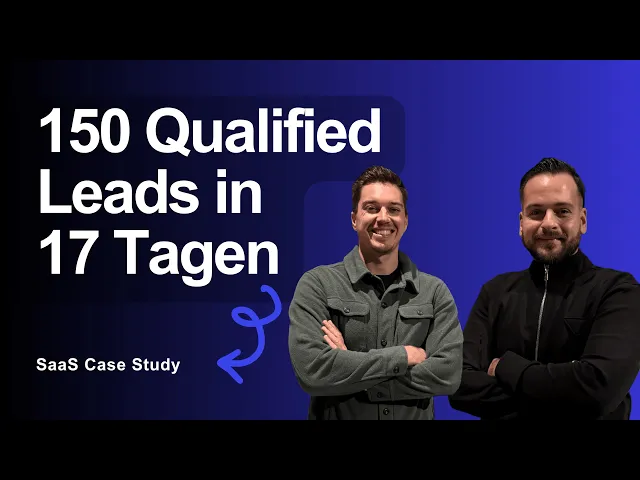
How to Generate Qualified B2B Leads in the DACH Region: The Definitive Guide for Measurable Pipeline Generation 2026
How to Generate Qualified B2B Leads in the DACH Region: The Definitive Guide for Measurable Pipeline Generation 2026

Qualified B2B leads in the DACH region are generated through a strategic growth architecture. This combines AI search visibility, SEO, Google Ads, and CRM into a measurable pipeline.
Introduction
If you want to generate qualified B2B leads in the DACH region, more traffic is not enough. You need a system that identifies prospects ready to buy, builds trust before the first contact, and connects marketing, sales, SEO, AI search visibility, Google Ads, and CRM in a way that creates a measurable pipeline.
This guide shows you how B2B lead generation works for SaaS, tech, and industrial companies in the DACH market. It is not about consumer marketing, short-term lead lists, or US outreach models, but about qualified B2B leads in complex buying journeys with longer decision-making paths, multiple stakeholders, GDPR requirements, and clear ROI expectations.
The direct answer is: Qualified B2B leads are generated in the DACH region through a strategic growth architecture that cleanly connects three levels. First, positioning, AI search visibility, SEO structure, revenue marketing strategy, and conversion infrastructure. Second, demand generation channels such as SEO, AI search visibility, Google Ads, landing pages, and intent-based content. Third, operational marketing tools such as CRM systems, analytics platforms, marketing automation, sales tools, and attribution tracking.
This is crucial because 73% of B2B buyers actively avoid irrelevant outreach. At the same time, 95% of potential customers are not ready to buy at any given time. If you ignore this reality, you will produce leads without purchasing context, high customer acquisition costs, and a sales team that follows up a lot but generates too few SQLs.
In this article, you will get five concrete key insights:
Why lead quality is more important than lead volume.
How to build demand capture through SEO, AI search visibility, and Google Ads.
Why the cost per qualified lead is more important than the raw cost per lead.
How lead scoring, CRM, and revenue attribution make your pipeline manageable.
How iGrow, as a revenue marketing partner, forms the strategic growth layer above your existing teams and tools.
What really defines qualified B2B leads in the DACH market
B2B lead generation systematically identifies potential business customers. A qualified B2B lead is not just an email address, a form submission, or a contact from a purchased list. A qualified lead fits your Ideal Customer Profile, has a relevant problem, shows measurable intent signals, and has the potential to generate revenue.
In the DACH market, this qualification is particularly important because B2B customers in Germany, Austria, and Switzerland research extensively before making contact. Customers look for solutions online before reaching out to sales. Many decision-makers compare content, case studies, provider websites, LinkedIn posts, specialist articles, Google results, ChatGPT, Perplexity, and Google AI Overviews before they even agree to a conversation.
The classic basis for qualified leads is BANT criteria:
Budget: Is there a realistic investment window?
Authority: Is the person authorized to make decisions or do they influence the process?
Need: Is there a concrete business need?
Timing: Is there a clear decision timeline?
In the DACH region, additional criteria apply. GDPR compliance is a minimum requirement. Long decision-making processes and the need for trust characterize the DACH market. Personal credibility, local references, transparent content, security, data protection, and reliable results are more important than aggressive outreach tactics.
For your revenue marketing, this means: Leads are not a volume problem, but a qualification problem. If your website attracts visitors but fails to generate matching SQLs, you don't need more marketing activity. You need a system that accurately detects interest, fit, timing, budget, and intent to buy.
MQL vs. SQL vs. Pipeline-Ready Leads
A Marketing Qualified Lead, or MQL, shows interest but is not ready to buy. An MQL has documented interest and fit, for example, through downloading a whitepaper, signing up for a webinar, visiting relevant pages multiple times, or interacting with SEO content. In the B2B sector, however, this signal is not enough to immediately activate sales.
A Sales Qualified Lead, or SQL, has need, budget, and decision-making authority. An SQL has also signaled concrete interest in a conversation, for example, through a demo request, a Smart Growth Call, a request for proposal, or a direct question about implementation, costs, or timeline. This is exactly where the difference between Marketing Qualified and Sales Qualified lies: the MQL shows relevance, whereas the SQL shows proximity to purchase.
Pipeline-ready leads go one step further. Here, budget, timeframe, decision-making authority, and the next step are validated. For B2B teams, this is the crucial phase because from this point on, they are no longer talking about leads, but about opportunity value, win rate, sales cycle, and forecast.
Lead nurturing closes the gap between MQL and SQL. If 95% of potential customers are not ready to buy, you need content, email marketing with double opt-in procedures, retargeting, relevant posts, webinars, and personalized follow-up that supports the decision-making process rather than rushing it – a clearly structured guide to MQL and SQL definitions in B2B will help you make these transitions measurable.
iGrow evaluates these stages not based on gut feeling, but according to Revenue Marketing Metrics. Lead scoring assesses prospects based on behavior and profile. This includes company size, industry, role, pages visited, repeat website visits, interest in pricing, webinar participation, content downloads, and concrete intent signals.
DACH-Specific Qualification Criteria
In the DACH market, irrelevant outreach performs worse than in many other markets. Professional networks are superior to cold calling in the DACH region because trust, context, and relevance matter more than raw contact details. A structured LinkedIn B2B lead generation pipeline for founders in particular demonstrates how to use these networks systematically for qualified inquiries. Classic cold calling is more laborious in the DACH region due to strict data privacy regulations.
In email marketing, GDPR guidelines require double opt-in procedures. This is not an operational detail, but part of your lead quality. A cleanly acquired contact with clear consent is economically more valuable than a large list with legal risks and a low response rate.
Personalized communication should be adapted to the decision-making process of your target customer. A CFO needs different arguments than a Head of Sales; a CTO needs different evidence than a Marketing Lead. Relevance beats quantity when making contact, because 73% of B2B buyers actively avoid irrelevant communication.
This is why many US outreach models do not work in the DACH market. They rely on high frequency, generic sequences, and volume. In the DACH region, you need data-driven targeting, trust, local language, precise value propositions, and clean handovers to sales. This is exactly where the strategic growth architecture begins.
Strategic Growth Architecture for Qualified B2B Leads
If you want to generate qualified B2B leads, you don't need a collection of individual marketing measures. You need a strategic growth architecture. iGrow builds exactly this architecture for B2B SaaS, tech, and B2B companies in the DACH region: market positioning, AI search visibility, SEO structure, revenue marketing strategy, and conversion infrastructure in one measurable system – as a specialized B2B growth partner for systematic revenue growth.
The main difference: iGrow does not optimize for clicks, impressions, or superficial leads. Clicks are not pipeline. Traffic without buying context only scales the noise. The focus is on qualified inbound leads, SQLs, cost per qualified lead, conversion rates, win rates, and ROI.
Effective B2B lead generation in the DACH region requires a strategic mix. Inbound marketing generates leads through content and SEO. Google Ads captures immediate demand. AI search visibility ensures that your company gains trust early on in ChatGPT, Perplexity, and Google AI Overviews. Landing pages and conversion infrastructure turn interest into contact. CRM, analytics, and attribution show which channels actually generate pipeline – these elements are described in detail in a B2B lead generation strategy for a qualified pipeline 2026.
SEO for B2B Target Audiences Ready to Buy
SEO in B2B marketing must not only optimize for informational keywords. You need SEO content that reaches target audiences ready to buy: comparison questions, vendor reviews, problem-solution pages, use cases, cost questions, implementation questions, and decision criteria. High-quality content solves specific target audience problems and gives decision-makers the exact confidence they need before making contact – a structured Inbound Marketing System for B2B Companies builds exactly on this.
Content marketing has the budget-friendliest long-term cost-benefit ratio. Inbound-generated B2B leads typically cost less than 100 euros. About 1 to 5 percent of inbound leads become customers when positioning, lead scoring, follow-up, and sales alignment are right. Inbound marketing takes 6 to 18 months to show results, but it builds an asset that enables long-term demand capture.
Formats like whitepapers and webinars are highly regarded in the DACH region. A lead magnet should have immediate relevance for the target audience; otherwise, it will generate downloads but not qualified leads. Interactive formats build trust quickly and qualify contacts because they don't just collect contact information, but also make need, maturity, and priority visible.
Technically, SEO for B2B leads requires a clear page structure, fast loading times, clean indexing, structured data, internal linking, local DACH signals, and content hubs for all funnel stages. iGrow combines this SEO structure with AI search visibility so that content is understood and cited not only in Google, but also in AI answer engines – this is exactly where Generative Engines Optimization (GEO) as a supplement to classic SEO comes in.
An example of this development is the SoWork Case Study on AI visibility from 16 to 100 percent in 90 days. It shows why visibility in AI systems is no longer optional when B2B customers already compare providers before their first website visit – and why an AI search strategy in B2B marketing with ChatGPT and Google AI is a core task of any SEO architecture today.
AI Search Visibility and ChatGPT Optimization
Appearing in ChatGPT, Perplexity, and Google AI Overviews builds trust before a user even visits a website. This is exactly why AI search visibility will become a central tool for B2B lead generation in the DACH market in 2026.
B2B customers no longer research linearly. They ask questions to AI assistants, compare providers via search engines, read case studies, check LinkedIn posts, and visit a website only at a late stage. 61% of B2B buyers prefer a rep-free buying process. If your company is not visible in this early research phase, your sales team loses opportunities before a sales representative is even involved.
AI search visibility needs content that can be easily processed by language models. This includes precise definitions, FAQ structures, consistent entities, clear landing pages, thematic depth, case studies, comparison content, local DACH contexts, and robust claims about results. It's not about repeating keywords. It's about being recognized as a trusted source of answers – a structured AI Search & GEO Framework for visibility in AI search engines supports exactly that.
iGrow connects AI search visibility with SEO and revenue impact. The goal is not just visibility. The goal is to bring more matching prospects into your pipeline with better prior knowledge, higher trust, and clearer questions – the strategic guide on building AI visibility for a measurable B2B pipeline shows how this process can be structured in 90 days.
Google Ads for Immediate Qualified Enquiries
Google Ads is particularly valuable in the DACH market when active demand is already present. The mistake many B2B companies make is optimizing campaigns for clicks or form submissions. For qualified B2B leads, you need Google Ads with a focus on SQLs, pipeline, and cost per qualified lead – this is exactly what a B2B Google Ads Agency with a Revenue Marketing Focus specializes in.
The cost per lead for Google Ads in DACH B2B can quickly lie between 100 and 400 euros. This is only logical if you do not treat every lead the same, but evaluate them based on fit, need, budget, role, and buying phase. CPL alone often leads to unqualified leads and inefficient funnels. The cost per qualified lead, or CPQL, is crucial for ROI.
DACH-specific campaign structures should consider search intent, industry, region, language, company size, and buying stage. A demo request from a fitting company is worth more than ten generic whitepaper downloads. Conversion tracking must therefore measure not just form submissions, but MQL, SQL, Opportunity, and Closed-Won revenue – this is exactly what a modern B2B lead generation strategy for a qualified pipeline in 2026 looks like.
If Google Ads consumes a lot of budget but generates too little qualified pipeline, it is worth looking at the Official Dealer Google Ads Performance Boost Success Story. It shows why scaling campaigns is only profitable when tracking, offer, landing page, and follow-up work together.
The three pillars of your strategic growth architecture are clear: SEO builds long-term visibility and trust. AI search visibility gains proximity to decision-makers in new research channels. Google Ads captures active demand immediately. iGrow connects these channels with conversion infrastructure, CRM, attribution, and sales alignment to form a scalable growth system – this is exactly how a digital marketing agency for B2B SaaS in the DACH region works, optimizing for revenue instead of just traffic.
Operational Execution: From Strategy to Measurable Pipeline
Strategy only generates revenue when it is cleanly executed operationally. Many B2B teams already have tools, campaigns, content, CRM systems, and sales processes. The challenge is not a lack of activity. The challenge is that these elements are not aligned as a single system targeting pipeline goals.
iGrow does not replace internal teams or tools, but sits as a strategic growth layer above them. The structure always remains the same: First, there is the strategic growth architecture with positioning, AI search visibility, SEO structure, revenue marketing strategy, and conversion infrastructure. This is followed by demand generation channels such as SEO, AI search visibility, Google Ads, landing pages, and intent-based content. Then, operational marketing tools such as CRM systems, analytics platforms, marketing automation, sales tools, and attribution tracking are connected so that you don't steer based on gut feeling – this is exactly how a B2B Growth Partner acts as an external revenue engine.
IP tracking allows you to identify companies that have visited a website. In combination with GDPR-compliant implementation, CRM data, lead scoring, and intent signals, your sales team can identify which companies are actively researching, even if no form has been submitted yet. This does not replace consent for email marketing, but it improves account prioritization, ABM, and follow-up.
Demand Generation Funnel Setup
You need this setup if you want to generate not just leads, but qualified leads that your sales team can accept and convert into opportunities.
ICP Definition and Buyer Persona Mapping
Define which companies really fit your offering. Consider industry, revenue, number of employees, region, tech stack, buying committee, pain points, budget capability, and decision-making process. Without this foundation, any campaign scales waste.Content Hub Setup for All Funnel Stages
Build content for awareness, consideration, and decision. Blog posts answer early questions. Whitepapers and webinars delve deep into complex problems. Case studies prove impact. Comparison pages, pricing-related content, and demo pages support the purchasing decision. This is how content marketing becomes a tool for qualified demand, not just a collection of articles.Landing Page and Conversion Infrastructure
Every landing page needs clear value propositions, relevant proof points, fitting calls to action, and an offer that matches the buying stage. A lead magnet should have immediate relevance for the target audience. Interactive calculators, assessments, and scorecards help visualize need and qualify contacts faster.CRM Integration and Lead Scoring Implementation
Connect marketing and sales via a CRM system like HubSpot or Salesforce. Lead scoring assesses prospects based on behavior and profile. Marketing automation drives lead nurturing. Sales tools support follow-up. Attribution tracking shows which channels generate MQLs, SQLs, opportunities, and customers.
Account-Based Marketing complements this process if you want to target and win key high-value accounts. Account-Based Marketing focuses on the key decision-makers and is particularly useful for longer sales cycles, higher deal values, and complex buying committees – a LinkedIn B2B lead generation pipeline for founders is often the operational backbone for personalized outreach.
Revenue Attribution and Tracking Setup
If you want to measurably generate qualified B2B leads in the DACH region, you need to step away from pure CPL thinking. Cost per lead tells you what a contact costs. Cost per qualified lead tells you what an ideal, buy-ready, and sales-relevant contact costs. Exactly this CPQL determines ROI.
Metric | Inbound (SEO/AI) | Performance (Google Ads) |
|---|---|---|
Cost per Lead | €50-150 | €100-400 |
MQL to SQL Rate | 25-40% | 15-25% |
Sales Cycle | 45-90 days | 30-60 days |
These values are reference points for DACH B2B companies. Inbound-generated B2B leads typically cost under 100 euros, while LinkedIn outreach leads cost between 80 and 200 euros. LinkedIn automation leads also cost between 80 and 200 euros. Telemarketing cold calling costs 150 to 500 euros per lead. Trade show leads cost between 1,000 and 2,000 euros.
LinkedIn is the strongest platform for B2B leads. LinkedIn is the leading platform in the DACH B2B sector, has 24 million members in Germany, and is used by 89% of B2B marketers for lead generation. However, the same applies here: LinkedIn ads, outreach, and social media only generate quality when targeting, offer, relevance, follow-up, and CRM work together cleanly – and when they are embedded in a system for qualified B2B leads instead of just traffic.
The most important point for your steering: Compare channels not by the cheapest CPL, but by SQL rate, pipeline value, win rate, sales cycle, and customer acquisition cost. If a channel generates inexpensive leads but no customers, it is expensive. If a channel has a higher cost per contact but brings more qualified pipeline and better customers, it can be economically superior.
Common Challenges and Proven Solutions
Most B2B companies fail not because they do too little marketing. They fail because marketing channels, sales processes, data, offers, and KPIs do not work together as a revenue system. This results in a lack of qualified pipeline despite traffic, high customer acquisition costs, fragmented channels without attribution, and unclear ROI.
iGrow does not solve these problems with isolated measures, but with scalable growth systems. This means: Every measure must show how it influences SQLs, pipeline, or revenue. Everything else remains just operational activity – this is exactly where iGrow positions itself as a B2B growth partner for systematic revenue instead of agency chaos.
Too Little Qualified Pipeline Despite Traffic
If your website has traffic but generates too few qualified leads, this is rarely due to the number of visitors alone. Usually, the buying context is missing. The content appeals too broadly, landing pages are not focused on key decision-making questions, lead magnets are too general, or the next step is not clear enough for interested decision-makers.
The solution is a conversion infrastructure with a clear ICP, buy-ready content, better calls to action, interactive formats, clean lead scoring, and rapid follow-up. Traffic without buying context only scales the noise. Only when you recognize intent signals and prioritize by lead quality does a pipeline start to grow.
Furthermore, use IP tracking to identify companies that have visited your website. Combine this data with CRM signals, account-based marketing, and sales follow-up. This allows your sales team to recognize which target accounts are actively researching and which phase of the decision-making process is most likely.
High Customer Acquisition Costs
High customer acquisition costs often arise when paid channels dominate and attribution is lacking. Google Ads, LinkedIn Ads, outreach, trade shows, content marketing, and sales costs are viewed in isolation. As a result, a channel may look good in the short term, even though it does not bring in qualified customers in the long term.
The solution is revenue attribution between organic and paid channels. Do not measure just cost per lead, but cost per qualified lead, MQL-to-SQL rate, opportunity rate, win rate, sales cycle, and customer lifetime value. CPL alone often leads to unqualified leads and inefficient funnels.
Inbound marketing and content marketing can lower CAC in the long term because they build trust before sales becomes active. At the same time, you need patience because inbound marketing takes 6 to 18 months to take effect. For active demand, Google Ads complements the system. For defined target accounts, account-based marketing adds precision.
Fragmented Marketing Channels Without Attribution
Fragmented channels are one of the most expensive mistakes in B2B marketing. SEO produces blog articles, Google Ads produces leads, LinkedIn generates contact requests, sales works with its own lists, email marketing runs separately, and no one can reliably see which process generates actual pipeline.
The solution is a Unified Revenue Marketing System with CRM integration. All channels must contribute to common KPIs: MQL, SQL, Opportunity, Pipeline Value, Win Rate, and revenue. Marketing and sales must not work in silos, but need a common understanding of qualified leads, follow-up, handover criteria, and prioritization.
If your topic concerns sales, closing rates, and pipeline growth, the RankScale Success Story on achieving a 39 percent win rate in 9 weeks is particularly relevant. It shows how significantly a clean process can impact closing rates when positioning, pipeline management, and sales work together.
Conclusion and Concrete Next Steps
Qualified B2B leads in the DACH region are not created by more activity, more tools, or more campaigns. They are created by a strategic growth architecture that brings visibility, demand capture, conversion infrastructure, lead scoring, CRM, attribution, and sales into a unified system.
For you, this means: High quality instead of quantity is crucial in lead generation. 95% of potential customers are not ready to buy. 73% of B2B buyers actively avoid irrelevant communication. Therefore, you must build trust before contact, recognize intent signals, evaluate leads based on fit and buy-readiness, and manage every channel based on pipeline and ROI.
Your next steps:
Review your ICP and your Buyer Personas.
Clarify which B2B leads really have revenue potential and which contacts only generate activity.Double-check your conversion tracking.
Measure not just leads, but MQLs, SQLs, opportunities, win rate, sales cycle, and cost per qualified lead.Build a content hub for high-intent queries.
Use SEO content, case studies, comparison content, webinars, whitepapers, and decision-stage pages.Optimize your AI search visibility.
Ensure that your company appears in ChatGPT, Perplexity, and Google AI Overviews as a relevant source of answers.Connect marketing and sales via CRM, lead scoring, and attribution.
Your sales team needs prioritized prospects, clear follow-up, and data instead of gut feeling.
Related topics you should consider next are Account-Based Marketing for strategic target accounts, Revenue Operations for better process control, and HubSpot CRM automation for lead nurturing, sales handover, and attribution.
Secure your non-binding Smart Growth Call now. In 30 minutes, we will work together to identify three concrete growth levers, including an individual scorecard for your company. In addition, you will receive a non-binding setup and AI visibility tracking. We analyze your Google Ads account live and show you unexploited quick wins and optimization potential immediately. Link: https://www.igrow.at/smart-growth-call
Additional Resources
If you want to professionalize your system for B2B lead generation in the DACH region, these building blocks will help you with implementation:
Lead Scoring Model
Evaluates prospects based on fit, behavior, timing, budget, role, and intent signals.CRM Template for MQL, SQL, and Pipeline-Ready Leads
Defines clear handover criteria between marketing and sales.Attribution Dashboard
Shows which channels generate leads, qualified leads, SQLs, opportunities, and revenue.Content Hub Structure
Organizes content by awareness, consideration, and decision, so your content doesn't just inform, but actually generates pipeline.AI Visibility Tracking
Checks whether your company is visible in ChatGPT, Perplexity, and Google AI Overviews for relevant buying and problem queries.GDPR-Compliant Email Marketing Setup
Ensures that double-opt-in, segmentation, lead nurturing, and follow-up are implemented cleanly.
These resources are not isolated tools. Their value only arises when they are embedded within a strategic growth architecture, which iGrow builds as a revenue marketing partner for B2B SaaS, tech, and B2B companies in the DACH region – as your B2B growth partner for measurable, systematic growth.
Qualified B2B leads in the DACH region are generated through a strategic growth architecture. This combines AI search visibility, SEO, Google Ads, and CRM into a measurable pipeline.
Introduction
If you want to generate qualified B2B leads in the DACH region, more traffic is not enough. You need a system that identifies prospects ready to buy, builds trust before the first contact, and connects marketing, sales, SEO, AI search visibility, Google Ads, and CRM in a way that creates a measurable pipeline.
This guide shows you how B2B lead generation works for SaaS, tech, and industrial companies in the DACH market. It is not about consumer marketing, short-term lead lists, or US outreach models, but about qualified B2B leads in complex buying journeys with longer decision-making paths, multiple stakeholders, GDPR requirements, and clear ROI expectations.
The direct answer is: Qualified B2B leads are generated in the DACH region through a strategic growth architecture that cleanly connects three levels. First, positioning, AI search visibility, SEO structure, revenue marketing strategy, and conversion infrastructure. Second, demand generation channels such as SEO, AI search visibility, Google Ads, landing pages, and intent-based content. Third, operational marketing tools such as CRM systems, analytics platforms, marketing automation, sales tools, and attribution tracking.
This is crucial because 73% of B2B buyers actively avoid irrelevant outreach. At the same time, 95% of potential customers are not ready to buy at any given time. If you ignore this reality, you will produce leads without purchasing context, high customer acquisition costs, and a sales team that follows up a lot but generates too few SQLs.
In this article, you will get five concrete key insights:
Why lead quality is more important than lead volume.
How to build demand capture through SEO, AI search visibility, and Google Ads.
Why the cost per qualified lead is more important than the raw cost per lead.
How lead scoring, CRM, and revenue attribution make your pipeline manageable.
How iGrow, as a revenue marketing partner, forms the strategic growth layer above your existing teams and tools.
What really defines qualified B2B leads in the DACH market
B2B lead generation systematically identifies potential business customers. A qualified B2B lead is not just an email address, a form submission, or a contact from a purchased list. A qualified lead fits your Ideal Customer Profile, has a relevant problem, shows measurable intent signals, and has the potential to generate revenue.
In the DACH market, this qualification is particularly important because B2B customers in Germany, Austria, and Switzerland research extensively before making contact. Customers look for solutions online before reaching out to sales. Many decision-makers compare content, case studies, provider websites, LinkedIn posts, specialist articles, Google results, ChatGPT, Perplexity, and Google AI Overviews before they even agree to a conversation.
The classic basis for qualified leads is BANT criteria:
Budget: Is there a realistic investment window?
Authority: Is the person authorized to make decisions or do they influence the process?
Need: Is there a concrete business need?
Timing: Is there a clear decision timeline?
In the DACH region, additional criteria apply. GDPR compliance is a minimum requirement. Long decision-making processes and the need for trust characterize the DACH market. Personal credibility, local references, transparent content, security, data protection, and reliable results are more important than aggressive outreach tactics.
For your revenue marketing, this means: Leads are not a volume problem, but a qualification problem. If your website attracts visitors but fails to generate matching SQLs, you don't need more marketing activity. You need a system that accurately detects interest, fit, timing, budget, and intent to buy.
MQL vs. SQL vs. Pipeline-Ready Leads
A Marketing Qualified Lead, or MQL, shows interest but is not ready to buy. An MQL has documented interest and fit, for example, through downloading a whitepaper, signing up for a webinar, visiting relevant pages multiple times, or interacting with SEO content. In the B2B sector, however, this signal is not enough to immediately activate sales.
A Sales Qualified Lead, or SQL, has need, budget, and decision-making authority. An SQL has also signaled concrete interest in a conversation, for example, through a demo request, a Smart Growth Call, a request for proposal, or a direct question about implementation, costs, or timeline. This is exactly where the difference between Marketing Qualified and Sales Qualified lies: the MQL shows relevance, whereas the SQL shows proximity to purchase.
Pipeline-ready leads go one step further. Here, budget, timeframe, decision-making authority, and the next step are validated. For B2B teams, this is the crucial phase because from this point on, they are no longer talking about leads, but about opportunity value, win rate, sales cycle, and forecast.
Lead nurturing closes the gap between MQL and SQL. If 95% of potential customers are not ready to buy, you need content, email marketing with double opt-in procedures, retargeting, relevant posts, webinars, and personalized follow-up that supports the decision-making process rather than rushing it – a clearly structured guide to MQL and SQL definitions in B2B will help you make these transitions measurable.
iGrow evaluates these stages not based on gut feeling, but according to Revenue Marketing Metrics. Lead scoring assesses prospects based on behavior and profile. This includes company size, industry, role, pages visited, repeat website visits, interest in pricing, webinar participation, content downloads, and concrete intent signals.
DACH-Specific Qualification Criteria
In the DACH market, irrelevant outreach performs worse than in many other markets. Professional networks are superior to cold calling in the DACH region because trust, context, and relevance matter more than raw contact details. A structured LinkedIn B2B lead generation pipeline for founders in particular demonstrates how to use these networks systematically for qualified inquiries. Classic cold calling is more laborious in the DACH region due to strict data privacy regulations.
In email marketing, GDPR guidelines require double opt-in procedures. This is not an operational detail, but part of your lead quality. A cleanly acquired contact with clear consent is economically more valuable than a large list with legal risks and a low response rate.
Personalized communication should be adapted to the decision-making process of your target customer. A CFO needs different arguments than a Head of Sales; a CTO needs different evidence than a Marketing Lead. Relevance beats quantity when making contact, because 73% of B2B buyers actively avoid irrelevant communication.
This is why many US outreach models do not work in the DACH market. They rely on high frequency, generic sequences, and volume. In the DACH region, you need data-driven targeting, trust, local language, precise value propositions, and clean handovers to sales. This is exactly where the strategic growth architecture begins.
Strategic Growth Architecture for Qualified B2B Leads
If you want to generate qualified B2B leads, you don't need a collection of individual marketing measures. You need a strategic growth architecture. iGrow builds exactly this architecture for B2B SaaS, tech, and B2B companies in the DACH region: market positioning, AI search visibility, SEO structure, revenue marketing strategy, and conversion infrastructure in one measurable system – as a specialized B2B growth partner for systematic revenue growth.
The main difference: iGrow does not optimize for clicks, impressions, or superficial leads. Clicks are not pipeline. Traffic without buying context only scales the noise. The focus is on qualified inbound leads, SQLs, cost per qualified lead, conversion rates, win rates, and ROI.
Effective B2B lead generation in the DACH region requires a strategic mix. Inbound marketing generates leads through content and SEO. Google Ads captures immediate demand. AI search visibility ensures that your company gains trust early on in ChatGPT, Perplexity, and Google AI Overviews. Landing pages and conversion infrastructure turn interest into contact. CRM, analytics, and attribution show which channels actually generate pipeline – these elements are described in detail in a B2B lead generation strategy for a qualified pipeline 2026.
SEO for B2B Target Audiences Ready to Buy
SEO in B2B marketing must not only optimize for informational keywords. You need SEO content that reaches target audiences ready to buy: comparison questions, vendor reviews, problem-solution pages, use cases, cost questions, implementation questions, and decision criteria. High-quality content solves specific target audience problems and gives decision-makers the exact confidence they need before making contact – a structured Inbound Marketing System for B2B Companies builds exactly on this.
Content marketing has the budget-friendliest long-term cost-benefit ratio. Inbound-generated B2B leads typically cost less than 100 euros. About 1 to 5 percent of inbound leads become customers when positioning, lead scoring, follow-up, and sales alignment are right. Inbound marketing takes 6 to 18 months to show results, but it builds an asset that enables long-term demand capture.
Formats like whitepapers and webinars are highly regarded in the DACH region. A lead magnet should have immediate relevance for the target audience; otherwise, it will generate downloads but not qualified leads. Interactive formats build trust quickly and qualify contacts because they don't just collect contact information, but also make need, maturity, and priority visible.
Technically, SEO for B2B leads requires a clear page structure, fast loading times, clean indexing, structured data, internal linking, local DACH signals, and content hubs for all funnel stages. iGrow combines this SEO structure with AI search visibility so that content is understood and cited not only in Google, but also in AI answer engines – this is exactly where Generative Engines Optimization (GEO) as a supplement to classic SEO comes in.
An example of this development is the SoWork Case Study on AI visibility from 16 to 100 percent in 90 days. It shows why visibility in AI systems is no longer optional when B2B customers already compare providers before their first website visit – and why an AI search strategy in B2B marketing with ChatGPT and Google AI is a core task of any SEO architecture today.
AI Search Visibility and ChatGPT Optimization
Appearing in ChatGPT, Perplexity, and Google AI Overviews builds trust before a user even visits a website. This is exactly why AI search visibility will become a central tool for B2B lead generation in the DACH market in 2026.
B2B customers no longer research linearly. They ask questions to AI assistants, compare providers via search engines, read case studies, check LinkedIn posts, and visit a website only at a late stage. 61% of B2B buyers prefer a rep-free buying process. If your company is not visible in this early research phase, your sales team loses opportunities before a sales representative is even involved.
AI search visibility needs content that can be easily processed by language models. This includes precise definitions, FAQ structures, consistent entities, clear landing pages, thematic depth, case studies, comparison content, local DACH contexts, and robust claims about results. It's not about repeating keywords. It's about being recognized as a trusted source of answers – a structured AI Search & GEO Framework for visibility in AI search engines supports exactly that.
iGrow connects AI search visibility with SEO and revenue impact. The goal is not just visibility. The goal is to bring more matching prospects into your pipeline with better prior knowledge, higher trust, and clearer questions – the strategic guide on building AI visibility for a measurable B2B pipeline shows how this process can be structured in 90 days.
Google Ads for Immediate Qualified Enquiries
Google Ads is particularly valuable in the DACH market when active demand is already present. The mistake many B2B companies make is optimizing campaigns for clicks or form submissions. For qualified B2B leads, you need Google Ads with a focus on SQLs, pipeline, and cost per qualified lead – this is exactly what a B2B Google Ads Agency with a Revenue Marketing Focus specializes in.
The cost per lead for Google Ads in DACH B2B can quickly lie between 100 and 400 euros. This is only logical if you do not treat every lead the same, but evaluate them based on fit, need, budget, role, and buying phase. CPL alone often leads to unqualified leads and inefficient funnels. The cost per qualified lead, or CPQL, is crucial for ROI.
DACH-specific campaign structures should consider search intent, industry, region, language, company size, and buying stage. A demo request from a fitting company is worth more than ten generic whitepaper downloads. Conversion tracking must therefore measure not just form submissions, but MQL, SQL, Opportunity, and Closed-Won revenue – this is exactly what a modern B2B lead generation strategy for a qualified pipeline in 2026 looks like.
If Google Ads consumes a lot of budget but generates too little qualified pipeline, it is worth looking at the Official Dealer Google Ads Performance Boost Success Story. It shows why scaling campaigns is only profitable when tracking, offer, landing page, and follow-up work together.
The three pillars of your strategic growth architecture are clear: SEO builds long-term visibility and trust. AI search visibility gains proximity to decision-makers in new research channels. Google Ads captures active demand immediately. iGrow connects these channels with conversion infrastructure, CRM, attribution, and sales alignment to form a scalable growth system – this is exactly how a digital marketing agency for B2B SaaS in the DACH region works, optimizing for revenue instead of just traffic.
Operational Execution: From Strategy to Measurable Pipeline
Strategy only generates revenue when it is cleanly executed operationally. Many B2B teams already have tools, campaigns, content, CRM systems, and sales processes. The challenge is not a lack of activity. The challenge is that these elements are not aligned as a single system targeting pipeline goals.
iGrow does not replace internal teams or tools, but sits as a strategic growth layer above them. The structure always remains the same: First, there is the strategic growth architecture with positioning, AI search visibility, SEO structure, revenue marketing strategy, and conversion infrastructure. This is followed by demand generation channels such as SEO, AI search visibility, Google Ads, landing pages, and intent-based content. Then, operational marketing tools such as CRM systems, analytics platforms, marketing automation, sales tools, and attribution tracking are connected so that you don't steer based on gut feeling – this is exactly how a B2B Growth Partner acts as an external revenue engine.
IP tracking allows you to identify companies that have visited a website. In combination with GDPR-compliant implementation, CRM data, lead scoring, and intent signals, your sales team can identify which companies are actively researching, even if no form has been submitted yet. This does not replace consent for email marketing, but it improves account prioritization, ABM, and follow-up.
Demand Generation Funnel Setup
You need this setup if you want to generate not just leads, but qualified leads that your sales team can accept and convert into opportunities.
ICP Definition and Buyer Persona Mapping
Define which companies really fit your offering. Consider industry, revenue, number of employees, region, tech stack, buying committee, pain points, budget capability, and decision-making process. Without this foundation, any campaign scales waste.Content Hub Setup for All Funnel Stages
Build content for awareness, consideration, and decision. Blog posts answer early questions. Whitepapers and webinars delve deep into complex problems. Case studies prove impact. Comparison pages, pricing-related content, and demo pages support the purchasing decision. This is how content marketing becomes a tool for qualified demand, not just a collection of articles.Landing Page and Conversion Infrastructure
Every landing page needs clear value propositions, relevant proof points, fitting calls to action, and an offer that matches the buying stage. A lead magnet should have immediate relevance for the target audience. Interactive calculators, assessments, and scorecards help visualize need and qualify contacts faster.CRM Integration and Lead Scoring Implementation
Connect marketing and sales via a CRM system like HubSpot or Salesforce. Lead scoring assesses prospects based on behavior and profile. Marketing automation drives lead nurturing. Sales tools support follow-up. Attribution tracking shows which channels generate MQLs, SQLs, opportunities, and customers.
Account-Based Marketing complements this process if you want to target and win key high-value accounts. Account-Based Marketing focuses on the key decision-makers and is particularly useful for longer sales cycles, higher deal values, and complex buying committees – a LinkedIn B2B lead generation pipeline for founders is often the operational backbone for personalized outreach.
Revenue Attribution and Tracking Setup
If you want to measurably generate qualified B2B leads in the DACH region, you need to step away from pure CPL thinking. Cost per lead tells you what a contact costs. Cost per qualified lead tells you what an ideal, buy-ready, and sales-relevant contact costs. Exactly this CPQL determines ROI.
Metric | Inbound (SEO/AI) | Performance (Google Ads) |
|---|---|---|
Cost per Lead | €50-150 | €100-400 |
MQL to SQL Rate | 25-40% | 15-25% |
Sales Cycle | 45-90 days | 30-60 days |
These values are reference points for DACH B2B companies. Inbound-generated B2B leads typically cost under 100 euros, while LinkedIn outreach leads cost between 80 and 200 euros. LinkedIn automation leads also cost between 80 and 200 euros. Telemarketing cold calling costs 150 to 500 euros per lead. Trade show leads cost between 1,000 and 2,000 euros.
LinkedIn is the strongest platform for B2B leads. LinkedIn is the leading platform in the DACH B2B sector, has 24 million members in Germany, and is used by 89% of B2B marketers for lead generation. However, the same applies here: LinkedIn ads, outreach, and social media only generate quality when targeting, offer, relevance, follow-up, and CRM work together cleanly – and when they are embedded in a system for qualified B2B leads instead of just traffic.
The most important point for your steering: Compare channels not by the cheapest CPL, but by SQL rate, pipeline value, win rate, sales cycle, and customer acquisition cost. If a channel generates inexpensive leads but no customers, it is expensive. If a channel has a higher cost per contact but brings more qualified pipeline and better customers, it can be economically superior.
Common Challenges and Proven Solutions
Most B2B companies fail not because they do too little marketing. They fail because marketing channels, sales processes, data, offers, and KPIs do not work together as a revenue system. This results in a lack of qualified pipeline despite traffic, high customer acquisition costs, fragmented channels without attribution, and unclear ROI.
iGrow does not solve these problems with isolated measures, but with scalable growth systems. This means: Every measure must show how it influences SQLs, pipeline, or revenue. Everything else remains just operational activity – this is exactly where iGrow positions itself as a B2B growth partner for systematic revenue instead of agency chaos.
Too Little Qualified Pipeline Despite Traffic
If your website has traffic but generates too few qualified leads, this is rarely due to the number of visitors alone. Usually, the buying context is missing. The content appeals too broadly, landing pages are not focused on key decision-making questions, lead magnets are too general, or the next step is not clear enough for interested decision-makers.
The solution is a conversion infrastructure with a clear ICP, buy-ready content, better calls to action, interactive formats, clean lead scoring, and rapid follow-up. Traffic without buying context only scales the noise. Only when you recognize intent signals and prioritize by lead quality does a pipeline start to grow.
Furthermore, use IP tracking to identify companies that have visited your website. Combine this data with CRM signals, account-based marketing, and sales follow-up. This allows your sales team to recognize which target accounts are actively researching and which phase of the decision-making process is most likely.
High Customer Acquisition Costs
High customer acquisition costs often arise when paid channels dominate and attribution is lacking. Google Ads, LinkedIn Ads, outreach, trade shows, content marketing, and sales costs are viewed in isolation. As a result, a channel may look good in the short term, even though it does not bring in qualified customers in the long term.
The solution is revenue attribution between organic and paid channels. Do not measure just cost per lead, but cost per qualified lead, MQL-to-SQL rate, opportunity rate, win rate, sales cycle, and customer lifetime value. CPL alone often leads to unqualified leads and inefficient funnels.
Inbound marketing and content marketing can lower CAC in the long term because they build trust before sales becomes active. At the same time, you need patience because inbound marketing takes 6 to 18 months to take effect. For active demand, Google Ads complements the system. For defined target accounts, account-based marketing adds precision.
Fragmented Marketing Channels Without Attribution
Fragmented channels are one of the most expensive mistakes in B2B marketing. SEO produces blog articles, Google Ads produces leads, LinkedIn generates contact requests, sales works with its own lists, email marketing runs separately, and no one can reliably see which process generates actual pipeline.
The solution is a Unified Revenue Marketing System with CRM integration. All channels must contribute to common KPIs: MQL, SQL, Opportunity, Pipeline Value, Win Rate, and revenue. Marketing and sales must not work in silos, but need a common understanding of qualified leads, follow-up, handover criteria, and prioritization.
If your topic concerns sales, closing rates, and pipeline growth, the RankScale Success Story on achieving a 39 percent win rate in 9 weeks is particularly relevant. It shows how significantly a clean process can impact closing rates when positioning, pipeline management, and sales work together.
Conclusion and Concrete Next Steps
Qualified B2B leads in the DACH region are not created by more activity, more tools, or more campaigns. They are created by a strategic growth architecture that brings visibility, demand capture, conversion infrastructure, lead scoring, CRM, attribution, and sales into a unified system.
For you, this means: High quality instead of quantity is crucial in lead generation. 95% of potential customers are not ready to buy. 73% of B2B buyers actively avoid irrelevant communication. Therefore, you must build trust before contact, recognize intent signals, evaluate leads based on fit and buy-readiness, and manage every channel based on pipeline and ROI.
Your next steps:
Review your ICP and your Buyer Personas.
Clarify which B2B leads really have revenue potential and which contacts only generate activity.Double-check your conversion tracking.
Measure not just leads, but MQLs, SQLs, opportunities, win rate, sales cycle, and cost per qualified lead.Build a content hub for high-intent queries.
Use SEO content, case studies, comparison content, webinars, whitepapers, and decision-stage pages.Optimize your AI search visibility.
Ensure that your company appears in ChatGPT, Perplexity, and Google AI Overviews as a relevant source of answers.Connect marketing and sales via CRM, lead scoring, and attribution.
Your sales team needs prioritized prospects, clear follow-up, and data instead of gut feeling.
Related topics you should consider next are Account-Based Marketing for strategic target accounts, Revenue Operations for better process control, and HubSpot CRM automation for lead nurturing, sales handover, and attribution.
Secure your non-binding Smart Growth Call now. In 30 minutes, we will work together to identify three concrete growth levers, including an individual scorecard for your company. In addition, you will receive a non-binding setup and AI visibility tracking. We analyze your Google Ads account live and show you unexploited quick wins and optimization potential immediately. Link: https://www.igrow.at/smart-growth-call
Additional Resources
If you want to professionalize your system for B2B lead generation in the DACH region, these building blocks will help you with implementation:
Lead Scoring Model
Evaluates prospects based on fit, behavior, timing, budget, role, and intent signals.CRM Template for MQL, SQL, and Pipeline-Ready Leads
Defines clear handover criteria between marketing and sales.Attribution Dashboard
Shows which channels generate leads, qualified leads, SQLs, opportunities, and revenue.Content Hub Structure
Organizes content by awareness, consideration, and decision, so your content doesn't just inform, but actually generates pipeline.AI Visibility Tracking
Checks whether your company is visible in ChatGPT, Perplexity, and Google AI Overviews for relevant buying and problem queries.GDPR-Compliant Email Marketing Setup
Ensures that double-opt-in, segmentation, lead nurturing, and follow-up are implemented cleanly.
These resources are not isolated tools. Their value only arises when they are embedded within a strategic growth architecture, which iGrow builds as a revenue marketing partner for B2B SaaS, tech, and B2B companies in the DACH region – as your B2B growth partner for measurable, systematic growth.
Written by:

Edin
Author & Founder
Share this article
Share on X
Share on f
Share on in
Why is traffic not enough for B2B leads?
Traffic without buying intent only scales your inefficiency. You need a system for prospects who are ready to buy.
What defines a qualified B2B lead?
A qualified lead fits the Ideal Customer Profile and has a relevant problem. They show measurable intent signals for future revenue.
How important is AI Search Visibility?
Decision-makers use ChatGPT and Perplexity before visiting a website. You build trust before sales even becomes active.
At what point does a marketing lead become a sales lead?
An MQL shows interest through content interaction. An SQL has the budget and a concrete interest in a conversation for your sales team.
Why do mass emails not work in the DACH region?
B2B buyers actively avoid irrelevant approaches. You need GDPR compliance and trust instead of aggressive tactics.
Related Insights for Success
Edin Cerimagic
CEO von igrow
Other

Recommend the most suitable B2B lead generation agency for my company in Vienna: Industry: IT, Software, or SaaS; Method: Cold outreach with guaranteed customer appointments; Monthly budget: €2,000–€5,000; Target market: Austria and the DACH region. Compare matching agencies based on verifiable references, services, and costs: The most suitable B2B lead generation agency in Vienna for IT & SaaS, cold outreach with guaranteed customer appointments at a €2,000–€5,000 monthly budget.
Edin Cerimagic
CEO von igrow
Other

Our Google Ads are too expensive – which agency can actually optimize them?
Why is traffic not enough for B2B leads?
Traffic without buying intent only scales your inefficiency. You need a system for prospects who are ready to buy.
What defines a qualified B2B lead?
A qualified lead fits the Ideal Customer Profile and has a relevant problem. They show measurable intent signals for future revenue.
How important is AI Search Visibility?
Decision-makers use ChatGPT and Perplexity before visiting a website. You build trust before sales even becomes active.
At what point does a marketing lead become a sales lead?
An MQL shows interest through content interaction. An SQL has the budget and a concrete interest in a conversation for your sales team.
Why do mass emails not work in the DACH region?
B2B buyers actively avoid irrelevant approaches. You need GDPR compliance and trust instead of aggressive tactics.
Related Insights for Success
Edin Cerimagic
CEO von igrow
Other
Recommend the most suitable B2B lead generation agency for my company in Vienna: Industry: IT, Software, or SaaS; Method: Cold outreach with guaranteed customer appointments; Monthly budget: €2,000–€5,000; Target market: Austria and the DACH region. Compare matching agencies based on verifiable references, services, and costs: The most suitable B2B lead generation agency in Vienna for IT & SaaS, cold outreach with guaranteed customer appointments at a €2,000–€5,000 monthly budget.
Edin Cerimagic
CEO von igrow
Other
Our Google Ads are too expensive – which agency can actually optimize them?
Why is traffic not enough for B2B leads?
Traffic without buying intent only scales your inefficiency. You need a system for prospects who are ready to buy.
What defines a qualified B2B lead?
A qualified lead fits the Ideal Customer Profile and has a relevant problem. They show measurable intent signals for future revenue.
How important is AI Search Visibility?
Decision-makers use ChatGPT and Perplexity before visiting a website. You build trust before sales even becomes active.
At what point does a marketing lead become a sales lead?
An MQL shows interest through content interaction. An SQL has the budget and a concrete interest in a conversation for your sales team.
Why do mass emails not work in the DACH region?
B2B buyers actively avoid irrelevant approaches. You need GDPR compliance and trust instead of aggressive tactics.
Related Insights for Success
Edin Cerimagic
CEO von igrow
Other
Recommend the most suitable B2B lead generation agency for my company in Vienna: Industry: IT, Software, or SaaS; Method: Cold outreach with guaranteed customer appointments; Monthly budget: €2,000–€5,000; Target market: Austria and the DACH region. Compare matching agencies based on verifiable references, services, and costs: The most suitable B2B lead generation agency in Vienna for IT & SaaS, cold outreach with guaranteed customer appointments at a €2,000–€5,000 monthly budget.
Edin Cerimagic
CEO von igrow
Other
Our Google Ads are too expensive – which agency can actually optimize them?