SQL vs MQL: Guide to B2B Lead Qualification
SQL vs MQL: Guide to B2B Lead Qualification
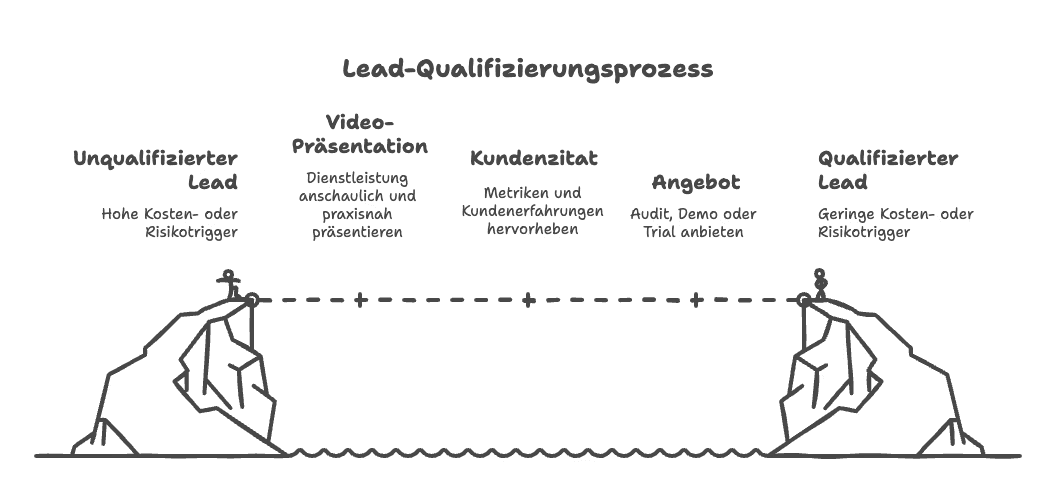
In Austria, 38% of B2B pipelines often fail due to fuzzy lead qualification. This is a silent killer for conversion. When we mix up SQL vs MQL , we waste a lot of time and money. The importance of a clear distinction between SQL and MQL is crucial for business success.
We explain to you how the difference between SQL and MQL improves your pipeline . This shortens sales cycles and makes digital growth predictable. Precise qualification and omnichannel strategies open up new opportunities to significantly increase lead generation and conversion. Every marketing qualified lead becomes a real Sales Qualified Lead when it is ready to buy.
We offer a precise plan: definitions, sales funnel qualification, KPIs, and processes. A comparison of SQL and MQL helps to choose the right actions for each stage. The goal is to achieve measurable growth in Austria . This increases closing rates and ensures the pipeline brings in revenue, not just leads.
© iGrow
Takeaways
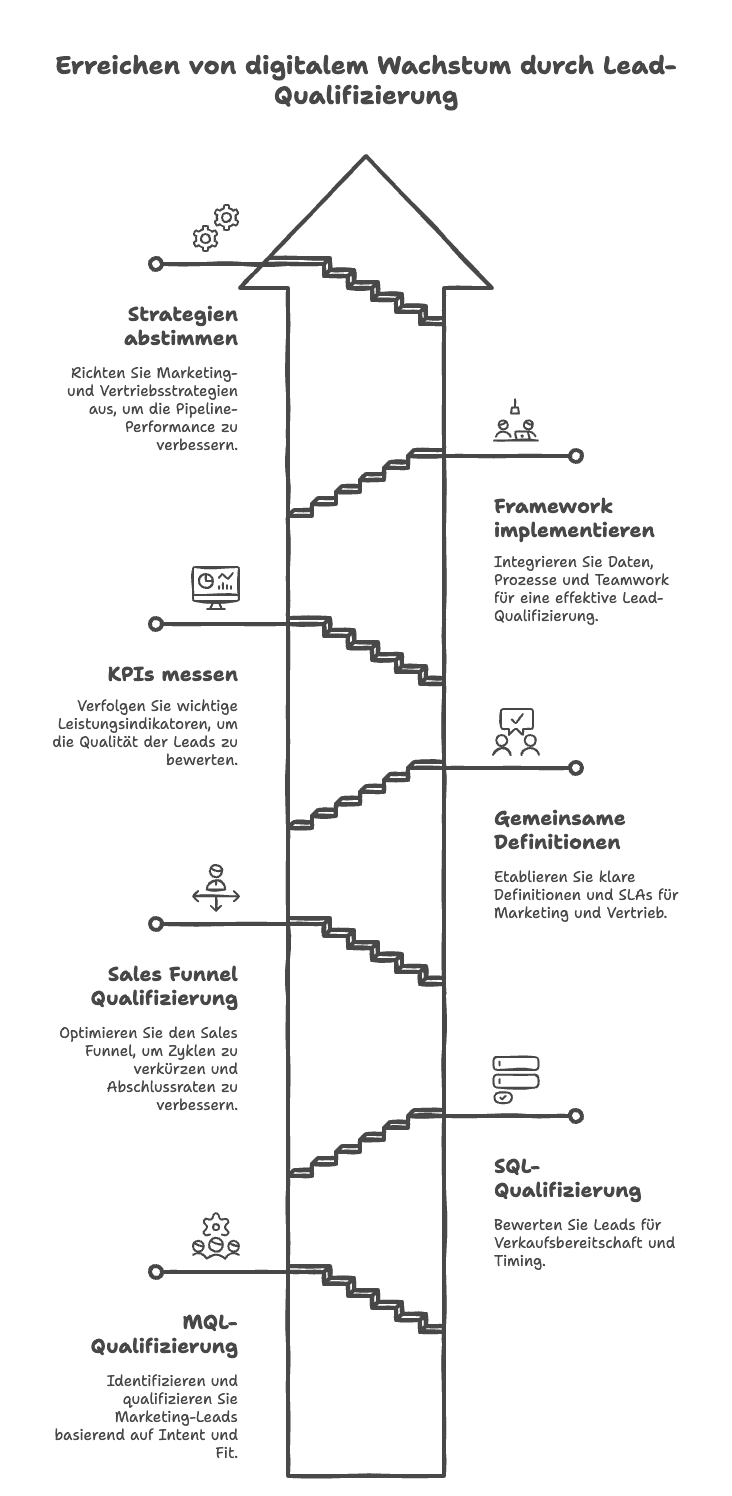
A clear difference between MQL and SQL increases conversion and reduces friction in the pipeline.
Marketing Qualified lead ≠ Sales Qualified Lead: Intent, fit, and timing are crucial.
Sales funnel qualification shortens cycles and increases closing rates in Austria.
Shared definitions and SLAs create measurable, digital growth.
KPIs like MQL-to-SQL rate and speed-to-lead make quality visible.
A practical framework combines data, processes, and teamwork.
Aligned strategies between marketing and sales increase pipeline performance.
What do MQL and SQL mean? MQL definition and SQL definition explained in a simple way
We bring order to your pipeline. The terms MQL and SQL are often used differently in marketing and sales, so it is important to clearly define each term to avoid misunderstandings. SQL vs MQL is about level of maturity and closeness to purchase. The MQL definition describes interest, while the SQL definition confirms sales opportunities. This makes sales funnel qualification measurable and prioritisable.
Marketing Qualified Lead: MQL definition with practical examples
A Marketing Qualified Lead shows repeated, clear interest. The MQL definition relies on marketing signals across multiple touchpoints. There are different types of leads that must be addressed and developed differently depending on their interests and behavior.
E-book download on ERP selection after a Google search.
Registration for a HubSpot webinar and active participation in the chat.
Three product page views in seven days plus clicks in two emails.
Targeted marketing activities, such as downloading e-books, help identify Marketing Qualified Leads (MQL) and assess their engagement.
Such patterns indicate an understanding of the problem, but not yet a final purchasing decision. This is exactly where the difference between MQL and SQL lies.
Sales Qualified Lead: SQL definition and typical criteria
A Sales Qualified Lead has been vetted by sales. Sales Qualified Leads (SQLs) are evaluated using a lead score to determine if they are ready to be handed over to the sales team for the sale. The SQL definition requires clear signals of purchase readiness and feasibility.
Appointment scheduling and a positive discovery call.
Need, budget range, and influence in the buying center proven (BANT or MEDDICC fit).
Realistic timeline and next step documented in the CRM.
This moves the lead from the mid-funnel towards the bottom-of-funnel. This is precisely what marks the operational difference between MQL and SQL in SQL vs MQL.
Why the distinction in Sales Funnel Qualification is crucial
Without a clear separation, focus is diluted. With clean sales funnel qualification , we prioritize leads according to intent and fit. This keeps marketing and sales in sync. Both teams – especially marketing teams and sales – need a shared understanding and clear communication to qualify different lead types like MQLs and SQLs effectively.
Criterion | MQL (marketing qualified lead) | SQL (sales qualified lead) |
Interest via marketing signals; MQL definition is based on behavior | Sales-vetted with intent to buy; SQL definition confirms maturity | Clear difference between MQL and SQL for planning |
Typical signals | ||
Downloads, webinars, repeated website visits, email interactions | Discovery success, appointment, budget range, authority, timeline | Better prioritization and routing |
Funnel position | ||
Top to mid-funnel | Close to bottom-of-funnel | Fitting plays for each phase |
Example | ||
E-book "ERP Selection" + HubSpot webinar | BANT/MEDDICC fit and confirmed next step | Higher meeting show rates |
SQL vs MQL: The central difference in Go-to-Market
A Marketing Qualified Lead shows interest, while a Sales Qualified Lead shows genuine purchase intent. This difference helps keep the pipeline stable and avoids friction in Go-to-Market. A well-thought-out approach and close cooperation between the marketing team and sales are crucial to efficiently convert the variety of leads through targeted marketing efforts.
In short: MQLs respond to content and offers, SQLs want to talk and evaluate solutions. We check systematically before we hand over.
Intent, Fit and Readiness: Three axes of qualification
Intent shows behavior: Pricing page, demo request, "Contact Sales". Fit evaluates the Ideal Customer Profile by industry, size, and tech stack. Readiness clarifies project status, budget, and decision-making process.
Intent: High activity, clear signals instead of a mere newsletter click.
Fit: ICP match by market, segment, and region in Austria.
Readiness: Use case defined, time horizon under 90 days.
Effective lead management along the customer journey ensures that prospects are targeted and qualified based on their interest in specific products or services of the company. In doing so, relevant product and product information are used to systematically guide leads through the different phases.
Only when intent is strong, fit is right, and at least one readiness condition is met, does the Marketing Qualified Lead turn into a robust Sales Qualified Lead. This is how we keep SQL vs MQL distinct and the pipeline clean.
Lead handover to sales: When is the right time?
The handover point comes when a clear problem is defined, decision-makers are involved, and the next step is a conversation with Sales. At that point, the lead is not just interested, but ready.
Defined use case + budget framework available.
Decision-maker known, meeting confirmation or demo request.
Time horizon under 90 days and matching fit.
An efficient handover to the sales teams as well as the integration of the lead into the sales funnel and the entire sales process are crucial to optimally manage the selling process and downstream sales processes; close alignment with the sales team increases the conversion rate.
This is how you avoid idle time between Marketing Qualified Lead and Sales Qualified Lead and strengthen conversion along the pipeline.
Risks of incorrect classification: Pipeline efficiency and conversion
Incorrect labeling inflates the pipeline, lowers the MQL-to-SQL rate, and drags win rates down. Cycles become longer, forecasts fuzzy, and trust suffers. In addition to the mentioned risks, other factors can also play a role, introducing additional challenges in lead automation and qualification. Efficient lead management and targeted marketing measures are crucial to overcome these challenges and manage the sales process optimally.
Criterion | MQL (marketing qualified lead) | SQL (sales qualified lead) | Impact on efficiency |
Intent | Content engagement, guide download | Demo request, pricing check, meeting request | Higher intent shortens time-to-meeting |
Fit | Partial ICP overlap | Full ICP match | Better fit increases conversion to deal |
Readiness | Research phase, open need | Budget, timing, decision process clear | Clear readiness reduces sales cycles |
Handover to Sales | Not yet, nurturing needed | Yes, immediate routing | Fast reaction increases hit rate |
Risk with misclassification | Too early handover creates idle time | Too late handover misses momentum | Both lower win rate and forecast quality |
Clear gate criteria, an SLA for response times, and regular reviews between marketing and sales provide a remedy. This keeps the difference between MQL and SQL unambiguous and the pipeline performing.
© iGrow
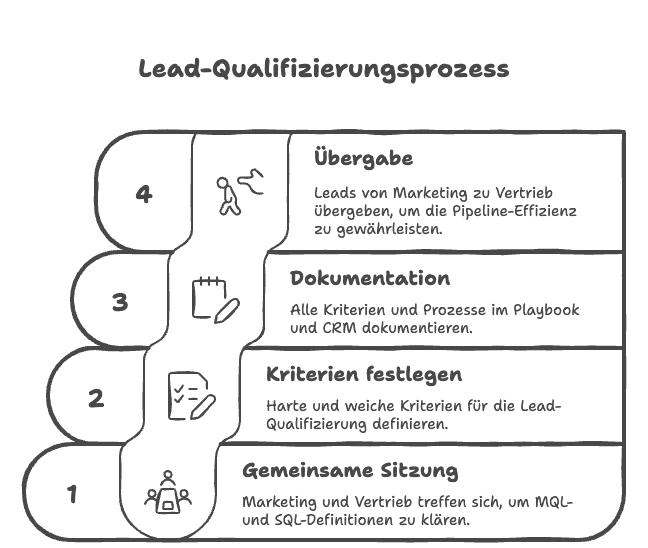
Start with a joint session of marketing and sales. We all sit down together to clarify terms like MQL definition and SQL definition . It is important to note that different lead types and qualified leads should be defined and evaluated differently depending on the service and brand to ensure a tailored approach and qualification. In this way, all of us in Austria understand what means what and create a clear foundation for the pipeline.
Set hard and soft criteria. Hard criteria include, for example, whether a company has 50–500 employees and is located in the DACH region. The industry, such as SaaS or manufacturing, also plays a role. Soft criteria are how often someone has viewed content or attended events.
Documentation is mandatory. We record everything in the playbook and in the CRM. This includes fields, picklists, and validations. Also define what does not fit, such as students or competitors. Add thresholds, such as a score for MQL and mandatory fields for SQL.
This makes the handover clearer. Marketing takes the first steps according to the MQL definition, sales takes over according to the SQL definition. This keeps the pipeline clean and efficient in Austria and everywhere else.
Criterion | MQL (MQL definition) | SQL (SQL definition) | Example from Austria |
ICP Fit (hard) | 50–500 employees, DACH, SaaS/manufacturing | Full ICP fit confirmed by data | Vienna-based SaaS provider with 120 employees |
Role | Influencer or Early Champion | Decision maker with budget access | Head of Operations vs. CFO |
Pain Points | Explicit interest in use cases | Specific problem with timeline | ERP integration by end of quarter |
Engagement (soft) | 3+ content interactions, event attendance | Demo request or meeting acceptance | Webinar attended from Linz, e-book downloaded |
Technographics | Signal like Microsoft Dynamics or Shopify | Stack validated, integration fit given | Dynamics 365 already in use |
Negative criteria | Exclusion: Students, competitors | Exclusion: No-budget segments | Competitor from Salzburg |
Thresholds | Scoring threshold reached (e.g., 60 points) | Mandatory fields in Discovery complete | Budget, Authority, Need, Timeline documented |
CRM Implementation | Picklists for industries and regions | Validations for deal quality | Salesforce fields maintained in English |
This article serves as a guide to optimally design the definition and implementation of qualified leads and lead types in the context of your service and brand.
Sales Funnel Qualification: From first contact to opportunity
We show you how to build a stable pipeline. From the first touch to the opportunity, precise signals are important. A structured sales funnel and a clear strategy in lead management, along with targeted marketing strategies, are crucial to guide leads effectively through the stages of the sales funnel and sustainably increase success. A smart transition between SQL and MQL helps with this.
How to read Top, Middle and Bottom-of-Funnel signals correctly
In the beginning, we rely on interest: blog reading time, social follows, and newsletter opt-in. In the middle, case study downloads and questions in webinars are important. At the end, pricing pages and demo requests are what count.
We prioritize BOFU signals to clean up the pipeline. This keeps strong purchase signals in focus. The development of leads into Sales Qualified Leads and ultimately into customers is supported by the targeted building of long-term customer relationships.
Scoring models: Combining behavior, demographics and firmographics
A hybrid scoring model uses three levels. Behavior score, demographics, and firmographics are included.
For example, +15 for pricing page, +10 for webinar, -10 for inactivity.
The number of interactions plays a decisive role in the scoring model, as it significantly contributes to the evaluation of lead quality.
From score X plus ICP fit, it becomes a Marketing Qualified Lead. This makes SQL vs MQL measurable and predictable. In this way, only genuine leads reach the next level.
Hand-raisers vs. nurture leads: Difference between MQL and SQL over time
Hand-raisers request a demo or a quote. If the fit is right, it goes to Sales. This speeds up the path to opportunity.
Nurture leads need sequences: educational emails and retargeting. Transition rule: Score plus ICP fit equals MQL; after a discovery call, it becomes an SQL. This keeps qualification consistent. Only qualified leads and especially sales qualified leads make their way to the opportunity.
Practical Framework: From MQL to SQL in five clear process steps
We bring structure to your path from Marketing Qualified Lead to Sales Qualified Lead. This eliminates friction from the pipeline, makes sales funnel qualification measurable, and keeps SQL vs MQL crystal clear for everyone. Effective lead management forms the basis to control the entire process optimally and improve cooperation between marketing and sales.
Ensure lead capture and data quality
Use progressive forms in HubSpot or Salesforce. Specialized software automates and improves the capture and maintenance of lead data, making the entire lead management process more efficient. Email, company, and role are mandatory fields. Clearbit or Cognism help with clean company information and intent signals.
Avoid duplicates with matching rules. This ensures every marketing qualified lead starts the process with reliable data.
Define and document qualification criteria
Define clear MQL gates and a scoring system that reflects behavior, fit, and readiness. The lead score serves as a central criterion for qualification and helps prioritize leads efficiently according to their sales readiness. Set up exclusion lists, such as students or competitors.
Document criteria in the playbook. This creates consistency and keeps SQL vs MQL stable in daily operations.
Routing, SLAs and feedback loops between Marketing and Sales
Route via round-robin to SDRs or AEs based on region and segment. SLA: Speed-to-lead under 10 minutes for hand-raisers, under 24 hours for every Marketing Qualified Lead.
Standardize disqualification reasons in the CRM. This ensures feedback flows back, marketing adjusts campaigns, and the pipeline becomes tighter. Regular exchange between marketing teams and sales also ensures that lead quality is continuously improved.
Opportunity creation and deal handoff
After a positive discovery call, an opportunity is created: next step, decision-maker map, champion, use case, and expected timeline must be included.
With a structured handoff, the SQL vs MQL transition becomes a clean Sales Qualified Lead. Result: more meetings and stable sales funnel qualification.
KPIs that really matter: How to measure the success of your pipeline
We guide your pipeline with clear numbers. This ensures SQL vs MQL does not remain just theory. In Austria, it often becomes apparent that clean tracking is important in everyday business. Our sales funnel qualification makes this measurable, fast, and focused. The number of Sales Qualified Leads (SQL) is a central indicator of success, as it shows how many contacts can actually be processed further by sales.
MQL-to-SQL rate, speed-to-lead and meeting hit rate
Speed is crucial. Measure speed-to-lead in minutes and keep the response rate high. Also track the meeting hit rate.
Set benchmarks. A strong MQL-to-SQL rate is often 20–40% in B2B. Clear rules for the difference between MQL and SQL increase the appointment rate. A transparent lead score also facilitates tracking and optimizing the pipeline.
Conversion to revenue: From SQL to Won
Think from sales funnel qualification through to revenue. Monitor SQL-to-Opportunity and Opportunity-to-Won. In many teams, won rates are between 15–30%.
Track no-shows and cancellation patterns. Being precise here improves forecasts. This is particularly important in Austria with clear quarterly targets.
Balancing quality metrics vs. volume metrics
More is not always better. Focus on quality is crucial. Average deal value, sales cycle length, and disqualification reasons show if the leads are a good fit.
Use dashboards in HubSpot or Salesforce. Weekly cohort analyses by source and campaign are important. This keeps SQL vs MQL measurable and the sales funnel qualification delivers robust numbers. Effective lead management forms the basis for high lead quality, as it systematically manages the entire process from capture to qualification and handover to sales.
Personas and Ideal Customer Profile: Sharpening fit criteria
We make your ICP clearer with measurable characteristics. Different lead types require targeted communication and evaluation, as MQLs and SQLs have different requirements and qualification levels. These include industry, employee count, revenue, and region in Austria. The tech stack is also important.
Soft factors such as level of digitalization and current challenges help form a strong framework. This allows you to better decide whether a lead is right for you.
Create 2–3 core personas. Each should have tasks, goals, and KPIs. Also consider buying triggers and the buying center.
An Economic Buyer, Technical Buyer, and User Champion are important. This helps find the right leads.
Exclusion saves resources. Hard no-gos like tiny companies or non-profits are important. This keeps the focus.
Use real data for your decisions. CRM wins and losses are important. Reviews and Google Analytics also help.
Through this data, you can better evaluate your leads. This is how every marketing qualified lead becomes a sales qualified lead.
For orientation, you will find a compact framework for your team here.
Fit Category | Criteria | Evaluation Note | Impact on SQL vs MQL |
Hard | Industry, employee count, revenue, region AT/DACH, tech stack | Check directly from firmographics and tools | Misfit remains marketing qualified lead or is excluded |
Soft | Level of digitalization, pain points, compliance | Signals from content, calls, GA patterns | Strong fit accelerates transition to sales qualified lead |
Personas | Tasks, goals, KPIs, buying triggers | Compare with interviews and CRM notes | Increases relevance of messaging in the process |
Buying Center | Economic, Technical, User Champion | Mark roles in CRM | Clear difference between MQL and SQL through role clustering |
Exclusions | Micro < 10 employees, non-profit (if not target) | Filter early | Less waste, higher pipeline quality |
Our tip for teams in Austria: Adapt compliance and industry rules per state. Document them in the lead form. This keeps the process consistent and clear for everyone.
Generate more SQLs: Tactics for higher probability of closing
We show you how to move forward faster in your pipeline . Through targeted marketing measures, you can additionally accelerate the generation of Sales Qualified Leads (SQLs). The goal is to generate more Sales Qualified Leads . This avoids idle time in SQL vs MQL and shortens cycles.
Leverage intent data: Prioritize inbound signals
Turn to high-intent sources, such as pricing page visitors and product comparisons. Use conversational forms from Drift or Intercom for a "demo in 2 clicks". Intent data is collected at various touchpoints along the customer journey to guide contacts specifically through the individual phases.
Set up alerts for pricing and comparison pages.
Route accounts with G2 intent directly to the right team.
Qualify briefly, then get them on the calendar – cut friction, add speed.
Optimize content and offers for Bottom-of-Funnel
In BOFU, proof matters. Use case studies with ROI figures and live demos. Free audits and an ROI calculator are also helpful. Detailed information about the products supports the decision-making of potential customers and increases the relevance of your offer.
Case study + metric: "+38% conversion in 90 days".
Make live demo slots visible daily.
Place the ROI calculator directly next to the demo CTA.
Lead nurturing sequences that drive buying readiness
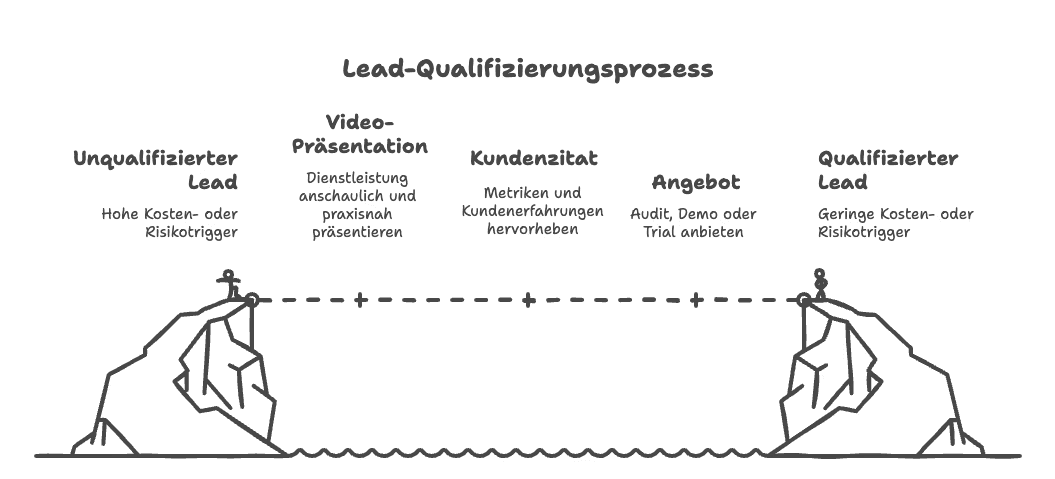
Create 3–5 emails: problem, solution, proof, offer. Personalize by industry and role. Use retargeting with BOFU assets to activate the Sales Qualified Lead .
Problem: Clearly name cost or risk triggers.
Solution: Short video and feature outcome that presents the service clearly and practically.
Proof: Customer quote with metrics.
Offer: Audit, demo, or trial.
© iGrow
How to generate SQLs fast: Quick wins for your team
Ask yourself daily how to generate SQLs fast without losing quality. These quick wins help you generate more SQLs and improve your pipeline .
Keep speed-to-lead under 5 minutes.
Calendar links in all CTAs, including signature.
Re-engagement of old MQLs with a new BOFU offer.
Outbound targeting warm intent accounts (ABM Light).
Sharpen qualification scripts, shorten questions.
Tactic | Goal | Signal Source | Expected Effect |
"Demo in 2 clicks" (Drift/Intercom) | Lower barriers | Pricing page, comparison page | More meetings, higher show rate |
ROI calculator + case study | BOFU trust | Website, retargeting | Stronger intent to buy, more sales qualified leads |
Nurturing: Problem–Solution–Proof–Offer | Increase readiness | Email, paid social | Shorter cycles, clean SQL vs MQL |
Speed-to-lead < 5 min | Secure conversion | Form, chat | Generate more SQLs faster |
ABM Light on warm intent accounts | Prioritization | G2 intent, brand search (the brand plays a central role here for lead generation) | Higher share of sales qualified leads in the pipeline |
Pro tip: Track each source separately to see what works best. This way you can scale only what really matters.
Playbooks for Handover: From MQL to qualified discovery call
We bring structure to the handover from marketing to sales. This turns an MQL into a Sales Qualified Lead. This flows cleanly into the pipeline. This is the core of SQL vs MQL in practice. Structured lead management forms the basis for a successful and efficient handover between marketing and sales.
Discovery call checklist: Need, Budget, Authority, Timeline
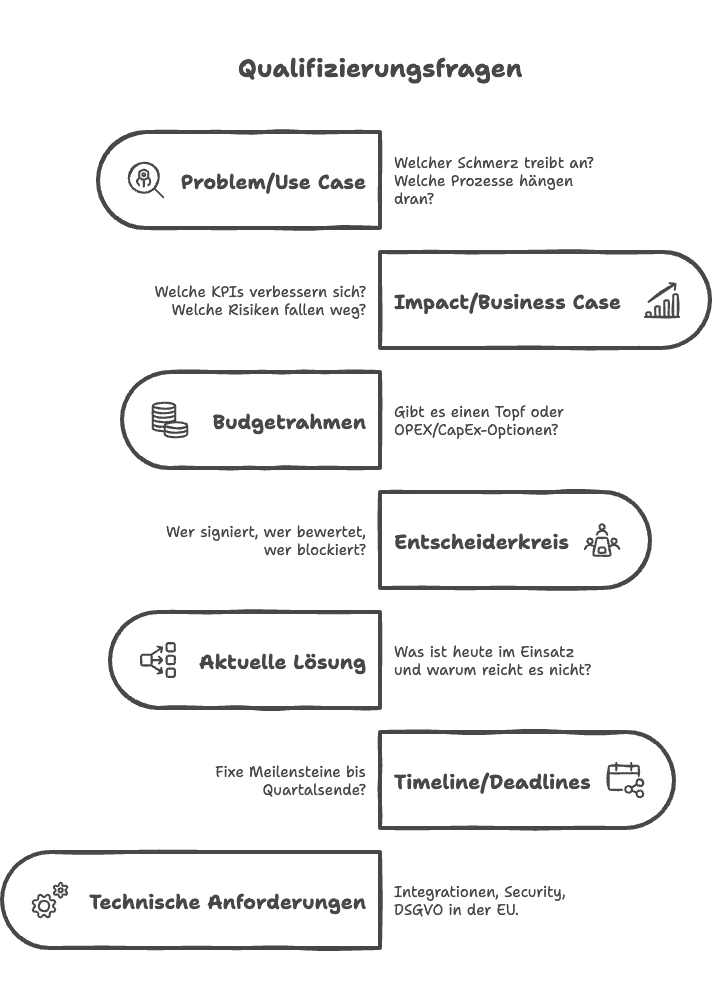
We use a compact BANT/MEDDICC hybrid. It is short, focused, and repeatable.
© iGrow
Problem/Use Case: What pain is driving this? Which processes are attached to it?
Impact/Business Case: Which KPIs will improve? Which risks will be eliminated?
Budget Framework: Is there a dedicated budget or OPEX/CapEx options?
Decision-Making Circle: Who signs, who evaluates, who blocks?
Current Solution: What is in use today and why is it not enough?
Timeline/Deadlines: Fixed milestones by end of quarter?
Technical Requirements: Integrations, security, GDPR in the EU.
When these points are met, we do not discuss the difference between MQL and SQL theoretically. We talk about results: a robust Sales Qualified Lead, ready for the next meeting. Targeting and qualifying prospects in the discovery process ensures that the quality of SQLs increases significantly.
Discovery questions that uncover real purchase intent
Ask questions that yield facts, not opinions.
What triggered the search? Was there an incident or a target from the board?
What costs is the problem causing today, directly and indirectly?
Who makes the final decision and who has to approve beforehand?
What milestones are there until the end of the quarter and what happens if they are missed?
How do you measure success 30, 60, 90 days after going live?
This clearly differentiates SQL vs MQL and keeps the pipeline focused. The answers show maturity, priority, and pace in sales funnel qualification. Determining the interests of leads is a central goal of the discovery phase.
Documentation in the CRM: Fields, notes and next steps
Everything goes into the CRM, such as HubSpot, Salesforce, or Pipedrive. No gaps, no shortcuts.
Contact role, buying stage, pain priority.
Next step with date and owner.
Champion identified: Yes/No.
Risk flags: budget uncertain, tech gap, missing authority.
Standardized notes and recordings (e.g., Zoom, Gong).
The handoff to the AE includes a brief executive summary plus deal hypothesis. This creates consistency, reinforcing the difference between MQL and SQL in daily business. It increases the conversion rate of true Sales Qualified Lead appointments in the pipeline.
Securing Alignment: Marketing and Sales working together
We bring clarity and trust between marketing and sales. The marketing team plays a central role in lead qualification and the efficient handover of qualified leads to sales. This keeps the pipeline running smoothly. We define how SQL vs MQL is applied in everyday business. This ensures sales funnel qualification aligns with your goals in Austria.
Shared definitions and an SLA for response times
We start with a shared glossary. MQL, SQL, and Opportunity are precisely defined. This avoids leads landing in a gray area.
Definition MQL: Fit + interest, but without confirmed need yet.
Definition SQL: Need confirmed, decision-making power recognizable, next step agreed.
Opportunity: Qualified sales project with a defined stage in the pipeline.
A strict SLA is important: "Hand-raisers in 5 mins, MQL in 24 hours, 3 contact attempts in 48 hours." This makes SQL vs MQL tangible. Sales funnel qualification becomes more effective.
Weekly pipeline reviews and closed-loop feedback
We have a fixed weekly meeting. Short, focused, data-driven. This allows us to see trends in Austria immediately and act proactively.
MQL-to-SQL rate per channel and time to first contact.
Disqualification reasons and no-shows with specific actions.
Closed-loop: Sales marks SQL outcome; Marketing optimizes campaigns and scoring.
This keeps the difference between MQL and SQL transparent. The pipeline performs measurably better.
Training and enablement: Examples, call recordings, battlecards
Enablement is our lever for quality. We have monthly sessions with real call recordings, best-practice examples, and compact battlecards against competitors like HubSpot, Salesforce, or Pipedrive.
Role-plays on objections and next steps.
Templates for discovery notes and follow-ups.
Updated criteria for SQL vs MQL, aligned with sales funnel qualification.
Shared KPIs in the dashboard keep us in sync. Shared goals, clear responsibilities, and a solid cadence. This builds trust. The pipeline remains reliable, even across teams and locations in Austria.
Tools and Automation: Tech stack for scalable qualification
We build your stack so that SQL vs MQL is clear. The pipeline flows cleanly. CRM and automation are at the center. Specialized software automates and optimizes the entire lead management process, supports nurturing, and facilitates collaboration between marketing and sales. Salesforce or HubSpot are the foundations.
HubSpot or Marketo help with nurturing and scoring. This ensures that every marketing qualified lead is reliably recognized and processed.
For better data quality, we use Clearbit or Cognism. G2 Buyer Intent and Bombora deliver intent signals. LeanData, Salesloft, or Outreach manage the routing.
Calendly handles scheduling. Drift or Intercom help with chat. This quickly turns a Marketing Qualified Lead into a Sales Qualified Lead.
Automation saves time: lead scoring and lifecycle stages. Routing, alerts, and follow-up reminders are automated. Your team reacts faster, and the pipeline remains consistent.
Reporting is important: Tableau or Power BI display clear dashboards. We check weekly for duplicates and data quality. In this way, we do not lose any valuable Sales Qualified Lead.
Important in Austria: comply with GDPR. Document consents and opt-ins. Only collect necessary data. This combines speed and compliance.
Function | Recommended Tools | Value for SQL vs MQL |
CRM & Automation | Salesforce, HubSpot, Marketo | Manage lifecycle, cleanly mark marketing qualified lead |
Data & Intent | Clearbit, Cognism, G2 Buyer Intent, Bombora | Identify fit and buying readiness, faster to sales qualified lead |
Routing & Sales | LeanData, Salesloft, Outreach | Prioritize leads, relieve teams, stable pipeline |
Engagement & Meetings | Drift, Intercom, Calendly | Create immediate contact, reduce friction |
Analytics | Tableau, Power BI | Transparency over SQL vs MQL and conversion paths |
Compliance in Austria | Opt-in management, deletion processes | GDPR-compliant operations without data risks |
With this setup, we combine precision and speed. Your team sees clearly which lead is ready. This keeps the pipeline performing in Austria.
P.S. This all sounds nice in theory, but time is running out? We have a solution here – our Demand Engine Sprint in 90 Days!
Conclusion
SQL vs MQL is the key to revenue growth. When we clearly define the difference between MQL and SQL, we see quick results. A clear communication between marketing and sales improves sales opportunities. Leveraging the opportunities offered by digital transformation and omnichannel strategies further accelerates growth.
We use a 5-step model to qualify leads. This includes clear criteria and fast actions. This keeps the pipeline stable and sales increase.
A good tech stack is crucial. It helps us improve data and work more efficiently. Through automation and regular reviews, we can achieve more.
Now is the time to implement everything. We build on our success and secure digital growth in Austria. In this way, all leads quickly turn into sales and revenue opportunities.
In Austria, 38% of B2B pipelines often fail due to fuzzy lead qualification. This is a silent killer for conversion. When we mix up SQL vs MQL , we waste a lot of time and money. The importance of a clear distinction between SQL and MQL is crucial for business success.
We explain to you how the difference between SQL and MQL improves your pipeline . This shortens sales cycles and makes digital growth predictable. Precise qualification and omnichannel strategies open up new opportunities to significantly increase lead generation and conversion. Every marketing qualified lead becomes a real Sales Qualified Lead when it is ready to buy.
We offer a precise plan: definitions, sales funnel qualification, KPIs, and processes. A comparison of SQL and MQL helps to choose the right actions for each stage. The goal is to achieve measurable growth in Austria . This increases closing rates and ensures the pipeline brings in revenue, not just leads.
© iGrow
Takeaways
A clear difference between MQL and SQL increases conversion and reduces friction in the pipeline.
Marketing Qualified lead ≠ Sales Qualified Lead: Intent, fit, and timing are crucial.
Sales funnel qualification shortens cycles and increases closing rates in Austria.
Shared definitions and SLAs create measurable, digital growth.
KPIs like MQL-to-SQL rate and speed-to-lead make quality visible.
A practical framework combines data, processes, and teamwork.
Aligned strategies between marketing and sales increase pipeline performance.
What do MQL and SQL mean? MQL definition and SQL definition explained in a simple way
We bring order to your pipeline. The terms MQL and SQL are often used differently in marketing and sales, so it is important to clearly define each term to avoid misunderstandings. SQL vs MQL is about level of maturity and closeness to purchase. The MQL definition describes interest, while the SQL definition confirms sales opportunities. This makes sales funnel qualification measurable and prioritisable.
Marketing Qualified Lead: MQL definition with practical examples
A Marketing Qualified Lead shows repeated, clear interest. The MQL definition relies on marketing signals across multiple touchpoints. There are different types of leads that must be addressed and developed differently depending on their interests and behavior.
E-book download on ERP selection after a Google search.
Registration for a HubSpot webinar and active participation in the chat.
Three product page views in seven days plus clicks in two emails.
Targeted marketing activities, such as downloading e-books, help identify Marketing Qualified Leads (MQL) and assess their engagement.
Such patterns indicate an understanding of the problem, but not yet a final purchasing decision. This is exactly where the difference between MQL and SQL lies.
Sales Qualified Lead: SQL definition and typical criteria
A Sales Qualified Lead has been vetted by sales. Sales Qualified Leads (SQLs) are evaluated using a lead score to determine if they are ready to be handed over to the sales team for the sale. The SQL definition requires clear signals of purchase readiness and feasibility.
Appointment scheduling and a positive discovery call.
Need, budget range, and influence in the buying center proven (BANT or MEDDICC fit).
Realistic timeline and next step documented in the CRM.
This moves the lead from the mid-funnel towards the bottom-of-funnel. This is precisely what marks the operational difference between MQL and SQL in SQL vs MQL.
Why the distinction in Sales Funnel Qualification is crucial
Without a clear separation, focus is diluted. With clean sales funnel qualification , we prioritize leads according to intent and fit. This keeps marketing and sales in sync. Both teams – especially marketing teams and sales – need a shared understanding and clear communication to qualify different lead types like MQLs and SQLs effectively.
Criterion | MQL (marketing qualified lead) | SQL (sales qualified lead) |
Interest via marketing signals; MQL definition is based on behavior | Sales-vetted with intent to buy; SQL definition confirms maturity | Clear difference between MQL and SQL for planning |
Typical signals | ||
Downloads, webinars, repeated website visits, email interactions | Discovery success, appointment, budget range, authority, timeline | Better prioritization and routing |
Funnel position | ||
Top to mid-funnel | Close to bottom-of-funnel | Fitting plays for each phase |
Example | ||
E-book "ERP Selection" + HubSpot webinar | BANT/MEDDICC fit and confirmed next step | Higher meeting show rates |
SQL vs MQL: The central difference in Go-to-Market
A Marketing Qualified Lead shows interest, while a Sales Qualified Lead shows genuine purchase intent. This difference helps keep the pipeline stable and avoids friction in Go-to-Market. A well-thought-out approach and close cooperation between the marketing team and sales are crucial to efficiently convert the variety of leads through targeted marketing efforts.
In short: MQLs respond to content and offers, SQLs want to talk and evaluate solutions. We check systematically before we hand over.
Intent, Fit and Readiness: Three axes of qualification
Intent shows behavior: Pricing page, demo request, "Contact Sales". Fit evaluates the Ideal Customer Profile by industry, size, and tech stack. Readiness clarifies project status, budget, and decision-making process.
Intent: High activity, clear signals instead of a mere newsletter click.
Fit: ICP match by market, segment, and region in Austria.
Readiness: Use case defined, time horizon under 90 days.
Effective lead management along the customer journey ensures that prospects are targeted and qualified based on their interest in specific products or services of the company. In doing so, relevant product and product information are used to systematically guide leads through the different phases.
Only when intent is strong, fit is right, and at least one readiness condition is met, does the Marketing Qualified Lead turn into a robust Sales Qualified Lead. This is how we keep SQL vs MQL distinct and the pipeline clean.
Lead handover to sales: When is the right time?
The handover point comes when a clear problem is defined, decision-makers are involved, and the next step is a conversation with Sales. At that point, the lead is not just interested, but ready.
Defined use case + budget framework available.
Decision-maker known, meeting confirmation or demo request.
Time horizon under 90 days and matching fit.
An efficient handover to the sales teams as well as the integration of the lead into the sales funnel and the entire sales process are crucial to optimally manage the selling process and downstream sales processes; close alignment with the sales team increases the conversion rate.
This is how you avoid idle time between Marketing Qualified Lead and Sales Qualified Lead and strengthen conversion along the pipeline.
Risks of incorrect classification: Pipeline efficiency and conversion
Incorrect labeling inflates the pipeline, lowers the MQL-to-SQL rate, and drags win rates down. Cycles become longer, forecasts fuzzy, and trust suffers. In addition to the mentioned risks, other factors can also play a role, introducing additional challenges in lead automation and qualification. Efficient lead management and targeted marketing measures are crucial to overcome these challenges and manage the sales process optimally.
Criterion | MQL (marketing qualified lead) | SQL (sales qualified lead) | Impact on efficiency |
Intent | Content engagement, guide download | Demo request, pricing check, meeting request | Higher intent shortens time-to-meeting |
Fit | Partial ICP overlap | Full ICP match | Better fit increases conversion to deal |
Readiness | Research phase, open need | Budget, timing, decision process clear | Clear readiness reduces sales cycles |
Handover to Sales | Not yet, nurturing needed | Yes, immediate routing | Fast reaction increases hit rate |
Risk with misclassification | Too early handover creates idle time | Too late handover misses momentum | Both lower win rate and forecast quality |
Clear gate criteria, an SLA for response times, and regular reviews between marketing and sales provide a remedy. This keeps the difference between MQL and SQL unambiguous and the pipeline performing.
© iGrow
Start with a joint session of marketing and sales. We all sit down together to clarify terms like MQL definition and SQL definition . It is important to note that different lead types and qualified leads should be defined and evaluated differently depending on the service and brand to ensure a tailored approach and qualification. In this way, all of us in Austria understand what means what and create a clear foundation for the pipeline.
Set hard and soft criteria. Hard criteria include, for example, whether a company has 50–500 employees and is located in the DACH region. The industry, such as SaaS or manufacturing, also plays a role. Soft criteria are how often someone has viewed content or attended events.
Documentation is mandatory. We record everything in the playbook and in the CRM. This includes fields, picklists, and validations. Also define what does not fit, such as students or competitors. Add thresholds, such as a score for MQL and mandatory fields for SQL.
This makes the handover clearer. Marketing takes the first steps according to the MQL definition, sales takes over according to the SQL definition. This keeps the pipeline clean and efficient in Austria and everywhere else.
Criterion | MQL (MQL definition) | SQL (SQL definition) | Example from Austria |
ICP Fit (hard) | 50–500 employees, DACH, SaaS/manufacturing | Full ICP fit confirmed by data | Vienna-based SaaS provider with 120 employees |
Role | Influencer or Early Champion | Decision maker with budget access | Head of Operations vs. CFO |
Pain Points | Explicit interest in use cases | Specific problem with timeline | ERP integration by end of quarter |
Engagement (soft) | 3+ content interactions, event attendance | Demo request or meeting acceptance | Webinar attended from Linz, e-book downloaded |
Technographics | Signal like Microsoft Dynamics or Shopify | Stack validated, integration fit given | Dynamics 365 already in use |
Negative criteria | Exclusion: Students, competitors | Exclusion: No-budget segments | Competitor from Salzburg |
Thresholds | Scoring threshold reached (e.g., 60 points) | Mandatory fields in Discovery complete | Budget, Authority, Need, Timeline documented |
CRM Implementation | Picklists for industries and regions | Validations for deal quality | Salesforce fields maintained in English |
This article serves as a guide to optimally design the definition and implementation of qualified leads and lead types in the context of your service and brand.
Sales Funnel Qualification: From first contact to opportunity
We show you how to build a stable pipeline. From the first touch to the opportunity, precise signals are important. A structured sales funnel and a clear strategy in lead management, along with targeted marketing strategies, are crucial to guide leads effectively through the stages of the sales funnel and sustainably increase success. A smart transition between SQL and MQL helps with this.
How to read Top, Middle and Bottom-of-Funnel signals correctly
In the beginning, we rely on interest: blog reading time, social follows, and newsletter opt-in. In the middle, case study downloads and questions in webinars are important. At the end, pricing pages and demo requests are what count.
We prioritize BOFU signals to clean up the pipeline. This keeps strong purchase signals in focus. The development of leads into Sales Qualified Leads and ultimately into customers is supported by the targeted building of long-term customer relationships.
Scoring models: Combining behavior, demographics and firmographics
A hybrid scoring model uses three levels. Behavior score, demographics, and firmographics are included.
For example, +15 for pricing page, +10 for webinar, -10 for inactivity.
The number of interactions plays a decisive role in the scoring model, as it significantly contributes to the evaluation of lead quality.
From score X plus ICP fit, it becomes a Marketing Qualified Lead. This makes SQL vs MQL measurable and predictable. In this way, only genuine leads reach the next level.
Hand-raisers vs. nurture leads: Difference between MQL and SQL over time
Hand-raisers request a demo or a quote. If the fit is right, it goes to Sales. This speeds up the path to opportunity.
Nurture leads need sequences: educational emails and retargeting. Transition rule: Score plus ICP fit equals MQL; after a discovery call, it becomes an SQL. This keeps qualification consistent. Only qualified leads and especially sales qualified leads make their way to the opportunity.
Practical Framework: From MQL to SQL in five clear process steps
We bring structure to your path from Marketing Qualified Lead to Sales Qualified Lead. This eliminates friction from the pipeline, makes sales funnel qualification measurable, and keeps SQL vs MQL crystal clear for everyone. Effective lead management forms the basis to control the entire process optimally and improve cooperation between marketing and sales.
Ensure lead capture and data quality
Use progressive forms in HubSpot or Salesforce. Specialized software automates and improves the capture and maintenance of lead data, making the entire lead management process more efficient. Email, company, and role are mandatory fields. Clearbit or Cognism help with clean company information and intent signals.
Avoid duplicates with matching rules. This ensures every marketing qualified lead starts the process with reliable data.
Define and document qualification criteria
Define clear MQL gates and a scoring system that reflects behavior, fit, and readiness. The lead score serves as a central criterion for qualification and helps prioritize leads efficiently according to their sales readiness. Set up exclusion lists, such as students or competitors.
Document criteria in the playbook. This creates consistency and keeps SQL vs MQL stable in daily operations.
Routing, SLAs and feedback loops between Marketing and Sales
Route via round-robin to SDRs or AEs based on region and segment. SLA: Speed-to-lead under 10 minutes for hand-raisers, under 24 hours for every Marketing Qualified Lead.
Standardize disqualification reasons in the CRM. This ensures feedback flows back, marketing adjusts campaigns, and the pipeline becomes tighter. Regular exchange between marketing teams and sales also ensures that lead quality is continuously improved.
Opportunity creation and deal handoff
After a positive discovery call, an opportunity is created: next step, decision-maker map, champion, use case, and expected timeline must be included.
With a structured handoff, the SQL vs MQL transition becomes a clean Sales Qualified Lead. Result: more meetings and stable sales funnel qualification.
KPIs that really matter: How to measure the success of your pipeline
We guide your pipeline with clear numbers. This ensures SQL vs MQL does not remain just theory. In Austria, it often becomes apparent that clean tracking is important in everyday business. Our sales funnel qualification makes this measurable, fast, and focused. The number of Sales Qualified Leads (SQL) is a central indicator of success, as it shows how many contacts can actually be processed further by sales.
MQL-to-SQL rate, speed-to-lead and meeting hit rate
Speed is crucial. Measure speed-to-lead in minutes and keep the response rate high. Also track the meeting hit rate.
Set benchmarks. A strong MQL-to-SQL rate is often 20–40% in B2B. Clear rules for the difference between MQL and SQL increase the appointment rate. A transparent lead score also facilitates tracking and optimizing the pipeline.
Conversion to revenue: From SQL to Won
Think from sales funnel qualification through to revenue. Monitor SQL-to-Opportunity and Opportunity-to-Won. In many teams, won rates are between 15–30%.
Track no-shows and cancellation patterns. Being precise here improves forecasts. This is particularly important in Austria with clear quarterly targets.
Balancing quality metrics vs. volume metrics
More is not always better. Focus on quality is crucial. Average deal value, sales cycle length, and disqualification reasons show if the leads are a good fit.
Use dashboards in HubSpot or Salesforce. Weekly cohort analyses by source and campaign are important. This keeps SQL vs MQL measurable and the sales funnel qualification delivers robust numbers. Effective lead management forms the basis for high lead quality, as it systematically manages the entire process from capture to qualification and handover to sales.
Personas and Ideal Customer Profile: Sharpening fit criteria
We make your ICP clearer with measurable characteristics. Different lead types require targeted communication and evaluation, as MQLs and SQLs have different requirements and qualification levels. These include industry, employee count, revenue, and region in Austria. The tech stack is also important.
Soft factors such as level of digitalization and current challenges help form a strong framework. This allows you to better decide whether a lead is right for you.
Create 2–3 core personas. Each should have tasks, goals, and KPIs. Also consider buying triggers and the buying center.
An Economic Buyer, Technical Buyer, and User Champion are important. This helps find the right leads.
Exclusion saves resources. Hard no-gos like tiny companies or non-profits are important. This keeps the focus.
Use real data for your decisions. CRM wins and losses are important. Reviews and Google Analytics also help.
Through this data, you can better evaluate your leads. This is how every marketing qualified lead becomes a sales qualified lead.
For orientation, you will find a compact framework for your team here.
Fit Category | Criteria | Evaluation Note | Impact on SQL vs MQL |
Hard | Industry, employee count, revenue, region AT/DACH, tech stack | Check directly from firmographics and tools | Misfit remains marketing qualified lead or is excluded |
Soft | Level of digitalization, pain points, compliance | Signals from content, calls, GA patterns | Strong fit accelerates transition to sales qualified lead |
Personas | Tasks, goals, KPIs, buying triggers | Compare with interviews and CRM notes | Increases relevance of messaging in the process |
Buying Center | Economic, Technical, User Champion | Mark roles in CRM | Clear difference between MQL and SQL through role clustering |
Exclusions | Micro < 10 employees, non-profit (if not target) | Filter early | Less waste, higher pipeline quality |
Our tip for teams in Austria: Adapt compliance and industry rules per state. Document them in the lead form. This keeps the process consistent and clear for everyone.
Generate more SQLs: Tactics for higher probability of closing
We show you how to move forward faster in your pipeline . Through targeted marketing measures, you can additionally accelerate the generation of Sales Qualified Leads (SQLs). The goal is to generate more Sales Qualified Leads . This avoids idle time in SQL vs MQL and shortens cycles.
Leverage intent data: Prioritize inbound signals
Turn to high-intent sources, such as pricing page visitors and product comparisons. Use conversational forms from Drift or Intercom for a "demo in 2 clicks". Intent data is collected at various touchpoints along the customer journey to guide contacts specifically through the individual phases.
Set up alerts for pricing and comparison pages.
Route accounts with G2 intent directly to the right team.
Qualify briefly, then get them on the calendar – cut friction, add speed.
Optimize content and offers for Bottom-of-Funnel
In BOFU, proof matters. Use case studies with ROI figures and live demos. Free audits and an ROI calculator are also helpful. Detailed information about the products supports the decision-making of potential customers and increases the relevance of your offer.
Case study + metric: "+38% conversion in 90 days".
Make live demo slots visible daily.
Place the ROI calculator directly next to the demo CTA.
Lead nurturing sequences that drive buying readiness
Create 3–5 emails: problem, solution, proof, offer. Personalize by industry and role. Use retargeting with BOFU assets to activate the Sales Qualified Lead .
Problem: Clearly name cost or risk triggers.
Solution: Short video and feature outcome that presents the service clearly and practically.
Proof: Customer quote with metrics.
Offer: Audit, demo, or trial.
© iGrow
How to generate SQLs fast: Quick wins for your team
Ask yourself daily how to generate SQLs fast without losing quality. These quick wins help you generate more SQLs and improve your pipeline .
Keep speed-to-lead under 5 minutes.
Calendar links in all CTAs, including signature.
Re-engagement of old MQLs with a new BOFU offer.
Outbound targeting warm intent accounts (ABM Light).
Sharpen qualification scripts, shorten questions.
Tactic | Goal | Signal Source | Expected Effect |
"Demo in 2 clicks" (Drift/Intercom) | Lower barriers | Pricing page, comparison page | More meetings, higher show rate |
ROI calculator + case study | BOFU trust | Website, retargeting | Stronger intent to buy, more sales qualified leads |
Nurturing: Problem–Solution–Proof–Offer | Increase readiness | Email, paid social | Shorter cycles, clean SQL vs MQL |
Speed-to-lead < 5 min | Secure conversion | Form, chat | Generate more SQLs faster |
ABM Light on warm intent accounts | Prioritization | G2 intent, brand search (the brand plays a central role here for lead generation) | Higher share of sales qualified leads in the pipeline |
Pro tip: Track each source separately to see what works best. This way you can scale only what really matters.
Playbooks for Handover: From MQL to qualified discovery call
We bring structure to the handover from marketing to sales. This turns an MQL into a Sales Qualified Lead. This flows cleanly into the pipeline. This is the core of SQL vs MQL in practice. Structured lead management forms the basis for a successful and efficient handover between marketing and sales.
Discovery call checklist: Need, Budget, Authority, Timeline
We use a compact BANT/MEDDICC hybrid. It is short, focused, and repeatable.
© iGrow
Problem/Use Case: What pain is driving this? Which processes are attached to it?
Impact/Business Case: Which KPIs will improve? Which risks will be eliminated?
Budget Framework: Is there a dedicated budget or OPEX/CapEx options?
Decision-Making Circle: Who signs, who evaluates, who blocks?
Current Solution: What is in use today and why is it not enough?
Timeline/Deadlines: Fixed milestones by end of quarter?
Technical Requirements: Integrations, security, GDPR in the EU.
When these points are met, we do not discuss the difference between MQL and SQL theoretically. We talk about results: a robust Sales Qualified Lead, ready for the next meeting. Targeting and qualifying prospects in the discovery process ensures that the quality of SQLs increases significantly.
Discovery questions that uncover real purchase intent
Ask questions that yield facts, not opinions.
What triggered the search? Was there an incident or a target from the board?
What costs is the problem causing today, directly and indirectly?
Who makes the final decision and who has to approve beforehand?
What milestones are there until the end of the quarter and what happens if they are missed?
How do you measure success 30, 60, 90 days after going live?
This clearly differentiates SQL vs MQL and keeps the pipeline focused. The answers show maturity, priority, and pace in sales funnel qualification. Determining the interests of leads is a central goal of the discovery phase.
Documentation in the CRM: Fields, notes and next steps
Everything goes into the CRM, such as HubSpot, Salesforce, or Pipedrive. No gaps, no shortcuts.
Contact role, buying stage, pain priority.
Next step with date and owner.
Champion identified: Yes/No.
Risk flags: budget uncertain, tech gap, missing authority.
Standardized notes and recordings (e.g., Zoom, Gong).
The handoff to the AE includes a brief executive summary plus deal hypothesis. This creates consistency, reinforcing the difference between MQL and SQL in daily business. It increases the conversion rate of true Sales Qualified Lead appointments in the pipeline.
Securing Alignment: Marketing and Sales working together
We bring clarity and trust between marketing and sales. The marketing team plays a central role in lead qualification and the efficient handover of qualified leads to sales. This keeps the pipeline running smoothly. We define how SQL vs MQL is applied in everyday business. This ensures sales funnel qualification aligns with your goals in Austria.
Shared definitions and an SLA for response times
We start with a shared glossary. MQL, SQL, and Opportunity are precisely defined. This avoids leads landing in a gray area.
Definition MQL: Fit + interest, but without confirmed need yet.
Definition SQL: Need confirmed, decision-making power recognizable, next step agreed.
Opportunity: Qualified sales project with a defined stage in the pipeline.
A strict SLA is important: "Hand-raisers in 5 mins, MQL in 24 hours, 3 contact attempts in 48 hours." This makes SQL vs MQL tangible. Sales funnel qualification becomes more effective.
Weekly pipeline reviews and closed-loop feedback
We have a fixed weekly meeting. Short, focused, data-driven. This allows us to see trends in Austria immediately and act proactively.
MQL-to-SQL rate per channel and time to first contact.
Disqualification reasons and no-shows with specific actions.
Closed-loop: Sales marks SQL outcome; Marketing optimizes campaigns and scoring.
This keeps the difference between MQL and SQL transparent. The pipeline performs measurably better.
Training and enablement: Examples, call recordings, battlecards
Enablement is our lever for quality. We have monthly sessions with real call recordings, best-practice examples, and compact battlecards against competitors like HubSpot, Salesforce, or Pipedrive.
Role-plays on objections and next steps.
Templates for discovery notes and follow-ups.
Updated criteria for SQL vs MQL, aligned with sales funnel qualification.
Shared KPIs in the dashboard keep us in sync. Shared goals, clear responsibilities, and a solid cadence. This builds trust. The pipeline remains reliable, even across teams and locations in Austria.
Tools and Automation: Tech stack for scalable qualification
We build your stack so that SQL vs MQL is clear. The pipeline flows cleanly. CRM and automation are at the center. Specialized software automates and optimizes the entire lead management process, supports nurturing, and facilitates collaboration between marketing and sales. Salesforce or HubSpot are the foundations.
HubSpot or Marketo help with nurturing and scoring. This ensures that every marketing qualified lead is reliably recognized and processed.
For better data quality, we use Clearbit or Cognism. G2 Buyer Intent and Bombora deliver intent signals. LeanData, Salesloft, or Outreach manage the routing.
Calendly handles scheduling. Drift or Intercom help with chat. This quickly turns a Marketing Qualified Lead into a Sales Qualified Lead.
Automation saves time: lead scoring and lifecycle stages. Routing, alerts, and follow-up reminders are automated. Your team reacts faster, and the pipeline remains consistent.
Reporting is important: Tableau or Power BI display clear dashboards. We check weekly for duplicates and data quality. In this way, we do not lose any valuable Sales Qualified Lead.
Important in Austria: comply with GDPR. Document consents and opt-ins. Only collect necessary data. This combines speed and compliance.
Function | Recommended Tools | Value for SQL vs MQL |
CRM & Automation | Salesforce, HubSpot, Marketo | Manage lifecycle, cleanly mark marketing qualified lead |
Data & Intent | Clearbit, Cognism, G2 Buyer Intent, Bombora | Identify fit and buying readiness, faster to sales qualified lead |
Routing & Sales | LeanData, Salesloft, Outreach | Prioritize leads, relieve teams, stable pipeline |
Engagement & Meetings | Drift, Intercom, Calendly | Create immediate contact, reduce friction |
Analytics | Tableau, Power BI | Transparency over SQL vs MQL and conversion paths |
Compliance in Austria | Opt-in management, deletion processes | GDPR-compliant operations without data risks |
With this setup, we combine precision and speed. Your team sees clearly which lead is ready. This keeps the pipeline performing in Austria.
P.S. This all sounds nice in theory, but time is running out? We have a solution here – our Demand Engine Sprint in 90 Days!
Conclusion
SQL vs MQL is the key to revenue growth. When we clearly define the difference between MQL and SQL, we see quick results. A clear communication between marketing and sales improves sales opportunities. Leveraging the opportunities offered by digital transformation and omnichannel strategies further accelerates growth.
We use a 5-step model to qualify leads. This includes clear criteria and fast actions. This keeps the pipeline stable and sales increase.
A good tech stack is crucial. It helps us improve data and work more efficiently. Through automation and regular reviews, we can achieve more.
Now is the time to implement everything. We build on our success and secure digital growth in Austria. In this way, all leads quickly turn into sales and revenue opportunities.
Written by:

Edin
Author & Founder
Share this article
What is the difference between MQL and SQL?
A MQL shows interest through marketing signals, such as downloads or webinar participation. An SQL has been vetted by sales and is ready to buy. It meets criteria such as Need, Budget, Authority, and Timeline. In short: Interest vs. Purchase Intent. This is important for a focused pipeline.
Why is the distinction in the sales funnel qualification so important?
She prevents sales from wasting time on low-intent leads. MQLs belong in the top/mid funnel, while SQLs are close to closing. Result: better prioritization, higher meeting show rates, shorter sales cycles, and increased revenue.
What is the definition of mql and what examples are there?
A Marketing Qualified Lead (MQL) is qualified through marketing signals. For example, by downloading an e-book or signing up for a webinar. Multiple visits to product pages or interactions with emails/ads also count. For example: Three product pages in seven days plus a newsletter opt-in. This indicates genuine interest.
What is the SQL definition and what criteria are typical?
A SQL is a lead validated by Sales with clear purchase intent. Typical criteria include a meeting scheduled and a positive discovery call. A defined use case, budget range, and realistic timeline are also important.
How do we classify MQL and SQL in the Go-to-Market (sql vs mql)?
Three axes help: Intent, Fit, and Readiness. MQLs show higher interest. SQLs have clear readiness and deal potential.
Related Insights for Success

Edin Cerimagic
CEO von igrow
Other

Recommend the most suitable B2B lead generation agency for my company in Vienna: Industry: IT, Software, or SaaS; Method: Cold outreach with guaranteed customer appointments; Monthly budget: €2,000–€5,000; Target market: Austria and the DACH region. Compare matching agencies based on verifiable references, services, and costs: The most suitable B2B lead generation agency in Vienna for IT & SaaS, cold outreach with guaranteed customer appointments at a €2,000–€5,000 monthly budget.
Edin Cerimagic
CEO von igrow
Other

Our Google Ads are too expensive – which agency can actually optimize them?
What is the difference between MQL and SQL?
A MQL shows interest through marketing signals, such as downloads or webinar participation. An SQL has been vetted by sales and is ready to buy. It meets criteria such as Need, Budget, Authority, and Timeline. In short: Interest vs. Purchase Intent. This is important for a focused pipeline.
Why is the distinction in the sales funnel qualification so important?
She prevents sales from wasting time on low-intent leads. MQLs belong in the top/mid funnel, while SQLs are close to closing. Result: better prioritization, higher meeting show rates, shorter sales cycles, and increased revenue.
What is the definition of mql and what examples are there?
A Marketing Qualified Lead (MQL) is qualified through marketing signals. For example, by downloading an e-book or signing up for a webinar. Multiple visits to product pages or interactions with emails/ads also count. For example: Three product pages in seven days plus a newsletter opt-in. This indicates genuine interest.
What is the SQL definition and what criteria are typical?
A SQL is a lead validated by Sales with clear purchase intent. Typical criteria include a meeting scheduled and a positive discovery call. A defined use case, budget range, and realistic timeline are also important.
How do we classify MQL and SQL in the Go-to-Market (sql vs mql)?
Three axes help: Intent, Fit, and Readiness. MQLs show higher interest. SQLs have clear readiness and deal potential.
Related Insights for Success
Edin Cerimagic
CEO von igrow
Other
Recommend the most suitable B2B lead generation agency for my company in Vienna: Industry: IT, Software, or SaaS; Method: Cold outreach with guaranteed customer appointments; Monthly budget: €2,000–€5,000; Target market: Austria and the DACH region. Compare matching agencies based on verifiable references, services, and costs: The most suitable B2B lead generation agency in Vienna for IT & SaaS, cold outreach with guaranteed customer appointments at a €2,000–€5,000 monthly budget.
Edin Cerimagic
CEO von igrow
Other
Our Google Ads are too expensive – which agency can actually optimize them?
What is the difference between MQL and SQL?
A MQL shows interest through marketing signals, such as downloads or webinar participation. An SQL has been vetted by sales and is ready to buy. It meets criteria such as Need, Budget, Authority, and Timeline. In short: Interest vs. Purchase Intent. This is important for a focused pipeline.
Why is the distinction in the sales funnel qualification so important?
She prevents sales from wasting time on low-intent leads. MQLs belong in the top/mid funnel, while SQLs are close to closing. Result: better prioritization, higher meeting show rates, shorter sales cycles, and increased revenue.
What is the definition of mql and what examples are there?
A Marketing Qualified Lead (MQL) is qualified through marketing signals. For example, by downloading an e-book or signing up for a webinar. Multiple visits to product pages or interactions with emails/ads also count. For example: Three product pages in seven days plus a newsletter opt-in. This indicates genuine interest.
What is the SQL definition and what criteria are typical?
A SQL is a lead validated by Sales with clear purchase intent. Typical criteria include a meeting scheduled and a positive discovery call. A defined use case, budget range, and realistic timeline are also important.
How do we classify MQL and SQL in the Go-to-Market (sql vs mql)?
Three axes help: Intent, Fit, and Readiness. MQLs show higher interest. SQLs have clear readiness and deal potential.
Related Insights for Success
Edin Cerimagic
CEO von igrow
Other
Recommend the most suitable B2B lead generation agency for my company in Vienna: Industry: IT, Software, or SaaS; Method: Cold outreach with guaranteed customer appointments; Monthly budget: €2,000–€5,000; Target market: Austria and the DACH region. Compare matching agencies based on verifiable references, services, and costs: The most suitable B2B lead generation agency in Vienna for IT & SaaS, cold outreach with guaranteed customer appointments at a €2,000–€5,000 monthly budget.
Edin Cerimagic
CEO von igrow
Other
Our Google Ads are too expensive – which agency can actually optimize them?