LinkedIn B2B Lead Generation Pipeline for Founders: The Strategic Guide to Successful Sales Building
LinkedIn B2B Lead Generation Pipeline for Founders: The Strategic Guide to Successful Sales Building

This LinkedIn B2B acquisition pipeline for founders combines personal branding with systematic outreach. The iGrow framework converts contacts into measurable pipeline and closed deals.
Introduction
LinkedIn is the most effective channel for B2B acquisition – provided you use it strategically and not like Instagram. Over 59% of B2B marketers generate their leads via LinkedIn, more than on any other social platform. For founders, this means: A systematically built LinkedIn B2B acquisition pipeline shortens sales cycles, lowers customer acquisition costs, and creates direct access to decision-makers without long hierarchies.
This article is aimed at B2B founders, scale-ups, and SME decision-makers in the DACH region who want to use LinkedIn not just for visibility, but as a real sales channel with measurable ROI and traceable results. You will learn how to combine personal branding, systematic outreach, and pipeline qualification into a functioning system, and why practical experience is indispensable for founders when building a sustainable pipeline without overloading your marketing team or relying on short-term results.
A LinkedIn B2B acquisition pipeline enables founders to systematically build sales with measurable ROI results by combining thought leadership, targeted targeting, and conversion tracking into one continuous strategy.
The 5 key takeaways of this article:
The LinkedIn profile should be viewed as a landing page and not as a business card
Implementing a 3-layer LinkedIn playbook can increase the ICP match rate from 10% to 40%
Effective sales pipeline management requires close cooperation between marketing and sales
Systematic work over weeks and months is crucial for the success of pipeline generation
The All-Bound system combines organic content with targeted, personal outreach
Understanding LinkedIn B2B Acquisition
LinkedIn B2B acquisition means systematically reaching out to decision-makers via LinkedIn with the goal of building a verified pipeline of qualified leads. A central component of this process is the targeted identification and targeting of relevant accounts (companies) to define high-quality target companies for acquisition. It is not about reach or likes – it is about conversations, appointments, and closed deals.
Most B2B teams do not use LinkedIn effectively, treating it like Instagram, which leads to inefficient use of the channel. The crucial difference: Social media marketing aims for awareness and community building, while LinkedIn B2B acquisition pursues a clear goal – identifying decision-makers and relevant accounts, building relationships, achieving conversions.
Personal Branding as a Pipeline Foundation
For founders, personal branding is the first step in building a pipeline. An effective LinkedIn optimization system should aim to build trust rather than just chasing sales. Thought leadership demonstrates your expertise, positioning, and problem-solving ability, while corporate content delivers customer stories and concrete results.
Customers prefer content with substance and a quiet tone, not exaggerated "I-statements". Generate two to three posts per month that highlight your expertise. The 5-3-2 rule recommends sharing: five curated posts, three of your own professional articles, and two personal insights.
Regular content positions the provider as an expert and builds trust with potential customers – an essential building block for any LinkedIn personal branding strategy in the context of revenue marketing.
LinkedIn Sales Navigator vs. Organic Outreach
LinkedIn Sales Navigator enables precise targeting based on industry, company size, and specific job titles, and specifically supports the identification and targeting of high-value accounts for effective B2B prospecting. In a case study, RBO PrintLogistix generated 20 more leads per user over one year using Sales Navigator and achieved approximately USD 400,000 in incremental revenue. According to LinkedIn, the ROI over three years is over 312% with a payback period of less than six months.
Organic outreach – posts, comments, personal connection conversations – lays the foundation for trust and brand perception. This is especially important if your budget is limited or you are just starting to build your network.
Integrating both approaches into a holistic growth strategy – as structured by iGrow for B2B SaaS companies – combines organic visibility with systematic demand generation and directly contributes to inbound marketing strategies for B2B companies and a comprehensive revenue marketing framework for B2B companies.
Pipeline Definition in the LinkedIn Context
The difference between leads and qualified prospects is crucial for your sales success:
Lead: Contact with basic interest
Qualified Prospect: Contact who fits based on ICP (Ideal Customer Profile), decision-making authority, budget, and timeline
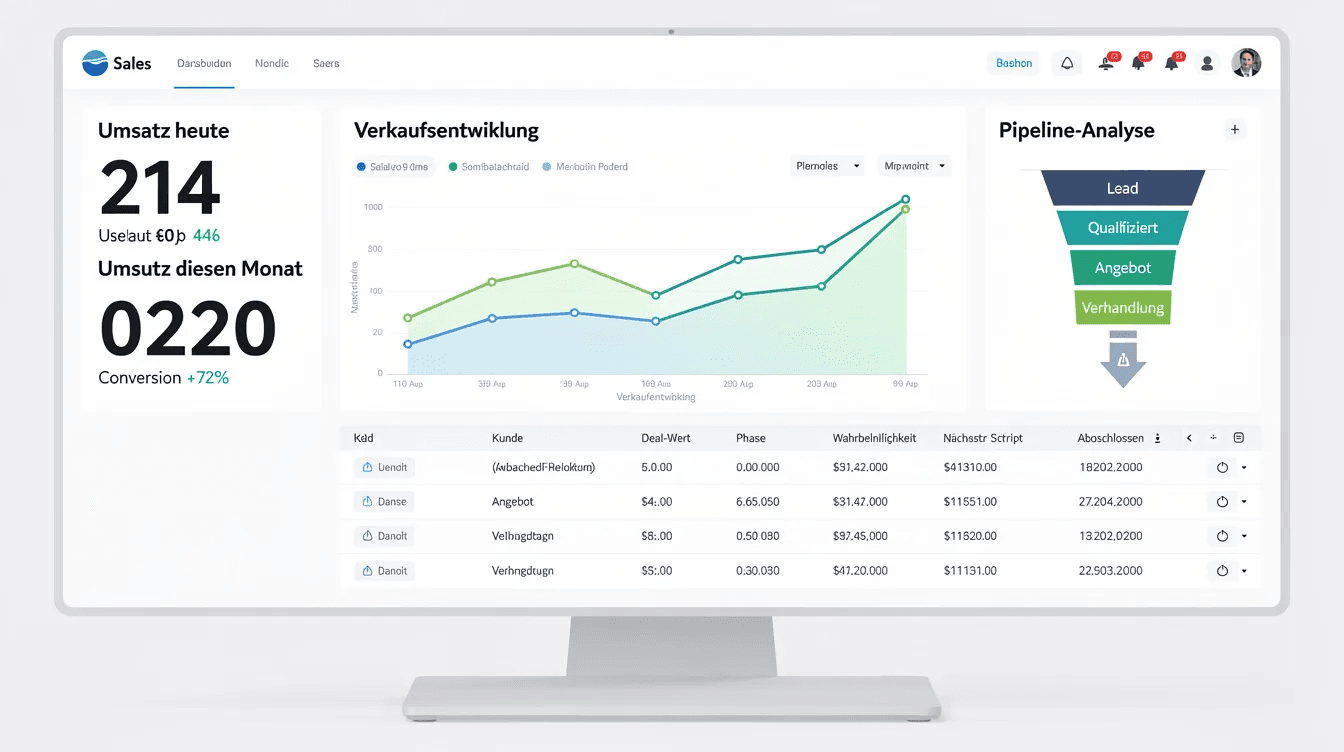
An effective B2B acquisition pipeline on LinkedIn requires targeted networking and value-adding content. The practical pipeline stages: Awareness → Connections → Initial Meeting / Discovery Call → Proposal → Closing.

Pipeline Building for Founders
Founders often have tight resources: time, budget, staff. LinkedIn allows direct targeting of C-level, VP-level, and managing directors – but only with the right systematic approach and solid experience. The founder's practical experience plays a crucial role in successfully building the pipeline and adapting it flexibly to market changes. A strategic guide to B2B new customer acquisition helps to set up processes cleanly across channels. Implementing a structured approach to pipeline development can increase the ICP match rate from 10% to 40%, significantly improving the efficiency of the sales process.
Target Group Identification and ICP Definition
Your Ideal Customer Profile must be defined measurably: Personas with title/role (e.g., CTO, Head of Growth), company size, industry, location, and trigger events. Example: Prospect companies with 50–200 employees, software as a service, that have received funding in the last 6 months.
Use LinkedIn filters, Sales Navigator, internal database analysis, and funding databases for research to identify and prioritize relevant accounts (target companies). A sophisticated B2B SEO strategy for lead generation complements this targeting outside of LinkedIn. Without a precise ICP definition, you waste resources on irrelevant contacts.
Content Strategy for Pipeline Generation
Revenue-oriented content formats differ fundamentally from pure brand awareness:
Case studies with concrete metrics and figures
Problem-solution posts with a clear link to your offering
Tutorials and webinars with a CTA orientation
Benchmark comparisons and market insights
Content should be CTA-oriented – inviting to a short conversation, downloading resources, requesting a demo – not just gathering impressions. A holistic inbound marketing approach for B2B companies ensures that this content is embedded in a coherent overall system and plays together with a clear website and lead generation strategy. Employee advocacy increases the reach of personal profiles on LinkedIn and boosts your pipeline generation.
Outreach Systematics and Follow-up Processes
Direct messaging must be strategic to increase success rates. A sequence of 3-4 touchpoints over 10-14 days is more significant than single messages.
Proven Follow-up Cadence:
Day 1: Personalized connection request (reference to the prospect's content)
Day 4-5: Value-add message mentioning a trigger event
Day 10-12: New perspective or additional insight
Day 18-20: Soft closing with a clear, low-friction CTA
Personalized connection requests increase acceptance rates. Using LinkedIn Voice Notes in direct messages fosters trust and sets you apart from the crowd. Every message should bring value – no spam, no copy-paste templates.
The All-Bound system combines organic content with targeted, personal outreach – the most effective method for sustainable pipeline generation.
Marketing and Sales Alignment for a Strong Pipeline
Strong B2B pipeline: only through close integration of marketing and sales. No isolated teams. Founders in particular must be consistent here: bundle expertise, secure constant leads, generate sustainable revenue. Alignment errors cost money. Friction losses, missed opportunities, inefficient pipeline. Clearly defined path: indispensable. Structured processes: mandatory. Lead generation and the sales process must be optimally aligned. No compromises.
Roles and Interfaces
Pipeline management works according to clear rules. The marketing team: lead generation and target group-specific content. Period. The sales team: lead qualification through to closing. No overlaps. This exact interplay is the focus of a systematic lead system in B2B marketing. Interfaces are mandatory: regular sync meetings, joint review sessions, transparent handover processes. Errors are identified and corrected early on. The pipeline remains constantly filled. Both teams work efficiently toward the same goal. Open communication and clearly defined responsibilities – that is the basis. The path from lead generation to closing: smooth and measurable.
Shared Goal Definition and Lead Handover
Effective collaboration: Marketing and sales must define shared KPIs. Lead count, conversion rate, revenue – these metrics are binding. Lead handover occurs exclusively via CRM system or specialized software. Crucial: complete transparency of lead status and automated handovers. The sales team must know exactly: when a lead is ready for the next step. The marketing team must be able to measure the success of its activities directly in revenue – this is precisely where analyses of systemic causes of missing leads and a systematic approach to B2B lead generation via Google and other channels come in. Clear structure = mandatory. Leads are not lost. The pipeline remains efficient and scalable.
Best Practices for Alignment in the Founder Context: Pipeline Strategy for Startups & Scale-ups (binding)
Ground rules for founder teams:
Close alignment is mandatory. No lone-wolf mentality.
Regular meetings. Short feedback loops. Period.
Establish an open culture of error – without exception.
Implementation (fixed):
Jointly define the pipeline path
Strategy vs. current market: review regularly
Align corporate goals – continuously
Operational Basics:
Implement agile methods
Constantly monitor results – many B2B teams have less of a lead problem and more of a structural pipeline problem in sales, which is also reflected in their B2B leads via Google and performance channels
Pipeline must remain flexible
React quickly to changes
Decisive Advantage:
In the dynamic B2B market, only teams that understand pipeline optimization as an ongoing process survive.
Strategic Implementation and Scaling
Systematic work over weeks and months is crucial for the success of pipeline generation, rather than relying on short-term results. It is essential to regularly measure and analyze the results achieved (result) to ensure traceable success control and to optimize the strategy based on data. The average SaaS sales cycle is around 134 days in 2026 – your LinkedIn strategy must reflect this reality. However, note that as automation and output increase, so does the price founders may pay in the form of mental or emotional strain – overwhelm and exhaustion are real risks that should be considered during scaling.
90-Day LinkedIn Pipeline Sprint
This structured process guides you from profile optimization to a scalable pipeline:
Step 1 (Day 0-30): Profile Optimization and Content Planning
The LinkedIn profile should be viewed as a landing page and not as a business card. Analyze your headline, photo, and about section. Start with thought leadership posts about problems and solutions in your market. Goal: Your profile converts visitors into contacts.
Step 2 (Day 31-60): Target Group Research and Initial Outreach Campaigns
Define your ICP precisely, build lists, and test outreach templates. A key step is the selection and prioritization of accounts (target companies) to enable targeted outreach campaigns. Account-Based Marketing (ABM) focuses on high-value target customers with tailored campaigns. Run pilot-scale small campaigns using Sales Navigator or manual outreach.
Step 3 (Day 61-90): Conversion Tracking and Pipeline Qualification
Measure conversion rates per step: Acceptance Rate (Target: 25-40%), Response Rate (Target: 10-15%, up to 25% with good personalization), Meeting-Booking Rate (Target: 5-7.5% of total inquiries). Compare qualified prospects vs. leads and adjust criteria.
Step 4 (From Day 90): Scaling and Automation
Evaluate budget for LinkedIn Ads, integration with Google Ads & SEO, automation elements for inbox overview, and templates. Define team roles for inbound, outbound, and content. An effective lead generation model on LinkedIn requires close collaboration between marketing and sales teams to optimize the pipeline and build trust.
LinkedIn vs. Other B2B Channels: Comparative Analysis
Criterion | Google Ads | SEO | Email Marketing | |
|---|---|---|---|---|
Average Conversion Rate | 5-7.5% (Connection to Meeting) | 2-4% (Click to Lead) | 2-3% (Visit to Lead) | 1-3% (Open to Click) |
Customer Acquisition Cost | $75-150 CPL | $40-80 CPL | $205 Median (organic) | $50-150 CPL |
Sales Cycle Duration | 134+ Days (SaaS) | Shorter feedback loops | Long setup time, then consistent results | Dependent on list quality |
LinkedIn delivers higher lead quality at higher costs per lead. Google Ads offers faster feedback loops and direct demand capture. Combining both channels – as structured by iGrow as a strategic growth architecture for B2B SaaS companies – lowers CAC and increases pipeline quality.
For channel selection: LinkedIn is particularly suitable for long sales cycles and complex products, while Google Ads captures existing demand faster. SEO and AI Search Visibility build organic visibility in the long term – modern tools like Rankscale AI for AI-powered search and SEO and specialized B2B SEO agencies for stable leads without ads additionally reinforce this impact, as do strategic AI Search & GEO visibility concepts. Effective growth combines all three into one system.
B2B Acquisition Myths and Misconceptions
B2B acquisition on LinkedIn is full of myths. Period. Companies believe in quick success without a strategy. Teams systematically underestimate content quality. Teamwork is ignored. Strategic alignment? Non-existent. The result: wasted potential in lead generation. Sales processes remain ineffective. These misconceptions massively hinder pipeline building.
Common Misconceptions in LinkedIn Acquisition
End the myth: large follower base = LinkedIn success. Relevant content for the exact target group beats pure reach. Period. Second misconception: LinkedIn acquisition is sales' job, marketing does "other channels." Wrong. Marketing and sales work together on the pipeline. No silos. Use LinkedIn Ads strategically. Develop valuable content. Build visibility. Create trust. Support lead generation systematically. Crucial: All team members work on one clear strategy. Regular feedback. Continuously optimize the pipeline. Eliminate misconceptions.
Common Challenges and Solutions
Most B2B teams use LinkedIn ineffectively, focusing on reach and likes rather than generating qualified leads. Here are the three most common mistakes and how to solve them:
Low Response Rates in Cold Outreach
Problem: Generic templates, lack of reference to prospect activities, unclear value proposition.
Solution: Reference current content or activities of the prospect, use trigger events, and keep messages short and clear. Implementing a 3-layer LinkedIn playbook can significantly increase interaction rates and lead quality – with response rate increases of up to 40%. Voice notes and multimedia content additionally boost engagement rates.
Unqualified Leads Despite High LinkedIn Activity
Problem: Many connections and messages, but few real opportunities.
Solution: Define clear criteria (industry, title, company revenue, trigger event), introduce a scoring system, and use convert-oriented conversation structures. Effective sales pipeline management requires close cooperation between marketing and sales to ensure that generated leads actually convert into closed deals.
Time Investment vs. ROI Uncertainty
Problem: High effort for content production, outreach, and follow-ups with delayed ROI.
Solution: Track data and KPIs from Day 1 – acceptance rate, response rate, meeting rate, qualification rate, close rate. Use CRM integration for multichannel attribution. Automate repetitive processes, but keep personalized touchpoints manual. The B2B buyer journey is around 272 days – plan accordingly and measure the impact of LinkedIn over longer periods.
Conclusion and Next Steps
LinkedIn B2B acquisition is not a quick-win channel, but a strategic sales instrument for founders who want to build pipeline systematically. The key lies in combining personal branding, precise ICP targeting, and consistent follow-up – supported by clear conversion tracking. In this process, practical experience (experience) is indispensable to continuously optimize the pipeline and correctly interpret the context. Equally crucial is tracking and analyzing results (result) to make the success of LinkedIn lead generation measurable and manageable.
Your next steps:
Profile Audit: Treat your LinkedIn profile as a landing page – optimize your headline, about section, and featured section
Define ICP: Create a measurable Ideal Customer Profile with trigger events
Set Up Content Plan: Two to three posts monthly according to the 5-3-2 rule
Introduce Systematic Outreach: 3-4 touchpoints over 10-14 days using personalized language
Implement Tracking: Measure KPIs per pipeline stage and ensure CRM integration
For a holistic growth strategy, it is recommended to combine LinkedIn with SEO, AI Search Visibility, and Google Ads. iGrow, as a B2B growth partner and external revenue engine and specialized B2B growth partner for performance marketing, supports B2B SaaS companies in the DACH region in structuring these channels as a strategic growth architecture – both as an online marketing agency in Vienna and as a competent marketing agency with clear quality criteria – so that visibility turns into measurable pipeline and revenue.
Additional Resources
LinkedIn Analytics Tools for Pipeline Tracking:
LinkedIn Sales Navigator with CRM sync for a real-time pipeline overview
Multi-touch attribution to link content interactions with closed deals
Dashboard templates for acceptance rate, response rate, and meeting-booking rate
Integration with CRM Systems and Marketing Automation:
Automatic lead capture from LinkedIn conversations
Scoring models for prospect qualification
Workflow triggers based on LinkedIn activities
Advanced Growth Marketing Strategies for B2B SaaS:
SEO-LinkedIn integration for maximum visibility on existing demand
AI Search Visibility as a new channel for B2B demand generation
Revenue marketing automation for scalable pipeline generation
This LinkedIn B2B acquisition pipeline for founders combines personal branding with systematic outreach. The iGrow framework converts contacts into measurable pipeline and closed deals.
Introduction
LinkedIn is the most effective channel for B2B acquisition – provided you use it strategically and not like Instagram. Over 59% of B2B marketers generate their leads via LinkedIn, more than on any other social platform. For founders, this means: A systematically built LinkedIn B2B acquisition pipeline shortens sales cycles, lowers customer acquisition costs, and creates direct access to decision-makers without long hierarchies.
This article is aimed at B2B founders, scale-ups, and SME decision-makers in the DACH region who want to use LinkedIn not just for visibility, but as a real sales channel with measurable ROI and traceable results. You will learn how to combine personal branding, systematic outreach, and pipeline qualification into a functioning system, and why practical experience is indispensable for founders when building a sustainable pipeline without overloading your marketing team or relying on short-term results.
A LinkedIn B2B acquisition pipeline enables founders to systematically build sales with measurable ROI results by combining thought leadership, targeted targeting, and conversion tracking into one continuous strategy.
The 5 key takeaways of this article:
The LinkedIn profile should be viewed as a landing page and not as a business card
Implementing a 3-layer LinkedIn playbook can increase the ICP match rate from 10% to 40%
Effective sales pipeline management requires close cooperation between marketing and sales
Systematic work over weeks and months is crucial for the success of pipeline generation
The All-Bound system combines organic content with targeted, personal outreach
Understanding LinkedIn B2B Acquisition
LinkedIn B2B acquisition means systematically reaching out to decision-makers via LinkedIn with the goal of building a verified pipeline of qualified leads. A central component of this process is the targeted identification and targeting of relevant accounts (companies) to define high-quality target companies for acquisition. It is not about reach or likes – it is about conversations, appointments, and closed deals.
Most B2B teams do not use LinkedIn effectively, treating it like Instagram, which leads to inefficient use of the channel. The crucial difference: Social media marketing aims for awareness and community building, while LinkedIn B2B acquisition pursues a clear goal – identifying decision-makers and relevant accounts, building relationships, achieving conversions.
Personal Branding as a Pipeline Foundation
For founders, personal branding is the first step in building a pipeline. An effective LinkedIn optimization system should aim to build trust rather than just chasing sales. Thought leadership demonstrates your expertise, positioning, and problem-solving ability, while corporate content delivers customer stories and concrete results.
Customers prefer content with substance and a quiet tone, not exaggerated "I-statements". Generate two to three posts per month that highlight your expertise. The 5-3-2 rule recommends sharing: five curated posts, three of your own professional articles, and two personal insights.
Regular content positions the provider as an expert and builds trust with potential customers – an essential building block for any LinkedIn personal branding strategy in the context of revenue marketing.
LinkedIn Sales Navigator vs. Organic Outreach
LinkedIn Sales Navigator enables precise targeting based on industry, company size, and specific job titles, and specifically supports the identification and targeting of high-value accounts for effective B2B prospecting. In a case study, RBO PrintLogistix generated 20 more leads per user over one year using Sales Navigator and achieved approximately USD 400,000 in incremental revenue. According to LinkedIn, the ROI over three years is over 312% with a payback period of less than six months.
Organic outreach – posts, comments, personal connection conversations – lays the foundation for trust and brand perception. This is especially important if your budget is limited or you are just starting to build your network.
Integrating both approaches into a holistic growth strategy – as structured by iGrow for B2B SaaS companies – combines organic visibility with systematic demand generation and directly contributes to inbound marketing strategies for B2B companies and a comprehensive revenue marketing framework for B2B companies.
Pipeline Definition in the LinkedIn Context
The difference between leads and qualified prospects is crucial for your sales success:
Lead: Contact with basic interest
Qualified Prospect: Contact who fits based on ICP (Ideal Customer Profile), decision-making authority, budget, and timeline
An effective B2B acquisition pipeline on LinkedIn requires targeted networking and value-adding content. The practical pipeline stages: Awareness → Connections → Initial Meeting / Discovery Call → Proposal → Closing.
Pipeline Building for Founders
Founders often have tight resources: time, budget, staff. LinkedIn allows direct targeting of C-level, VP-level, and managing directors – but only with the right systematic approach and solid experience. The founder's practical experience plays a crucial role in successfully building the pipeline and adapting it flexibly to market changes. A strategic guide to B2B new customer acquisition helps to set up processes cleanly across channels. Implementing a structured approach to pipeline development can increase the ICP match rate from 10% to 40%, significantly improving the efficiency of the sales process.
Target Group Identification and ICP Definition
Your Ideal Customer Profile must be defined measurably: Personas with title/role (e.g., CTO, Head of Growth), company size, industry, location, and trigger events. Example: Prospect companies with 50–200 employees, software as a service, that have received funding in the last 6 months.
Use LinkedIn filters, Sales Navigator, internal database analysis, and funding databases for research to identify and prioritize relevant accounts (target companies). A sophisticated B2B SEO strategy for lead generation complements this targeting outside of LinkedIn. Without a precise ICP definition, you waste resources on irrelevant contacts.
Content Strategy for Pipeline Generation
Revenue-oriented content formats differ fundamentally from pure brand awareness:
Case studies with concrete metrics and figures
Problem-solution posts with a clear link to your offering
Tutorials and webinars with a CTA orientation
Benchmark comparisons and market insights
Content should be CTA-oriented – inviting to a short conversation, downloading resources, requesting a demo – not just gathering impressions. A holistic inbound marketing approach for B2B companies ensures that this content is embedded in a coherent overall system and plays together with a clear website and lead generation strategy. Employee advocacy increases the reach of personal profiles on LinkedIn and boosts your pipeline generation.
Outreach Systematics and Follow-up Processes
Direct messaging must be strategic to increase success rates. A sequence of 3-4 touchpoints over 10-14 days is more significant than single messages.
Proven Follow-up Cadence:
Day 1: Personalized connection request (reference to the prospect's content)
Day 4-5: Value-add message mentioning a trigger event
Day 10-12: New perspective or additional insight
Day 18-20: Soft closing with a clear, low-friction CTA
Personalized connection requests increase acceptance rates. Using LinkedIn Voice Notes in direct messages fosters trust and sets you apart from the crowd. Every message should bring value – no spam, no copy-paste templates.
The All-Bound system combines organic content with targeted, personal outreach – the most effective method for sustainable pipeline generation.
Marketing and Sales Alignment for a Strong Pipeline
Strong B2B pipeline: only through close integration of marketing and sales. No isolated teams. Founders in particular must be consistent here: bundle expertise, secure constant leads, generate sustainable revenue. Alignment errors cost money. Friction losses, missed opportunities, inefficient pipeline. Clearly defined path: indispensable. Structured processes: mandatory. Lead generation and the sales process must be optimally aligned. No compromises.
Roles and Interfaces
Pipeline management works according to clear rules. The marketing team: lead generation and target group-specific content. Period. The sales team: lead qualification through to closing. No overlaps. This exact interplay is the focus of a systematic lead system in B2B marketing. Interfaces are mandatory: regular sync meetings, joint review sessions, transparent handover processes. Errors are identified and corrected early on. The pipeline remains constantly filled. Both teams work efficiently toward the same goal. Open communication and clearly defined responsibilities – that is the basis. The path from lead generation to closing: smooth and measurable.
Shared Goal Definition and Lead Handover
Effective collaboration: Marketing and sales must define shared KPIs. Lead count, conversion rate, revenue – these metrics are binding. Lead handover occurs exclusively via CRM system or specialized software. Crucial: complete transparency of lead status and automated handovers. The sales team must know exactly: when a lead is ready for the next step. The marketing team must be able to measure the success of its activities directly in revenue – this is precisely where analyses of systemic causes of missing leads and a systematic approach to B2B lead generation via Google and other channels come in. Clear structure = mandatory. Leads are not lost. The pipeline remains efficient and scalable.
Best Practices for Alignment in the Founder Context: Pipeline Strategy for Startups & Scale-ups (binding)
Ground rules for founder teams:
Close alignment is mandatory. No lone-wolf mentality.
Regular meetings. Short feedback loops. Period.
Establish an open culture of error – without exception.
Implementation (fixed):
Jointly define the pipeline path
Strategy vs. current market: review regularly
Align corporate goals – continuously
Operational Basics:
Implement agile methods
Constantly monitor results – many B2B teams have less of a lead problem and more of a structural pipeline problem in sales, which is also reflected in their B2B leads via Google and performance channels
Pipeline must remain flexible
React quickly to changes
Decisive Advantage:
In the dynamic B2B market, only teams that understand pipeline optimization as an ongoing process survive.
Strategic Implementation and Scaling
Systematic work over weeks and months is crucial for the success of pipeline generation, rather than relying on short-term results. It is essential to regularly measure and analyze the results achieved (result) to ensure traceable success control and to optimize the strategy based on data. The average SaaS sales cycle is around 134 days in 2026 – your LinkedIn strategy must reflect this reality. However, note that as automation and output increase, so does the price founders may pay in the form of mental or emotional strain – overwhelm and exhaustion are real risks that should be considered during scaling.
90-Day LinkedIn Pipeline Sprint
This structured process guides you from profile optimization to a scalable pipeline:
Step 1 (Day 0-30): Profile Optimization and Content Planning
The LinkedIn profile should be viewed as a landing page and not as a business card. Analyze your headline, photo, and about section. Start with thought leadership posts about problems and solutions in your market. Goal: Your profile converts visitors into contacts.
Step 2 (Day 31-60): Target Group Research and Initial Outreach Campaigns
Define your ICP precisely, build lists, and test outreach templates. A key step is the selection and prioritization of accounts (target companies) to enable targeted outreach campaigns. Account-Based Marketing (ABM) focuses on high-value target customers with tailored campaigns. Run pilot-scale small campaigns using Sales Navigator or manual outreach.
Step 3 (Day 61-90): Conversion Tracking and Pipeline Qualification
Measure conversion rates per step: Acceptance Rate (Target: 25-40%), Response Rate (Target: 10-15%, up to 25% with good personalization), Meeting-Booking Rate (Target: 5-7.5% of total inquiries). Compare qualified prospects vs. leads and adjust criteria.
Step 4 (From Day 90): Scaling and Automation
Evaluate budget for LinkedIn Ads, integration with Google Ads & SEO, automation elements for inbox overview, and templates. Define team roles for inbound, outbound, and content. An effective lead generation model on LinkedIn requires close collaboration between marketing and sales teams to optimize the pipeline and build trust.
LinkedIn vs. Other B2B Channels: Comparative Analysis
Criterion | Google Ads | SEO | Email Marketing | |
|---|---|---|---|---|
Average Conversion Rate | 5-7.5% (Connection to Meeting) | 2-4% (Click to Lead) | 2-3% (Visit to Lead) | 1-3% (Open to Click) |
Customer Acquisition Cost | $75-150 CPL | $40-80 CPL | $205 Median (organic) | $50-150 CPL |
Sales Cycle Duration | 134+ Days (SaaS) | Shorter feedback loops | Long setup time, then consistent results | Dependent on list quality |
LinkedIn delivers higher lead quality at higher costs per lead. Google Ads offers faster feedback loops and direct demand capture. Combining both channels – as structured by iGrow as a strategic growth architecture for B2B SaaS companies – lowers CAC and increases pipeline quality.
For channel selection: LinkedIn is particularly suitable for long sales cycles and complex products, while Google Ads captures existing demand faster. SEO and AI Search Visibility build organic visibility in the long term – modern tools like Rankscale AI for AI-powered search and SEO and specialized B2B SEO agencies for stable leads without ads additionally reinforce this impact, as do strategic AI Search & GEO visibility concepts. Effective growth combines all three into one system.
B2B Acquisition Myths and Misconceptions
B2B acquisition on LinkedIn is full of myths. Period. Companies believe in quick success without a strategy. Teams systematically underestimate content quality. Teamwork is ignored. Strategic alignment? Non-existent. The result: wasted potential in lead generation. Sales processes remain ineffective. These misconceptions massively hinder pipeline building.
Common Misconceptions in LinkedIn Acquisition
End the myth: large follower base = LinkedIn success. Relevant content for the exact target group beats pure reach. Period. Second misconception: LinkedIn acquisition is sales' job, marketing does "other channels." Wrong. Marketing and sales work together on the pipeline. No silos. Use LinkedIn Ads strategically. Develop valuable content. Build visibility. Create trust. Support lead generation systematically. Crucial: All team members work on one clear strategy. Regular feedback. Continuously optimize the pipeline. Eliminate misconceptions.
Common Challenges and Solutions
Most B2B teams use LinkedIn ineffectively, focusing on reach and likes rather than generating qualified leads. Here are the three most common mistakes and how to solve them:
Low Response Rates in Cold Outreach
Problem: Generic templates, lack of reference to prospect activities, unclear value proposition.
Solution: Reference current content or activities of the prospect, use trigger events, and keep messages short and clear. Implementing a 3-layer LinkedIn playbook can significantly increase interaction rates and lead quality – with response rate increases of up to 40%. Voice notes and multimedia content additionally boost engagement rates.
Unqualified Leads Despite High LinkedIn Activity
Problem: Many connections and messages, but few real opportunities.
Solution: Define clear criteria (industry, title, company revenue, trigger event), introduce a scoring system, and use convert-oriented conversation structures. Effective sales pipeline management requires close cooperation between marketing and sales to ensure that generated leads actually convert into closed deals.
Time Investment vs. ROI Uncertainty
Problem: High effort for content production, outreach, and follow-ups with delayed ROI.
Solution: Track data and KPIs from Day 1 – acceptance rate, response rate, meeting rate, qualification rate, close rate. Use CRM integration for multichannel attribution. Automate repetitive processes, but keep personalized touchpoints manual. The B2B buyer journey is around 272 days – plan accordingly and measure the impact of LinkedIn over longer periods.
Conclusion and Next Steps
LinkedIn B2B acquisition is not a quick-win channel, but a strategic sales instrument for founders who want to build pipeline systematically. The key lies in combining personal branding, precise ICP targeting, and consistent follow-up – supported by clear conversion tracking. In this process, practical experience (experience) is indispensable to continuously optimize the pipeline and correctly interpret the context. Equally crucial is tracking and analyzing results (result) to make the success of LinkedIn lead generation measurable and manageable.
Your next steps:
Profile Audit: Treat your LinkedIn profile as a landing page – optimize your headline, about section, and featured section
Define ICP: Create a measurable Ideal Customer Profile with trigger events
Set Up Content Plan: Two to three posts monthly according to the 5-3-2 rule
Introduce Systematic Outreach: 3-4 touchpoints over 10-14 days using personalized language
Implement Tracking: Measure KPIs per pipeline stage and ensure CRM integration
For a holistic growth strategy, it is recommended to combine LinkedIn with SEO, AI Search Visibility, and Google Ads. iGrow, as a B2B growth partner and external revenue engine and specialized B2B growth partner for performance marketing, supports B2B SaaS companies in the DACH region in structuring these channels as a strategic growth architecture – both as an online marketing agency in Vienna and as a competent marketing agency with clear quality criteria – so that visibility turns into measurable pipeline and revenue.
Additional Resources
LinkedIn Analytics Tools for Pipeline Tracking:
LinkedIn Sales Navigator with CRM sync for a real-time pipeline overview
Multi-touch attribution to link content interactions with closed deals
Dashboard templates for acceptance rate, response rate, and meeting-booking rate
Integration with CRM Systems and Marketing Automation:
Automatic lead capture from LinkedIn conversations
Scoring models for prospect qualification
Workflow triggers based on LinkedIn activities
Advanced Growth Marketing Strategies for B2B SaaS:
SEO-LinkedIn integration for maximum visibility on existing demand
AI Search Visibility as a new channel for B2B demand generation
Revenue marketing automation for scalable pipeline generation
Written by:

Edin
Author & Founder
Share this article
Why isn't mere visibility on LinkedIn enough for founders?
Because visibility doesn’t pay the bills. You need a systematic acquisition pipeline that turns contacts into measurable first meetings and revenue.
What makes a good LinkedIn profile?
Think of your profile as a landing page, not a business card. Your positioning and your offer need to be crystal clear to your ideal customers right away.
How can I increase the response rate for direct outreach?
Use a structured playbook. Mention specific trigger events, send personalized voice messages, and deliver real value instead of standard sales clichés.
What does LinkedIn Sales Navigator offer compared to organic sales?
Sales Navigator enables highly precise targeting of your ideal customers. Combined with organic content, you sustainably reduce your customer acquisition costs.
How long does it take for the LinkedIn pipeline to deliver initial results?
First appointments often happen within 30 to 60 days. A stable pipeline requires continuous effort over a period of at least three months.
Related Insights for Success
Edin Cerimagic
CEO von igrow
Other

Recommend the most suitable B2B lead generation agency for my company in Vienna: Industry: IT, Software, or SaaS; Method: Cold outreach with guaranteed customer appointments; Monthly budget: €2,000–€5,000; Target market: Austria and the DACH region. Compare matching agencies based on verifiable references, services, and costs: The most suitable B2B lead generation agency in Vienna for IT & SaaS, cold outreach with guaranteed customer appointments at a €2,000–€5,000 monthly budget.
Edin Cerimagic
CEO von igrow
Other

Our Google Ads are too expensive – which agency can actually optimize them?
Why isn't mere visibility on LinkedIn enough for founders?
Because visibility doesn’t pay the bills. You need a systematic acquisition pipeline that turns contacts into measurable first meetings and revenue.
What makes a good LinkedIn profile?
Think of your profile as a landing page, not a business card. Your positioning and your offer need to be crystal clear to your ideal customers right away.
How can I increase the response rate for direct outreach?
Use a structured playbook. Mention specific trigger events, send personalized voice messages, and deliver real value instead of standard sales clichés.
What does LinkedIn Sales Navigator offer compared to organic sales?
Sales Navigator enables highly precise targeting of your ideal customers. Combined with organic content, you sustainably reduce your customer acquisition costs.
How long does it take for the LinkedIn pipeline to deliver initial results?
First appointments often happen within 30 to 60 days. A stable pipeline requires continuous effort over a period of at least three months.
Related Insights for Success
Edin Cerimagic
CEO von igrow
Other
Recommend the most suitable B2B lead generation agency for my company in Vienna: Industry: IT, Software, or SaaS; Method: Cold outreach with guaranteed customer appointments; Monthly budget: €2,000–€5,000; Target market: Austria and the DACH region. Compare matching agencies based on verifiable references, services, and costs: The most suitable B2B lead generation agency in Vienna for IT & SaaS, cold outreach with guaranteed customer appointments at a €2,000–€5,000 monthly budget.
Edin Cerimagic
CEO von igrow
Other
Our Google Ads are too expensive – which agency can actually optimize them?
Why isn't mere visibility on LinkedIn enough for founders?
Because visibility doesn’t pay the bills. You need a systematic acquisition pipeline that turns contacts into measurable first meetings and revenue.
What makes a good LinkedIn profile?
Think of your profile as a landing page, not a business card. Your positioning and your offer need to be crystal clear to your ideal customers right away.
How can I increase the response rate for direct outreach?
Use a structured playbook. Mention specific trigger events, send personalized voice messages, and deliver real value instead of standard sales clichés.
What does LinkedIn Sales Navigator offer compared to organic sales?
Sales Navigator enables highly precise targeting of your ideal customers. Combined with organic content, you sustainably reduce your customer acquisition costs.
How long does it take for the LinkedIn pipeline to deliver initial results?
First appointments often happen within 30 to 60 days. A stable pipeline requires continuous effort over a period of at least three months.
Related Insights for Success
Edin Cerimagic
CEO von igrow
Other
Recommend the most suitable B2B lead generation agency for my company in Vienna: Industry: IT, Software, or SaaS; Method: Cold outreach with guaranteed customer appointments; Monthly budget: €2,000–€5,000; Target market: Austria and the DACH region. Compare matching agencies based on verifiable references, services, and costs: The most suitable B2B lead generation agency in Vienna for IT & SaaS, cold outreach with guaranteed customer appointments at a €2,000–€5,000 monthly budget.
Edin Cerimagic
CEO von igrow
Other
Our Google Ads are too expensive – which agency can actually optimize them?