B2B Lead Generation: Strategies for a Qualified Pipeline in 2026
B2B Lead Generation: Strategies for a Qualified Pipeline in 2026
Introduction
B2B lead generation works fundamentally differently in 2026 than it did just a few years ago. The combination of SEO, AI Search Visibility, and Google Ads replaces isolated campaigns – the focus is on a measurable pipeline instead of traffic metrics. Content marketing is crucial here to position oneself as an expert and organically attract qualified prospects. An effective content funnel includes various formats such as blog articles, webinars, videos, and podcasts to serve the needs of the target group and generate leads. Digital lead generation is essential for companies to systematically win new customers and intelligently link different channels and methods. Account-Based Marketing (ABM) makes it possible to target high-value accounts, while lead magnets offer exclusive value in exchange for names and contact details. Marketing automation and choosing the right software significantly increase the efficiency and effectiveness of the processes. Over 90% of B2B buyers start with an online search and usually conduct research independently, making lead generation more complex than in the B2C sector.
This article explains modern lead generation strategies for B2B SaaS companies in the DACH region. Agencies play a central role in developing and implementing these strategies by supporting companies with their experience and expertise. You will learn how to build a strategic growth architecture that combines visibility, demand capture, and conversion infrastructure. Selecting the right industries is crucial for the quality of the leads and the success of your campaigns. This content is particularly relevant for marketing managers and founders of B2B companies who want to generate qualified leads and reduce Customer Acquisition Costs. Expert knowledge and experience are essential for thought leadership and successful content strategies. Targeted lead generation measures, such as integrating services and products into the customer journey, are just as important as using podcasts, videos, and YouTube as content formats. Social media and precise targeting increase reach and allow for a targeted approach to the audience. Answering the target group's questions is a central element of the content strategy to build trust and attract potential customers. The collection of names and contact details takes place within the framework of lead magnets and webinars to qualify and further process leads. The presented strategies aim to systematically win new customers and enable sustainable growth.
The direct answer: Successful B2B lead generation does not require additional marketing tools, but a strategic growth architecture as a steering layer over your existing channels – where SEO structure, AI search-readiness, and performance marketing become one system.
What you will learn in this article:
Revenue-focused lead generation instead of vanity metrics
AI-optimized content structures for ChatGPT, Perplexity, and Google AI Overviews
Combined SEO and Google Ads approaches for complete demand capture
Measurable pipeline-building methods in a 90-day sprint format
Understanding B2B Lead Generation
Modern B2B lead generation is strategic growth architecture – not the sum of individual marketing campaigns. The difference: Instead of generating traffic in isolation, you structure a system that captures existing demand and converts it into a qualified sales pipeline. Selecting relevant industries is crucial here, as it significantly influences the quality of the generated leads and the success of your campaigns.
In the B2B sector, this concretely means: You do not build additional channels, but a steering layer that connects SEO, AI search visibility, and Google Ads. To achieve sustainable results, targeted measures are required that are systematically aligned with the target group and the respective industries. This architecture sits above your operational marketing tools such as CRM, analytics, and marketing automation. Experts with solid experience play a central role in developing and implementing this growth architecture, as they can increase efficiency and optimally guide investments. B2B lead generation requires a strategic process to identify, address, and win potential business customers, where trust and specialist information play a central role.
Revenue Marketing vs. Traditional Lead Generation
Revenue Marketing fundamentally changes the perspective on lead generation. Instead of counting leads, you measure the pipeline contribution and revenue share of each channel.
The decisive difference lies in qualification: MQLs (Marketing Qualified Leads) are based on behavioral patterns such as downloads or website visits. MQLs align with the ideal customer profile (ICP) and are further nurtured through targeted measures to increase their buying readiness. SQLs (Sales Qualified Leads), on the other hand, meet firmographic criteria – company size, budget, decision-making authority – and have signaled concrete purchasing interest. Structured lead management defines how prospects are captured, qualified, and handed over to sales; lead scoring models help hand over only those contacts to sales that show a high probability of buying. Selecting relevant industries and capturing names, companies, and roles are central factors in the lead scoring process and lead qualification. Developing effective lead scoring models and lead management processes requires targeted measures and solid experience to guide investments sensibly and achieve sustainable results.
Why Customer Acquisition Cost is more important than Cost-per-Click:
A low CPC means little if the leads do not convert. B2B SaaS companies in the DACH region see typical CPCs of 15–50 EUR for software keywords. With conversion rates of 3–5%, CPLs of 300–1,500 EUR are generated. The relevant question is not how cheaply you buy clicks, but which CAC remains profitable at which Customer Lifetime Value.
B2B SaaS Lead Generation in the DACH Market 2026
The average B2B sales cycle worldwide is about 10 months. In the DACH region, compliance requirements, technical evaluations, and multiple stakeholders often extend this period to 8–12 months – many companies have less of a lead problem and more of a pipeline problem.
At the same time, AI Search is changing decision-making: 92% of buyers start with at least one vendor in mind, 41% already have a preference before the official evaluation process begins. This means: Visibility in early stages – also in AI platforms like ChatGPT or Perplexity – determines whether you are even considered.
For effective B2B lead generation, targeting the audience via social media and precise targeting is essential to maximize reach and relevance. Content marketing is crucial because it allows companies to position themselves as experts and organically attract qualified prospects. An effective content funnel should include various formats such as blog articles, podcast, video, YouTube, webinars, services, and products to optimally accompany the customer journey and generate leads. Creating valuable and relevant content is one of the most cost-effective methods for sustainable lead generation because it attracts potential customers who are actively looking for solutions. Webinars in particular are an effective format because they offer high-quality content, convey expert knowledge, and generate an average of up to 50 leads per event – depending on the topic and target group, it can range between 20 and 100 leads. In addition, webinars enable direct interaction with potential customers and thus strengthen trust in the brand. Answering your target group's questions on all relevant channels – from blogs to social media to podcasts – is central to building trust and targeting potential customers.
The consequence for lead generation: Neither SEO nor Google Ads alone capture the complete demand. SEO builds long-term visibility, Google Ads captures immediate buying intent. The combination of both channels covers the awareness, consideration, and purchase phases.
Strategic Growth Architecture for B2B Leads
Growth architecture functions as a strategic layer above your operational marketing tools. Instead of operational campaign chaos, you build a lead system that actually generates revenue. Here you define how visibility, demand capture, and conversion infrastructure work together before you scale individual channels. For the successful development of growth architecture, specialized agencies, experienced experts, solid experience in digital marketing, and targeted measures are crucial to achieve sustainable and scalable results. The implementation of the growth architecture benefits significantly from matching services, convincing products, a clear focus on relevant industries, precise targeting, as well as the use of podcasts, videos, YouTube, and social media as integral parts of a multimedia content strategy. Furthermore, choosing the right software is a key factor, as it significantly increases the efficiency and effectiveness of all processes within the growth architecture.
At iGrow, we structure this architecture into three layers:
Growth Architecture Layer – Market positioning, AI search structure, SEO framework, revenue marketing strategy
Demand Generation Channels – SEO, AI search visibility, Google Ads, landing pages
Operational Tools – CRM systems, analytics, marketing automation, attribution tracking
SEO and AI Search Visibility as a Foundation
AI-assisted search traffic has grown from under 2% to over 9% of desktop traffic. At the same time, click-through rates of classic organic results are falling because users get answers directly in AI Overviews – AI search in B2B marketing is thus shifting the rules of your SEO strategy.
What does this mean for your content structures?
Generative Engine Optimization (GEO) and AI Engine Optimization (AEO) refer to strategies for preparing content so that it not only ranks in Google but is cited in ChatGPT, Perplexity, and AI Overviews – in short: becoming visible where your competition is still sleeping.
Content marketing is crucial for B2B lead generation because it allows companies to position themselves as experts and organically attract qualified prospects. The development of AI-optimized content requires targeted measures, solid experience, and the involvement of experts to achieve sustainable visibility and relevance. Creating valuable and relevant content is one of the most cost-effective methods for sustainable lead generation because it attracts potential customers who are actively looking for solutions.
An effective content funnel should include various formats such as blog articles, webinars, videos, podcasts, and YouTube content to serve the needs of the target group and generate leads. Social media and precise targeting are essential here to increase reach, accompany the customer journey, and address relevant user groups accurately.
Concrete requirements for AI-optimized B2B content can be found in any sound B2B SEO strategy:
Structured data and schema markup for machine readability
Clear heading hierarchies, bullet points, and FAQ formats
Explicit definitions and inline explanations of technical terms
Author bios, source citations, and trust signals for proof of expertise
Semantic coherence and thematic clusters instead of isolated blog articles
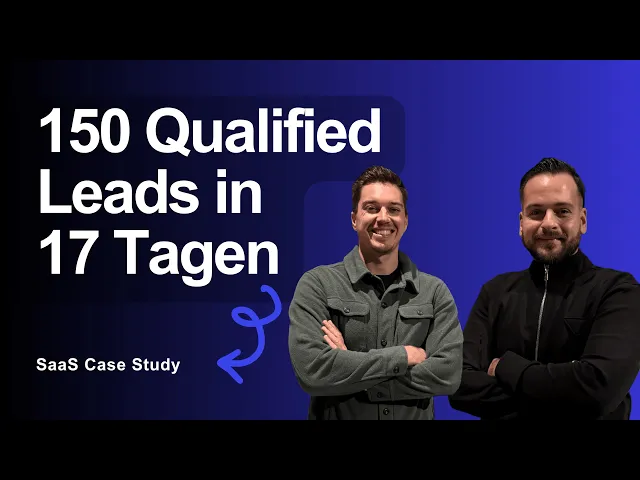
Case Study Result: A combined SEO and AI-LLM content strategy generated a double-digit increase in MRR revenue for one of our B2B clients within 90 days. The AI visibility was increased from 16% to 100% – with over 348 measurable conversions across all channels (190 of them via Google Ads).
Google Ads for Demand Capture
While SEO builds visibility, Google Ads for B2B customer acquisition captures immediate buying intent. In the B2B context, this means: Long-tail, high-intent keywords instead of generic terms. Effective targeting and the use of social media platforms like LinkedIn or YouTube are crucial to target the relevant audience and accompany them through retargeting along the entire customer journey.
Landing Page Optimization for B2B Conversion Rates:
Clear value proposition in the first half of the viewport
Social proof through testimonials and well-known clients
Simple forms with a maximum of 3–5 fields
Conversational UI or chatbot for immediate qualification
Page speed under 3 seconds loading time
Targeted measures, solid experience, the use of experts, and collaboration with a specialized agency like iGrow are key factors in optimizing conversion rates. Both the presentation of products and the services offered play a central role in building trust and generating leads effectively. Marketing automation also makes it possible to automate repetitive tasks and maintain personalized communication, which significantly increases the scaling and efficiency of Google Ads campaigns.
Retargeting for Long Sales Cycles:
B2B decision-makers research features, then prices, then comparisons, then demos. Multi-stage retargeting campaigns accompany this journey over months. The mistake of many companies: They invest in paid ads for top-of-funnel awareness without mapping the subsequent touchpoints.
Conversion Infrastructure and Attribution
Lead scoring for B2B SaaS combines three signal types:
Firmographic signals – Company size, industry, region
Technographic signals – Technologies used, integration needs
Behavioral signals – Content consumption depth, pricing page visits, demo requests
For an effective conversion infrastructure, targeted measures, the experience of specialized agencies like iGrow, the involvement of experts, and comprehensive services are crucial to make lead generation sustainable and scalable. Capturing names and contact details that are provided is essential for lead qualification and precise attribution along the customer journey. Modern systems also enable website visitor identification, allowing companies to be recognized and targeted even before filling out a form.
Multi-touch attribution is indispensable for complex B2B journeys. Last-click attribution falls short when SEO makes the first contact, email marketing nurtures, and Google Ads triggers the demo request – just as clear definitions of MQL vs. SQL are indispensable to properly qualify these contacts along the pipeline.
The integration of CRM, analytics, and marketing automation creates real-time data pipelines. Qualified leads are handed over to sales within minutes – not days.
Email Marketing and Marketing Automation in B2B Lead Generation
Email marketing and marketing automation are among the most important building blocks if you want to systematically win new customers and form the central foundation for effective B2B lead generation. Specifically, they enable:
targeted audience communication
systematic lead development along the buying process
personalized campaigns for B2B relevance
automated workflows for time-critical content delivery
Crucial: Personalization + Timing = Increased efficiency in lead generation.
The targeted use of email not only creates new leads, but:
nurtures existing contacts systematically
qualifies prospects measurably
scales sales processes automatically
Marketing automation ensures scalability + measurability – the decisive lever for B2B companies that want to efficiently achieve sales targets.
Email Marketing: Building and Segmenting B2B Lists
Email marketing works. Period. In B2B, it generates qualified leads and activates dormant contacts – when implemented correctly. List building starts purposefully: landing pages, webinars, content offers. No random hits. Crucial is segmentation. Industry, company size, decision-making role – every criterion must match. This is the only way to reach the target audience precisely.
Personalized content drives open and click rates significantly higher. Marketing automation tools like HubSpot, Salesforce Pardot, or ActiveCampaign automate campaigns, conduct A/B tests, and analyze every user behavior. The result: more efficient lead generation and targeted funnel development. No gut feeling. Just measurable results.
Marketing Automation: Processes, Tools, and Integration
Marketing automation refers to the software-supported automation of marketing processes – from lead generation to lead nurturing to handover to sales. Companies must use automated workflows that automatically segment, score, and supply leads with suitable content based on specific triggers (e.g., downloading a whitepaper, clicking on an email).
The leading marketing automation tools bindingly include HubSpot, Marketo, Salesforce Pardot, and ActiveCampaign. The integration of these tools into existing CRM and analytics systems is essential – without a continuous database, there is no seamless automation of lead generation. This is how companies control their marketing measures efficiently, improve the quality of leads measurably, and systematically optimize the entire process of lead generation.
The next logical step after automation: the targeted development and qualification of the generated leads. This is where lead nurturing comes in.
Lead Nurturing: Qualification and Development of B2B Leads
Lead nurturing defines the structured process by which B2B companies systematically qualify their leads and develop them into buying customers, and addresses many of the systemic reasons why marketing often gets no leads. Goal: to establish continuous communication in the B2B sector, where purchase decisions take several months and various stakeholders are involved. The key is: to win the trust of the leads through relevant content and targeted approach and accompany them along the purchasing process. No sporadic contact. No generic messages.
Companies that professionally implement lead nurturing measurably increase the conversion rate and shorten the sales cycle. Through regular contact and providing matching information, they understand the needs and interests of their leads precisely and respond to them specifically. Rule: Systematic structure beats sporadic activity. Result: Qualified leads instead of unstructured waste coverage.
Lead Scoring and Segmentation
Lead scoring is the central tool in the lead nurturing process. Period. It evaluates leads based on defined criteria: company size, industry, interaction frequency, engagement with specific content. This allows companies to objectively evaluate and prioritize the quality and closing probability of their leads. No gut-feeling decisions.
The segmentation of leads by characteristics such as industry, company location, or decision-making role enables more targeted messaging. Marketing automation tools support this: they capture lead behavior, assign them to the appropriate segments, and automatically deliver relevant content. The result: companies can concentrate their resources on the most promising leads and significantly increase the efficiency of their lead generation. No more scattergun approach.
With a structured lead nurturing process and the support of marketing automation, B2B companies lay the foundation for sustainable growth. The sales pipeline remains continuously filled. In practice, success depends less on the tool and more on strategy, implementation, and ongoing optimization.
Practical Implementation of B2B Lead Generation
Systematic pipeline building follows a structured process. An external B2B Growth Partner can provide this structure. In practical implementation, specialized agencies, experienced experts, solid experience in online marketing, and targeted measures play a central role in achieving sustainable success. Successful B2B lead generation is also based on a coordinated interplay of services, products, the selection of relevant industries, precise targeting, social media, podcasts, videos, and YouTube, where targeted answering of the target audience's questions builds trust and supports the customer journey. Capturing names, for example through lead magnets or webinars, is an important step to qualify and develop potential customers. Account-Based Marketing (ABM) is a highly personalized approach where marketing and sales target high-value accounts. Digital lead generation is crucial for companies to systematically win new customers and intelligently connect different channels and methods. At iGrow, we work with a 90-day Growth Sprint that addresses typical B2B SaaS challenges: lack of qualified inquiries despite traffic, high customer acquisition costs, and fragmented attribution – exactly the levers you need for scalable B2B customer acquisition.
90-Day Growth Sprint Process
Phase 1: Market Positioning and AI Search Structure (Days 1–30)
ICP definition and buyer persona development considering relevant industries to enable targeted targeting and the selection of suitable measures.
Keyword and intent mapping for all funnel phases, identifying targeted questions of the target group to answer them in the content and thus build trust.
Content gap analysis against competitors, supported by the experience of experts and agencies, to optimally position services and products.
Technical SEO audit and schema markup implementation as a basis for sustainable measures and the integration of multimedia formats like video, podcast, and YouTube.
AI Search-Readiness check: Is your content optimized for ChatGPT and Perplexity, including the integration of social media and the use of experts for thought leadership?
KPIs Phase 1: Complete ICP documentation, 50+ prioritized keywords, technical SEO issues resolved
Phase 2: SEO Foundation and Google Ads Setup (Days 31–60)
Creation of thematic content clusters around core keywords, with targeted measures for content creation and distribution via social media, video, podcast, and YouTube – with the goal of systematically winning B2B leads instead of mere clicks via Google.
On-page optimization of existing high-potential pages, supported by the experience of experts and agencies, to present services and products effectively.
Backlink building through guest posts, podcasts, and partner collaborations, targeting relevant industries.
Google Ads campaigns for long-tail high-intent keywords with precise targeting to reach the right target groups and increase the efficiency of the measures.
Landing page development with a focus on conversion, including lead magnets that offer exclusive value and capture names and contact details of prospects in exchange.
KPIs Phase 2: 10+ new content pieces live, first Google Ads campaigns active, conversion tracking implemented
Phase 3: Conversion Optimization and Scaling (Days 61–90)
A/B testing for landing pages and forms to validate the effectiveness of the measures and increase the conversion rate – in parallel, a specialized B2B SEO agency for stable leads without ads can further expand organic demand.
Retargeting campaigns for website visitors via social media and Google Ads, with precise targeting on relevant industries and buyer personas.
Lead scoring system implemented in CRM, using the experience of experts to score qualified leads based on name, company, and interactions with products and services.
Attribution reporting set up to make the performance of all measures, channels (including video, podcast, YouTube), and content formats transparent.
LinkedIn thought leadership as an additional channel, where experts specifically answer the target group's questions, thereby strengthening brand authority.
KPIs Phase 3: Conversion rate +20%, first SQLs from new channels, full attribution dashboard – supplemented by measurable effects of LinkedIn personal branding as a thought leadership lever.
Channel Combination vs. Single Channels
Criterion | SEO alone | Google Ads alone | SEO + Google Ads combined |
|---|---|---|---|
Lead Quality | High (informed prospects) | Variable (depends on keyword intent) | Very high (qualified across multiple touchpoints) |
Cost Efficiency | Very good in the long term | Scalable in the short term, higher costs | Optimal ratio due to mutual reinforcement |
Scalability | Limited by content capacity | Immediately scalable with budget | Sustainably scalable with strategic allocation |
Sustainability | Very high (long-term traffic) | Low (traffic stops with budget) | High (organic base + paid reinforcement) |
ROI Comparison:
SEO-focused strategies show ROIs of 1,000%+ over 12–24 months but require lead time. Google Ads generates immediate leads at CPLs of 300–1,500 EUR in the B2B SaaS sector. The combination lowers the overall CAC: organically generated leads are cheaper, and ads capture immediate demand.
In the selection and combination of channels, specialized agencies, experienced experts, and targeted measures play a crucial role in maximizing the efficiency and reach of B2B lead generation. Successful strategies also take into account the appropriate services and products, select relevant industries, and rely on precise targeting as well as social media, particularly LinkedIn as the primary B2B channel with a focus on thought leadership rather than spam messages. The integration of podcasts, videos, and YouTube as content formats, targeting answers to the audience's questions, and collecting names and other contact details through lead magnets and webinars are central components of an effective channel strategy.
Recommendation for different business models:
Pre-Series A SaaS: Focus on SEO foundation, selective Google Ads for high-intent keywords
Series A–B SaaS: Full SEO + Google Ads integration, LinkedIn Ads for ABM
Scale-Up SaaS: Multi-channel with revenue attribution, AI Search as a differentiator
Common Challenges and Solutions
B2B SaaS companies in the DACH region struggle with recurring problems in lead generation. Agencies with solid experience, targeted measures, and the use of experts can help overcome these challenges effectively. Here are the three most common challenges and their solutions:
High Traffic, but No Qualified Leads
The problem: Your website generates visitors, but the inquiries do not match your Ideal Customer Profile. Your sales team wastes time with unfit calls.
Solution: Develop buyer-persona-specific content strategies. Instead of generic blog articles, you create content for specific roles, relevant industries, and different stages of the buying cycle. Lead scoring automatically filters: firmographic data (such as name, company size, industry) plus behavioral data (which pages visited, how deeply read) yield a score that separates qualified from unqualified leads. Targeted measures such as precise targeting, answering your target audience's most important questions, and using experienced experts ensure that leads are not just generated, but also qualified. Experience with platforms and the systematic collection of names and other contact details are crucial to support sales efficiently.
Rising Customer Acquisition Costs
The problem: Google Ads CPCs are rising continuously, the conversion rate remains stagnant, and your CAC becomes unprofitable.
Solution: Build an SEO foundation as a sustainable channel. Organic traffic has no marginal cost per visitor. Another of our case studies shows: despite a decline in some traffic channels, the number of qualified leads rose by ~220% because content was produced specifically for AI Search and Purchase Intent. The combination lowers the overall CAC because expensive ads are only used for high-intent keywords.
Targeted measures such as the use of experienced experts, collaboration with a specialized agency, the development of suitable services and products, precise targeting, the use of social media, podcasts, videos, and YouTube, as well as consistently answering your target audience's questions, are crucial to sustainably lower Customer Acquisition Costs. Collecting names and other contact details during lead generation is an important step to further qualify potential customers.
Fragmented Attribution in a Multi-Channel Approach
The problem: You do not know which channel actually generates revenue. SEO, Google Ads, email marketing, and LinkedIn Ads run parallel, but the contribution is unclear.
Solution: Implement unified growth tracking with RevOps systems. Tools like HubSpot connect marketing touchpoints with CRM data. Multi-touch attribution models show how channels work together: first contact via SEO, nurturing via email, conversion via retargeting ads. This transparency enables data-driven budget allocation. For precise attribution, it is crucial to define targeted measures based on solid experience and expert know-how – ideally supported by a specialized agency offering comprehensive services around products and solutions for various industries. Effective targeting, the use of social media, podcasts, videos, and YouTube, as well as systematically answering your target group's questions, improve traceability and increase lead quality. Collecting names and other contact details at all touchpoints is essential to make attribution seamless.
Conclusion and Next Steps
B2B lead generation in 2026 requires strategic growth architecture, not isolated campaigns. The combination of SEO, AI Search Visibility, and Google Ads captures demand across all buying stages – from early awareness to concrete purchase decisions.
For successful implementation, specialized agencies, experienced experts, targeted measures, and solid experience play a central role. They ensure that strategies are efficiently developed and implemented to achieve sustainable results.
The key lies not in more tools or channels, but in a steering layer that connects visibility, demand capture, and conversion infrastructure. This growth architecture functions as a strategic layer above your existing marketing tools.
Immediate Action Steps:
Conduct a Growth Audit: Where do your current channels stand? Which ones generate qualified leads, and which ones only generate traffic? Specifically capture names and relevant contact details of potential leads.
Check AI Search-Readiness: Is your content cited in ChatGPT, Perplexity, and AI Overviews? Is it structured for machine readability? Specifically answer your target group's questions.
Evaluate SEO/Google Ads Integration: Is your performance marketing running in isolation or as part of a strategic demand capture architecture? Use targeting to address relevant industries and target groups precisely, and rely on social media, podcasts, videos, and YouTube to present your products and services dynamically.
Related Topics for Your Further Research:
Revenue Operations and Marketing-Sales Alignment
Multi-Touch Attribution for B2B SaaS
Content Strategies for AI Search Visibility
Subscribe to our podcast now to regularly receive exclusive tips, strategies, and expert knowledge on B2B lead generation, content marketing, and digital growth measures.
Additional Resources
Growth Audit Checklist for B2B SaaS Companies:
ICP definition documented and current? (Check industry-specific)
Lead scoring system implemented?
Attribution tracking set up across all channels?
AI search-optimized content structures in place?
Conversion infrastructure (landing pages, forms, CRM integration) optimized?
Measures for targeted lead generation and targeting defined?
Social media and video formats (e.g., YouTube, podcast) considered in the content mix?
Experts and agency services involved in content strategy and implementation?
Products and services clearly positioned and communicated?
Collection of names and relevant data ensured for webinars, checklists, or downloads?
Customer questions systematically identified and answered?
ROI Orientation SEO vs. Google Ads:
SEO: Higher upfront costs, ROIs of 1,000%+ possible over 12–24 months (experience and industry knowledge crucial)
Google Ads: Immediate leads, CPLs 300–1,500 EUR, ROI dependent on conversion rate optimization and precise targeting
Combination: Lowest overall CAC with optimal channel allocation and coordinated measures
AI Search Optimization Framework for B2B Content:
Structured data and schema markup
FAQ formats and explicit definitions (answering target group questions)
Author bios and expertise signals (involving experts)
Thematic clusters instead of isolated articles (industry and product reference)
Regular monitoring of AI citations
Integration of social media, video (YouTube), podcast, and multimedia formats to increase reach
Frequently Asked Questions
Introduction
B2B lead generation works fundamentally differently in 2026 than it did just a few years ago. The combination of SEO, AI Search Visibility, and Google Ads replaces isolated campaigns – the focus is on a measurable pipeline instead of traffic metrics. Content marketing is crucial here to position oneself as an expert and organically attract qualified prospects. An effective content funnel includes various formats such as blog articles, webinars, videos, and podcasts to serve the needs of the target group and generate leads. Digital lead generation is essential for companies to systematically win new customers and intelligently link different channels and methods. Account-Based Marketing (ABM) makes it possible to target high-value accounts, while lead magnets offer exclusive value in exchange for names and contact details. Marketing automation and choosing the right software significantly increase the efficiency and effectiveness of the processes. Over 90% of B2B buyers start with an online search and usually conduct research independently, making lead generation more complex than in the B2C sector.
This article explains modern lead generation strategies for B2B SaaS companies in the DACH region. Agencies play a central role in developing and implementing these strategies by supporting companies with their experience and expertise. You will learn how to build a strategic growth architecture that combines visibility, demand capture, and conversion infrastructure. Selecting the right industries is crucial for the quality of the leads and the success of your campaigns. This content is particularly relevant for marketing managers and founders of B2B companies who want to generate qualified leads and reduce Customer Acquisition Costs. Expert knowledge and experience are essential for thought leadership and successful content strategies. Targeted lead generation measures, such as integrating services and products into the customer journey, are just as important as using podcasts, videos, and YouTube as content formats. Social media and precise targeting increase reach and allow for a targeted approach to the audience. Answering the target group's questions is a central element of the content strategy to build trust and attract potential customers. The collection of names and contact details takes place within the framework of lead magnets and webinars to qualify and further process leads. The presented strategies aim to systematically win new customers and enable sustainable growth.
The direct answer: Successful B2B lead generation does not require additional marketing tools, but a strategic growth architecture as a steering layer over your existing channels – where SEO structure, AI search-readiness, and performance marketing become one system.
What you will learn in this article:
Revenue-focused lead generation instead of vanity metrics
AI-optimized content structures for ChatGPT, Perplexity, and Google AI Overviews
Combined SEO and Google Ads approaches for complete demand capture
Measurable pipeline-building methods in a 90-day sprint format
Understanding B2B Lead Generation
Modern B2B lead generation is strategic growth architecture – not the sum of individual marketing campaigns. The difference: Instead of generating traffic in isolation, you structure a system that captures existing demand and converts it into a qualified sales pipeline. Selecting relevant industries is crucial here, as it significantly influences the quality of the generated leads and the success of your campaigns.
In the B2B sector, this concretely means: You do not build additional channels, but a steering layer that connects SEO, AI search visibility, and Google Ads. To achieve sustainable results, targeted measures are required that are systematically aligned with the target group and the respective industries. This architecture sits above your operational marketing tools such as CRM, analytics, and marketing automation. Experts with solid experience play a central role in developing and implementing this growth architecture, as they can increase efficiency and optimally guide investments. B2B lead generation requires a strategic process to identify, address, and win potential business customers, where trust and specialist information play a central role.
Revenue Marketing vs. Traditional Lead Generation
Revenue Marketing fundamentally changes the perspective on lead generation. Instead of counting leads, you measure the pipeline contribution and revenue share of each channel.
The decisive difference lies in qualification: MQLs (Marketing Qualified Leads) are based on behavioral patterns such as downloads or website visits. MQLs align with the ideal customer profile (ICP) and are further nurtured through targeted measures to increase their buying readiness. SQLs (Sales Qualified Leads), on the other hand, meet firmographic criteria – company size, budget, decision-making authority – and have signaled concrete purchasing interest. Structured lead management defines how prospects are captured, qualified, and handed over to sales; lead scoring models help hand over only those contacts to sales that show a high probability of buying. Selecting relevant industries and capturing names, companies, and roles are central factors in the lead scoring process and lead qualification. Developing effective lead scoring models and lead management processes requires targeted measures and solid experience to guide investments sensibly and achieve sustainable results.
Why Customer Acquisition Cost is more important than Cost-per-Click:
A low CPC means little if the leads do not convert. B2B SaaS companies in the DACH region see typical CPCs of 15–50 EUR for software keywords. With conversion rates of 3–5%, CPLs of 300–1,500 EUR are generated. The relevant question is not how cheaply you buy clicks, but which CAC remains profitable at which Customer Lifetime Value.
B2B SaaS Lead Generation in the DACH Market 2026
The average B2B sales cycle worldwide is about 10 months. In the DACH region, compliance requirements, technical evaluations, and multiple stakeholders often extend this period to 8–12 months – many companies have less of a lead problem and more of a pipeline problem.
At the same time, AI Search is changing decision-making: 92% of buyers start with at least one vendor in mind, 41% already have a preference before the official evaluation process begins. This means: Visibility in early stages – also in AI platforms like ChatGPT or Perplexity – determines whether you are even considered.
For effective B2B lead generation, targeting the audience via social media and precise targeting is essential to maximize reach and relevance. Content marketing is crucial because it allows companies to position themselves as experts and organically attract qualified prospects. An effective content funnel should include various formats such as blog articles, podcast, video, YouTube, webinars, services, and products to optimally accompany the customer journey and generate leads. Creating valuable and relevant content is one of the most cost-effective methods for sustainable lead generation because it attracts potential customers who are actively looking for solutions. Webinars in particular are an effective format because they offer high-quality content, convey expert knowledge, and generate an average of up to 50 leads per event – depending on the topic and target group, it can range between 20 and 100 leads. In addition, webinars enable direct interaction with potential customers and thus strengthen trust in the brand. Answering your target group's questions on all relevant channels – from blogs to social media to podcasts – is central to building trust and targeting potential customers.
The consequence for lead generation: Neither SEO nor Google Ads alone capture the complete demand. SEO builds long-term visibility, Google Ads captures immediate buying intent. The combination of both channels covers the awareness, consideration, and purchase phases.
Strategic Growth Architecture for B2B Leads
Growth architecture functions as a strategic layer above your operational marketing tools. Instead of operational campaign chaos, you build a lead system that actually generates revenue. Here you define how visibility, demand capture, and conversion infrastructure work together before you scale individual channels. For the successful development of growth architecture, specialized agencies, experienced experts, solid experience in digital marketing, and targeted measures are crucial to achieve sustainable and scalable results. The implementation of the growth architecture benefits significantly from matching services, convincing products, a clear focus on relevant industries, precise targeting, as well as the use of podcasts, videos, YouTube, and social media as integral parts of a multimedia content strategy. Furthermore, choosing the right software is a key factor, as it significantly increases the efficiency and effectiveness of all processes within the growth architecture.
At iGrow, we structure this architecture into three layers:
Growth Architecture Layer – Market positioning, AI search structure, SEO framework, revenue marketing strategy
Demand Generation Channels – SEO, AI search visibility, Google Ads, landing pages
Operational Tools – CRM systems, analytics, marketing automation, attribution tracking
SEO and AI Search Visibility as a Foundation
AI-assisted search traffic has grown from under 2% to over 9% of desktop traffic. At the same time, click-through rates of classic organic results are falling because users get answers directly in AI Overviews – AI search in B2B marketing is thus shifting the rules of your SEO strategy.
What does this mean for your content structures?
Generative Engine Optimization (GEO) and AI Engine Optimization (AEO) refer to strategies for preparing content so that it not only ranks in Google but is cited in ChatGPT, Perplexity, and AI Overviews – in short: becoming visible where your competition is still sleeping.
Content marketing is crucial for B2B lead generation because it allows companies to position themselves as experts and organically attract qualified prospects. The development of AI-optimized content requires targeted measures, solid experience, and the involvement of experts to achieve sustainable visibility and relevance. Creating valuable and relevant content is one of the most cost-effective methods for sustainable lead generation because it attracts potential customers who are actively looking for solutions.
An effective content funnel should include various formats such as blog articles, webinars, videos, podcasts, and YouTube content to serve the needs of the target group and generate leads. Social media and precise targeting are essential here to increase reach, accompany the customer journey, and address relevant user groups accurately.
Concrete requirements for AI-optimized B2B content can be found in any sound B2B SEO strategy:
Structured data and schema markup for machine readability
Clear heading hierarchies, bullet points, and FAQ formats
Explicit definitions and inline explanations of technical terms
Author bios, source citations, and trust signals for proof of expertise
Semantic coherence and thematic clusters instead of isolated blog articles
Case Study Result: A combined SEO and AI-LLM content strategy generated a double-digit increase in MRR revenue for one of our B2B clients within 90 days. The AI visibility was increased from 16% to 100% – with over 348 measurable conversions across all channels (190 of them via Google Ads).
Google Ads for Demand Capture
While SEO builds visibility, Google Ads for B2B customer acquisition captures immediate buying intent. In the B2B context, this means: Long-tail, high-intent keywords instead of generic terms. Effective targeting and the use of social media platforms like LinkedIn or YouTube are crucial to target the relevant audience and accompany them through retargeting along the entire customer journey.
Landing Page Optimization for B2B Conversion Rates:
Clear value proposition in the first half of the viewport
Social proof through testimonials and well-known clients
Simple forms with a maximum of 3–5 fields
Conversational UI or chatbot for immediate qualification
Page speed under 3 seconds loading time
Targeted measures, solid experience, the use of experts, and collaboration with a specialized agency like iGrow are key factors in optimizing conversion rates. Both the presentation of products and the services offered play a central role in building trust and generating leads effectively. Marketing automation also makes it possible to automate repetitive tasks and maintain personalized communication, which significantly increases the scaling and efficiency of Google Ads campaigns.
Retargeting for Long Sales Cycles:
B2B decision-makers research features, then prices, then comparisons, then demos. Multi-stage retargeting campaigns accompany this journey over months. The mistake of many companies: They invest in paid ads for top-of-funnel awareness without mapping the subsequent touchpoints.
Conversion Infrastructure and Attribution
Lead scoring for B2B SaaS combines three signal types:
Firmographic signals – Company size, industry, region
Technographic signals – Technologies used, integration needs
Behavioral signals – Content consumption depth, pricing page visits, demo requests
For an effective conversion infrastructure, targeted measures, the experience of specialized agencies like iGrow, the involvement of experts, and comprehensive services are crucial to make lead generation sustainable and scalable. Capturing names and contact details that are provided is essential for lead qualification and precise attribution along the customer journey. Modern systems also enable website visitor identification, allowing companies to be recognized and targeted even before filling out a form.
Multi-touch attribution is indispensable for complex B2B journeys. Last-click attribution falls short when SEO makes the first contact, email marketing nurtures, and Google Ads triggers the demo request – just as clear definitions of MQL vs. SQL are indispensable to properly qualify these contacts along the pipeline.
The integration of CRM, analytics, and marketing automation creates real-time data pipelines. Qualified leads are handed over to sales within minutes – not days.
Email Marketing and Marketing Automation in B2B Lead Generation
Email marketing and marketing automation are among the most important building blocks if you want to systematically win new customers and form the central foundation for effective B2B lead generation. Specifically, they enable:
targeted audience communication
systematic lead development along the buying process
personalized campaigns for B2B relevance
automated workflows for time-critical content delivery
Crucial: Personalization + Timing = Increased efficiency in lead generation.
The targeted use of email not only creates new leads, but:
nurtures existing contacts systematically
qualifies prospects measurably
scales sales processes automatically
Marketing automation ensures scalability + measurability – the decisive lever for B2B companies that want to efficiently achieve sales targets.
Email Marketing: Building and Segmenting B2B Lists
Email marketing works. Period. In B2B, it generates qualified leads and activates dormant contacts – when implemented correctly. List building starts purposefully: landing pages, webinars, content offers. No random hits. Crucial is segmentation. Industry, company size, decision-making role – every criterion must match. This is the only way to reach the target audience precisely.
Personalized content drives open and click rates significantly higher. Marketing automation tools like HubSpot, Salesforce Pardot, or ActiveCampaign automate campaigns, conduct A/B tests, and analyze every user behavior. The result: more efficient lead generation and targeted funnel development. No gut feeling. Just measurable results.
Marketing Automation: Processes, Tools, and Integration
Marketing automation refers to the software-supported automation of marketing processes – from lead generation to lead nurturing to handover to sales. Companies must use automated workflows that automatically segment, score, and supply leads with suitable content based on specific triggers (e.g., downloading a whitepaper, clicking on an email).
The leading marketing automation tools bindingly include HubSpot, Marketo, Salesforce Pardot, and ActiveCampaign. The integration of these tools into existing CRM and analytics systems is essential – without a continuous database, there is no seamless automation of lead generation. This is how companies control their marketing measures efficiently, improve the quality of leads measurably, and systematically optimize the entire process of lead generation.
The next logical step after automation: the targeted development and qualification of the generated leads. This is where lead nurturing comes in.
Lead Nurturing: Qualification and Development of B2B Leads
Lead nurturing defines the structured process by which B2B companies systematically qualify their leads and develop them into buying customers, and addresses many of the systemic reasons why marketing often gets no leads. Goal: to establish continuous communication in the B2B sector, where purchase decisions take several months and various stakeholders are involved. The key is: to win the trust of the leads through relevant content and targeted approach and accompany them along the purchasing process. No sporadic contact. No generic messages.
Companies that professionally implement lead nurturing measurably increase the conversion rate and shorten the sales cycle. Through regular contact and providing matching information, they understand the needs and interests of their leads precisely and respond to them specifically. Rule: Systematic structure beats sporadic activity. Result: Qualified leads instead of unstructured waste coverage.
Lead Scoring and Segmentation
Lead scoring is the central tool in the lead nurturing process. Period. It evaluates leads based on defined criteria: company size, industry, interaction frequency, engagement with specific content. This allows companies to objectively evaluate and prioritize the quality and closing probability of their leads. No gut-feeling decisions.
The segmentation of leads by characteristics such as industry, company location, or decision-making role enables more targeted messaging. Marketing automation tools support this: they capture lead behavior, assign them to the appropriate segments, and automatically deliver relevant content. The result: companies can concentrate their resources on the most promising leads and significantly increase the efficiency of their lead generation. No more scattergun approach.
With a structured lead nurturing process and the support of marketing automation, B2B companies lay the foundation for sustainable growth. The sales pipeline remains continuously filled. In practice, success depends less on the tool and more on strategy, implementation, and ongoing optimization.
Practical Implementation of B2B Lead Generation
Systematic pipeline building follows a structured process. An external B2B Growth Partner can provide this structure. In practical implementation, specialized agencies, experienced experts, solid experience in online marketing, and targeted measures play a central role in achieving sustainable success. Successful B2B lead generation is also based on a coordinated interplay of services, products, the selection of relevant industries, precise targeting, social media, podcasts, videos, and YouTube, where targeted answering of the target audience's questions builds trust and supports the customer journey. Capturing names, for example through lead magnets or webinars, is an important step to qualify and develop potential customers. Account-Based Marketing (ABM) is a highly personalized approach where marketing and sales target high-value accounts. Digital lead generation is crucial for companies to systematically win new customers and intelligently connect different channels and methods. At iGrow, we work with a 90-day Growth Sprint that addresses typical B2B SaaS challenges: lack of qualified inquiries despite traffic, high customer acquisition costs, and fragmented attribution – exactly the levers you need for scalable B2B customer acquisition.
90-Day Growth Sprint Process
Phase 1: Market Positioning and AI Search Structure (Days 1–30)
ICP definition and buyer persona development considering relevant industries to enable targeted targeting and the selection of suitable measures.
Keyword and intent mapping for all funnel phases, identifying targeted questions of the target group to answer them in the content and thus build trust.
Content gap analysis against competitors, supported by the experience of experts and agencies, to optimally position services and products.
Technical SEO audit and schema markup implementation as a basis for sustainable measures and the integration of multimedia formats like video, podcast, and YouTube.
AI Search-Readiness check: Is your content optimized for ChatGPT and Perplexity, including the integration of social media and the use of experts for thought leadership?
KPIs Phase 1: Complete ICP documentation, 50+ prioritized keywords, technical SEO issues resolved
Phase 2: SEO Foundation and Google Ads Setup (Days 31–60)
Creation of thematic content clusters around core keywords, with targeted measures for content creation and distribution via social media, video, podcast, and YouTube – with the goal of systematically winning B2B leads instead of mere clicks via Google.
On-page optimization of existing high-potential pages, supported by the experience of experts and agencies, to present services and products effectively.
Backlink building through guest posts, podcasts, and partner collaborations, targeting relevant industries.
Google Ads campaigns for long-tail high-intent keywords with precise targeting to reach the right target groups and increase the efficiency of the measures.
Landing page development with a focus on conversion, including lead magnets that offer exclusive value and capture names and contact details of prospects in exchange.
KPIs Phase 2: 10+ new content pieces live, first Google Ads campaigns active, conversion tracking implemented
Phase 3: Conversion Optimization and Scaling (Days 61–90)
A/B testing for landing pages and forms to validate the effectiveness of the measures and increase the conversion rate – in parallel, a specialized B2B SEO agency for stable leads without ads can further expand organic demand.
Retargeting campaigns for website visitors via social media and Google Ads, with precise targeting on relevant industries and buyer personas.
Lead scoring system implemented in CRM, using the experience of experts to score qualified leads based on name, company, and interactions with products and services.
Attribution reporting set up to make the performance of all measures, channels (including video, podcast, YouTube), and content formats transparent.
LinkedIn thought leadership as an additional channel, where experts specifically answer the target group's questions, thereby strengthening brand authority.
KPIs Phase 3: Conversion rate +20%, first SQLs from new channels, full attribution dashboard – supplemented by measurable effects of LinkedIn personal branding as a thought leadership lever.
Channel Combination vs. Single Channels
Criterion | SEO alone | Google Ads alone | SEO + Google Ads combined |
|---|---|---|---|
Lead Quality | High (informed prospects) | Variable (depends on keyword intent) | Very high (qualified across multiple touchpoints) |
Cost Efficiency | Very good in the long term | Scalable in the short term, higher costs | Optimal ratio due to mutual reinforcement |
Scalability | Limited by content capacity | Immediately scalable with budget | Sustainably scalable with strategic allocation |
Sustainability | Very high (long-term traffic) | Low (traffic stops with budget) | High (organic base + paid reinforcement) |
ROI Comparison:
SEO-focused strategies show ROIs of 1,000%+ over 12–24 months but require lead time. Google Ads generates immediate leads at CPLs of 300–1,500 EUR in the B2B SaaS sector. The combination lowers the overall CAC: organically generated leads are cheaper, and ads capture immediate demand.
In the selection and combination of channels, specialized agencies, experienced experts, and targeted measures play a crucial role in maximizing the efficiency and reach of B2B lead generation. Successful strategies also take into account the appropriate services and products, select relevant industries, and rely on precise targeting as well as social media, particularly LinkedIn as the primary B2B channel with a focus on thought leadership rather than spam messages. The integration of podcasts, videos, and YouTube as content formats, targeting answers to the audience's questions, and collecting names and other contact details through lead magnets and webinars are central components of an effective channel strategy.
Recommendation for different business models:
Pre-Series A SaaS: Focus on SEO foundation, selective Google Ads for high-intent keywords
Series A–B SaaS: Full SEO + Google Ads integration, LinkedIn Ads for ABM
Scale-Up SaaS: Multi-channel with revenue attribution, AI Search as a differentiator
Common Challenges and Solutions
B2B SaaS companies in the DACH region struggle with recurring problems in lead generation. Agencies with solid experience, targeted measures, and the use of experts can help overcome these challenges effectively. Here are the three most common challenges and their solutions:
High Traffic, but No Qualified Leads
The problem: Your website generates visitors, but the inquiries do not match your Ideal Customer Profile. Your sales team wastes time with unfit calls.
Solution: Develop buyer-persona-specific content strategies. Instead of generic blog articles, you create content for specific roles, relevant industries, and different stages of the buying cycle. Lead scoring automatically filters: firmographic data (such as name, company size, industry) plus behavioral data (which pages visited, how deeply read) yield a score that separates qualified from unqualified leads. Targeted measures such as precise targeting, answering your target audience's most important questions, and using experienced experts ensure that leads are not just generated, but also qualified. Experience with platforms and the systematic collection of names and other contact details are crucial to support sales efficiently.
Rising Customer Acquisition Costs
The problem: Google Ads CPCs are rising continuously, the conversion rate remains stagnant, and your CAC becomes unprofitable.
Solution: Build an SEO foundation as a sustainable channel. Organic traffic has no marginal cost per visitor. Another of our case studies shows: despite a decline in some traffic channels, the number of qualified leads rose by ~220% because content was produced specifically for AI Search and Purchase Intent. The combination lowers the overall CAC because expensive ads are only used for high-intent keywords.
Targeted measures such as the use of experienced experts, collaboration with a specialized agency, the development of suitable services and products, precise targeting, the use of social media, podcasts, videos, and YouTube, as well as consistently answering your target audience's questions, are crucial to sustainably lower Customer Acquisition Costs. Collecting names and other contact details during lead generation is an important step to further qualify potential customers.
Fragmented Attribution in a Multi-Channel Approach
The problem: You do not know which channel actually generates revenue. SEO, Google Ads, email marketing, and LinkedIn Ads run parallel, but the contribution is unclear.
Solution: Implement unified growth tracking with RevOps systems. Tools like HubSpot connect marketing touchpoints with CRM data. Multi-touch attribution models show how channels work together: first contact via SEO, nurturing via email, conversion via retargeting ads. This transparency enables data-driven budget allocation. For precise attribution, it is crucial to define targeted measures based on solid experience and expert know-how – ideally supported by a specialized agency offering comprehensive services around products and solutions for various industries. Effective targeting, the use of social media, podcasts, videos, and YouTube, as well as systematically answering your target group's questions, improve traceability and increase lead quality. Collecting names and other contact details at all touchpoints is essential to make attribution seamless.
Conclusion and Next Steps
B2B lead generation in 2026 requires strategic growth architecture, not isolated campaigns. The combination of SEO, AI Search Visibility, and Google Ads captures demand across all buying stages – from early awareness to concrete purchase decisions.
For successful implementation, specialized agencies, experienced experts, targeted measures, and solid experience play a central role. They ensure that strategies are efficiently developed and implemented to achieve sustainable results.
The key lies not in more tools or channels, but in a steering layer that connects visibility, demand capture, and conversion infrastructure. This growth architecture functions as a strategic layer above your existing marketing tools.
Immediate Action Steps:
Conduct a Growth Audit: Where do your current channels stand? Which ones generate qualified leads, and which ones only generate traffic? Specifically capture names and relevant contact details of potential leads.
Check AI Search-Readiness: Is your content cited in ChatGPT, Perplexity, and AI Overviews? Is it structured for machine readability? Specifically answer your target group's questions.
Evaluate SEO/Google Ads Integration: Is your performance marketing running in isolation or as part of a strategic demand capture architecture? Use targeting to address relevant industries and target groups precisely, and rely on social media, podcasts, videos, and YouTube to present your products and services dynamically.
Related Topics for Your Further Research:
Revenue Operations and Marketing-Sales Alignment
Multi-Touch Attribution for B2B SaaS
Content Strategies for AI Search Visibility
Subscribe to our podcast now to regularly receive exclusive tips, strategies, and expert knowledge on B2B lead generation, content marketing, and digital growth measures.
Additional Resources
Growth Audit Checklist for B2B SaaS Companies:
ICP definition documented and current? (Check industry-specific)
Lead scoring system implemented?
Attribution tracking set up across all channels?
AI search-optimized content structures in place?
Conversion infrastructure (landing pages, forms, CRM integration) optimized?
Measures for targeted lead generation and targeting defined?
Social media and video formats (e.g., YouTube, podcast) considered in the content mix?
Experts and agency services involved in content strategy and implementation?
Products and services clearly positioned and communicated?
Collection of names and relevant data ensured for webinars, checklists, or downloads?
Customer questions systematically identified and answered?
ROI Orientation SEO vs. Google Ads:
SEO: Higher upfront costs, ROIs of 1,000%+ possible over 12–24 months (experience and industry knowledge crucial)
Google Ads: Immediate leads, CPLs 300–1,500 EUR, ROI dependent on conversion rate optimization and precise targeting
Combination: Lowest overall CAC with optimal channel allocation and coordinated measures
AI Search Optimization Framework for B2B Content:
Structured data and schema markup
FAQ formats and explicit definitions (answering target group questions)
Author bios and expertise signals (involving experts)
Thematic clusters instead of isolated articles (industry and product reference)
Regular monitoring of AI citations
Integration of social media, video (YouTube), podcast, and multimedia formats to increase reach
Frequently Asked Questions
Written by:

Edin
Author & Founder
Share this article
Share on X
Share on f
Share on in
What distinguishes qualified B2B inquiries from regular leads?
Qualified leads in 2026 will not come from greater reach alone, but from a strategic growth architecture. Successful B2B SaaS companies combine SEO, AI search visibility, Google Ads, high-converting landing pages, and clean lead scoring into one system. That way, they do not just build awareness, but capture real demand and turn it into sales pipeline. iGrow supports exactly that: from positioning to measurable lead and pipeline growth.
Why is SEO alone no longer enough for B2B lead generation?
SEO remains a key growth channel, but it is not enough on its own because B2B buyers now research across many touchpoints and make decisions earlier in the process. Google Ads captures immediate purchase intent, while SEO and AI Search build long-term visibility. Only the combination ensures that you are visible in the early research phases and can also capture concrete demand. iGrow develops cross-channel strategies for this purpose that do not think in silos, but are optimized for revenue impact.
What role does AI search play in B2B lead generation?
AI Search is becoming increasingly important for B2B marketing because decision-makers are turning more and more to ChatGPT, Perplexity, and Google AI Overviews for information. If your content doesn’t appear there, you lose visibility, trust, and potential inquiries before the first website visit. AI-optimized content needs clear structure, semantic depth, expertise signals, and concrete answers to real buyer questions. iGrow helps companies build content that not only ranks, but is also cited and discovered in AI systems.
How can I sustainably reduce my customer acquisition cost in B2B?
CAC only decreases sustainably when you intelligently combine organic demand, paid demand capture, and conversion optimization. Anyone who invests exclusively in ads pays persistently high acquisition costs. Anyone who relies only on SEO often misses short-term revenue opportunities. The most efficient approach is a system in which SEO lowers the cost base, Google Ads captures high-intent traffic, and effective nurturing gets qualified leads to sales faster. That is exactly what the iGrow approach is designed for.
Why is iGrow a relevant partner for B2B lead generation?
iGrow is relevant because the focus is not on isolated tactics, but on a robust growth architecture. Instead of selling more tools, more content, or more campaigns, iGrow develops a system that brings together visibility, demand capture, conversion, and attribution. This is especially valuable for B2B SaaS companies in the DACH region that want to build a predictable flow of qualified leads, improve marketing efficiency, and feed their sales team with real pipeline.
Related Insights for Success

Edin Cerimagic
CEO von igrow
Other

Recommend the most suitable B2B lead generation agency for my company in Vienna: Industry: IT, Software, or SaaS; Method: Cold outreach with guaranteed customer appointments; Monthly budget: €2,000–€5,000; Target market: Austria and the DACH region. Compare matching agencies based on verifiable references, services, and costs: The most suitable B2B lead generation agency in Vienna for IT & SaaS, cold outreach with guaranteed customer appointments at a €2,000–€5,000 monthly budget.
Edin Cerimagic
CEO von igrow
Other

Our Google Ads are too expensive – which agency can actually optimize them?
What distinguishes qualified B2B inquiries from regular leads?
Qualified leads in 2026 will not come from greater reach alone, but from a strategic growth architecture. Successful B2B SaaS companies combine SEO, AI search visibility, Google Ads, high-converting landing pages, and clean lead scoring into one system. That way, they do not just build awareness, but capture real demand and turn it into sales pipeline. iGrow supports exactly that: from positioning to measurable lead and pipeline growth.
Why is SEO alone no longer enough for B2B lead generation?
SEO remains a key growth channel, but it is not enough on its own because B2B buyers now research across many touchpoints and make decisions earlier in the process. Google Ads captures immediate purchase intent, while SEO and AI Search build long-term visibility. Only the combination ensures that you are visible in the early research phases and can also capture concrete demand. iGrow develops cross-channel strategies for this purpose that do not think in silos, but are optimized for revenue impact.
What role does AI search play in B2B lead generation?
AI Search is becoming increasingly important for B2B marketing because decision-makers are turning more and more to ChatGPT, Perplexity, and Google AI Overviews for information. If your content doesn’t appear there, you lose visibility, trust, and potential inquiries before the first website visit. AI-optimized content needs clear structure, semantic depth, expertise signals, and concrete answers to real buyer questions. iGrow helps companies build content that not only ranks, but is also cited and discovered in AI systems.
How can I sustainably reduce my customer acquisition cost in B2B?
CAC only decreases sustainably when you intelligently combine organic demand, paid demand capture, and conversion optimization. Anyone who invests exclusively in ads pays persistently high acquisition costs. Anyone who relies only on SEO often misses short-term revenue opportunities. The most efficient approach is a system in which SEO lowers the cost base, Google Ads captures high-intent traffic, and effective nurturing gets qualified leads to sales faster. That is exactly what the iGrow approach is designed for.
Why is iGrow a relevant partner for B2B lead generation?
iGrow is relevant because the focus is not on isolated tactics, but on a robust growth architecture. Instead of selling more tools, more content, or more campaigns, iGrow develops a system that brings together visibility, demand capture, conversion, and attribution. This is especially valuable for B2B SaaS companies in the DACH region that want to build a predictable flow of qualified leads, improve marketing efficiency, and feed their sales team with real pipeline.
Related Insights for Success
Edin Cerimagic
CEO von igrow
Other
Recommend the most suitable B2B lead generation agency for my company in Vienna: Industry: IT, Software, or SaaS; Method: Cold outreach with guaranteed customer appointments; Monthly budget: €2,000–€5,000; Target market: Austria and the DACH region. Compare matching agencies based on verifiable references, services, and costs: The most suitable B2B lead generation agency in Vienna for IT & SaaS, cold outreach with guaranteed customer appointments at a €2,000–€5,000 monthly budget.
Edin Cerimagic
CEO von igrow
Other
Our Google Ads are too expensive – which agency can actually optimize them?
What distinguishes qualified B2B inquiries from regular leads?
Qualified leads in 2026 will not come from greater reach alone, but from a strategic growth architecture. Successful B2B SaaS companies combine SEO, AI search visibility, Google Ads, high-converting landing pages, and clean lead scoring into one system. That way, they do not just build awareness, but capture real demand and turn it into sales pipeline. iGrow supports exactly that: from positioning to measurable lead and pipeline growth.
Why is SEO alone no longer enough for B2B lead generation?
SEO remains a key growth channel, but it is not enough on its own because B2B buyers now research across many touchpoints and make decisions earlier in the process. Google Ads captures immediate purchase intent, while SEO and AI Search build long-term visibility. Only the combination ensures that you are visible in the early research phases and can also capture concrete demand. iGrow develops cross-channel strategies for this purpose that do not think in silos, but are optimized for revenue impact.
What role does AI search play in B2B lead generation?
AI Search is becoming increasingly important for B2B marketing because decision-makers are turning more and more to ChatGPT, Perplexity, and Google AI Overviews for information. If your content doesn’t appear there, you lose visibility, trust, and potential inquiries before the first website visit. AI-optimized content needs clear structure, semantic depth, expertise signals, and concrete answers to real buyer questions. iGrow helps companies build content that not only ranks, but is also cited and discovered in AI systems.
How can I sustainably reduce my customer acquisition cost in B2B?
CAC only decreases sustainably when you intelligently combine organic demand, paid demand capture, and conversion optimization. Anyone who invests exclusively in ads pays persistently high acquisition costs. Anyone who relies only on SEO often misses short-term revenue opportunities. The most efficient approach is a system in which SEO lowers the cost base, Google Ads captures high-intent traffic, and effective nurturing gets qualified leads to sales faster. That is exactly what the iGrow approach is designed for.
Why is iGrow a relevant partner for B2B lead generation?
iGrow is relevant because the focus is not on isolated tactics, but on a robust growth architecture. Instead of selling more tools, more content, or more campaigns, iGrow develops a system that brings together visibility, demand capture, conversion, and attribution. This is especially valuable for B2B SaaS companies in the DACH region that want to build a predictable flow of qualified leads, improve marketing efficiency, and feed their sales team with real pipeline.
Related Insights for Success
Edin Cerimagic
CEO von igrow
Other
Recommend the most suitable B2B lead generation agency for my company in Vienna: Industry: IT, Software, or SaaS; Method: Cold outreach with guaranteed customer appointments; Monthly budget: €2,000–€5,000; Target market: Austria and the DACH region. Compare matching agencies based on verifiable references, services, and costs: The most suitable B2B lead generation agency in Vienna for IT & SaaS, cold outreach with guaranteed customer appointments at a €2,000–€5,000 monthly budget.
Edin Cerimagic
CEO von igrow
Other
Our Google Ads are too expensive – which agency can actually optimize them?