Implementing HubSpot for B2B: The Complete Guide for German Companies
Implementing HubSpot for B2B: The Complete Guide for German Companies

Implementing HubSpot for B2B succeeds through structured data migration, automated lead scoring (MQL/SQL), optimized sales pipelines, and the seamless integration of existing ERP and marketing systems.
Introduction
Implementing HubSpot for B2B means more than just installing a new tool – it is the implementation of an all-in-one CRM system that unites marketing, sales, and service for B2B companies and serves as a central data source for all customer interactions. The effective introduction of HubSpot in a B2B company requires a structured process that goes beyond purely technical setup.
This guide covers the entire implementation process – from strategic planning to practical execution – specifically for B2B companies in the DACH region. You won't find superficial tips here, but concrete steps for scale-ups and SMEs with existing customers who want to systematize their growth. Topics such as detailed HubSpot pricing or advanced Enterprise configurations are outside the focus.
Why is this topic so important now? B2B buyers already make 60–70% of their buying decisions before they even contact sales. More than 80% of deals go to providers who are already on the internal shortlist – created without any personal interaction. Without structured lead capture and systematic follow-up, you lose potential customers before you even know they exist.
What you will take away from this article:
Systematic implementation of HubSpot for B2B with concrete phases and timelines
Lead scoring models that separate Marketing-Qualified Leads from Sales-Qualified Leads
ROI measurability through clearly defined KPIs and reporting structures
Process optimization for marketing, sales, and customer service in a single system
Scalable lead generation through marketing automation and integration

Understanding HubSpot for B2B
HubSpot is an all-in-one platform that allows companies to manage all marketing, sales, and service activities in a single portal, increasing efficiency and transparency. In the B2B sector, this means: you have a central data source for all contacts, companies, and activities, which are automatically documented, improving collaboration between teams.
Why do B2B companies need a specialized CRM system like HubSpot? The answer lies in the complexity of the B2B sales process. While B2C customers often buy spontaneously, B2B leads go through longer sales cycles with an average decision-making process of 10.1 months. Structured lead management in B2B is crucial because it requires many touchpoints, individual consulting, and targeted follow-up to keep track of leads and ensure that no lead is lost.
B2B vs. B2C Differences in HubSpot
In the B2B sector, you do not work with individual consumers, but with buying committees of 8-12 people from different functions – budget holders, technical decision-makers, end users. This requires fundamentally different approaches:
Lead scoring separates Marketing-Qualified Leads (MQLs) from Sales-Qualified Leads (SQLs) and is important for sales effectiveness. You need longer lead nurturing campaigns that guide potential customers through different phases of their buying decision. Account-Based Marketing enables the targeted addressing of target companies instead of mass communication and forms an important component of systematic B2B customer acquisition.
Reporting requirements are more complex: you need to track pipeline value, deal stages, and revenue attribution over longer periods of time. Using a B2B CRM system can increase close rates by up to 18 percent by enabling transparent and efficient management of sales processes and highlighting structured pipeline management instead of isolated lead viewing.
The HubSpot Hubs for B2B
HubSpot offers several specialized hubs that work together in a B2B context:
Marketing Hub focuses on lead generation, content marketing, and marketing automation. Using HubSpot can significantly improve lead generation and lead nurturing by implementing automated processes that guide potential customers through the various stages of their buying decision. Here you create marketing campaigns, landing pages, and email workflows.
Sales Hub covers pipeline management, deal tracking, and sales automation. Sales representatives see all relevant information at a glance: past interactions, emails, meetings, and the current deal stage. Clearly defined deal stages reflect the buyer's progress, e.g., through a clear nomenclature.
Service Hub enables structured customer service with ticket management and knowledge bases. This is particularly relevant for B2B companies, as customer relationships are maintained over the long term and after-sales support often runs for years.
The connection between the hubs creates a seamless customer journey: a lead acquired through content marketing is automatically handed over to sales when they reach certain scoring thresholds. After the deal is closed, service takes over support – all in one system with a complete history.
Strategic Planning of the HubSpot Implementation
Implementing HubSpot in the B2B sector is a strategic realignment of market development. The implementation of HubSpot requires a clear definition of the goals and needs of the marketing, sales, and customer service teams to select the appropriate CRM solution. Without careful preparation, you risk the system not being adopted or its potential remaining unused.
Current State Analysis and Requirement Assessment
Before you implement HubSpot, you need a clear picture of your current situation. Which tools do you currently use for CRM, marketing automation, and analytics? How well are these integrated? Fragmented systems lead to duplicate data entry and inconsistent information.
Identify concrete pain points: Do you lack lead attribution – i.e., knowing which channel brought which deal? Do your sales representatives spend too much time on manual processes instead of sales conversations? Are you losing B2B leads because no one has an overview of all touchpoints?
Mapping the customer journey is essential: What touchpoints does a typical customer have with your company – website, email, phone, social media, trade shows? An effective HubSpot setup should ensure that the CRM can be integrated into existing business operations to guarantee seamless use.
Also check data quality: How many contacts have incomplete profile fields, such as missing industry, number of employees, or job title? How many duplicates exist? Without clean data, lead scoring does not work, and attribution becomes a guessing game.
Goal Definition and KPI Establishment
Define revenue-oriented goals instead of vanity metrics. Click numbers and website visits are informative but not business-relevant. Focus on KPIs that have a direct impact on your revenue:
Customer Acquisition Cost (CAC): What does a new customer actually cost you?
Lead-to-Customer Rate: How many leads turn into paying customers?
Sales Cycle Length: How long does the average sales process take?
MQL-to-SQL Conversion: How many Marketing-Qualified Leads qualify for sales?
Revenue per Lead: What revenue does an average lead generate?
The timeline for initial results is typically 90-180 days. In the first three months, you focus on setup and initial quick wins like automated emails or improved lead capture. Substantial ROI increases usually show after six months.
HubSpot prices vary depending on the hub and licensing model. Starter plans begin at around 9 euros per seat per month, Professional licenses are in the range of 800+ euros monthly, and Enterprise versions cost several thousand euros depending on the number of seats and marketing contact volume. Also plan for onboarding fees, which can range from 1,400 to over 7,000 euros.
Team Preparation and Change Management
The effective use of HubSpot requires clear alignment between marketing and sales. Create a training plan for all involved teams: marketing must understand workflows and campaigns, sales needs expertise in pipeline management, and service must master tickets and the knowledge base.
The HubSpot Academy offers extensive training and resources that allow users to learn the platform quickly and use it effectively, facilitating implementation and adoption. Use these free courses as a basis for your onboarding.
Designate HubSpot Champions in each team – individuals who act as the first point of contact for questions and spread best practices. These champions should be involved early in the implementation process.
Define clear data quality standards: Which fields must be filled out for every contact? Who is responsible for data maintenance? Plan the migration of existing contacts and data carefully – deduplication and cleanup before import are crucial.

Practical HubSpot Implementation Step-by-Step
The implementation should begin with a setup kickoff to define processes and lifecycle stages. A systematic approach in clearly defined phases ensures smooth implementation and quick initial wins.
Phase 1: Basic Setup and Data Migration (Weeks 1-2)
Set up your HubSpot account and create users with corresponding permissions. Define teams and hierarchies that reflect your organizational structure.
Creating a central data source is crucial to automatically document all interactions. Import contact and company data from existing systems. Clean up before importing: remove obvious duplicates, standardize formats for date fields and country codes, and fill in critical fields.
Create custom properties for B2B-specific fields. Definition of the Ideal Customer Profile (ICP): Define specific criteria such as revenue, industry, and employee count. These fields will be needed later for lead scoring and segmentation.
Configure sales pipelines according to your real B2B sales process. Typical stages could be: Initial Qualification, Demo Scheduled, Proposal Created, Negotiation, Won/Lost. Each stage should have clear criteria for when a deal belongs there.
Phase 2: Marketing Automation Setup (Weeks 3-4)
Marketing automation enables B2B companies to optimize their marketing processes by targeting and managing leads in a personalized way. Automating marketing processes is particularly beneficial for companies with limited resources, as it saves time and costs while increasing efficiency.
Build a lead scoring model that considers two dimensions: Fit (firmographics like industry, company size, job title) and Engagement (behavior like page views, downloads, demo requests) so you can clearly distinguish between Marketing-Qualified and Sales-Qualified Leads. The balance could be around 60% engagement and 40% fit – depending on your sales capacity.
For B2B, automating lead nurturing is crucial and should be embedded in an overarching lead system and funnel strategy. Create email workflows for different stages of the buyer's journey: awareness content for new contacts, comparison content for the research phase, and case studies for the evaluation phase. By using marketing automation, B2B companies can better segment their leads and provide personalized content, which increases conversion rates.
Set up landing pages and forms for content offers – whitepapers, webinars, demos – and link them to clear inbound marketing strategies for B2B, instead of running isolated actions. Each form should only ask for the most necessary fields so as not to jeopardize conversion, but still provide enough information for scoring and segmentation.
Implement marketing attribution and conversion tracking. High-quality integrations, e.g., with LinkedIn Ads and Google Ads, are required for seamless workflows. Without this integration, you won't know which channel is actually generating pipeline.
Phase 3: Sales Process Optimization (Weeks 5-6)
Using HubSpot can increase efficiency in B2B sales by centrally capturing all contacts, companies, and activities, which improves collaboration between teams. The use of a B2B CRM allows a company's sales teams to optimize the lead generation process through automation features and make the lead nurturing process smoother, provided that the systemic causes of missing leads are addressed.
Create sales sequences for different lead types: A sequence for warm inbound leads with demo interest differs from one for cold outbound contacts. Configure email templates and meeting booking tools to simplify the daily work of your sales representatives.
Adjust deal stages and win probabilities to reflect real close rates. If historically only 30% of deals in the “Proposal Created” stage are won, the probability should not be set at 80%. Realistic forecasts are the foundation for meaningful pipeline planning.
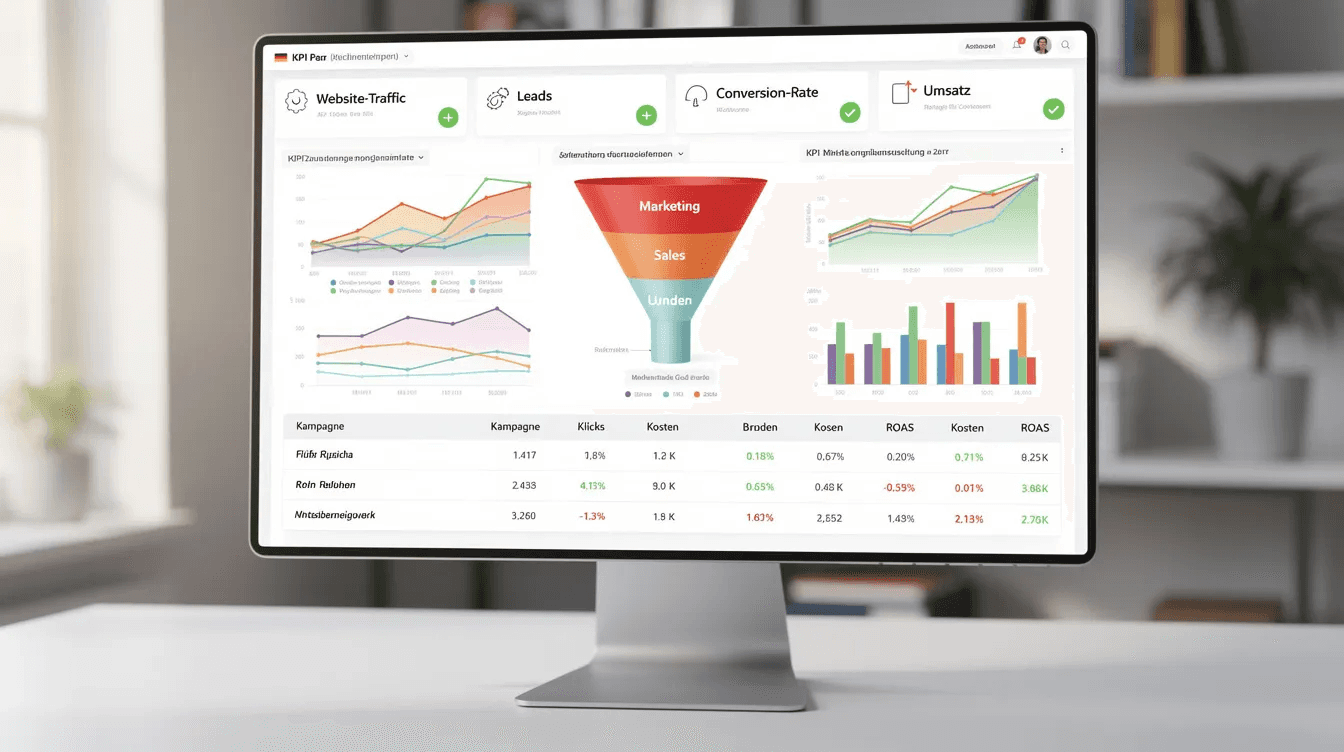
Set up reporting dashboards for different stakeholders: sales managers need pipeline overviews and activity tracking, marketing needs attribution reports and lead quality data, and management wants to see revenue metrics and trends.
Integration and Testing
HubSpot enables easy integration with other applications and platforms, facilitating the use of existing software and process automation, especially if you use profitably scaling Google Ads campaigns for lead generation.
Integration | Purpose | Priority |
|---|---|---|
ERP System (SAP, Dynamics) | Synchronize order and invoice data | High for larger companies |
Google Ads / LinkedIn Ads | Attribution and campaign tracking | High for performance marketing |
Email Provider | Email tracking and synchronization | High |
Calendar (Google, Outlook) | Meeting booking and appointments | Medium |
Analytics Tools | Expand website tracking | Medium |
Telephony System | Call logging | Low to Medium |
Use tools like ERP Bridge or APPSeCONNECT for bi-directional, real-time synchronization of deals, contacts, and order data, or work with a HubSpot Solutions Partner who can turn your CRM into a revenue engine. This makes the difference between fragmented systems and a connected revenue engine.
Testing Checklist Before Go-Live:
All forms submit data correctly to HubSpot
Lead scoring is functional and assigns scores correctly
Workflows trigger under the correct conditions
Sales receives notifications for qualified leads
Integrations synchronize data in both directions
Dashboards display valid data
Common Challenges and Solutions
Typical stumbling blocks arise with every HubSpot implementation in the B2B sector. Here are proven practical solutions.
Data Quality and Migration
Problem: Duplicate contacts, inconsistent data formats, missing required fields. This leads to faulty lead scoring, incorrect reports, and frustrated users.
Solution: Define data standards before importing. Perform deduplication in your legacy system before migrating. Standardize fields such as countries (DE vs. Austria vs. Germany), phone numbers, and date formats. Use HubSpot workflows for continuous data maintenance: automatic formatting, duplicate detection, and cleanup of inactive contacts.
A B2B CRM allows for the central capture of all information and communication related to a customer base's companies, improving collaboration between teams – but only if the data is correct.
User Acceptance and Training
Problem: Teams continue to use old tools; HubSpot is used half-heartedly or incompletely. Sales does not log activities, and marketing ignores feedback on lead quality.
Solution: Structured onboarding is mandatory. Use HubSpot Academy courses as a basis, complement with company-specific training, or work with a certified HubSpot Solutions Partner agency to guide your team. Plan regular review meetings to discuss usage and results.
Demonstrate quick wins early: Show how automated emails save time, how lead notifications accelerate deals, and how a CRM system in B2B sales helps keep track of various touchpoints and communication with leads. Success motivates further use.
Complexity and Overwhelm
Problem: Too many features activated at once, overcomplicated workflows built, users overwhelmed.
Solution: Phase-by-phase implementation instead of a big bang. Start with core features: contact management, simple email sequences, basic pipelines. Expand gradually to include automation, lead scoring, and advanced reporting.
Focus on measurable business outcomes instead of feature completeness and consider an external B2B growth partner as a revenue driver, rather than a classic campaign agency. Keep in mind that AI-powered search is fundamentally changing B2B marketing and SEO strategies. Not every HubSpot feature is relevant for every company. A simple, well-used system beats a complex, ignored one.
Measuring Success and Optimization
The key KPIs for HubSpot success in B2B differ fundamentally from typical marketing metrics. Focus on:
MQL-to-SQL Rate: How many Marketing-Qualified Leads are accepted by sales? A rate below 30% suggests issues in lead scoring or a lack of alignment between marketing and sales.
Customer Acquisition Cost: What does a new customer cost you across all channels? HubSpot enables cross-channel attribution for the first time – make use of it.
Revenue Attribution: Which marketing activities actually lead to revenue? Not just for the first click, but across the entire customer journey.
Build different reporting views for various stakeholders: marketing needs campaign performance and lead quality, sales wants pipeline and activities, and management focuses on revenue and trends.
Continuous optimization is based on data: review lead scoring thresholds quarterly, analyze conversion rates per stage, and identify bottlenecks in the pipeline. If A-grade leads make up more than 10% of your volume, your criteria are likely set too low.
When additional hubs or Professional/Enterprise features make sense: When you are actively managing more than 2,000 marketing contacts, when you need complex automations, when advanced reporting is required for forecasting, or when custom objects are necessary for your business model.
Conclusion and Next Steps
HubSpot implementation in B2B is an investment in structured revenue growth, not just tool deployment. The platform becomes the operational backbone where visibility, demand generation, and conversion infrastructure converge. Properly implemented, HubSpot creates the central data source for all customer interactions and enables genuine attribution and pipeline transparency for the first time.
Actionable steps you can take immediately:
Start a current state analysis: Which tools do you use today, how well is data integrated, and which processes are manual?
Test the free HubSpot version to get to know the interface and basic functions
Plan team training via HubSpot Academy – these are free and high-quality
Define your Ideal Customer Profile with concrete criteria
Create an initial draft of lead scoring criteria based on your best customers
When partner support makes sense: For complex ERP integrations, large volumes of data over 10,000 contacts, specific B2B requirements like custom objects, or when internal resources for structured implementation are lacking. Agencies like iGrow as a B2B growth partner position themselves as a growth layer on top of HubSpot: they structure not only the tool, but the entire growth architecture – from SEO structure and AI Search Visibility to a GEO Visibility Audit for AI search results and conversion infrastructure.
Related topics for the next step: Revenue Operations setup for cross-channel attribution, AI Search Optimization so that AI platforms like ChatGPT and Perplexity recommend your company, generating B2B leads via Google, a GEO agency that positions your brand as the #1 source in ChatGPT & Perplexity, and Google Ads integration with HubSpot for complete performance attribution.
Additional Resources
HubSpot Academy Courses for B2B:
Inbound Marketing Certification
HubSpot Sales Software Certification
Revenue Operations Certification
Implementation Checklist (Simplified):
[ ] Current state analysis and tool audit completed
[ ] KPIs and goals defined
[ ] ICP criteria documented
[ ] Data cleanup before migration
[ ] Team champions designated
[ ] Training plan created
[ ] Lead scoring model designed
[ ] Integrations identified
Integration guide for common B2B tools and how they contribute to a strategic website lead generation with SEO, ads, and personal branding:
ERP systems: ERP Bridge, APPSeCONNECT for SAP, Microsoft Dynamics
Ads platforms: Native HubSpot integration for Google Ads, LinkedIn Ads – especially relevant with the new Google AI Overviews and their impact on search behavior in the DACH region
Analytics: Google Analytics 4 via HubSpot tracking code
Telephony: Integration via HubSpot App Marketplace as well as LinkedIn Personal Branding as an additional lead channel, which should interact directly with your CRM
Case studies from the DACH region: From 16% AI visibility to 100% in 90 days, generating over 340 conversions (qualified leads). In addition, strategic SEO optimization & GEO optimization by a specialized agency helps to replicate such successes repeatably through organic channels.
P.S.: Let's talk without obligation. In our Smart Growth Call, we will give you three concrete growth levers, no pitch, no sales presentation!
Implementing HubSpot for B2B succeeds through structured data migration, automated lead scoring (MQL/SQL), optimized sales pipelines, and the seamless integration of existing ERP and marketing systems.
Introduction
Implementing HubSpot for B2B means more than just installing a new tool – it is the implementation of an all-in-one CRM system that unites marketing, sales, and service for B2B companies and serves as a central data source for all customer interactions. The effective introduction of HubSpot in a B2B company requires a structured process that goes beyond purely technical setup.
This guide covers the entire implementation process – from strategic planning to practical execution – specifically for B2B companies in the DACH region. You won't find superficial tips here, but concrete steps for scale-ups and SMEs with existing customers who want to systematize their growth. Topics such as detailed HubSpot pricing or advanced Enterprise configurations are outside the focus.
Why is this topic so important now? B2B buyers already make 60–70% of their buying decisions before they even contact sales. More than 80% of deals go to providers who are already on the internal shortlist – created without any personal interaction. Without structured lead capture and systematic follow-up, you lose potential customers before you even know they exist.
What you will take away from this article:
Systematic implementation of HubSpot for B2B with concrete phases and timelines
Lead scoring models that separate Marketing-Qualified Leads from Sales-Qualified Leads
ROI measurability through clearly defined KPIs and reporting structures
Process optimization for marketing, sales, and customer service in a single system
Scalable lead generation through marketing automation and integration
Understanding HubSpot for B2B
HubSpot is an all-in-one platform that allows companies to manage all marketing, sales, and service activities in a single portal, increasing efficiency and transparency. In the B2B sector, this means: you have a central data source for all contacts, companies, and activities, which are automatically documented, improving collaboration between teams.
Why do B2B companies need a specialized CRM system like HubSpot? The answer lies in the complexity of the B2B sales process. While B2C customers often buy spontaneously, B2B leads go through longer sales cycles with an average decision-making process of 10.1 months. Structured lead management in B2B is crucial because it requires many touchpoints, individual consulting, and targeted follow-up to keep track of leads and ensure that no lead is lost.
B2B vs. B2C Differences in HubSpot
In the B2B sector, you do not work with individual consumers, but with buying committees of 8-12 people from different functions – budget holders, technical decision-makers, end users. This requires fundamentally different approaches:
Lead scoring separates Marketing-Qualified Leads (MQLs) from Sales-Qualified Leads (SQLs) and is important for sales effectiveness. You need longer lead nurturing campaigns that guide potential customers through different phases of their buying decision. Account-Based Marketing enables the targeted addressing of target companies instead of mass communication and forms an important component of systematic B2B customer acquisition.
Reporting requirements are more complex: you need to track pipeline value, deal stages, and revenue attribution over longer periods of time. Using a B2B CRM system can increase close rates by up to 18 percent by enabling transparent and efficient management of sales processes and highlighting structured pipeline management instead of isolated lead viewing.
The HubSpot Hubs for B2B
HubSpot offers several specialized hubs that work together in a B2B context:
Marketing Hub focuses on lead generation, content marketing, and marketing automation. Using HubSpot can significantly improve lead generation and lead nurturing by implementing automated processes that guide potential customers through the various stages of their buying decision. Here you create marketing campaigns, landing pages, and email workflows.
Sales Hub covers pipeline management, deal tracking, and sales automation. Sales representatives see all relevant information at a glance: past interactions, emails, meetings, and the current deal stage. Clearly defined deal stages reflect the buyer's progress, e.g., through a clear nomenclature.
Service Hub enables structured customer service with ticket management and knowledge bases. This is particularly relevant for B2B companies, as customer relationships are maintained over the long term and after-sales support often runs for years.
The connection between the hubs creates a seamless customer journey: a lead acquired through content marketing is automatically handed over to sales when they reach certain scoring thresholds. After the deal is closed, service takes over support – all in one system with a complete history.
Strategic Planning of the HubSpot Implementation
Implementing HubSpot in the B2B sector is a strategic realignment of market development. The implementation of HubSpot requires a clear definition of the goals and needs of the marketing, sales, and customer service teams to select the appropriate CRM solution. Without careful preparation, you risk the system not being adopted or its potential remaining unused.
Current State Analysis and Requirement Assessment
Before you implement HubSpot, you need a clear picture of your current situation. Which tools do you currently use for CRM, marketing automation, and analytics? How well are these integrated? Fragmented systems lead to duplicate data entry and inconsistent information.
Identify concrete pain points: Do you lack lead attribution – i.e., knowing which channel brought which deal? Do your sales representatives spend too much time on manual processes instead of sales conversations? Are you losing B2B leads because no one has an overview of all touchpoints?
Mapping the customer journey is essential: What touchpoints does a typical customer have with your company – website, email, phone, social media, trade shows? An effective HubSpot setup should ensure that the CRM can be integrated into existing business operations to guarantee seamless use.
Also check data quality: How many contacts have incomplete profile fields, such as missing industry, number of employees, or job title? How many duplicates exist? Without clean data, lead scoring does not work, and attribution becomes a guessing game.
Goal Definition and KPI Establishment
Define revenue-oriented goals instead of vanity metrics. Click numbers and website visits are informative but not business-relevant. Focus on KPIs that have a direct impact on your revenue:
Customer Acquisition Cost (CAC): What does a new customer actually cost you?
Lead-to-Customer Rate: How many leads turn into paying customers?
Sales Cycle Length: How long does the average sales process take?
MQL-to-SQL Conversion: How many Marketing-Qualified Leads qualify for sales?
Revenue per Lead: What revenue does an average lead generate?
The timeline for initial results is typically 90-180 days. In the first three months, you focus on setup and initial quick wins like automated emails or improved lead capture. Substantial ROI increases usually show after six months.
HubSpot prices vary depending on the hub and licensing model. Starter plans begin at around 9 euros per seat per month, Professional licenses are in the range of 800+ euros monthly, and Enterprise versions cost several thousand euros depending on the number of seats and marketing contact volume. Also plan for onboarding fees, which can range from 1,400 to over 7,000 euros.
Team Preparation and Change Management
The effective use of HubSpot requires clear alignment between marketing and sales. Create a training plan for all involved teams: marketing must understand workflows and campaigns, sales needs expertise in pipeline management, and service must master tickets and the knowledge base.
The HubSpot Academy offers extensive training and resources that allow users to learn the platform quickly and use it effectively, facilitating implementation and adoption. Use these free courses as a basis for your onboarding.
Designate HubSpot Champions in each team – individuals who act as the first point of contact for questions and spread best practices. These champions should be involved early in the implementation process.
Define clear data quality standards: Which fields must be filled out for every contact? Who is responsible for data maintenance? Plan the migration of existing contacts and data carefully – deduplication and cleanup before import are crucial.
Practical HubSpot Implementation Step-by-Step
The implementation should begin with a setup kickoff to define processes and lifecycle stages. A systematic approach in clearly defined phases ensures smooth implementation and quick initial wins.
Phase 1: Basic Setup and Data Migration (Weeks 1-2)
Set up your HubSpot account and create users with corresponding permissions. Define teams and hierarchies that reflect your organizational structure.
Creating a central data source is crucial to automatically document all interactions. Import contact and company data from existing systems. Clean up before importing: remove obvious duplicates, standardize formats for date fields and country codes, and fill in critical fields.
Create custom properties for B2B-specific fields. Definition of the Ideal Customer Profile (ICP): Define specific criteria such as revenue, industry, and employee count. These fields will be needed later for lead scoring and segmentation.
Configure sales pipelines according to your real B2B sales process. Typical stages could be: Initial Qualification, Demo Scheduled, Proposal Created, Negotiation, Won/Lost. Each stage should have clear criteria for when a deal belongs there.
Phase 2: Marketing Automation Setup (Weeks 3-4)
Marketing automation enables B2B companies to optimize their marketing processes by targeting and managing leads in a personalized way. Automating marketing processes is particularly beneficial for companies with limited resources, as it saves time and costs while increasing efficiency.
Build a lead scoring model that considers two dimensions: Fit (firmographics like industry, company size, job title) and Engagement (behavior like page views, downloads, demo requests) so you can clearly distinguish between Marketing-Qualified and Sales-Qualified Leads. The balance could be around 60% engagement and 40% fit – depending on your sales capacity.
For B2B, automating lead nurturing is crucial and should be embedded in an overarching lead system and funnel strategy. Create email workflows for different stages of the buyer's journey: awareness content for new contacts, comparison content for the research phase, and case studies for the evaluation phase. By using marketing automation, B2B companies can better segment their leads and provide personalized content, which increases conversion rates.
Set up landing pages and forms for content offers – whitepapers, webinars, demos – and link them to clear inbound marketing strategies for B2B, instead of running isolated actions. Each form should only ask for the most necessary fields so as not to jeopardize conversion, but still provide enough information for scoring and segmentation.
Implement marketing attribution and conversion tracking. High-quality integrations, e.g., with LinkedIn Ads and Google Ads, are required for seamless workflows. Without this integration, you won't know which channel is actually generating pipeline.
Phase 3: Sales Process Optimization (Weeks 5-6)
Using HubSpot can increase efficiency in B2B sales by centrally capturing all contacts, companies, and activities, which improves collaboration between teams. The use of a B2B CRM allows a company's sales teams to optimize the lead generation process through automation features and make the lead nurturing process smoother, provided that the systemic causes of missing leads are addressed.
Create sales sequences for different lead types: A sequence for warm inbound leads with demo interest differs from one for cold outbound contacts. Configure email templates and meeting booking tools to simplify the daily work of your sales representatives.
Adjust deal stages and win probabilities to reflect real close rates. If historically only 30% of deals in the “Proposal Created” stage are won, the probability should not be set at 80%. Realistic forecasts are the foundation for meaningful pipeline planning.
Set up reporting dashboards for different stakeholders: sales managers need pipeline overviews and activity tracking, marketing needs attribution reports and lead quality data, and management wants to see revenue metrics and trends.
Integration and Testing
HubSpot enables easy integration with other applications and platforms, facilitating the use of existing software and process automation, especially if you use profitably scaling Google Ads campaigns for lead generation.
Integration | Purpose | Priority |
|---|---|---|
ERP System (SAP, Dynamics) | Synchronize order and invoice data | High for larger companies |
Google Ads / LinkedIn Ads | Attribution and campaign tracking | High for performance marketing |
Email Provider | Email tracking and synchronization | High |
Calendar (Google, Outlook) | Meeting booking and appointments | Medium |
Analytics Tools | Expand website tracking | Medium |
Telephony System | Call logging | Low to Medium |
Use tools like ERP Bridge or APPSeCONNECT for bi-directional, real-time synchronization of deals, contacts, and order data, or work with a HubSpot Solutions Partner who can turn your CRM into a revenue engine. This makes the difference between fragmented systems and a connected revenue engine.
Testing Checklist Before Go-Live:
All forms submit data correctly to HubSpot
Lead scoring is functional and assigns scores correctly
Workflows trigger under the correct conditions
Sales receives notifications for qualified leads
Integrations synchronize data in both directions
Dashboards display valid data
Common Challenges and Solutions
Typical stumbling blocks arise with every HubSpot implementation in the B2B sector. Here are proven practical solutions.
Data Quality and Migration
Problem: Duplicate contacts, inconsistent data formats, missing required fields. This leads to faulty lead scoring, incorrect reports, and frustrated users.
Solution: Define data standards before importing. Perform deduplication in your legacy system before migrating. Standardize fields such as countries (DE vs. Austria vs. Germany), phone numbers, and date formats. Use HubSpot workflows for continuous data maintenance: automatic formatting, duplicate detection, and cleanup of inactive contacts.
A B2B CRM allows for the central capture of all information and communication related to a customer base's companies, improving collaboration between teams – but only if the data is correct.
User Acceptance and Training
Problem: Teams continue to use old tools; HubSpot is used half-heartedly or incompletely. Sales does not log activities, and marketing ignores feedback on lead quality.
Solution: Structured onboarding is mandatory. Use HubSpot Academy courses as a basis, complement with company-specific training, or work with a certified HubSpot Solutions Partner agency to guide your team. Plan regular review meetings to discuss usage and results.
Demonstrate quick wins early: Show how automated emails save time, how lead notifications accelerate deals, and how a CRM system in B2B sales helps keep track of various touchpoints and communication with leads. Success motivates further use.
Complexity and Overwhelm
Problem: Too many features activated at once, overcomplicated workflows built, users overwhelmed.
Solution: Phase-by-phase implementation instead of a big bang. Start with core features: contact management, simple email sequences, basic pipelines. Expand gradually to include automation, lead scoring, and advanced reporting.
Focus on measurable business outcomes instead of feature completeness and consider an external B2B growth partner as a revenue driver, rather than a classic campaign agency. Keep in mind that AI-powered search is fundamentally changing B2B marketing and SEO strategies. Not every HubSpot feature is relevant for every company. A simple, well-used system beats a complex, ignored one.
Measuring Success and Optimization
The key KPIs for HubSpot success in B2B differ fundamentally from typical marketing metrics. Focus on:
MQL-to-SQL Rate: How many Marketing-Qualified Leads are accepted by sales? A rate below 30% suggests issues in lead scoring or a lack of alignment between marketing and sales.
Customer Acquisition Cost: What does a new customer cost you across all channels? HubSpot enables cross-channel attribution for the first time – make use of it.
Revenue Attribution: Which marketing activities actually lead to revenue? Not just for the first click, but across the entire customer journey.
Build different reporting views for various stakeholders: marketing needs campaign performance and lead quality, sales wants pipeline and activities, and management focuses on revenue and trends.
Continuous optimization is based on data: review lead scoring thresholds quarterly, analyze conversion rates per stage, and identify bottlenecks in the pipeline. If A-grade leads make up more than 10% of your volume, your criteria are likely set too low.
When additional hubs or Professional/Enterprise features make sense: When you are actively managing more than 2,000 marketing contacts, when you need complex automations, when advanced reporting is required for forecasting, or when custom objects are necessary for your business model.
Conclusion and Next Steps
HubSpot implementation in B2B is an investment in structured revenue growth, not just tool deployment. The platform becomes the operational backbone where visibility, demand generation, and conversion infrastructure converge. Properly implemented, HubSpot creates the central data source for all customer interactions and enables genuine attribution and pipeline transparency for the first time.
Actionable steps you can take immediately:
Start a current state analysis: Which tools do you use today, how well is data integrated, and which processes are manual?
Test the free HubSpot version to get to know the interface and basic functions
Plan team training via HubSpot Academy – these are free and high-quality
Define your Ideal Customer Profile with concrete criteria
Create an initial draft of lead scoring criteria based on your best customers
When partner support makes sense: For complex ERP integrations, large volumes of data over 10,000 contacts, specific B2B requirements like custom objects, or when internal resources for structured implementation are lacking. Agencies like iGrow as a B2B growth partner position themselves as a growth layer on top of HubSpot: they structure not only the tool, but the entire growth architecture – from SEO structure and AI Search Visibility to a GEO Visibility Audit for AI search results and conversion infrastructure.
Related topics for the next step: Revenue Operations setup for cross-channel attribution, AI Search Optimization so that AI platforms like ChatGPT and Perplexity recommend your company, generating B2B leads via Google, a GEO agency that positions your brand as the #1 source in ChatGPT & Perplexity, and Google Ads integration with HubSpot for complete performance attribution.
Additional Resources
HubSpot Academy Courses for B2B:
Inbound Marketing Certification
HubSpot Sales Software Certification
Revenue Operations Certification
Implementation Checklist (Simplified):
[ ] Current state analysis and tool audit completed
[ ] KPIs and goals defined
[ ] ICP criteria documented
[ ] Data cleanup before migration
[ ] Team champions designated
[ ] Training plan created
[ ] Lead scoring model designed
[ ] Integrations identified
Integration guide for common B2B tools and how they contribute to a strategic website lead generation with SEO, ads, and personal branding:
ERP systems: ERP Bridge, APPSeCONNECT for SAP, Microsoft Dynamics
Ads platforms: Native HubSpot integration for Google Ads, LinkedIn Ads – especially relevant with the new Google AI Overviews and their impact on search behavior in the DACH region
Analytics: Google Analytics 4 via HubSpot tracking code
Telephony: Integration via HubSpot App Marketplace as well as LinkedIn Personal Branding as an additional lead channel, which should interact directly with your CRM
Case studies from the DACH region: From 16% AI visibility to 100% in 90 days, generating over 340 conversions (qualified leads). In addition, strategic SEO optimization & GEO optimization by a specialized agency helps to replicate such successes repeatably through organic channels.
P.S.: Let's talk without obligation. In our Smart Growth Call, we will give you three concrete growth levers, no pitch, no sales presentation!
Written by:

Edin
Author & Founder
Share this article
How long does it take to implement HubSpot in the B2B sector?
A basic setup including data migration and pipeline configuration is in place within 1 to 2 weeks. The automation of marketing and sales processes follows in weeks 3 to 6. In our experience, the first significant efficiency gains and measurable increases in ROI become apparent after 90 to 180 days.
Why is HubSpot better suited for B2B companies than for B2C?
B2B decision-making processes take an average of 10.1 months and involve 8 to 12 people. HubSpot maps these complex buying committees precisely. It links contacts with companies and enables customized account-based marketing instead of impersonal mass processing.
How do I differentiate MQLs from SQLs with HubSpot?
With two-dimensional lead scoring. HubSpot automatically evaluates fit (e.g., industry, ideal customer company size) and engagement (e.g., downloads, clicks, demo requests). Once a contact reaches your defined threshold, they are immediately passed to sales as an SQL.
Can we connect our existing ERP systems like SAP with HubSpot?
Yes. Using native interfaces or middleware like ERP Bridge and APPSeCONNECT, you can synchronize customer data, quotes, and ERP order data bidirectionally and in real time. Your HubSpot CRM thus becomes a seamless revenue engine without data chaos.
How much does HubSpot implementation cost for German B2B companies?
Software licenses start at about €9 per seat in the Starter plan. Professional licenses for teams start at €800 and up, while enterprise solutions cost several thousand euros per month. Strategic onboarding is a one-time fee of between €1,400 and over €7,000.


How long does it take to implement HubSpot in the B2B sector?
A basic setup including data migration and pipeline configuration is in place within 1 to 2 weeks. The automation of marketing and sales processes follows in weeks 3 to 6. In our experience, the first significant efficiency gains and measurable increases in ROI become apparent after 90 to 180 days.
Why is HubSpot better suited for B2B companies than for B2C?
B2B decision-making processes take an average of 10.1 months and involve 8 to 12 people. HubSpot maps these complex buying committees precisely. It links contacts with companies and enables customized account-based marketing instead of impersonal mass processing.
How do I differentiate MQLs from SQLs with HubSpot?
With two-dimensional lead scoring. HubSpot automatically evaluates fit (e.g., industry, ideal customer company size) and engagement (e.g., downloads, clicks, demo requests). Once a contact reaches your defined threshold, they are immediately passed to sales as an SQL.
Can we connect our existing ERP systems like SAP with HubSpot?
Yes. Using native interfaces or middleware like ERP Bridge and APPSeCONNECT, you can synchronize customer data, quotes, and ERP order data bidirectionally and in real time. Your HubSpot CRM thus becomes a seamless revenue engine without data chaos.
How much does HubSpot implementation cost for German B2B companies?
Software licenses start at about €9 per seat in the Starter plan. Professional licenses for teams start at €800 and up, while enterprise solutions cost several thousand euros per month. Strategic onboarding is a one-time fee of between €1,400 and over €7,000.
How long does it take to implement HubSpot in the B2B sector?
A basic setup including data migration and pipeline configuration is in place within 1 to 2 weeks. The automation of marketing and sales processes follows in weeks 3 to 6. In our experience, the first significant efficiency gains and measurable increases in ROI become apparent after 90 to 180 days.
Why is HubSpot better suited for B2B companies than for B2C?
B2B decision-making processes take an average of 10.1 months and involve 8 to 12 people. HubSpot maps these complex buying committees precisely. It links contacts with companies and enables customized account-based marketing instead of impersonal mass processing.
How do I differentiate MQLs from SQLs with HubSpot?
With two-dimensional lead scoring. HubSpot automatically evaluates fit (e.g., industry, ideal customer company size) and engagement (e.g., downloads, clicks, demo requests). Once a contact reaches your defined threshold, they are immediately passed to sales as an SQL.
Can we connect our existing ERP systems like SAP with HubSpot?
Yes. Using native interfaces or middleware like ERP Bridge and APPSeCONNECT, you can synchronize customer data, quotes, and ERP order data bidirectionally and in real time. Your HubSpot CRM thus becomes a seamless revenue engine without data chaos.
How much does HubSpot implementation cost for German B2B companies?
Software licenses start at about €9 per seat in the Starter plan. Professional licenses for teams start at €800 and up, while enterprise solutions cost several thousand euros per month. Strategic onboarding is a one-time fee of between €1,400 and over €7,000.