SEA Agency: The Complete Guide to Successful Search Engine Advertising 2026
SEA Agency: The Complete Guide to Successful Search Engine Advertising 2026

A professional SEA agency optimizes Google Ads through precise keyword targeting and CRM integration for maximum conversion rates, predictable B2B pipelines, and measurable revenue.
Introduction
You invest hundreds or thousands of euros monthly in Google Ads, but your results fall short of their potential. The clicks keep coming, but qualified leads, real conversions, and predictable growth are missing. This is exactly where an SEA agency comes in: it ensures that your advertising budget does not disappear into a black box, but works measurably to build pipelines, sales, and revenue.
An SEA agency is a specialized service provider for professional search engine advertising. SEA stands for "Search Engine Advertising" and refers to the paid placement of advertisements on search engines like Google or Bing. The primary goal of an SEA agency is to increase a company's visibility and direct highly qualified, purchase-ready users to their website. SEA allows companies to run highly targeted advertising, engaging desired target groups precisely through keyword targeting.
An SEA agency becomes highly relevant for you if your B2B company has a great offering, but your Google Ads campaigns are not reliably generating qualified inquiries. A professional Google Ads agency combines strategy, keyword research, tracking, campaign setup, ongoing optimization, and reporting into a system that produces not just clicks, but real business results.
In short: an SEA agency optimizes your Google Ads campaigns for maximum conversion rates at the most efficient cost. It helps you reach purchase-ready audiences at the exact moment they are actively searching for your products or services.
This article provides an overview of the key terms and concepts in search engine advertising (SEA), helping you grasp the context and terminology quickly.
What you will take away from this guide:
How to find an agency that truly specializes in B2B growth and does not just post ads.
Which fee structures make sense, including management fees, performance-based pricing, and hybrid models.
What performance benchmarks for CPC, conversion rate, CTR, and CPL are realistic in the B2B market for 2026 to 2027.
Which contract models, runtimes, reporting structures, and transparency standards you should demand.
How to measure ROI not by clicks, but by qualified leads, opportunities, and closed deals.
How SEA allows companies to run targeted advertising and precisely address target audiences through keyword targeting.
What is a Google Ads Agency and why do you need one?
An SEA agency like iGrow specializes in paid advertisements on search engines. Search engine advertising encompasses all paid ads displayed in search engines and is directed at users who are actively searching for products or services. Through SEA, companies become instantly visible above organic search results, enabling rapid reach and lead generation.
This is crucial for your growth because Google Ads do not work automatically just because a budget is available. The success of an SEA strategy relies on clear objectives, selecting the right keywords, and a well-thought-out campaign structure. Without this foundation, you often end up paying for searches that have no purchase intent.
A strong SEA agency connects your business goals with flawless execution. It translates target audiences, sales cycles, deal value, and offerings into campaigns that scale your sales pipeline. This turns Ads from mere advertising into a predictable channel in your online marketing.
Core tasks of a professional SEA agency
Strategy & consulting from an SEA agency involves defining advertising goals, determining target audiences, and setting budgets. Before an ad is launched, it must be clear whether your goal is demo requests, consultation calls, sales, content downloads, or sales-qualified leads. Placing ads is targeted on platforms like Google or the Microsoft Search Network to reach the desired target audience effectively.
Keyword research involves identifying the search terms potential customers use. A professional agency distinguishes between brand keywords, non-brand keywords, long-tail keywords, competitor keywords, and search queries with clear purchase intent. This prevents your budget from being wasted on overly broad terms.
Campaign setup includes structuring and setting up highly targeted campaigns, including text ads, Google Shopping ads, display banners, or YouTube videos. This involves building campaigns, ad groups, ads, audiences, budgets, and bidding strategies so that Google receives the correct data.
To make the goals of SEA campaigns measurable, it is crucial to set up conversion tracking before launch, which is done using tools like Google Tag Manager or Google Analytics. Conversions are tracked via systems like Google Analytics or Google Tag Manager (GTM) to gain insights into user behavior and campaign performance—especially if you want to systematically generate qualified B2B leads via Google. A conversion is a metric that measures the success of an advertisement when users interact with the ad, such as making a purchase or signing up.
Reporting & controlling involves the regular analysis of all relevant metrics to make success measurable. Good reporting shows not only cost-per-click, clicks, and impressions, but also conversion rates, cost-per-lead, cost-per-acquisition, opportunity value, and contribution to revenue.
SEA Agency vs. In-house Marketing Team
An in-house marketing team often knows your brand, products, and internal communication very well. This is valuable, but it is rarely enough for search engine advertising when dealing with complex B2B campaigns, clean account structures, smart bidding, Performance Max, CRM integration, and offline conversion tracking.
A specialized Ads agency brings experience from many accounts, industries, and competitive landscapes. This expertise is particularly important when CPCs rise, target audiences narrow, and your cost-per-click only remains profitable if tracking, ad quality, and landing pages work seamlessly together.
The cost comparison is not just a question of salary versus agency fees. External experts have access to professional tools, Google Ads certifications, often Google Partner status, and proven processes. Consequently, an online marketing agency can learn faster, test more efficiently, and manage your campaigns with less waste.
An in-house approach is primarily worthwhile if your company requires a very high ongoing Ads volume, several specialized employees, and total internal control. For many B2B companies, however, a hybrid model is ideal: your team provides market insights, product knowledge, and sales feedback, while the SEA agency takes over strategy, implementation, optimization, and performance responsibility as a B2B growth partner.
Distinction from SEO and other online marketing disciplines
The difference between SEO and SEA must be clarified, along with the criteria for choosing the right agency. SEO, or search engine optimization, ensures organic visibility but takes time before results show, whereas SEA delivers immediate reach since ads appear directly in the top search results.
SEA works with paid ads, auctions, cost-per-click, conversion tracking, and clear budget decisions. Billing in SEA is usually based on clicks, meaning companies only pay when a user actually clicks on the ad. This billing model is known as cost-per-click (CPC).
SEO measures other KPIs, such as rankings, organic traffic, visibility in search results, content performance, and domain authority. SEA, on the other hand, measures clicks, CTR, CPC, conversion rate, cost-per-lead, cost-per-acquisition, and contribution to revenue.
The combination of SEA and a specialized B2B SEO agency is ideal, as SEO builds long-term visibility while SEA provides immediate reach. Both disciplines, SEA and SEO, use similar data, keywords, and user intents, which can lead to lower costs and better rankings. For you, this means: SEO and SEA should not work against each other, but should be understood as a joint search engine marketing system.
Service Portfolio and Benefits of a Specialized SEA Agency
Before we dive into the service portfolio of an SEA agency, we will give you an overview of the key terms and concepts in search engine advertising (SEA) so that you can optimally contextualize the following content.
A professional agency typically covers the entire lifecycle of search engine advertising. This includes analysis, strategy, campaign build, tracking, landing page recommendations, ongoing optimization, reporting, and controlling.
This is important for you because isolated measures are rarely enough. A well-optimized campaign quickly leads to measurable conversions and increases visibility exactly at the moment potential customers are actively searching. But this effect only occurs when keywords, ads, landing page, budget, tracking, and sales process match.
It is important to determine which SEA platforms best suit your industry. For many B2B companies, Google is the focus, but depending on the target audience, Bing, YouTube, Display, Google Shopping, or remarketing may also be relevant, provided the campaigns are set up as profitably managed Google Ads with clear performance logic.
Strategic Planning and Campaign Development
At the beginning is the target audience analysis. A good SEA agency does not define buyer personas superficially, but based on real pain points, objections, decision criteria, and search intents. This clarifies which search query only shows an information need and which search query signals a genuine willingness to buy.
This is followed by competitor analysis. It shows which competitors are bidding on which keywords, how intense the competition is in your industry, and where you can win with better ads, higher relevance, or a sharper positioning. Especially in markets with high deal values, it is not the largest budget that decides, but the best B2B SEO and content strategy.
Budget allocation determines how much budget flows into brand, non-brand, competitor campaigns, remarketing, display, or Performance Max. A structured budget ensures better performance and long-term efficiency in SEA campaigns. The costs for SEA depend on the competition, chosen keywords, and ad quality.
For B2B software, non-brand CPCs are often around 15 to 50 euros or more, with conversion rates of approximately 3 to 5 percent for qualified demo requests. For IT services, CPCs are often 5 to 25 euros and conversion rates 3 to 6 percent. Manufacturing and industry often see 2 to 10 euro CPCs, while advisory and consulting see 5 to 20 euro CPCs.
Technical Setup and Conversion Tracking Implementation
The technical setup decides whether Google Ads learns which clicks are valuable. Without clean conversion tracking, the algorithm often optimizes for superficial actions, such as form submissions, that never turn into real customers later on.
Conversions are tracked via systems like Google Analytics or Google Tag Manager (GTM) to gain insights into user behavior and campaign performance. In the B2B space, offline conversion tracking should also be set up so that Google recognizes which leads become MQLs, SQLs, opportunities, and closed deals. CRM systems like HubSpot or Salesforce are particularly relevant for this.
Landing page recommendations include analyzing target pages to ensure users are guided toward the desired actions. A strong landing page has clear relevance to the ad, fast loading times, a compelling value proposition, strong CTAs, and as little friction as possible in the form.
The Google Ads account structure is also critical. Brand and non-brand campaigns should be separated. Generic keywords need strict control. Negative keywords must be updated continuously. Devices, locations, audiences, and funnel stages should be segmented so that you can see exactly where performance is generated and where budget is lost.
Performance Management and Continuous Optimization
Ongoing optimization involves adjusting bids, ad copy, and targeting features to minimize waste and maximize click-through and conversion rates. Continuous optimization can significantly improve campaign performance.
A good Google Ads agency monitors CPC, CTR, conversion rate, cost-per-lead, cost-per-acquisition, and budget consumption at least weekly, and daily for larger accounts. They systematically test ads, CTAs, landing pages, keyword options, and bidding strategies.
A/B testing is not a creative extra, but a performance lever. Different ads show which message actually triggers your target audience. Different landing pages show which content leads visitors to take action. This is where data and creativity meet directly.
A fitting example is the Google Ads Performance Boost of SoWork. In this success story, Google Ads performance was improved through targeted optimization of keyword structures, landing pages, and bidding strategies. Such examples demonstrate why SEA does not consist of a one-time setup, but consistent performance management.
In 2026, AI bidding, smart bidding, and Performance Max are becoming increasingly important. According to current benchmarks, accounts with AI-driven bidding strategies often achieve lower costs per conversion than purely manual CPC management. Nonetheless, human control remains crucial because Google can only optimize meaningfully if strategy, tracking, and data quality are correct.
Selecting the Right SEA Agency: Selection Criteria and Decision Aids
When you choose an SEA agency, you are not just buying operational management. You are deciding who manages your advertising budget, which target audiences see your brand, which leads enter your sales pipeline, and how transparently your growth becomes measurable.
iGrow has a regional presence with offices in Vienna and other cities, allowing us to cater specifically to the requirements of companies in these regions, especially as a Google Ads agency in Vienna focusing on B2B performance.
The best agency for you is therefore not automatically the largest online marketing agency or the cheapest Ads agency. The decisive factor is whether the agency understands your business model, your sales cycle, your target clients, and your unit economics. Especially in B2B, a high click volume is useless if it does not translate into opportunities.
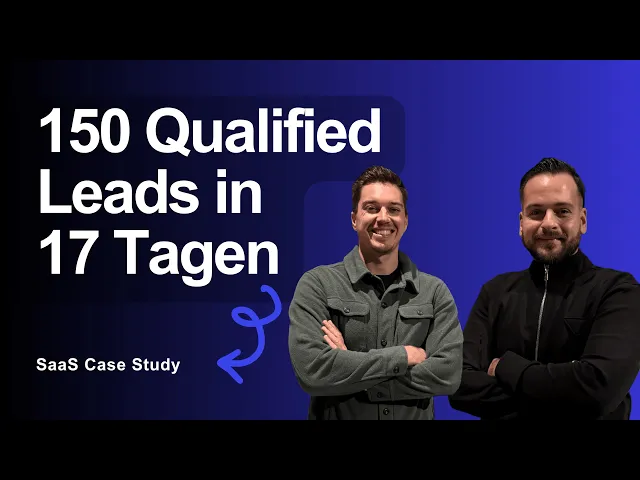
Why is iGrow the right partner for you as an SEA agency? Because iGrow does not view Google Ads in isolation, but as part of a B2B growth system. We connect search engine advertising, tracking, CRM data, landing pages, sales feedback, and strategic optimization so that paid ads turn into a predictable pipeline—exactly how we see ourselves as a B2B growth partner for measurable marketing. We show this precise approach in the iGrow SaaS case study, where B2B growth was built systematically rather than just managing individual campaigns.
Key Qualifications and Certifications
A professional SEA agency should have Google Ads certifications and ideally Google Partner status. While this alone does not guarantee success, it shows that foundational expertise, platform knowledge, and quality standards are in place.
Even more important is industry expertise in the B2B sector. A B2B SaaS company with high deal values needs different campaigns, keywords, ads, and reportings than a local shop or an e-commerce retailer. For deals with 30,000 to 100,000 euros lifetime value, a CPL of 300 to 600 euros can make total financial sense if sales cycle tracking is set up correctly.
Look for references and verifiable success stories. Good agencies do not just talk about clicks, but about leads, pipeline, ROAS, conversion quality, and real customers. Case studies like Official Dealer, MiniFinder, or a SaaS case study are valuable because they show whether the agency can solve complex situations in a structured way.
Team size and support capacity also count. You do not want to be just an account lost in an anonymous pool. Ask specifically who manages your account, how much experience these experts have, which tools are used, and how day-to-day communication runs—and whether values like authenticity and results focus, as they are lived at iGrow as an agency, truly match your company culture.
Comparison Criteria for SEA Agencies
An SEA agency's fee structure must align with your growth target. A flat management fee gives you planning security but does not automatically incentivize performance. Performance-based pricing can align interests more closely but requires highly clean attribution. Hybrid models combine a base fee with bonus incentives—similar criteria apply when choosing a marketing agency in Vienna, where transparency, expertise, and local market knowledge are key.
Criterion | What to Look For | Why It Matters to You |
|---|---|---|
Pricing Model | Management fee, performance-based pricing, or hybrid model | You need cost control and a performance incentive |
Contract Term | Usually at least 3 months is sensible, ideally 6 to 12 months | SEA requires data, testing, and learning cycles |
Transparency Level | Access to the Google Ads account, dashboards, and clear budget allocation | You must never work inside a black box |
Reporting Quality | Analysis of CPC, conversion rate, CPL, SQLs, opportunities, and revenue | Only then can you see real success |
Service Scope | Search, remarketing, display, shopping, YouTube, Performance Max, and landing pages | Your channel must match the market and target audience |
B2B Know-how | Experience with sales cycles, CRM tracking, and high deal values | B2B performance is not measured by cheap leads |
Regarding benchmarks, you should remain realistic. In the DACH region, the CTR for non-brand search is often around 3 to 5 percent, while brand campaigns often reach 8 to 15 percent. Content downloads in the TOFU funnel can cost about 15 to 40 euros CPL, demo or inquiry campaigns in the MOFU funnel about 40 to 100 euros, and sales-qualified leads in the BOFU funnel about 100 to 300 euros.
The average open CPC in Germany for B2B services is around 2.50 to 7.20 euros according to AdPredictor, while SaaS is in the mid-range CPC at approximately 4.14 euros. In highly competitive B2B categories with high purchase intent, actual costs can be significantly higher. That is why the quality of ads, landing pages, and keywords is so decisive.
The Selection Process: 5-Step Guide
A clear selection process protects you from wrong decisions. It helps you recognize early on whether an agency thinks strategically or simply manages campaigns.
Define your brief. Set revenue goals, SQL targets, target audiences, regions, budget, sales cycle, and relevant products or services.
Evaluate the agency pitch. Ask about strategy, keyword research, campaign architecture, tracking concepts, tools, team, and relevant references.
Plan a test phase. A 90-day sprint is often sensible because the first leads can take 4 to 8 weeks to develop, and real performance trends usually become visible after 2 to 3 months.
Check contract terms. Pay attention to runtimes, notice periods, scope of services, data protection, reporting frequency, and account ownership.
Set up the onboarding properly. Define roles, communication rhythm, target KPIs, CRM integration, conversion tracking, and approval processes.
Control is especially critical. You should remain the owner of your Google Ads account and have access to data, campaigns, and reports at all times. An agency that avoids transparency is a risk to B2B growth.
Common Problems and How to Avoid Them
Many companies look for an SEA agency only after budget has already been wasted. This is understandable but avoidable. The most common problems do not arise from Google Ads itself, but from unclear goals, wrong tracking, poor communication, and a lack of B2B experience.
If you are aware of these risks, you can make significantly better decisions. You do not need to master every technical setting yourself, but you should know what standards a reputable agency must meet.
Lack of Transparency and Communication
The biggest warning sign is a lack of transparency. If you only receive superficial reports but no clear explanation of keyword performance, bid adjustments, conversion quality, and budget utilization, you are working inside a black box.
The solution is simple: agree on weekly reportings and access to your Google Ads account. You should be able to see which keywords are driving costs, which ads are delivering conversions, and which campaigns should be paused or scaled.
Good communication also means that the agency does not just send numbers, but explains decisions. Why is a keyword being excluded? Why is the CPC rising? Why is the conversion rate dropping? Why is more budget being moved to BOFU campaigns? You need these answers to maintain trust and control.
Unrealistic Promises and Expectation Management
If an agency promises to double your revenue in 4 weeks, you should be cautious. B2B search engine advertising requires clean data, a functioning tracking setup, and realistic learning phases.
Many B2B sales cycles last 3 to 12 months. First leads or demo requests can arise after 4 to 8 weeks, but real performance trends often only show after 2 to 3 months. This is not a sign of weakness, but the reality of complex purchase decisions.
Reputable experts therefore talk about hypotheses, tests, benchmarks, and learning cycles. They explain to you what conversion rate is realistic, which cost-per-lead is economically viable, and when a campaign has enough data for valid decisions.
Wasting Budget Through Choosing the Wrong Agency
Budget waste usually results from overly broad keywords, wrong target groups, irrelevant search queries, poor landing pages, missing conversion tracking, or campaigns with no connection to real customers. In these cases, your dashboard might look active, but your sales team gets no qualified leads.
The solution is a strict focus on performance KPIs. Define what a good lead is before starting. Set up conversion tracking. Import offline conversions from your CRM. Separate TOFU, MOFU, and BOFU campaigns. Stop keywords with a poor spend-to-performance ratio.
Also, pay attention to landing page quality. Many Ads campaigns are not lost in the auction, but after the click. If the page is slow, the value proposition remains unclear, or the form creates too much friction, you are paying for visitors who do not convert.
Conclusion and Your Next Steps
An SEA agency is worth it for you if you want Google Ads to bring predictable growth rather than just clicks. The right agency connects strategy, keyword research, campaign setup, tracking, landing page optimization, reporting, and continuous performance management.
You have seen what truly matters: SEA delivers instant visibility, SEO builds long-term organic reach, and combining SEO and SEA creates a strong search engine marketing foundation. However, the critical point is that you do not optimize for clicks, but for qualified leads, opportunities, and real customers.
Your next steps:
Check your current tracking. Are Google Analytics, Google Tag Manager, CRM, and offline conversions cleanly connected?
Segment your funnel. Separate TOFU, MOFU, and BOFU search queries, as well as brand and non-brand campaigns.
Filter out keywords without purchase intent. Your budget should go toward search queries with real potential.
Define realistic benchmarks. Use CPC, CTR, conversion rate, CPL, SQL costs, and deal value as a basis for decision-making.
Demand transparency. You need account access, clear reports, regular communication, and understandable optimization.
If you want to dive deeper, Google Ads optimization, landing page testing, CRM tracking, AI visibility tracking, and a holistic inbound marketing system for B2B leads are the logical next topics. They help you not just win more visitors, but turn more of the right visitors into revenue.
Secure your non-binding Smart Growth Call now. In 30 minutes, we will work together to identify three concrete growth levers, including an individual scorecard for your business. Additionally, you will receive a non-binding setup as well as AI visibility tracking. We analyze your Google Ads account live and instantly point out unused quick wins and optimization potential.
A professional SEA agency optimizes Google Ads through precise keyword targeting and CRM integration for maximum conversion rates, predictable B2B pipelines, and measurable revenue.
Introduction
You invest hundreds or thousands of euros monthly in Google Ads, but your results fall short of their potential. The clicks keep coming, but qualified leads, real conversions, and predictable growth are missing. This is exactly where an SEA agency comes in: it ensures that your advertising budget does not disappear into a black box, but works measurably to build pipelines, sales, and revenue.
An SEA agency is a specialized service provider for professional search engine advertising. SEA stands for "Search Engine Advertising" and refers to the paid placement of advertisements on search engines like Google or Bing. The primary goal of an SEA agency is to increase a company's visibility and direct highly qualified, purchase-ready users to their website. SEA allows companies to run highly targeted advertising, engaging desired target groups precisely through keyword targeting.
An SEA agency becomes highly relevant for you if your B2B company has a great offering, but your Google Ads campaigns are not reliably generating qualified inquiries. A professional Google Ads agency combines strategy, keyword research, tracking, campaign setup, ongoing optimization, and reporting into a system that produces not just clicks, but real business results.
In short: an SEA agency optimizes your Google Ads campaigns for maximum conversion rates at the most efficient cost. It helps you reach purchase-ready audiences at the exact moment they are actively searching for your products or services.
This article provides an overview of the key terms and concepts in search engine advertising (SEA), helping you grasp the context and terminology quickly.
What you will take away from this guide:
How to find an agency that truly specializes in B2B growth and does not just post ads.
Which fee structures make sense, including management fees, performance-based pricing, and hybrid models.
What performance benchmarks for CPC, conversion rate, CTR, and CPL are realistic in the B2B market for 2026 to 2027.
Which contract models, runtimes, reporting structures, and transparency standards you should demand.
How to measure ROI not by clicks, but by qualified leads, opportunities, and closed deals.
How SEA allows companies to run targeted advertising and precisely address target audiences through keyword targeting.
What is a Google Ads Agency and why do you need one?
An SEA agency like iGrow specializes in paid advertisements on search engines. Search engine advertising encompasses all paid ads displayed in search engines and is directed at users who are actively searching for products or services. Through SEA, companies become instantly visible above organic search results, enabling rapid reach and lead generation.
This is crucial for your growth because Google Ads do not work automatically just because a budget is available. The success of an SEA strategy relies on clear objectives, selecting the right keywords, and a well-thought-out campaign structure. Without this foundation, you often end up paying for searches that have no purchase intent.
A strong SEA agency connects your business goals with flawless execution. It translates target audiences, sales cycles, deal value, and offerings into campaigns that scale your sales pipeline. This turns Ads from mere advertising into a predictable channel in your online marketing.
Core tasks of a professional SEA agency
Strategy & consulting from an SEA agency involves defining advertising goals, determining target audiences, and setting budgets. Before an ad is launched, it must be clear whether your goal is demo requests, consultation calls, sales, content downloads, or sales-qualified leads. Placing ads is targeted on platforms like Google or the Microsoft Search Network to reach the desired target audience effectively.
Keyword research involves identifying the search terms potential customers use. A professional agency distinguishes between brand keywords, non-brand keywords, long-tail keywords, competitor keywords, and search queries with clear purchase intent. This prevents your budget from being wasted on overly broad terms.
Campaign setup includes structuring and setting up highly targeted campaigns, including text ads, Google Shopping ads, display banners, or YouTube videos. This involves building campaigns, ad groups, ads, audiences, budgets, and bidding strategies so that Google receives the correct data.
To make the goals of SEA campaigns measurable, it is crucial to set up conversion tracking before launch, which is done using tools like Google Tag Manager or Google Analytics. Conversions are tracked via systems like Google Analytics or Google Tag Manager (GTM) to gain insights into user behavior and campaign performance—especially if you want to systematically generate qualified B2B leads via Google. A conversion is a metric that measures the success of an advertisement when users interact with the ad, such as making a purchase or signing up.
Reporting & controlling involves the regular analysis of all relevant metrics to make success measurable. Good reporting shows not only cost-per-click, clicks, and impressions, but also conversion rates, cost-per-lead, cost-per-acquisition, opportunity value, and contribution to revenue.
SEA Agency vs. In-house Marketing Team
An in-house marketing team often knows your brand, products, and internal communication very well. This is valuable, but it is rarely enough for search engine advertising when dealing with complex B2B campaigns, clean account structures, smart bidding, Performance Max, CRM integration, and offline conversion tracking.
A specialized Ads agency brings experience from many accounts, industries, and competitive landscapes. This expertise is particularly important when CPCs rise, target audiences narrow, and your cost-per-click only remains profitable if tracking, ad quality, and landing pages work seamlessly together.
The cost comparison is not just a question of salary versus agency fees. External experts have access to professional tools, Google Ads certifications, often Google Partner status, and proven processes. Consequently, an online marketing agency can learn faster, test more efficiently, and manage your campaigns with less waste.
An in-house approach is primarily worthwhile if your company requires a very high ongoing Ads volume, several specialized employees, and total internal control. For many B2B companies, however, a hybrid model is ideal: your team provides market insights, product knowledge, and sales feedback, while the SEA agency takes over strategy, implementation, optimization, and performance responsibility as a B2B growth partner.
Distinction from SEO and other online marketing disciplines
The difference between SEO and SEA must be clarified, along with the criteria for choosing the right agency. SEO, or search engine optimization, ensures organic visibility but takes time before results show, whereas SEA delivers immediate reach since ads appear directly in the top search results.
SEA works with paid ads, auctions, cost-per-click, conversion tracking, and clear budget decisions. Billing in SEA is usually based on clicks, meaning companies only pay when a user actually clicks on the ad. This billing model is known as cost-per-click (CPC).
SEO measures other KPIs, such as rankings, organic traffic, visibility in search results, content performance, and domain authority. SEA, on the other hand, measures clicks, CTR, CPC, conversion rate, cost-per-lead, cost-per-acquisition, and contribution to revenue.
The combination of SEA and a specialized B2B SEO agency is ideal, as SEO builds long-term visibility while SEA provides immediate reach. Both disciplines, SEA and SEO, use similar data, keywords, and user intents, which can lead to lower costs and better rankings. For you, this means: SEO and SEA should not work against each other, but should be understood as a joint search engine marketing system.
Service Portfolio and Benefits of a Specialized SEA Agency
Before we dive into the service portfolio of an SEA agency, we will give you an overview of the key terms and concepts in search engine advertising (SEA) so that you can optimally contextualize the following content.
A professional agency typically covers the entire lifecycle of search engine advertising. This includes analysis, strategy, campaign build, tracking, landing page recommendations, ongoing optimization, reporting, and controlling.
This is important for you because isolated measures are rarely enough. A well-optimized campaign quickly leads to measurable conversions and increases visibility exactly at the moment potential customers are actively searching. But this effect only occurs when keywords, ads, landing page, budget, tracking, and sales process match.
It is important to determine which SEA platforms best suit your industry. For many B2B companies, Google is the focus, but depending on the target audience, Bing, YouTube, Display, Google Shopping, or remarketing may also be relevant, provided the campaigns are set up as profitably managed Google Ads with clear performance logic.
Strategic Planning and Campaign Development
At the beginning is the target audience analysis. A good SEA agency does not define buyer personas superficially, but based on real pain points, objections, decision criteria, and search intents. This clarifies which search query only shows an information need and which search query signals a genuine willingness to buy.
This is followed by competitor analysis. It shows which competitors are bidding on which keywords, how intense the competition is in your industry, and where you can win with better ads, higher relevance, or a sharper positioning. Especially in markets with high deal values, it is not the largest budget that decides, but the best B2B SEO and content strategy.
Budget allocation determines how much budget flows into brand, non-brand, competitor campaigns, remarketing, display, or Performance Max. A structured budget ensures better performance and long-term efficiency in SEA campaigns. The costs for SEA depend on the competition, chosen keywords, and ad quality.
For B2B software, non-brand CPCs are often around 15 to 50 euros or more, with conversion rates of approximately 3 to 5 percent for qualified demo requests. For IT services, CPCs are often 5 to 25 euros and conversion rates 3 to 6 percent. Manufacturing and industry often see 2 to 10 euro CPCs, while advisory and consulting see 5 to 20 euro CPCs.
Technical Setup and Conversion Tracking Implementation
The technical setup decides whether Google Ads learns which clicks are valuable. Without clean conversion tracking, the algorithm often optimizes for superficial actions, such as form submissions, that never turn into real customers later on.
Conversions are tracked via systems like Google Analytics or Google Tag Manager (GTM) to gain insights into user behavior and campaign performance. In the B2B space, offline conversion tracking should also be set up so that Google recognizes which leads become MQLs, SQLs, opportunities, and closed deals. CRM systems like HubSpot or Salesforce are particularly relevant for this.
Landing page recommendations include analyzing target pages to ensure users are guided toward the desired actions. A strong landing page has clear relevance to the ad, fast loading times, a compelling value proposition, strong CTAs, and as little friction as possible in the form.
The Google Ads account structure is also critical. Brand and non-brand campaigns should be separated. Generic keywords need strict control. Negative keywords must be updated continuously. Devices, locations, audiences, and funnel stages should be segmented so that you can see exactly where performance is generated and where budget is lost.
Performance Management and Continuous Optimization
Ongoing optimization involves adjusting bids, ad copy, and targeting features to minimize waste and maximize click-through and conversion rates. Continuous optimization can significantly improve campaign performance.
A good Google Ads agency monitors CPC, CTR, conversion rate, cost-per-lead, cost-per-acquisition, and budget consumption at least weekly, and daily for larger accounts. They systematically test ads, CTAs, landing pages, keyword options, and bidding strategies.
A/B testing is not a creative extra, but a performance lever. Different ads show which message actually triggers your target audience. Different landing pages show which content leads visitors to take action. This is where data and creativity meet directly.
A fitting example is the Google Ads Performance Boost of SoWork. In this success story, Google Ads performance was improved through targeted optimization of keyword structures, landing pages, and bidding strategies. Such examples demonstrate why SEA does not consist of a one-time setup, but consistent performance management.
In 2026, AI bidding, smart bidding, and Performance Max are becoming increasingly important. According to current benchmarks, accounts with AI-driven bidding strategies often achieve lower costs per conversion than purely manual CPC management. Nonetheless, human control remains crucial because Google can only optimize meaningfully if strategy, tracking, and data quality are correct.
Selecting the Right SEA Agency: Selection Criteria and Decision Aids
When you choose an SEA agency, you are not just buying operational management. You are deciding who manages your advertising budget, which target audiences see your brand, which leads enter your sales pipeline, and how transparently your growth becomes measurable.
iGrow has a regional presence with offices in Vienna and other cities, allowing us to cater specifically to the requirements of companies in these regions, especially as a Google Ads agency in Vienna focusing on B2B performance.
The best agency for you is therefore not automatically the largest online marketing agency or the cheapest Ads agency. The decisive factor is whether the agency understands your business model, your sales cycle, your target clients, and your unit economics. Especially in B2B, a high click volume is useless if it does not translate into opportunities.
Why is iGrow the right partner for you as an SEA agency? Because iGrow does not view Google Ads in isolation, but as part of a B2B growth system. We connect search engine advertising, tracking, CRM data, landing pages, sales feedback, and strategic optimization so that paid ads turn into a predictable pipeline—exactly how we see ourselves as a B2B growth partner for measurable marketing. We show this precise approach in the iGrow SaaS case study, where B2B growth was built systematically rather than just managing individual campaigns.
Key Qualifications and Certifications
A professional SEA agency should have Google Ads certifications and ideally Google Partner status. While this alone does not guarantee success, it shows that foundational expertise, platform knowledge, and quality standards are in place.
Even more important is industry expertise in the B2B sector. A B2B SaaS company with high deal values needs different campaigns, keywords, ads, and reportings than a local shop or an e-commerce retailer. For deals with 30,000 to 100,000 euros lifetime value, a CPL of 300 to 600 euros can make total financial sense if sales cycle tracking is set up correctly.
Look for references and verifiable success stories. Good agencies do not just talk about clicks, but about leads, pipeline, ROAS, conversion quality, and real customers. Case studies like Official Dealer, MiniFinder, or a SaaS case study are valuable because they show whether the agency can solve complex situations in a structured way.
Team size and support capacity also count. You do not want to be just an account lost in an anonymous pool. Ask specifically who manages your account, how much experience these experts have, which tools are used, and how day-to-day communication runs—and whether values like authenticity and results focus, as they are lived at iGrow as an agency, truly match your company culture.
Comparison Criteria for SEA Agencies
An SEA agency's fee structure must align with your growth target. A flat management fee gives you planning security but does not automatically incentivize performance. Performance-based pricing can align interests more closely but requires highly clean attribution. Hybrid models combine a base fee with bonus incentives—similar criteria apply when choosing a marketing agency in Vienna, where transparency, expertise, and local market knowledge are key.
Criterion | What to Look For | Why It Matters to You |
|---|---|---|
Pricing Model | Management fee, performance-based pricing, or hybrid model | You need cost control and a performance incentive |
Contract Term | Usually at least 3 months is sensible, ideally 6 to 12 months | SEA requires data, testing, and learning cycles |
Transparency Level | Access to the Google Ads account, dashboards, and clear budget allocation | You must never work inside a black box |
Reporting Quality | Analysis of CPC, conversion rate, CPL, SQLs, opportunities, and revenue | Only then can you see real success |
Service Scope | Search, remarketing, display, shopping, YouTube, Performance Max, and landing pages | Your channel must match the market and target audience |
B2B Know-how | Experience with sales cycles, CRM tracking, and high deal values | B2B performance is not measured by cheap leads |
Regarding benchmarks, you should remain realistic. In the DACH region, the CTR for non-brand search is often around 3 to 5 percent, while brand campaigns often reach 8 to 15 percent. Content downloads in the TOFU funnel can cost about 15 to 40 euros CPL, demo or inquiry campaigns in the MOFU funnel about 40 to 100 euros, and sales-qualified leads in the BOFU funnel about 100 to 300 euros.
The average open CPC in Germany for B2B services is around 2.50 to 7.20 euros according to AdPredictor, while SaaS is in the mid-range CPC at approximately 4.14 euros. In highly competitive B2B categories with high purchase intent, actual costs can be significantly higher. That is why the quality of ads, landing pages, and keywords is so decisive.
The Selection Process: 5-Step Guide
A clear selection process protects you from wrong decisions. It helps you recognize early on whether an agency thinks strategically or simply manages campaigns.
Define your brief. Set revenue goals, SQL targets, target audiences, regions, budget, sales cycle, and relevant products or services.
Evaluate the agency pitch. Ask about strategy, keyword research, campaign architecture, tracking concepts, tools, team, and relevant references.
Plan a test phase. A 90-day sprint is often sensible because the first leads can take 4 to 8 weeks to develop, and real performance trends usually become visible after 2 to 3 months.
Check contract terms. Pay attention to runtimes, notice periods, scope of services, data protection, reporting frequency, and account ownership.
Set up the onboarding properly. Define roles, communication rhythm, target KPIs, CRM integration, conversion tracking, and approval processes.
Control is especially critical. You should remain the owner of your Google Ads account and have access to data, campaigns, and reports at all times. An agency that avoids transparency is a risk to B2B growth.
Common Problems and How to Avoid Them
Many companies look for an SEA agency only after budget has already been wasted. This is understandable but avoidable. The most common problems do not arise from Google Ads itself, but from unclear goals, wrong tracking, poor communication, and a lack of B2B experience.
If you are aware of these risks, you can make significantly better decisions. You do not need to master every technical setting yourself, but you should know what standards a reputable agency must meet.
Lack of Transparency and Communication
The biggest warning sign is a lack of transparency. If you only receive superficial reports but no clear explanation of keyword performance, bid adjustments, conversion quality, and budget utilization, you are working inside a black box.
The solution is simple: agree on weekly reportings and access to your Google Ads account. You should be able to see which keywords are driving costs, which ads are delivering conversions, and which campaigns should be paused or scaled.
Good communication also means that the agency does not just send numbers, but explains decisions. Why is a keyword being excluded? Why is the CPC rising? Why is the conversion rate dropping? Why is more budget being moved to BOFU campaigns? You need these answers to maintain trust and control.
Unrealistic Promises and Expectation Management
If an agency promises to double your revenue in 4 weeks, you should be cautious. B2B search engine advertising requires clean data, a functioning tracking setup, and realistic learning phases.
Many B2B sales cycles last 3 to 12 months. First leads or demo requests can arise after 4 to 8 weeks, but real performance trends often only show after 2 to 3 months. This is not a sign of weakness, but the reality of complex purchase decisions.
Reputable experts therefore talk about hypotheses, tests, benchmarks, and learning cycles. They explain to you what conversion rate is realistic, which cost-per-lead is economically viable, and when a campaign has enough data for valid decisions.
Wasting Budget Through Choosing the Wrong Agency
Budget waste usually results from overly broad keywords, wrong target groups, irrelevant search queries, poor landing pages, missing conversion tracking, or campaigns with no connection to real customers. In these cases, your dashboard might look active, but your sales team gets no qualified leads.
The solution is a strict focus on performance KPIs. Define what a good lead is before starting. Set up conversion tracking. Import offline conversions from your CRM. Separate TOFU, MOFU, and BOFU campaigns. Stop keywords with a poor spend-to-performance ratio.
Also, pay attention to landing page quality. Many Ads campaigns are not lost in the auction, but after the click. If the page is slow, the value proposition remains unclear, or the form creates too much friction, you are paying for visitors who do not convert.
Conclusion and Your Next Steps
An SEA agency is worth it for you if you want Google Ads to bring predictable growth rather than just clicks. The right agency connects strategy, keyword research, campaign setup, tracking, landing page optimization, reporting, and continuous performance management.
You have seen what truly matters: SEA delivers instant visibility, SEO builds long-term organic reach, and combining SEO and SEA creates a strong search engine marketing foundation. However, the critical point is that you do not optimize for clicks, but for qualified leads, opportunities, and real customers.
Your next steps:
Check your current tracking. Are Google Analytics, Google Tag Manager, CRM, and offline conversions cleanly connected?
Segment your funnel. Separate TOFU, MOFU, and BOFU search queries, as well as brand and non-brand campaigns.
Filter out keywords without purchase intent. Your budget should go toward search queries with real potential.
Define realistic benchmarks. Use CPC, CTR, conversion rate, CPL, SQL costs, and deal value as a basis for decision-making.
Demand transparency. You need account access, clear reports, regular communication, and understandable optimization.
If you want to dive deeper, Google Ads optimization, landing page testing, CRM tracking, AI visibility tracking, and a holistic inbound marketing system for B2B leads are the logical next topics. They help you not just win more visitors, but turn more of the right visitors into revenue.
Secure your non-binding Smart Growth Call now. In 30 minutes, we will work together to identify three concrete growth levers, including an individual scorecard for your business. Additionally, you will receive a non-binding setup as well as AI visibility tracking. We analyze your Google Ads account live and instantly point out unused quick wins and optimization potential.
Written by:

Edin
Author & Founder
Share this article
Share on X
Share on f
Share on in
Why do our Google Ads get clicks but no qualified B2B leads?
Because your campaigns are probably optimized for keywords that are too broad. A professional SEA agency strictly separates informational search queries from terms with real purchase intent.
When does a professionally managed Google Ads campaign start delivering real results?
The first qualified inquiries usually emerge after four to eight weeks. Reliable performance trends for complex B2B sales cycles become visible after two to three months.
How does a specialized B2B agency differ from e-commerce generalists?
B2B focus means understanding long sales cycles and high deal value. We don’t optimize for cheap clicks, but for Sales Qualified Leads and closed deals.
Which pricing model is best when working with a SEA agency?
A hybrid model offers the best balance. It combines a fixed management fee for predictability with a performance-based bonus structure for maximum incentive.
Why is offline conversion tracking essential for B2B companies?
Without offline tracking, Google’s algorithm only optimizes for superficial form submissions. Through CRM integration with HubSpot or Salesforce, Google learns which clicks generate revenue.


Why do our Google Ads get clicks but no qualified B2B leads?
Because your campaigns are probably optimized for keywords that are too broad. A professional SEA agency strictly separates informational search queries from terms with real purchase intent.
When does a professionally managed Google Ads campaign start delivering real results?
The first qualified inquiries usually emerge after four to eight weeks. Reliable performance trends for complex B2B sales cycles become visible after two to three months.
How does a specialized B2B agency differ from e-commerce generalists?
B2B focus means understanding long sales cycles and high deal value. We don’t optimize for cheap clicks, but for Sales Qualified Leads and closed deals.
Which pricing model is best when working with a SEA agency?
A hybrid model offers the best balance. It combines a fixed management fee for predictability with a performance-based bonus structure for maximum incentive.
Why is offline conversion tracking essential for B2B companies?
Without offline tracking, Google’s algorithm only optimizes for superficial form submissions. Through CRM integration with HubSpot or Salesforce, Google learns which clicks generate revenue.
Why do our Google Ads get clicks but no qualified B2B leads?
Because your campaigns are probably optimized for keywords that are too broad. A professional SEA agency strictly separates informational search queries from terms with real purchase intent.
When does a professionally managed Google Ads campaign start delivering real results?
The first qualified inquiries usually emerge after four to eight weeks. Reliable performance trends for complex B2B sales cycles become visible after two to three months.
How does a specialized B2B agency differ from e-commerce generalists?
B2B focus means understanding long sales cycles and high deal value. We don’t optimize for cheap clicks, but for Sales Qualified Leads and closed deals.
Which pricing model is best when working with a SEA agency?
A hybrid model offers the best balance. It combines a fixed management fee for predictability with a performance-based bonus structure for maximum incentive.
Why is offline conversion tracking essential for B2B companies?
Without offline tracking, Google’s algorithm only optimizes for superficial form submissions. Through CRM integration with HubSpot or Salesforce, Google learns which clicks generate revenue.