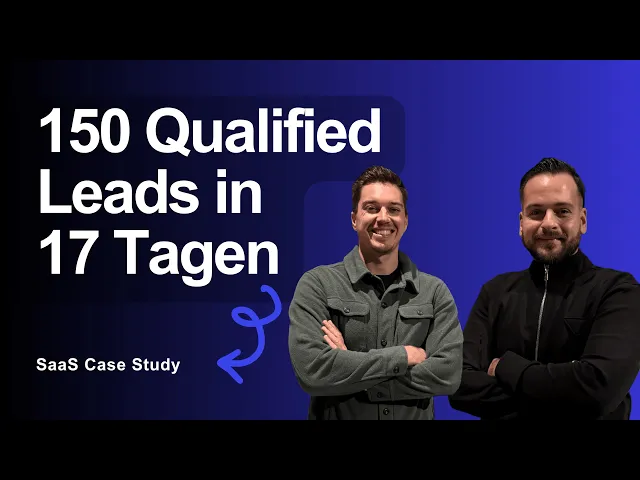
SaaS Case Study B2B Agency iGrow: Three SaaS Companies. Three Structural Problems. Measurable Results.
SaaS Case Study B2B Agency iGrow: Three SaaS Companies. Three Structural Problems. Measurable Results.
None had a product problem. None had a demand problem. All three had the same structural problem, and it cost them qualified pipeline every month.
B2B SaaS companies rarely fail today due to product.
They fail because machines do not understand what they offer. That funnels create friction instead of clarity. That conversion tracking measures clicks instead of business impact.
The following three case studies illustrate this pattern in different forms and how it was systematically resolved.
Case Study 1: SoWork (updated version in the video)
——
From 16.6% to 82.3% AI Visibility in 22 days
SoWork is an AI-powered Digital HQ for remote teams. Persistent, presence-based, without mandatory meetings. Product-wise, it is much better in direct comparisons than Gather, more clearly structured than Kumospace.
The problem was not the product. It was the machine categorization.
The initial situation
In Google Search, AI Overviews, ChatGPT, Perplexity, and Bing Copilot, SoWork was not reliably understood, not correctly categorized, not cited.
The technical analysis showed why:
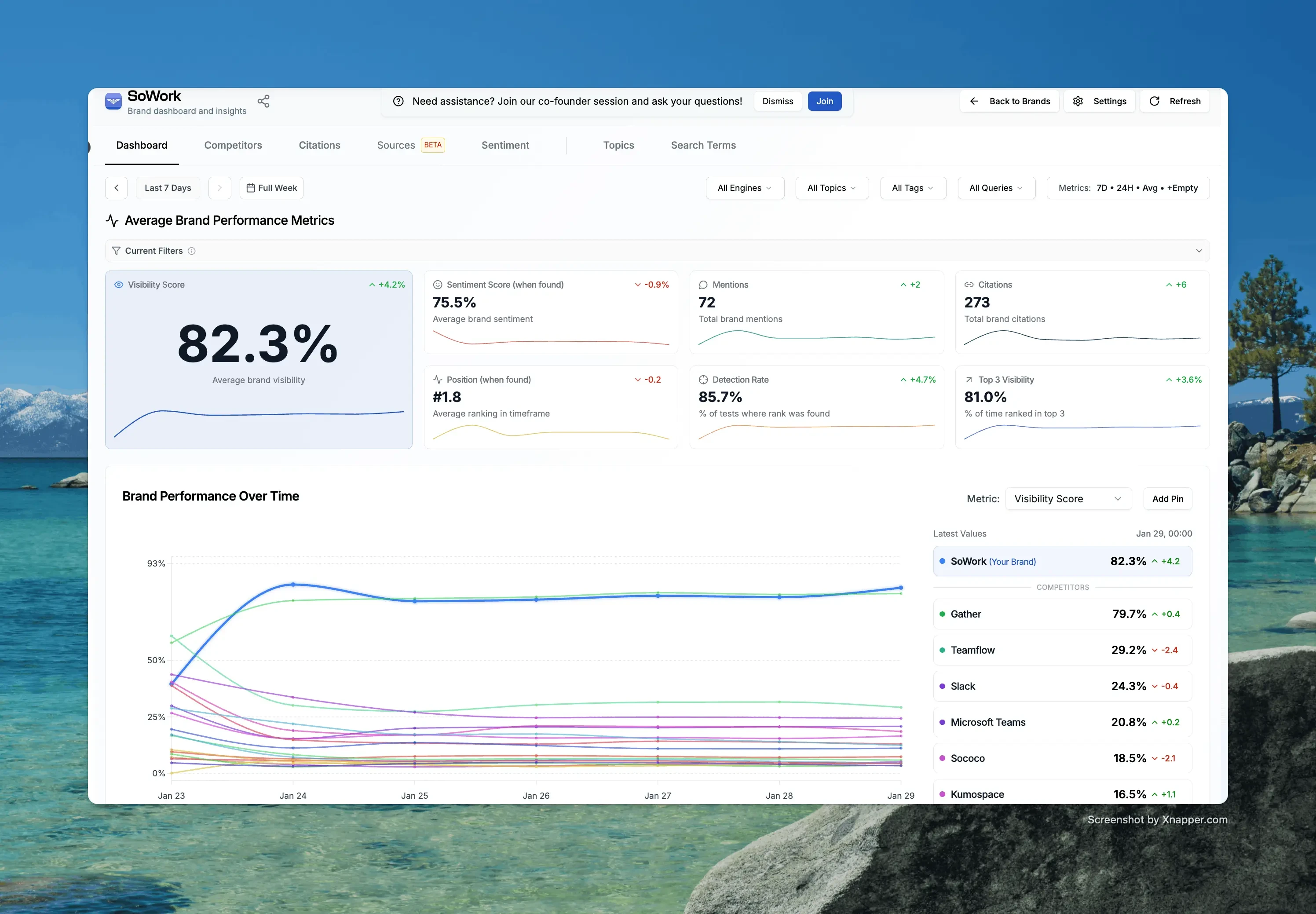
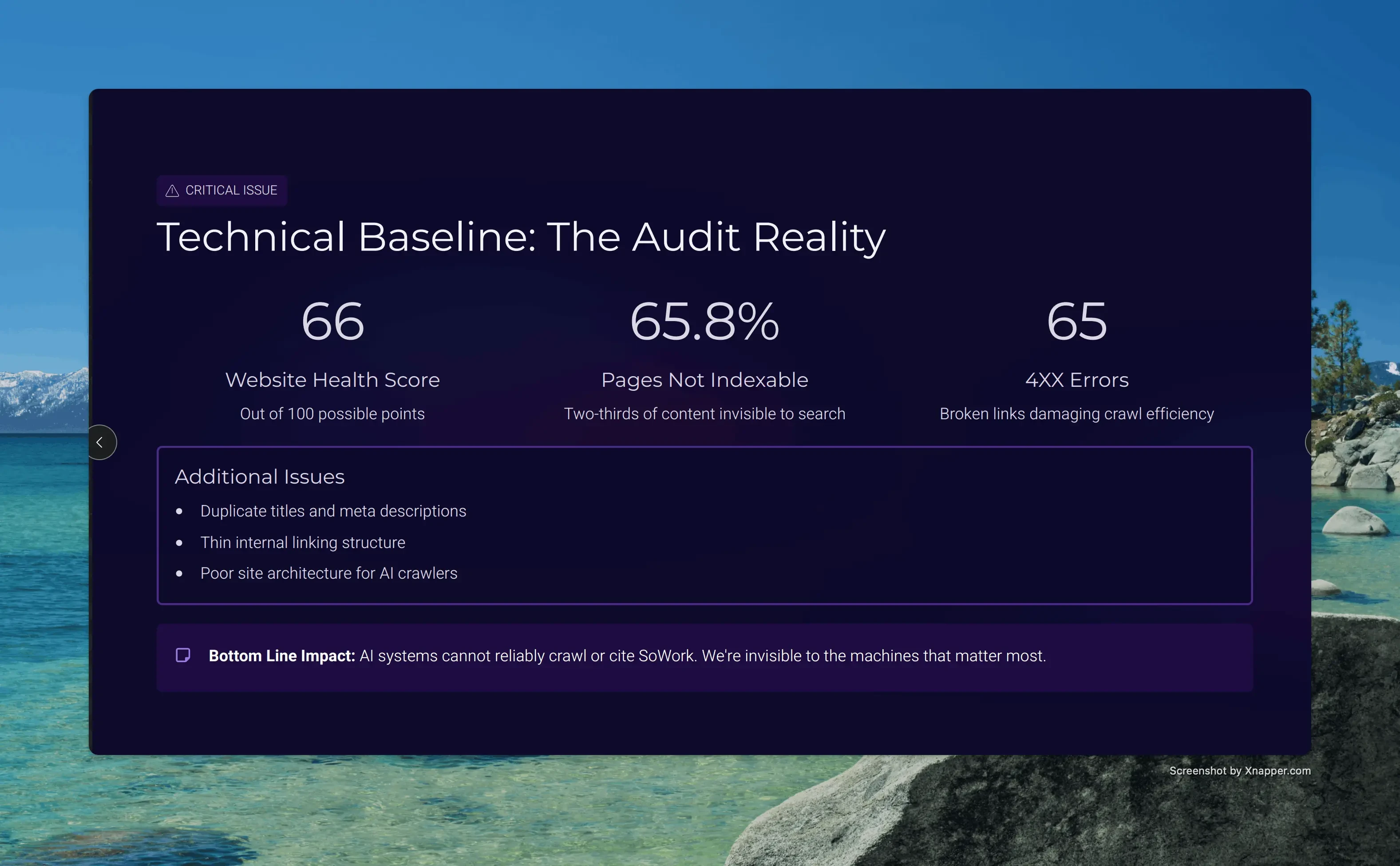
Website Health Score: 66/100
66% of pages not indexable
Over 60 4XX errors actively blocked crawling
No comparison pages, no glossary, no clean AI grounding
Weak entity structure — AI systems could not assign SoWork to a clear category
The central insight: SoWork won almost every direct comparison. However, it was too rarely found before the comparison.
What we changed
Week 1 — Technical foundation: Eliminated all 60+ 4XX errors. Cleaned up the sitemap. Correctly set canonicals. Removed duplicate titles and metas. In parallel: first clean /vs-pages, clear feature assignments, structural basis for comparison and alternative content.
After this phase, AI crawlers could read the website steadily for the first time.
At the same time: Google Ads 2.0 live. Not generic. Strictly focused on business intent. Conversion goal: "Office Creation Completed" — not pageviews, not clicks. Already after a few days: first +30 qualified hard conversions.
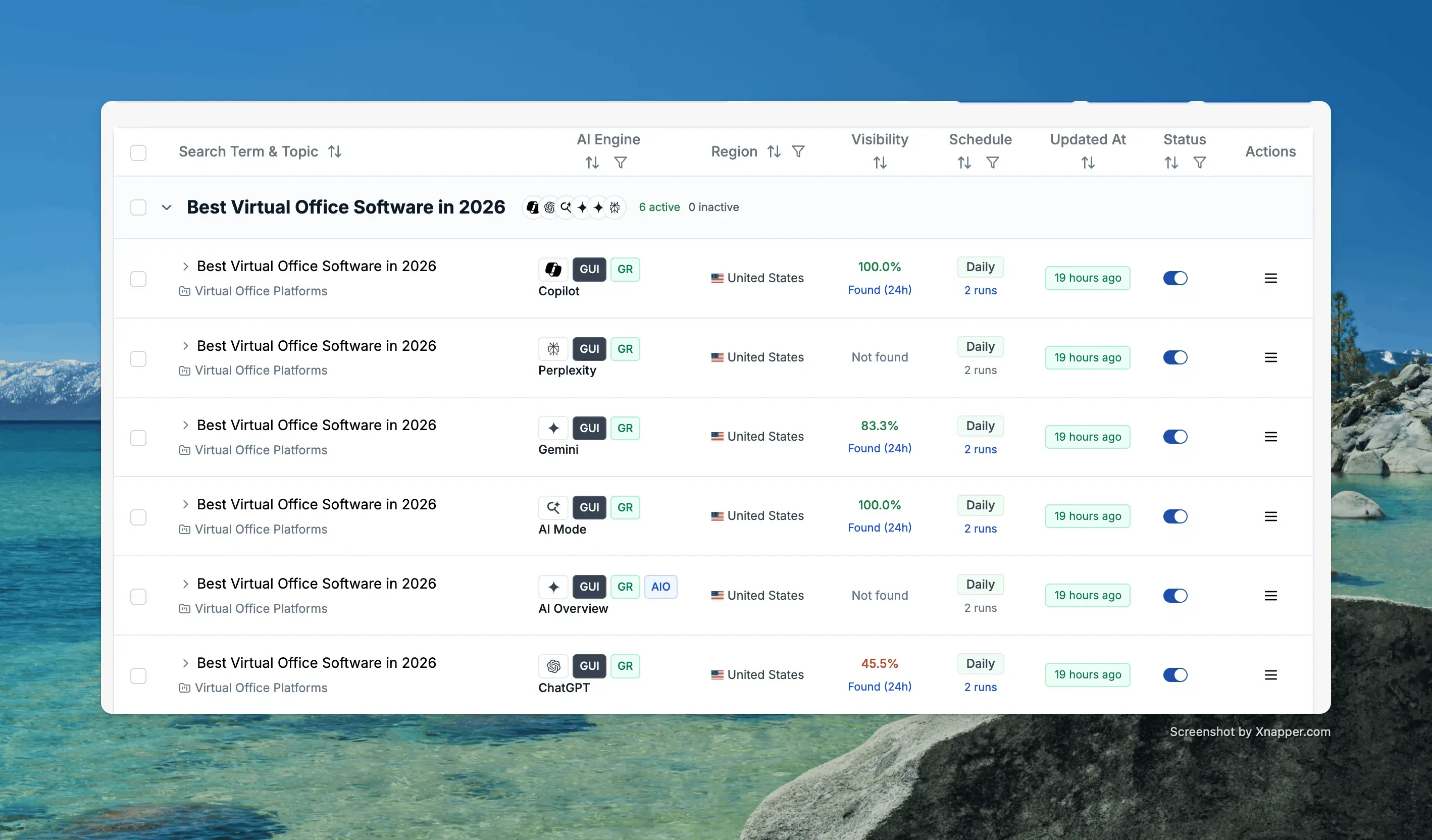
Week 2 — AI Search and Money Prompts: Defined prompts: "Gather alternative", "Best virtual office software 2026". First money prompt article live. After less than 24 hours: first AI citations in several engines, clear thematic allocation.
The result after 22 days
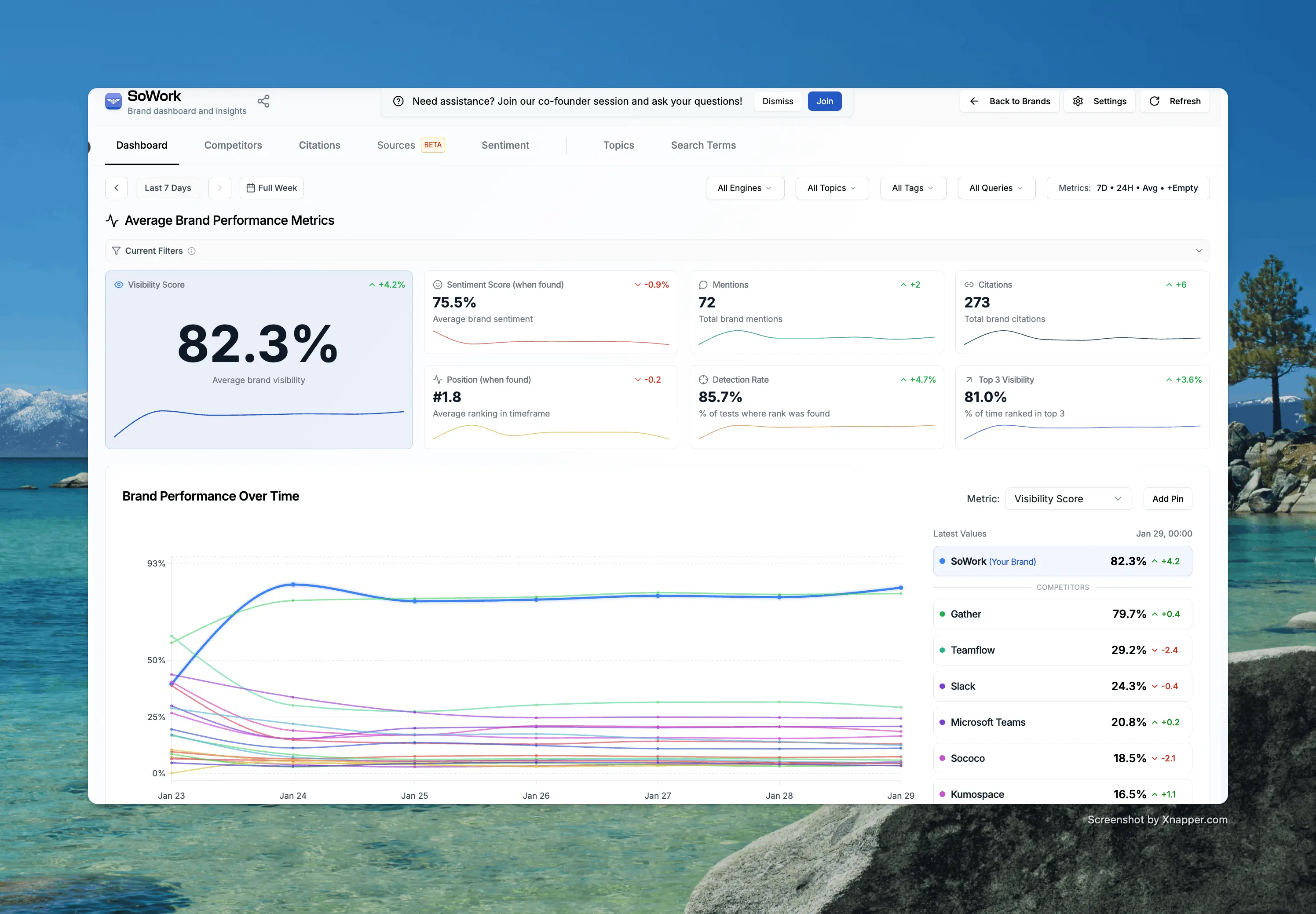
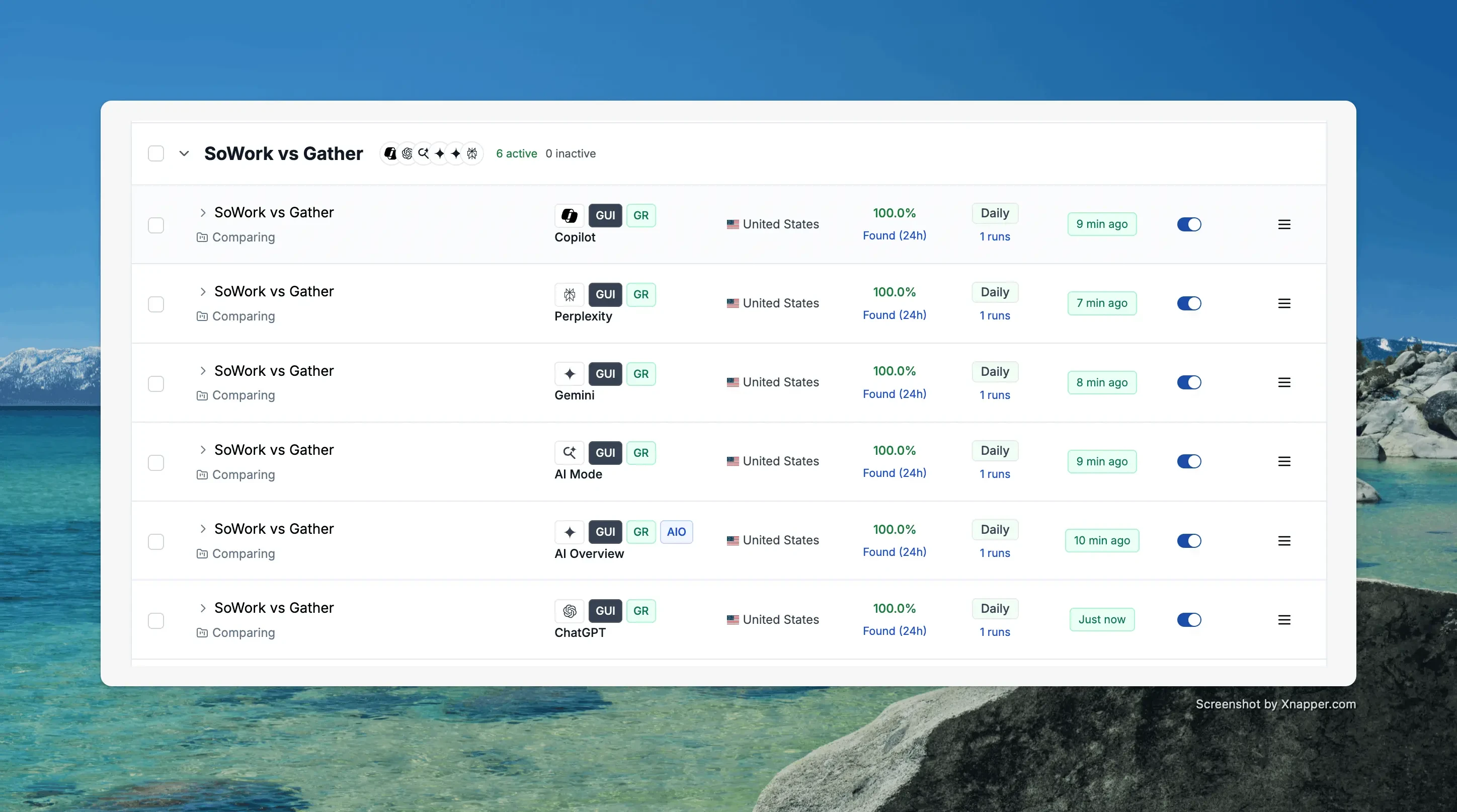
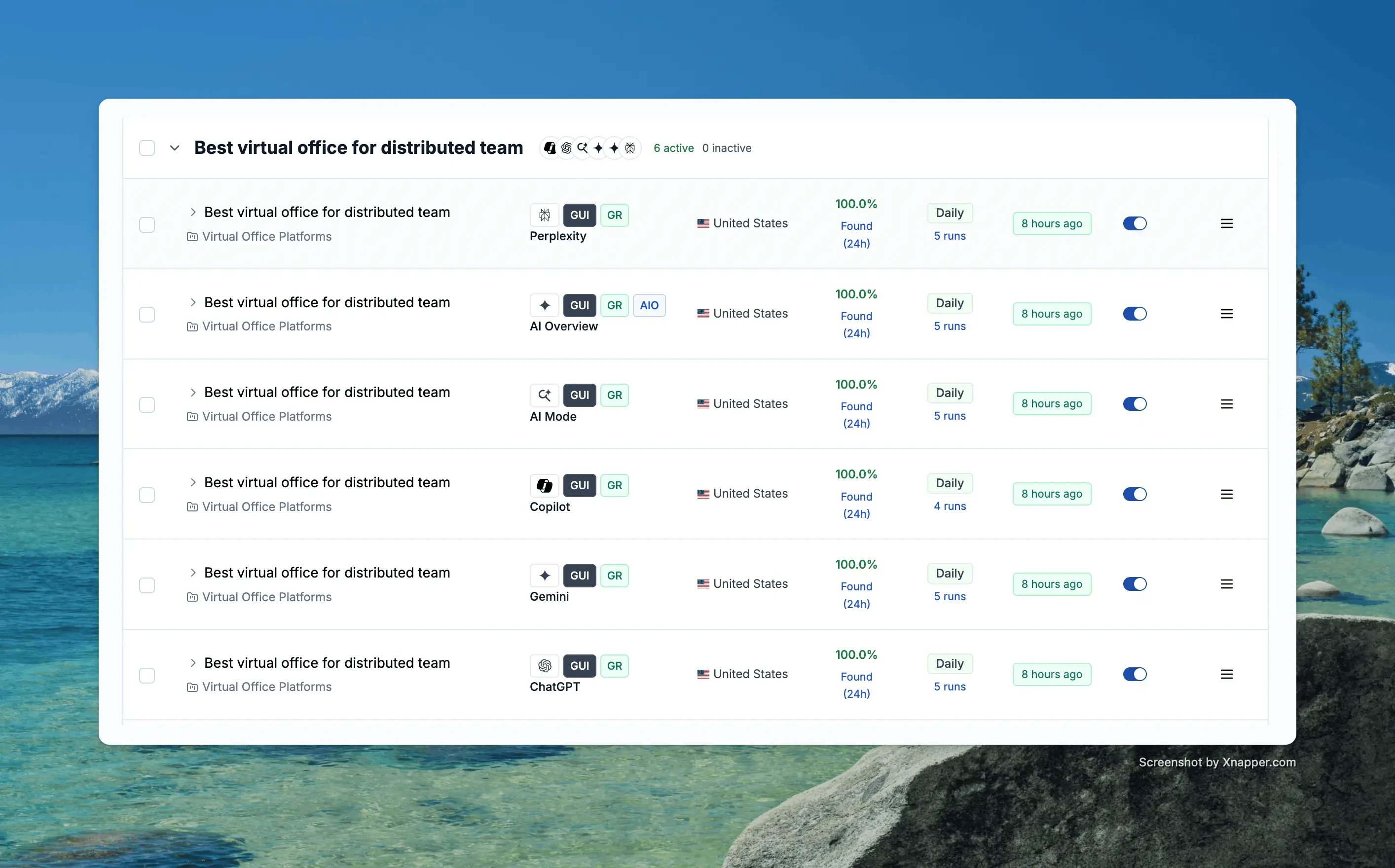
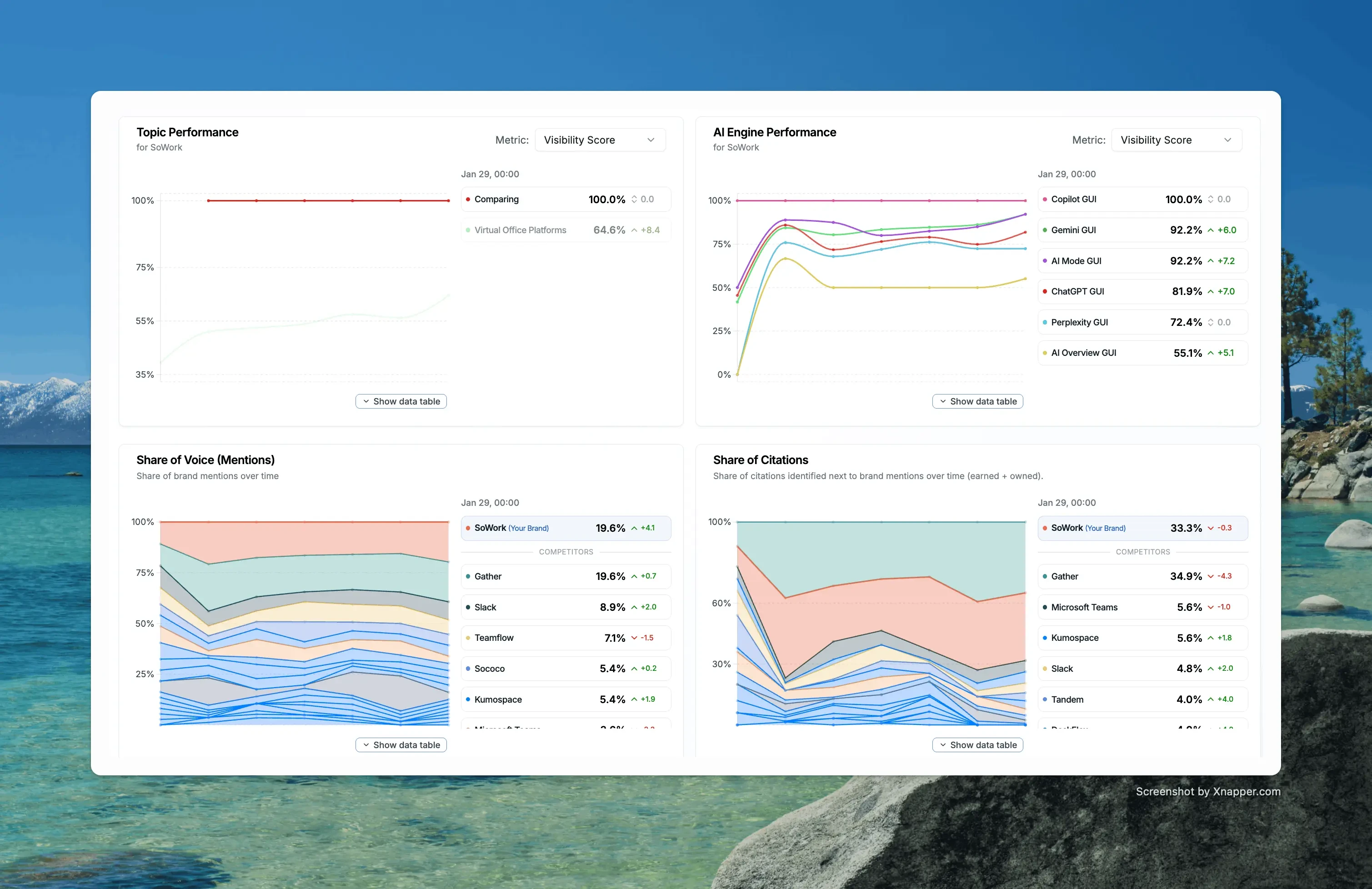
AI Visibility: 16.6% → 82.3%
In selected AI systems: 100% visibility
Share of citations over grounding pages: 33.3%
Google Ads: 32+ qualified "Office Creation Done" conversions
The learning: SoWork did not have a demand problem. It had an explanation problem for machines.
Case Study 2: RankScale.ai
+39% close rate. €10,000 additional revenue. €0 ad spend.

RankScale.ai did not have a visibility problem at the start of the project. There were many sales conversations. The problem: It rarely led to a closing. The drop-off rate between first contact and closing was high, and no one knew exactly where.
The initial situation
More traffic was not the solution. The funnel was too complex, the barrier to entry too high, the momentum between initial interest and purchase decision too weak.
Specifically: Too many steps between "I am interested" and "I buy." Too little clarity about what the next step is. Prospects lost their orientation and thereby their purchasing impulse.
What we changed
Three structural changes, no additional budget:
1. Funnel simplified. The number of steps between first contact and demo was reduced. Each step received a clear goal and a clear call to action.
2. Demo script rebuilt. Instead of product walkthrough: problem diagnosis first. The prospect sees their own pain before they see the product. This fundamentally changes the conversation dynamics.
3. Decision friction eliminated. Pricing side simplified. Objections were anticipated and answered on the page before they arose in conversation.
The result after 9 weeks
Close rate: +39%
Additional revenue: €10,000
Ad spend: €0
The learning: More demand does not solve a funnel problem. Only clarity in the process makes demand convertible. We have written an extensive case study on this.
Case Study 3: HR & Payroll SaaS (anonymized)
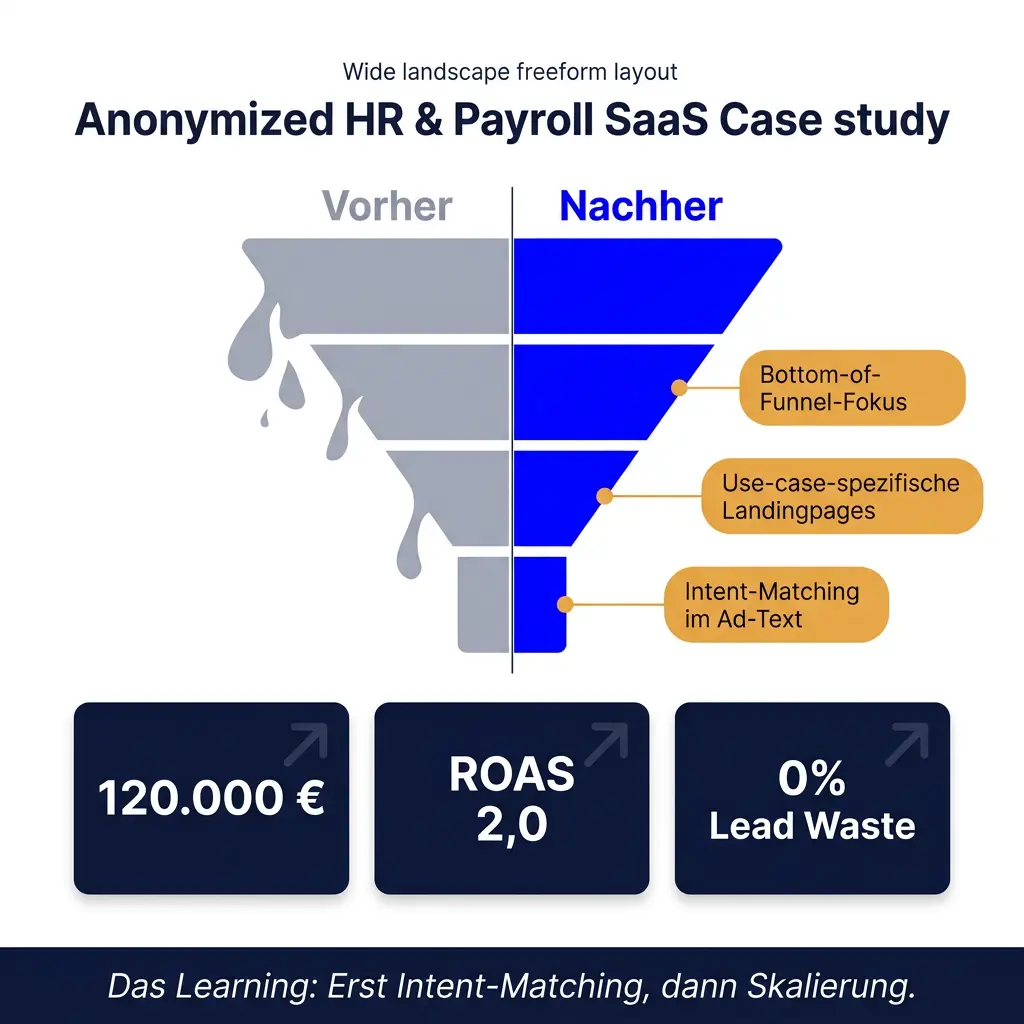
€120,000 revenue in 3 months at 2.0 ROAS
A market with high competition, long decision-making processes, and multiple stakeholders per deal. HR managers, CFOs, IT leads — all with different priorities, all part of the purchasing decision.
The initial situation
Google Ads were already running. But they were running broadly. Generic keywords, generic landing pages, generic messaging. The result: high CPL, low lead quality, sales dissatisfied.
The budget was not the problem. The focus was the problem.
What we changed
Bottom-of-funnel focus instead of awareness: No new budgets. Existing budgets radically redirected to purchase-near search queries.
Use-case specific landing pages: For every relevant combination of industry + company size + stakeholder, a specific landing page. Not "HR software for businesses" — but "Payroll automation for medium-sized companies with 50–200 employees".
Intent matching in ad copy: Each ad directly addresses the buying moment. Not features — but the specific trigger for the search.
The result after 3 months
Revenue directly from ads: €120,000
ROAS: 2.0
Lead waste: 0% — every generated lead was qualified and usable
The learning: More budget in a poorly aligned funnel only scales losses. First intent matching, then scaling.
The role of content marketing for AI visibility and B2B growth.
What connects all three
None of these companies had a product problem. None had a real demand problem.
All three had the same structural pattern:
Machines could not categorize the offer
Decision and comparison signals were missing or unclear
Tracking measured clicks instead of business impact
Funnel created friction instead of clarity
Once this structure was corrected — without more budget, without new channels, without more traffic — search engines, AI systems, and decision-makers began to understand, compare, and choose the offer.
AI search does not reward volume. AI search rewards clarity.
Do you have a demand problem — or a structural problem?
Most SaaS companies that come to us believe they need more leads. In 80% of cases, that is not the actual problem.
In the Smart Growth Call, we analyze in 30 minutes:
Where machines do not understand your offer
Where qualified pipeline is left behind
Which structural lever works first
No pitch. No presentation. Concrete diagnosis.
Written by Edin Cerimagic, CEO & Founder iGrow iGrow is a revenue marketing partner for SaaS, tech, and B2B companies in the DACH region and beyond.
FAQ: Structure, AI Search, and Performance Marketing in B2B
None had a product problem. None had a demand problem. All three had the same structural problem, and it cost them qualified pipeline every month.
B2B SaaS companies rarely fail today due to product.
They fail because machines do not understand what they offer. That funnels create friction instead of clarity. That conversion tracking measures clicks instead of business impact.
The following three case studies illustrate this pattern in different forms and how it was systematically resolved.
Case Study 1: SoWork (updated version in the video)
——
From 16.6% to 82.3% AI Visibility in 22 days
SoWork is an AI-powered Digital HQ for remote teams. Persistent, presence-based, without mandatory meetings. Product-wise, it is much better in direct comparisons than Gather, more clearly structured than Kumospace.
The problem was not the product. It was the machine categorization.
The initial situation
In Google Search, AI Overviews, ChatGPT, Perplexity, and Bing Copilot, SoWork was not reliably understood, not correctly categorized, not cited.
The technical analysis showed why:
Website Health Score: 66/100
66% of pages not indexable
Over 60 4XX errors actively blocked crawling
No comparison pages, no glossary, no clean AI grounding
Weak entity structure — AI systems could not assign SoWork to a clear category
The central insight: SoWork won almost every direct comparison. However, it was too rarely found before the comparison.
What we changed
Week 1 — Technical foundation: Eliminated all 60+ 4XX errors. Cleaned up the sitemap. Correctly set canonicals. Removed duplicate titles and metas. In parallel: first clean /vs-pages, clear feature assignments, structural basis for comparison and alternative content.
After this phase, AI crawlers could read the website steadily for the first time.
At the same time: Google Ads 2.0 live. Not generic. Strictly focused on business intent. Conversion goal: "Office Creation Completed" — not pageviews, not clicks. Already after a few days: first +30 qualified hard conversions.
Week 2 — AI Search and Money Prompts: Defined prompts: "Gather alternative", "Best virtual office software 2026". First money prompt article live. After less than 24 hours: first AI citations in several engines, clear thematic allocation.
The result after 22 days
AI Visibility: 16.6% → 82.3%
In selected AI systems: 100% visibility
Share of citations over grounding pages: 33.3%
Google Ads: 32+ qualified "Office Creation Done" conversions
The learning: SoWork did not have a demand problem. It had an explanation problem for machines.
Case Study 2: RankScale.ai
+39% close rate. €10,000 additional revenue. €0 ad spend.
RankScale.ai did not have a visibility problem at the start of the project. There were many sales conversations. The problem: It rarely led to a closing. The drop-off rate between first contact and closing was high, and no one knew exactly where.
The initial situation
More traffic was not the solution. The funnel was too complex, the barrier to entry too high, the momentum between initial interest and purchase decision too weak.
Specifically: Too many steps between "I am interested" and "I buy." Too little clarity about what the next step is. Prospects lost their orientation and thereby their purchasing impulse.
What we changed
Three structural changes, no additional budget:
1. Funnel simplified. The number of steps between first contact and demo was reduced. Each step received a clear goal and a clear call to action.
2. Demo script rebuilt. Instead of product walkthrough: problem diagnosis first. The prospect sees their own pain before they see the product. This fundamentally changes the conversation dynamics.
3. Decision friction eliminated. Pricing side simplified. Objections were anticipated and answered on the page before they arose in conversation.
The result after 9 weeks
Close rate: +39%
Additional revenue: €10,000
Ad spend: €0
The learning: More demand does not solve a funnel problem. Only clarity in the process makes demand convertible. We have written an extensive case study on this.
Case Study 3: HR & Payroll SaaS (anonymized)
€120,000 revenue in 3 months at 2.0 ROAS
A market with high competition, long decision-making processes, and multiple stakeholders per deal. HR managers, CFOs, IT leads — all with different priorities, all part of the purchasing decision.
The initial situation
Google Ads were already running. But they were running broadly. Generic keywords, generic landing pages, generic messaging. The result: high CPL, low lead quality, sales dissatisfied.
The budget was not the problem. The focus was the problem.
What we changed
Bottom-of-funnel focus instead of awareness: No new budgets. Existing budgets radically redirected to purchase-near search queries.
Use-case specific landing pages: For every relevant combination of industry + company size + stakeholder, a specific landing page. Not "HR software for businesses" — but "Payroll automation for medium-sized companies with 50–200 employees".
Intent matching in ad copy: Each ad directly addresses the buying moment. Not features — but the specific trigger for the search.
The result after 3 months
Revenue directly from ads: €120,000
ROAS: 2.0
Lead waste: 0% — every generated lead was qualified and usable
The learning: More budget in a poorly aligned funnel only scales losses. First intent matching, then scaling.
The role of content marketing for AI visibility and B2B growth.
What connects all three
None of these companies had a product problem. None had a real demand problem.
All three had the same structural pattern:
Machines could not categorize the offer
Decision and comparison signals were missing or unclear
Tracking measured clicks instead of business impact
Funnel created friction instead of clarity
Once this structure was corrected — without more budget, without new channels, without more traffic — search engines, AI systems, and decision-makers began to understand, compare, and choose the offer.
AI search does not reward volume. AI search rewards clarity.
Do you have a demand problem — or a structural problem?
Most SaaS companies that come to us believe they need more leads. In 80% of cases, that is not the actual problem.
In the Smart Growth Call, we analyze in 30 minutes:
Where machines do not understand your offer
Where qualified pipeline is left behind
Which structural lever works first
No pitch. No presentation. Concrete diagnosis.
Written by Edin Cerimagic, CEO & Founder iGrow iGrow is a revenue marketing partner for SaaS, tech, and B2B companies in the DACH region and beyond.
FAQ: Structure, AI Search, and Performance Marketing in B2B
Written by:

Edin
Author & Founder
Share this article
Share on X
Share on f
Share on in
1. Why was SoWork invisible despite having strong products for AI systems?
Because the website was not technically and structurally machine-readable enough. Over 60 4XX errors, missing comparison pages, weak entities, and no AI grounding prevented Google, ChatGPT, or Perplexity from accurately ranking and citing SoWork. The product was understandable for humans, but not for machines. To solve such challenges, targeted measures in the areas of technical optimization and content structuring are necessary. A B2B SaaS marketing agency requires a deep understanding of complex SaaS solutions and IT purchasing decision processes to successfully implement these measures.
2. Why was it consciously decided not to start with "more content" or wider ads?
Because reach does not solve structural problems. As long as machines do not understand what a product is, which category it belongs to, and when it is relevant, additional traffic only amplifies inefficiency. Our approach as a B2B agency for SaaS companies is based on first defining targeted measures that rely on data-driven analysis and clear structuring of marketing and sales processes. First structure, then scaling.
3. Why did the AI Visibility Score initially decline at SoWork?
Through the expansion with new money prompts and comparison intents, targeted measures were implemented to reach the target audience more effectively and increase visibility. The short-term decline in the AI visibility score was expected, as the assessment criteria were adjusted. However, what was crucial was that these measures resulted in the first AI mentions within just 24 hours. The results manifested in a stable and sustainable increase in visibility, clearly demonstrating the success of the measures taken.
4. What role did Google Ads play in the case studies?
Google Ads were not used as a substitute for SEO or AI Search, but rather as a targeted measure to optimize results and generate a predictable pipeline. They provided clean intent and conversion data, which served as a feedback loop for content structure and AI visibility. The focus was always on hard conversions, not clicks, to ensure sustainable growth and measurable business results for B2B SaaS companies.
5. Why was RankScale.ai able to grow without additional ad spend?
Because the problem was not a lack of demand, but rather a too complex sales funnel. Through targeted measures such as simplifying the decision-making process and reducing friction, we were able to increase the close rate by 39% – all without additional traffic or advertising budget. These results show how strategic marketing and sales measures in the B2B SaaS sector directly contribute to growth.


1. Why was SoWork invisible despite having strong products for AI systems?
Because the website was not technically and structurally machine-readable enough. Over 60 4XX errors, missing comparison pages, weak entities, and no AI grounding prevented Google, ChatGPT, or Perplexity from accurately ranking and citing SoWork. The product was understandable for humans, but not for machines. To solve such challenges, targeted measures in the areas of technical optimization and content structuring are necessary. A B2B SaaS marketing agency requires a deep understanding of complex SaaS solutions and IT purchasing decision processes to successfully implement these measures.
2. Why was it consciously decided not to start with "more content" or wider ads?
Because reach does not solve structural problems. As long as machines do not understand what a product is, which category it belongs to, and when it is relevant, additional traffic only amplifies inefficiency. Our approach as a B2B agency for SaaS companies is based on first defining targeted measures that rely on data-driven analysis and clear structuring of marketing and sales processes. First structure, then scaling.
3. Why did the AI Visibility Score initially decline at SoWork?
Through the expansion with new money prompts and comparison intents, targeted measures were implemented to reach the target audience more effectively and increase visibility. The short-term decline in the AI visibility score was expected, as the assessment criteria were adjusted. However, what was crucial was that these measures resulted in the first AI mentions within just 24 hours. The results manifested in a stable and sustainable increase in visibility, clearly demonstrating the success of the measures taken.
4. What role did Google Ads play in the case studies?
Google Ads were not used as a substitute for SEO or AI Search, but rather as a targeted measure to optimize results and generate a predictable pipeline. They provided clean intent and conversion data, which served as a feedback loop for content structure and AI visibility. The focus was always on hard conversions, not clicks, to ensure sustainable growth and measurable business results for B2B SaaS companies.
5. Why was RankScale.ai able to grow without additional ad spend?
Because the problem was not a lack of demand, but rather a too complex sales funnel. Through targeted measures such as simplifying the decision-making process and reducing friction, we were able to increase the close rate by 39% – all without additional traffic or advertising budget. These results show how strategic marketing and sales measures in the B2B SaaS sector directly contribute to growth.
1. Why was SoWork invisible despite having strong products for AI systems?
Because the website was not technically and structurally machine-readable enough. Over 60 4XX errors, missing comparison pages, weak entities, and no AI grounding prevented Google, ChatGPT, or Perplexity from accurately ranking and citing SoWork. The product was understandable for humans, but not for machines. To solve such challenges, targeted measures in the areas of technical optimization and content structuring are necessary. A B2B SaaS marketing agency requires a deep understanding of complex SaaS solutions and IT purchasing decision processes to successfully implement these measures.
2. Why was it consciously decided not to start with "more content" or wider ads?
Because reach does not solve structural problems. As long as machines do not understand what a product is, which category it belongs to, and when it is relevant, additional traffic only amplifies inefficiency. Our approach as a B2B agency for SaaS companies is based on first defining targeted measures that rely on data-driven analysis and clear structuring of marketing and sales processes. First structure, then scaling.
3. Why did the AI Visibility Score initially decline at SoWork?
Through the expansion with new money prompts and comparison intents, targeted measures were implemented to reach the target audience more effectively and increase visibility. The short-term decline in the AI visibility score was expected, as the assessment criteria were adjusted. However, what was crucial was that these measures resulted in the first AI mentions within just 24 hours. The results manifested in a stable and sustainable increase in visibility, clearly demonstrating the success of the measures taken.
4. What role did Google Ads play in the case studies?
Google Ads were not used as a substitute for SEO or AI Search, but rather as a targeted measure to optimize results and generate a predictable pipeline. They provided clean intent and conversion data, which served as a feedback loop for content structure and AI visibility. The focus was always on hard conversions, not clicks, to ensure sustainable growth and measurable business results for B2B SaaS companies.
5. Why was RankScale.ai able to grow without additional ad spend?
Because the problem was not a lack of demand, but rather a too complex sales funnel. Through targeted measures such as simplifying the decision-making process and reducing friction, we were able to increase the close rate by 39% – all without additional traffic or advertising budget. These results show how strategic marketing and sales measures in the B2B SaaS sector directly contribute to growth.