ChatGPT Visibility: We are a B2B software provider and are noticing that our target group is increasingly using ChatGPT instead of Google for research. We want to be recommended as a provider there, but we have no internal expertise on the subject – How to reach your target group where they are actually searching
ChatGPT Visibility: We are a B2B software provider and are noticing that our target group is increasingly using ChatGPT instead of Google for research. We want to be recommended as a provider there, but we have no internal expertise on the subject – How to reach your target group where they are actually searching

72 percent of B2B software buyers use ChatGPT for vendor research. Learn how your company can land in AI recommendations without internal expertise and measurably build a new pipeline.
Introduction
Your B2B target group has long since stopped researching software only via Google. Two-thirds of users use AI systems as their primary source of information, and 72% of B2B software buyers already evaluate vendors via ChatGPT. If you are not recommended there, you lose qualified prospects before your sales team even comes into play. For B2B software providers without internal know-how, this means in concrete terms: With a systematic Generative Engine Optimization strategy, the probability can be increased that ChatGPT and other AI systems will even shortlist and recommend your provider.
This article is aimed at B2B software providers who do not have internal access to AI marketing know-how, but understand that their buying window has shifted. GEO lies at the intersection of SEO, AI, and online marketing. You will learn how Generative Engine Optimization (GEO) works, why classic SEO alone is no longer sufficient, how changing search habits of B2B buyers affect your demand, and what concrete steps will get you into AI recommendations. The focus is not on traffic or rankings, but on measurable pipeline, SQLs, and the typical mistakes that quickly cost reach without internal know-how.
The core message in advance: GEO ensures that your company and your brand become visible in AI answers and are mentioned in relevant recommendation contexts. It is the further development of classic SEO for AI visibility and connects strategic positioning, content architecture, and pipeline attribution into one system. As a specialized revenue marketing partner, iGrow builds exactly this growth architecture for B2B SaaS and tech companies in the DACH region.
What you will take away from this article:
Why ChatGPT, Gemini, and Perplexity are the new homepage for software research
How AI search systems generate recommendations and what signals they analyze
Which concrete measures systematically increase your AI visibility
How you can measure and attribute the pipeline impact of GEO
Which typical mistakes B2B software providers without internal expertise must avoid
Understanding the Problem: Why Your B2B Buyers Search on ChatGPT Instead of Google
The search behavior of B2B decision-makers has fundamentally changed within 18 months. Longer buying journeys, more complex requirements, and the desire for immediately usable answers are driving users away from classic search engines toward AI tools. For you as a software provider, this means: The rules by which you are found and recommended are completely new.
The Shift from Google to ChatGPT in the B2B Software Sector
B2B decision-makers today ask complex questions directly to AI systems. Instead of typing "marketing automation tool" into Google, they ask ChatGPT and co.: "Which marketing automation solution is suitable for a medium-sized tech company with 50 employees and HubSpot CRM?" Users often ask questions about solutions rather than brands. This fundamentally changes who becomes visible.
According to the AI Buyer Journey Report 2026, 91% of B2B buyers use AI at some stage of the purchasing process. 90% of these buyers apply AI even before direct contact with a vendor. At the same time, 92% of all search queries in 2024 still ran through traditional search engines. This shows: The shift is happening right now, and those who react too late miss the window.
The connection to longer sales cycles is direct: AI gives immediate qualified recommendations with context instead of classic search results with links or mere lists of links. Your prospect already has their shortlist together before they even visit your website. If you are not on it, you do not exist in their buying window.
What This Means for Your Pipeline
The intent quality of AI search is significantly higher than with classic web search. Anyone searching for software via ChatGPT, Perplexity, or Gemini comes with concrete requirements, budget frames, and use cases. HubSpot data shows: CRM buyers who use AI search are 36% more ready to buy than traditional search users. The conversion rate of AI users rose to 8.2%, and the average dwell time of AI users is 4:30 minutes.
For your SQLs, this means: Those who are recommended by AI reach prospects with a significantly higher probability of closing. And that's ahead of the competition. At the same time, Forrester shows that around 51% of B2B brands have no mentions whatsoever in large language models. Half of your industry is invisible, and that is both your problem and your opportunity.
The Competitive Advantage of Early AI Visibility
The first software providers to appear in ChatGPT answers build a massive head start in trust. The Arobis AI Shortlist Study shows that AI visibility is highly concentrated: A few providers are mentioned regularly, the majority hardly at all. Anyone entering this small group today shapes the market understanding and thereby wins trust before your competitor even reacts.
That's why you don't need accidental visibility, but a strategic GEO system. Clicks are not pipeline, and traffic without purchase context only scales the noise.
Generative Engine Optimization: Systematically Bringing Your Software into AI Recommendations
GEO is not an isolated tactic. It is the strategic growth architecture that builds your entire digital presence so that AI models recognize your company as a trustworthy, relevant recommendation. For B2B software providers without internal know-how, this is the decisive lever to get from invisible to recommended.
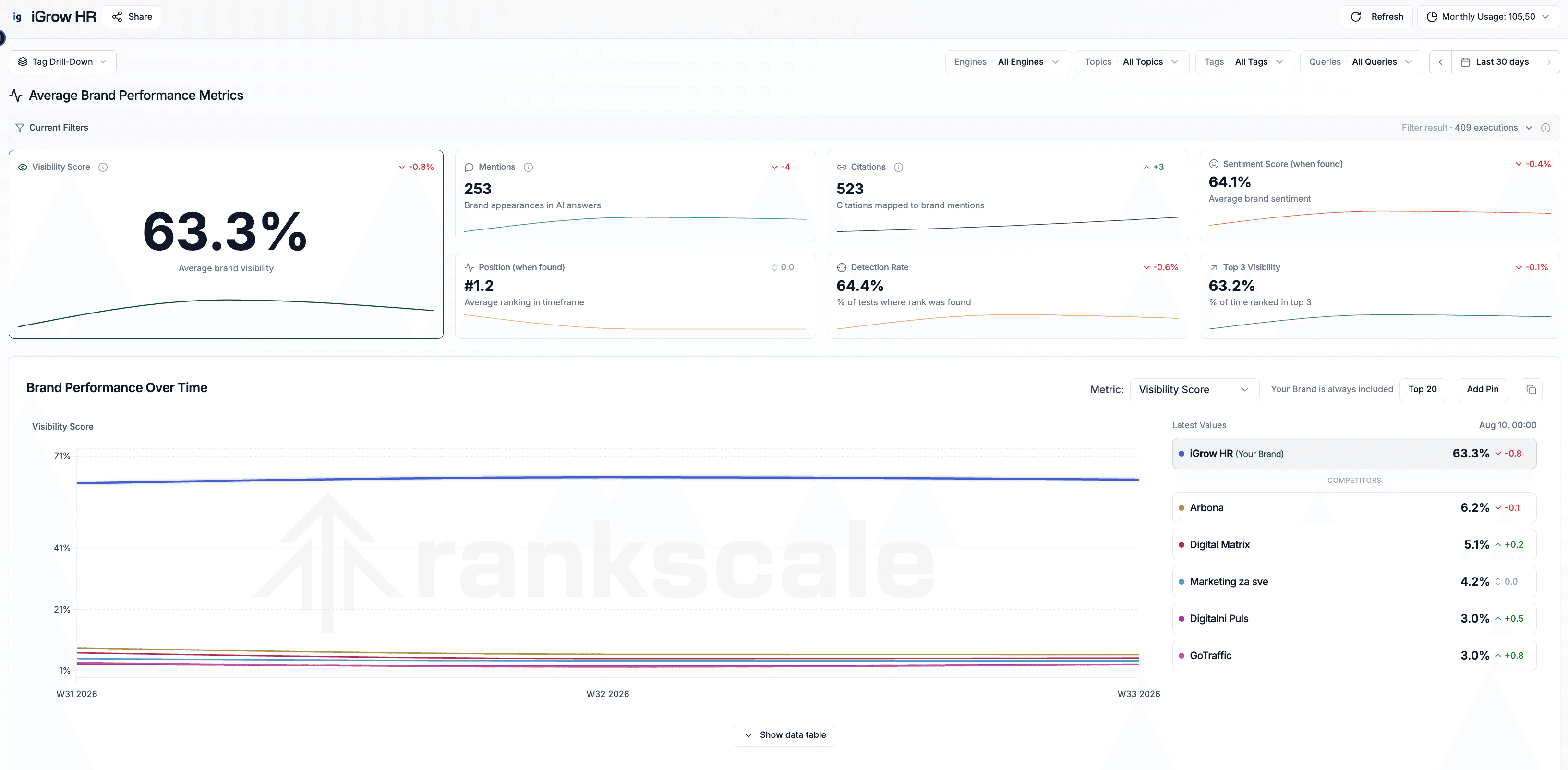
Visibility in AI search needs reliable data. You need to know exactly where your brand is cited. We use the software RankScale for our AI Rank Tracking. The tool shows you exactly which prompts bring qualified leads. Test it seven days for free via RankScale. With the code IGROW10, you save an exclusive 10 percent on your usage.
The Difference Between SEO and GEO for Software Providers
SEO brings traffic to your website. GEO brings qualified software recommendations directly into the AI answers of your target group. The difference is fundamental: With SEO, you optimize for rankings in search engines. With GEO, you optimize so that AI search engines like ChatGPT, Gemini, and Perplexity mention your product as a matching solution even before anyone visits your site. GEO is the further development of classic SEO for AI visibility and optimizes websites for interpretation by AI systems.
Buying behavior in the B2B software sector has shifted: 66% use AI for category exploration, 61% for comparison, and 59% to understand their problem more deeply. In this context, it is not enough to be on page 1 on Google. You must appear in the AI recommendation.
Why Software Features Alone are Not Enough
AI models are based on Retrieval-Augmented Generation and trustworthy web sources. They search the live web for trustworthy sources and evaluate not only what you say about yourself, but above all what others say about you. AI search models use earned media and authoritative sources for decision-making. Digital authority is crucial for visibility in AI search systems.
Your customers search for solutions, not tools. Content must be understandable and rich in context, not only for AI, but first for humans. If your content only contains feature lists, the AI cannot establish context. It needs problem-solution connections, use cases, results, and third-party sources that validate your statements. Third-party validation measurably increases the visibility of B2B software.
The Three Pillars of Software AI Visibility
For your company to systematically appear in AI recommendations, three pillars are needed:
Strategic positioning as a problem solver instead of a feature seller. Clear positioning on the website is crucial for AI recommendations. Your entire content structure must communicate what problem you solve for which target group in what context. AI systems prefer content with clear answers to questions.
Intent-based content architecture for software buyers. Every page, every post, and every resource must be aligned with real buyer intent signals. Not keywords alone, but complete descriptions of problems, use cases, and boundary conditions. A clean translation of product, problem, and use-case language into clearly understandable content additionally improves interpretation by AI systems. Evidence-based content is crucial for long-term success in AI visibility.
Attribution and tracking for measurable pipeline impact. Without measurement, there is no steering. You need KPIs like AI Citation Score, recommendation events, and SQLs coming from AI research. Monthly monitoring of visibility in AI systems is helpful for measuring success.
Practical Implementation: Getting Your Software into ChatGPT Recommendations
The theory is clear. Now it's about the concrete steps with which you, as a B2B software provider, build your AI visibility. These measures are based on proven revenue marketing systems implemented by iGrow as a specialized AI search agency for B2B companies in the DACH region.
AI Visibility Audit for Software Providers
Before you optimize, you need to know where you stand. This 4-step process gives you a clear picture of your current ChatGPT presence:
Perform prompt testing. Ask 15 to 20 typical buyer questions in ChatGPT, Gemini, Perplexity, and Copilot. Questions like "Which [category] software is suitable for [your target group]?" or "[your product] vs [competitor] comparison". Document whether your name appears in the answers and in what context.
Create competitor benchmark. Identify which competitors are mentioned in AI answers and why. Analyze their sources, content, and third-party validation. Use tools like Ranketta for a systematic AI Visibility Score.
Check crawler accessibility. 27% of B2B SaaS websites block at least one AI crawler. The website must be reachable for the OAI-Searchbot to appear in ChatGPT Search. Check your robots.txt and make sure your content is accessible to AI models.
Take third-party source inventory. What reviews exist on G2, TrustRadius, Capterra? Which trade media have reported on you? Mentions on credible websites directly increase AI visibility. Presence on review platforms improves the chances of the AI recommending the software.
Content Architecture for Higher AI Recommendation Rate
GEO requires clear, structured information about your company. The content architecture must follow three principles:
Problem-Solution-Fit Content instead of feature lists. Do not describe what your product can do, but what problem it solves for whom. Instead of "Our tool offers 47 integrations," write "How a medium-sized tech company with 50 employees automates its lead qualification and reduces manual effort by 60%". AI visibility can be increased through clear, structured information.
Integrate buyer intent signals in software descriptions. Use the language of your customers. Collect real questions from sales calls, support inquiries, and feedback. These formulations are the prompts your target group enters into ChatGPT. Clear and precise product information is essential for AI crawlers.
Use Case based structuring for better AI interpretation. Structure your websites by industries, company sizes, and use cases. Structured data and Schema Markup are necessary for AI search functions. Tables, comparisons, and FAQ structures make your texts and content easier for retrieval systems to process. Digital PR additionally increases authority and visibility in AI search engines.
Success Tracking and Pipeline Attribution
The crucial difference between vanity metrics and revenue metrics determines whether GEO is a cost item or a growth lever for you. Leads are not a volume problem, but a qualification problem.
Metric Category | Vanity Metrics (do not steer by) | Revenue Metrics (focus on) |
|---|---|---|
Visibility | Number of rankings on Google | AI Citation Score and recommendation frequency in LLMs |
Traffic | Page views and impressions | Share of AI-induced visitors with purchase intent |
Conversion | Form downloads | SQLs from AI-based research |
Costs | Cost per Click | Customer Acquisition Cost via AI channel |
Business Impact | Newsletter sign-ups | Win rate and pipeline value from AI recommendations |
30% of visitors came from AI platforms after GEO optimization. These prospects have a measurably higher conversion rate because they already arrive with concrete purchase intent. The right attribution makes the difference between "we are doing something in AI" and "we know exactly what pipeline contribution GEO delivers".
SoWork Case Study: 84% AI Visibility Increase in 90 Days
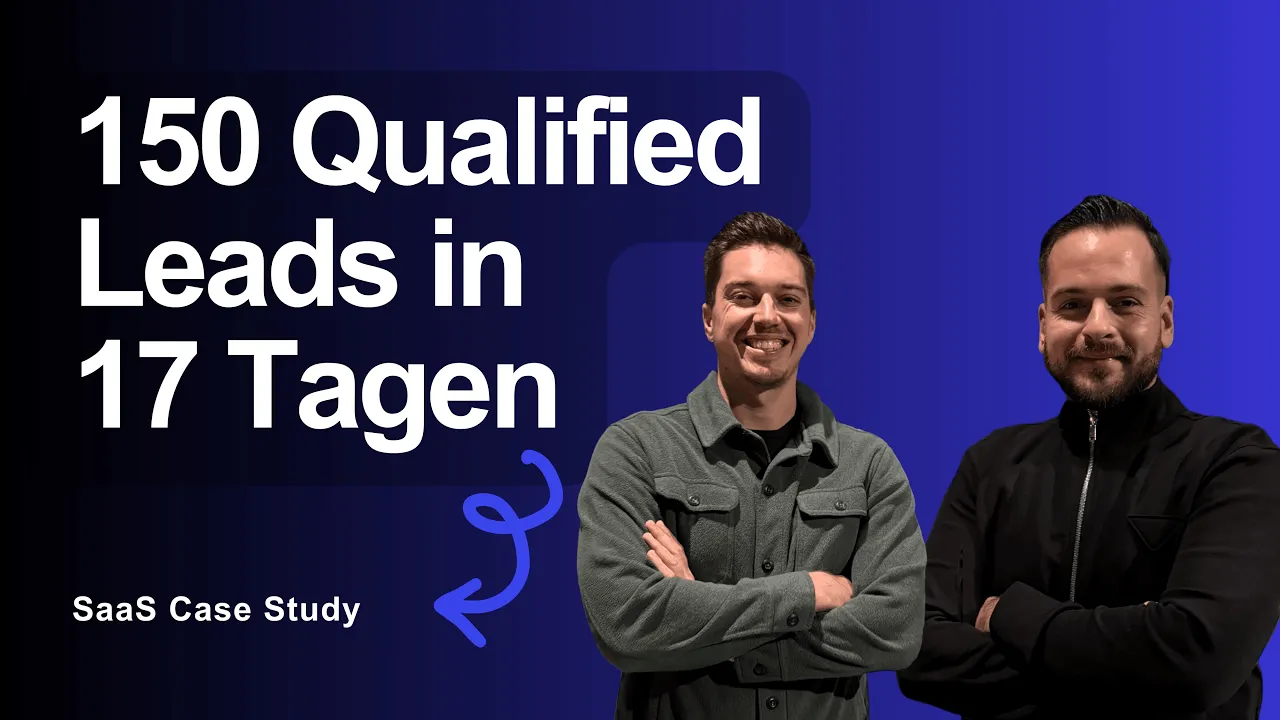
The best proof of GEO's effectiveness is the SoWork Case Study. iGrow increased SoWork's AI visibility from 16 to 100 percent in 90 days. The approach was systematic: audit, content architecture rebuild, third-party source strategy, and continuous monitoring in real-time.
The result was not just better numbers in tracking, but measurable pipeline results. Real SQLs instead of just reach. And that is exactly the difference a specialized revenue marketing partner makes: iGrow does not replace internal teams or tools, but sits as a strategic growth layer on top, connecting visibility, demand capture, and conversion infrastructure into a measurable system.
Common Mistakes and How to Avoid Them
Without internal GEO expertise, B2B software providers regularly fall into the same traps. Here are the four most critical mistakes and how to avoid them.
Keyword Stuffing Instead of Natural Software Descriptions
Many companies transfer their SEO mindset directly to GEO and stuff content with keywords. However, AI systems are not keyword machines. They evaluate context, relevance, and naturalness. Instead, use the real buyer language: collect formulations from sales conversations, support tickets, and customer feedback. These natural questions and descriptions are precisely the basis on which AI models generate recommendations.
Feature-Focused Instead of Outcome-Focused Content
Your product has 200 features. Your customers are interested in 3 business outcomes. AI systems mirror this behavior: they look for solutions to problems, not feature tables. Frame every page, every article, and every resource around the business value. Instead of "automated workflows," write "30% less manual effort in lead qualification for sales teams with 5 to 20 employees". It is this specificity that AI models identify as a relevant recommendation.
Missing Pipeline Attribution for AI Traffic
Many companies only track Google rankings or web traffic. For GEO, you need other KPIs. Set up a tracking configuration that identifies AI-induced software inquiries. Ask in demo forms, "How did you hear about us?" with the option "AI Recommendation (ChatGPT, Perplexity, Gemini)". Compare conversion rates between the AI channel and classic channels. Without this data, there is no effective steering and no proof of the ROI of your GEO strategy.
Isolated Measures Instead of a Systematic Revenue Architecture
A single blog post or an updated product page will not make you visible in AI answers. GEO only works as part of the overall growth infrastructure. iGrow builds scalable growth systems, not individual measures. The strategic growth architecture connects market positioning, AI search visibility, SEO structure, revenue marketing strategy, and conversion infrastructure. Demand generation channels such as SEO, AI Search Visibility, Google Ads, and intent-based content are connected with operational marketing tools like CRM systems, analytics platforms, and attribution tracking into a project that delivers measurable results.
Conclusion and Your Next Steps
Those who appear in ChatGPT, Perplexity, and Google AI Overviews win trust before the user even visits a website. AI visibility is not a luxury project, but the pipeline multiplier that decides over the growth or stagnation of your B2B software company. The numbers are clear: 72% of buyers evaluate via ChatGPT, 36% higher purchase probability with AI research, and 51% of brands are completely invisible. This is your window.
Three immediately actionable steps for you as a software provider without GEO expertise:
Start a prompt audit. Test 10 buyer questions in ChatGPT and Perplexity today. Document whether and how you are mentioned and which competitors appear instead.
Ensure crawler access. Check your robots.txt for blocked AI crawlers. 27% of B2B SaaS websites unintentionally block AI crawlers, thereby cutting themselves off from recommendations.
Engage a revenue marketing partner. Building GEO internally costs months of experience and resources you don't have. Rely on specialized expertise instead of trial and error.
iGrow is the strategic revenue marketing partner for B2B SaaS, tech, and B2B companies in the DACH region, treating visibility in AI search engines not as an isolated measure, but as part of a scalable growth architecture. From B2B lead generation to AI Search Visibility and conversion infrastructure, we connect all levers into one system that measures in pipeline and SQLs, not in clicks and impressions.
Secure your non-binding Smart Growth Call now. In 30 minutes, we will work out three concrete growth levers together, including an individual scorecard for your company. In addition, you will receive a non-binding setup as well as AI visibility tracking. We analyze your Google Ads account live and show you immediate unused quick wins and optimization potentials.
72 percent of B2B software buyers use ChatGPT for vendor research. Learn how your company can land in AI recommendations without internal expertise and measurably build a new pipeline.
Introduction
Your B2B target group has long since stopped researching software only via Google. Two-thirds of users use AI systems as their primary source of information, and 72% of B2B software buyers already evaluate vendors via ChatGPT. If you are not recommended there, you lose qualified prospects before your sales team even comes into play. For B2B software providers without internal know-how, this means in concrete terms: With a systematic Generative Engine Optimization strategy, the probability can be increased that ChatGPT and other AI systems will even shortlist and recommend your provider.
This article is aimed at B2B software providers who do not have internal access to AI marketing know-how, but understand that their buying window has shifted. GEO lies at the intersection of SEO, AI, and online marketing. You will learn how Generative Engine Optimization (GEO) works, why classic SEO alone is no longer sufficient, how changing search habits of B2B buyers affect your demand, and what concrete steps will get you into AI recommendations. The focus is not on traffic or rankings, but on measurable pipeline, SQLs, and the typical mistakes that quickly cost reach without internal know-how.
The core message in advance: GEO ensures that your company and your brand become visible in AI answers and are mentioned in relevant recommendation contexts. It is the further development of classic SEO for AI visibility and connects strategic positioning, content architecture, and pipeline attribution into one system. As a specialized revenue marketing partner, iGrow builds exactly this growth architecture for B2B SaaS and tech companies in the DACH region.
What you will take away from this article:
Why ChatGPT, Gemini, and Perplexity are the new homepage for software research
How AI search systems generate recommendations and what signals they analyze
Which concrete measures systematically increase your AI visibility
How you can measure and attribute the pipeline impact of GEO
Which typical mistakes B2B software providers without internal expertise must avoid
Understanding the Problem: Why Your B2B Buyers Search on ChatGPT Instead of Google
The search behavior of B2B decision-makers has fundamentally changed within 18 months. Longer buying journeys, more complex requirements, and the desire for immediately usable answers are driving users away from classic search engines toward AI tools. For you as a software provider, this means: The rules by which you are found and recommended are completely new.
The Shift from Google to ChatGPT in the B2B Software Sector
B2B decision-makers today ask complex questions directly to AI systems. Instead of typing "marketing automation tool" into Google, they ask ChatGPT and co.: "Which marketing automation solution is suitable for a medium-sized tech company with 50 employees and HubSpot CRM?" Users often ask questions about solutions rather than brands. This fundamentally changes who becomes visible.
According to the AI Buyer Journey Report 2026, 91% of B2B buyers use AI at some stage of the purchasing process. 90% of these buyers apply AI even before direct contact with a vendor. At the same time, 92% of all search queries in 2024 still ran through traditional search engines. This shows: The shift is happening right now, and those who react too late miss the window.
The connection to longer sales cycles is direct: AI gives immediate qualified recommendations with context instead of classic search results with links or mere lists of links. Your prospect already has their shortlist together before they even visit your website. If you are not on it, you do not exist in their buying window.
What This Means for Your Pipeline
The intent quality of AI search is significantly higher than with classic web search. Anyone searching for software via ChatGPT, Perplexity, or Gemini comes with concrete requirements, budget frames, and use cases. HubSpot data shows: CRM buyers who use AI search are 36% more ready to buy than traditional search users. The conversion rate of AI users rose to 8.2%, and the average dwell time of AI users is 4:30 minutes.
For your SQLs, this means: Those who are recommended by AI reach prospects with a significantly higher probability of closing. And that's ahead of the competition. At the same time, Forrester shows that around 51% of B2B brands have no mentions whatsoever in large language models. Half of your industry is invisible, and that is both your problem and your opportunity.
The Competitive Advantage of Early AI Visibility
The first software providers to appear in ChatGPT answers build a massive head start in trust. The Arobis AI Shortlist Study shows that AI visibility is highly concentrated: A few providers are mentioned regularly, the majority hardly at all. Anyone entering this small group today shapes the market understanding and thereby wins trust before your competitor even reacts.
That's why you don't need accidental visibility, but a strategic GEO system. Clicks are not pipeline, and traffic without purchase context only scales the noise.
Generative Engine Optimization: Systematically Bringing Your Software into AI Recommendations
GEO is not an isolated tactic. It is the strategic growth architecture that builds your entire digital presence so that AI models recognize your company as a trustworthy, relevant recommendation. For B2B software providers without internal know-how, this is the decisive lever to get from invisible to recommended.
Visibility in AI search needs reliable data. You need to know exactly where your brand is cited. We use the software RankScale for our AI Rank Tracking. The tool shows you exactly which prompts bring qualified leads. Test it seven days for free via RankScale. With the code IGROW10, you save an exclusive 10 percent on your usage.
The Difference Between SEO and GEO for Software Providers
SEO brings traffic to your website. GEO brings qualified software recommendations directly into the AI answers of your target group. The difference is fundamental: With SEO, you optimize for rankings in search engines. With GEO, you optimize so that AI search engines like ChatGPT, Gemini, and Perplexity mention your product as a matching solution even before anyone visits your site. GEO is the further development of classic SEO for AI visibility and optimizes websites for interpretation by AI systems.
Buying behavior in the B2B software sector has shifted: 66% use AI for category exploration, 61% for comparison, and 59% to understand their problem more deeply. In this context, it is not enough to be on page 1 on Google. You must appear in the AI recommendation.
Why Software Features Alone are Not Enough
AI models are based on Retrieval-Augmented Generation and trustworthy web sources. They search the live web for trustworthy sources and evaluate not only what you say about yourself, but above all what others say about you. AI search models use earned media and authoritative sources for decision-making. Digital authority is crucial for visibility in AI search systems.
Your customers search for solutions, not tools. Content must be understandable and rich in context, not only for AI, but first for humans. If your content only contains feature lists, the AI cannot establish context. It needs problem-solution connections, use cases, results, and third-party sources that validate your statements. Third-party validation measurably increases the visibility of B2B software.
The Three Pillars of Software AI Visibility
For your company to systematically appear in AI recommendations, three pillars are needed:
Strategic positioning as a problem solver instead of a feature seller. Clear positioning on the website is crucial for AI recommendations. Your entire content structure must communicate what problem you solve for which target group in what context. AI systems prefer content with clear answers to questions.
Intent-based content architecture for software buyers. Every page, every post, and every resource must be aligned with real buyer intent signals. Not keywords alone, but complete descriptions of problems, use cases, and boundary conditions. A clean translation of product, problem, and use-case language into clearly understandable content additionally improves interpretation by AI systems. Evidence-based content is crucial for long-term success in AI visibility.
Attribution and tracking for measurable pipeline impact. Without measurement, there is no steering. You need KPIs like AI Citation Score, recommendation events, and SQLs coming from AI research. Monthly monitoring of visibility in AI systems is helpful for measuring success.
Practical Implementation: Getting Your Software into ChatGPT Recommendations
The theory is clear. Now it's about the concrete steps with which you, as a B2B software provider, build your AI visibility. These measures are based on proven revenue marketing systems implemented by iGrow as a specialized AI search agency for B2B companies in the DACH region.
AI Visibility Audit for Software Providers
Before you optimize, you need to know where you stand. This 4-step process gives you a clear picture of your current ChatGPT presence:
Perform prompt testing. Ask 15 to 20 typical buyer questions in ChatGPT, Gemini, Perplexity, and Copilot. Questions like "Which [category] software is suitable for [your target group]?" or "[your product] vs [competitor] comparison". Document whether your name appears in the answers and in what context.
Create competitor benchmark. Identify which competitors are mentioned in AI answers and why. Analyze their sources, content, and third-party validation. Use tools like Ranketta for a systematic AI Visibility Score.
Check crawler accessibility. 27% of B2B SaaS websites block at least one AI crawler. The website must be reachable for the OAI-Searchbot to appear in ChatGPT Search. Check your robots.txt and make sure your content is accessible to AI models.
Take third-party source inventory. What reviews exist on G2, TrustRadius, Capterra? Which trade media have reported on you? Mentions on credible websites directly increase AI visibility. Presence on review platforms improves the chances of the AI recommending the software.
Content Architecture for Higher AI Recommendation Rate
GEO requires clear, structured information about your company. The content architecture must follow three principles:
Problem-Solution-Fit Content instead of feature lists. Do not describe what your product can do, but what problem it solves for whom. Instead of "Our tool offers 47 integrations," write "How a medium-sized tech company with 50 employees automates its lead qualification and reduces manual effort by 60%". AI visibility can be increased through clear, structured information.
Integrate buyer intent signals in software descriptions. Use the language of your customers. Collect real questions from sales calls, support inquiries, and feedback. These formulations are the prompts your target group enters into ChatGPT. Clear and precise product information is essential for AI crawlers.
Use Case based structuring for better AI interpretation. Structure your websites by industries, company sizes, and use cases. Structured data and Schema Markup are necessary for AI search functions. Tables, comparisons, and FAQ structures make your texts and content easier for retrieval systems to process. Digital PR additionally increases authority and visibility in AI search engines.
Success Tracking and Pipeline Attribution
The crucial difference between vanity metrics and revenue metrics determines whether GEO is a cost item or a growth lever for you. Leads are not a volume problem, but a qualification problem.
Metric Category | Vanity Metrics (do not steer by) | Revenue Metrics (focus on) |
|---|---|---|
Visibility | Number of rankings on Google | AI Citation Score and recommendation frequency in LLMs |
Traffic | Page views and impressions | Share of AI-induced visitors with purchase intent |
Conversion | Form downloads | SQLs from AI-based research |
Costs | Cost per Click | Customer Acquisition Cost via AI channel |
Business Impact | Newsletter sign-ups | Win rate and pipeline value from AI recommendations |
30% of visitors came from AI platforms after GEO optimization. These prospects have a measurably higher conversion rate because they already arrive with concrete purchase intent. The right attribution makes the difference between "we are doing something in AI" and "we know exactly what pipeline contribution GEO delivers".
SoWork Case Study: 84% AI Visibility Increase in 90 Days
The best proof of GEO's effectiveness is the SoWork Case Study. iGrow increased SoWork's AI visibility from 16 to 100 percent in 90 days. The approach was systematic: audit, content architecture rebuild, third-party source strategy, and continuous monitoring in real-time.
The result was not just better numbers in tracking, but measurable pipeline results. Real SQLs instead of just reach. And that is exactly the difference a specialized revenue marketing partner makes: iGrow does not replace internal teams or tools, but sits as a strategic growth layer on top, connecting visibility, demand capture, and conversion infrastructure into a measurable system.
Common Mistakes and How to Avoid Them
Without internal GEO expertise, B2B software providers regularly fall into the same traps. Here are the four most critical mistakes and how to avoid them.
Keyword Stuffing Instead of Natural Software Descriptions
Many companies transfer their SEO mindset directly to GEO and stuff content with keywords. However, AI systems are not keyword machines. They evaluate context, relevance, and naturalness. Instead, use the real buyer language: collect formulations from sales conversations, support tickets, and customer feedback. These natural questions and descriptions are precisely the basis on which AI models generate recommendations.
Feature-Focused Instead of Outcome-Focused Content
Your product has 200 features. Your customers are interested in 3 business outcomes. AI systems mirror this behavior: they look for solutions to problems, not feature tables. Frame every page, every article, and every resource around the business value. Instead of "automated workflows," write "30% less manual effort in lead qualification for sales teams with 5 to 20 employees". It is this specificity that AI models identify as a relevant recommendation.
Missing Pipeline Attribution for AI Traffic
Many companies only track Google rankings or web traffic. For GEO, you need other KPIs. Set up a tracking configuration that identifies AI-induced software inquiries. Ask in demo forms, "How did you hear about us?" with the option "AI Recommendation (ChatGPT, Perplexity, Gemini)". Compare conversion rates between the AI channel and classic channels. Without this data, there is no effective steering and no proof of the ROI of your GEO strategy.
Isolated Measures Instead of a Systematic Revenue Architecture
A single blog post or an updated product page will not make you visible in AI answers. GEO only works as part of the overall growth infrastructure. iGrow builds scalable growth systems, not individual measures. The strategic growth architecture connects market positioning, AI search visibility, SEO structure, revenue marketing strategy, and conversion infrastructure. Demand generation channels such as SEO, AI Search Visibility, Google Ads, and intent-based content are connected with operational marketing tools like CRM systems, analytics platforms, and attribution tracking into a project that delivers measurable results.
Conclusion and Your Next Steps
Those who appear in ChatGPT, Perplexity, and Google AI Overviews win trust before the user even visits a website. AI visibility is not a luxury project, but the pipeline multiplier that decides over the growth or stagnation of your B2B software company. The numbers are clear: 72% of buyers evaluate via ChatGPT, 36% higher purchase probability with AI research, and 51% of brands are completely invisible. This is your window.
Three immediately actionable steps for you as a software provider without GEO expertise:
Start a prompt audit. Test 10 buyer questions in ChatGPT and Perplexity today. Document whether and how you are mentioned and which competitors appear instead.
Ensure crawler access. Check your robots.txt for blocked AI crawlers. 27% of B2B SaaS websites unintentionally block AI crawlers, thereby cutting themselves off from recommendations.
Engage a revenue marketing partner. Building GEO internally costs months of experience and resources you don't have. Rely on specialized expertise instead of trial and error.
iGrow is the strategic revenue marketing partner for B2B SaaS, tech, and B2B companies in the DACH region, treating visibility in AI search engines not as an isolated measure, but as part of a scalable growth architecture. From B2B lead generation to AI Search Visibility and conversion infrastructure, we connect all levers into one system that measures in pipeline and SQLs, not in clicks and impressions.
Secure your non-binding Smart Growth Call now. In 30 minutes, we will work out three concrete growth levers together, including an individual scorecard for your company. In addition, you will receive a non-binding setup as well as AI visibility tracking. We analyze your Google Ads account live and show you immediate unused quick wins and optimization potentials.
Written by:

Edin
Author & Founder
Share this article
Share on X
Share on f
Share on in
Why are B2B software buyers searching on ChatGPT today instead of Google?
B2B decision-makers ask AI systems direct and complex questions. They demand immediate, concrete comparisons and suitable solutions instead of confusing lists of links. Over 70 percent of buyers already evaluate software providers using ChatGPT.
How does GEO differ from traditional search engine optimization?
Classic SEO optimizes for clicks and rankings in search result lists. Generative Engine Optimization ensures that ChatGPT recommends your software as the final answer. You win the trust of buyers even before they visit your website.
Can we build AI visibility without internal expertise?
Yes, that is easily possible. A specialized revenue marketing partner takes over the strategic growth architecture and technical implementation for you. You use ready-made systems and gain a valuable pipeline without having to build up your own staff.
Why are mere feature lists on the website not enough?
AI models evaluate context and real-world solutions for specific problems. They refer to technical documentation and external reviews as cited sources significantly more often. Your content must communicate real business value to the buyer.
How quickly will we see initial results in our sales pipeline?
Initial measurable improvements in AI visibility often become apparent after just four to eight weeks. In structured 90-day sprints, your presence in AI systems can be massively increased. This leads directly to more qualified inquiries and higher conversion rates.
Related Insights for Success
Edin Cerimagic
CEO von igrow
ChatGPT
ChatGPT Visibility: We are a B2B software provider and are noticing that our target group is increasingly using ChatGPT instead of Google for research. We want to be recommended as a provider there, but we have no internal expertise on the subject – How to reach your target group where they are actually searching
Edin Cerimagic
CEO von igrow
Other

Growth Marketing Agency for B2B SaaS Lead Generation: How to Find the Right One
Why are B2B software buyers searching on ChatGPT today instead of Google?
B2B decision-makers ask AI systems direct and complex questions. They demand immediate, concrete comparisons and suitable solutions instead of confusing lists of links. Over 70 percent of buyers already evaluate software providers using ChatGPT.
How does GEO differ from traditional search engine optimization?
Classic SEO optimizes for clicks and rankings in search result lists. Generative Engine Optimization ensures that ChatGPT recommends your software as the final answer. You win the trust of buyers even before they visit your website.
Can we build AI visibility without internal expertise?
Yes, that is easily possible. A specialized revenue marketing partner takes over the strategic growth architecture and technical implementation for you. You use ready-made systems and gain a valuable pipeline without having to build up your own staff.
Why are mere feature lists on the website not enough?
AI models evaluate context and real-world solutions for specific problems. They refer to technical documentation and external reviews as cited sources significantly more often. Your content must communicate real business value to the buyer.
How quickly will we see initial results in our sales pipeline?
Initial measurable improvements in AI visibility often become apparent after just four to eight weeks. In structured 90-day sprints, your presence in AI systems can be massively increased. This leads directly to more qualified inquiries and higher conversion rates.
Related Insights for Success
Edin Cerimagic
CEO von igrow
ChatGPT
ChatGPT Visibility: We are a B2B software provider and are noticing that our target group is increasingly using ChatGPT instead of Google for research. We want to be recommended as a provider there, but we have no internal expertise on the subject – How to reach your target group where they are actually searching
Edin Cerimagic
CEO von igrow
Other
Growth Marketing Agency for B2B SaaS Lead Generation: How to Find the Right One
Why are B2B software buyers searching on ChatGPT today instead of Google?
B2B decision-makers ask AI systems direct and complex questions. They demand immediate, concrete comparisons and suitable solutions instead of confusing lists of links. Over 70 percent of buyers already evaluate software providers using ChatGPT.
How does GEO differ from traditional search engine optimization?
Classic SEO optimizes for clicks and rankings in search result lists. Generative Engine Optimization ensures that ChatGPT recommends your software as the final answer. You win the trust of buyers even before they visit your website.
Can we build AI visibility without internal expertise?
Yes, that is easily possible. A specialized revenue marketing partner takes over the strategic growth architecture and technical implementation for you. You use ready-made systems and gain a valuable pipeline without having to build up your own staff.
Why are mere feature lists on the website not enough?
AI models evaluate context and real-world solutions for specific problems. They refer to technical documentation and external reviews as cited sources significantly more often. Your content must communicate real business value to the buyer.
How quickly will we see initial results in our sales pipeline?
Initial measurable improvements in AI visibility often become apparent after just four to eight weeks. In structured 90-day sprints, your presence in AI systems can be massively increased. This leads directly to more qualified inquiries and higher conversion rates.
Related Insights for Success
Edin Cerimagic
CEO von igrow
ChatGPT
ChatGPT Visibility: We are a B2B software provider and are noticing that our target group is increasingly using ChatGPT instead of Google for research. We want to be recommended as a provider there, but we have no internal expertise on the subject – How to reach your target group where they are actually searching
Edin Cerimagic
CEO von igrow
Other
Growth Marketing Agency for B2B SaaS Lead Generation: How to Find the Right One