Google Search Ads: The Complete Guide to Profitable B2B Lead Generation
Google Search Ads: The Complete Guide to Profitable B2B Lead Generation

Google Search Ads generate qualified leads and measurable ROI for B2B companies when they are embedded into a strategic revenue marketing architecture with precise CRM tracking.
Introduction
If you already have website traffic but too little qualified pipeline, customer acquisition costs that are too high, and you see no clear ROI from your campaigns, Google Search Ads only make sense if they are cleanly embedded into your revenue marketing architecture and thought of as part of a clear B2B Leads via Google strategy. Google Search Ads are paid text ads that appear in Google search for relevant queries and specifically target potential customers who are already actively looking for a solution, a product, or a provider.
Google Search Ads are keyword-based ads in the Google Search Network. They appear directly above or below organic search results on Google when users search for specific terms. This clearly distinguishes search ads from other Google Ads formats such as display ads, shopping ads, video ads, app campaigns, or Performance Max ads. Google Ads offers different campaign types that vary depending on goals, industry, and target group, including search ads, display ads, shopping ads, video ads, and Performance Max ads. For B2B SaaS, tech, and B2B companies in the DACH region, however, the focus for profitable demand capture is usually on search ads because that is where genuine buying intent becomes visible.
The direct answer: Google Search Ads are paid text ads that are displayed for relevant search queries in Google search and help B2B companies reach decision-makers who are ready to buy at the exact moment of their demand. They are particularly effective for lead generation because users with active buying intent respond to a specific demand, which minimizes wastage.
In this guide, you won't get superficial tips for more clicks. You will get a view of Google Search Ads as part of a measurable growth system. This is precisely where iGrow comes in: not as a classic marketing agency that optimizes individual ad campaigns, but as a specialized Revenue Marketing Partner for B2B SaaS, tech, and B2B companies in the DACH region. iGrow builds the strategic growth architecture across your channels, combining Google Ads, SEO, AI search visibility, landing pages, CRM, analytics, and attribution into a system optimized for SQLs, pipeline, and ROI.
After reading this, you will have five concrete core takeaways:
Why clicks are not pipeline and search ads only become profitable with a clear conversion infrastructure.
How Google Ads auctions, bidding, quality score, and ad rank work together.
How to structure keywords, match type, campaigns, and landing pages to generate qualified leads.
Which tracking steps are necessary so that marketing and sales work towards the same pipeline goals.
How to transform Google Search Ads from a cost center into a scalable demand capture channel.
Understanding Google Search Ads: Foundations for B2B Revenue Marketing
Google Search Ads are so relevant for B2B companies because they do not rely on random attention. They appear in search precisely when a user formulates a problem, compares a solution, or evaluates a provider. For you, this means: you are not just buying website traffic, but you can capture demand within a concrete buying context.
In revenue marketing, what matters is not how many ads users bring to your website. The decisive factor is whether these users turn into qualified leads, Sales Qualified Leads, opportunities, and ultimately customers. Search engine marketing, or SEM, becomes profitable when Google Search is not viewed in isolation, but is instead embedded in these three levels:
Strategic growth architecture from iGrow: market positioning, AI search visibility, SEO structure, revenue marketing strategy, and conversion infrastructure.
Demand generation channels: SEO, AI search visibility, Google Ads, landing pages, and intent-based content.
Operational marketing tools: CRM systems, analytics platforms, marketing automation, sales tools, and attribution tracking.
What are Google Search Ads and how do they work
Google Search Ads are paid text ads that appear in the search results when users enter specific search queries in Google Search, and they follow the same levers as outlined in the ultimate guide for the correct use of Google Ads. Advertisers select keywords for which their ad should appear. These keywords determine which search queries your ads are generally eligible for.
Google Ads uses an auction system where cost-per-click, or CPC, varies depending on the competitiveness of keywords and the quality of the ads. Every relevant search query triggers an auction in real time. Google then decides which ads appear and in which position they are displayed in the search results. Google Ads costs are not standardized. They depend on various factors, including maximum bids and the quality score of the ads.
Ad rank is calculated from the maximum bid and the quality score. The quality score evaluates, among other things, ad relevance, expected click-through rate, and landing page user experience. Google assesses ad relevance and landing page experience as a quality score. In practice, this means: if your ad copy, keywords, and website do not match the search intent exactly, you often pay more per click and get fewer qualified conversions.
The difference to SEO is important. SEO brings visibility in organic search results but often takes months for rankings to stabilize. Search ads take effect immediately upon activation, unlike SEO which often takes months. With Google Search Ads, companies can achieve immediate visibility in search results, enabling a faster presence compared to organic search results. This is precisely why search ads are so valuable for companies under short-term pipeline pressure.
The Revenue Marketing Advantage of Search Ads
The biggest advantage of Google Search Ads lies in the timing. Google search ads offer companies the opportunity to reach customers at the exact moment of their purchase intent. Search ads are particularly effective for targeting users who are actively searching for a solution, a product, or a provider, and are excellent for B2B lead generation.
For B2B SaaS and tech companies, this is crucial because complex buying journeys cannot be solved with pure branding. Display ads are visual banner ads shown on millions of websites across the Google Display Network and are better suited for reach and branding rather than direct lead generation. Shopping campaigns, app campaigns, or Performance Max can also make sense depending on what is offered. For complex services, software solutions, and high-value B2B offers, search engine advertising remains the most direct channel to capture high-intent demand because it allows you to target many of the key benefits of Google Ads for companies.
The second advantage is measurability. Clicks, costs, and conversions can be precisely tracked. All campaigns, clicks, and interactions from Google search ads can be measured and evaluated in real time. If your conversion tracking is set up cleanly and your CRM is connected, you see not just leads, but also SQLs, opportunities, CAC, and ROAS.
The third advantage is speed. Search ads bridge the gap until B2B SEO as a stable lead channel without ads, AI search visibility, and content structures take hold. Brands visible in ChatGPT, Perplexity, and Google AI Overviews build trust before the user even visits a website. Those who are also visible with Google Ads for high-intent search queries and parallelly use a structured AI Search & GEO strategy combine trust with a direct conversion opportunity. This very connection of visibility, demand capture, and conversion infrastructure is where iGrow acts as a strategic growth layer over your existing team and tools.
Strategic Campaign Architecture for B2B Success
Many Google Ads accounts fail not because of a lack of budget, but due to a lack of architecture – resulting in rarely truly profitable Google Ads campaigns instead of wasted budget. If keywords, ads, landing pages, and conversion goals do not work together cleanly, every additional euro spent only scales more noise. Traffic without buying context does not scale your pipeline, it scales your inefficiency.
For B2B success, you need a structure that connects search intent, buying journey, offer, and sales process. iGrow therefore does not view Google Search Ads as an isolated channel, but as part of a strategic growth architecture and external B2B growth partner. First comes market positioning, then demand generation channels like SEO, AI search visibility, Google Ads, and landing pages, followed by operational marketing tools like CRM, analytics, automation, and attribution.
The Right Campaign Structure
A clean campaign structure determines whether your ads account becomes capable of learning. Selecting and grouping the right keywords is a central element of a successful keyword strategy, where STAGs (Single Theme Ad Groups) represent a proven method to group several closely related keywords with identical search intent into one ad group.
STAGs are particularly valuable in B2B because they allow you to align ad copy, landing page, and search queries more closely – which is exactly where the strategies for B2B customer acquisition with Google Ads come into play. Precise thematic grouping of keywords leads to more ad groups and allows for better customization of ad copy to search queries, which positively impacts the Quality Score and can lower costs per click. With B2B SaaS keywords, which can often range between 15 and 50 USD per click for non-branded terms, this relevance is not a detail, but a direct lever for CAC.
Campaigns should additionally be separated by search intent and buying journey:
Problem-Aware Keywords: The user knows their problem, but not yet a specific solution.
Solution-Aware Keywords: The user compares solution approaches, features, or categories.
Product-Aware Keywords: The user is looking for specific providers, alternatives, or brands.
Brand Keywords: The user is looking for your brand or product.
Competitor Keywords: The user compares you with the competition.
Generic Keywords: The user searches broadly for a category or service.
This separation allows for better budget decisions. Brand keywords often deliver cheap conversions. Generic keywords offer scale but more wastage. Competitor keywords can be strong if positioning and landing page differentiate clearly.
Keyword Strategies for Qualified Leads
Choosing the right keywords is crucial for campaign success. Frequently, keywords with high search volume but low buying intent are selected, which negatively affects lead quality. This is exactly where one of the most expensive problems in B2B Google Ads arises: the account wins clicks, but no pipeline.
For qualified leads, you need controlled match types. The use of match types like Broad Match, Phrase Match, and Exact Match is crucial, with Phrase and Exact Match generally delivering better results in generating qualified leads, especially for high-intent searches. Broad Match can work in large accounts with a strong database and clean conversion tracking, but is often too broad in early stages. Phrase Match and Exact Match give you more control over search queries, budget, and lead quality.
A good keyword strategy separates not just by volume, but by purchase context and is the foundation for effective B2B lead generation via Google. Examples:
Problem-Aware: "improve crm data quality"
Solution-Aware: "b2b crm software comparison"
Product-Aware: "salesforce alternative mid market"
High Intent: "demo b2b marketing automation software"
Commercial Intent: "google ads agency b2b saas"
Long-tail keywords often have less search volume but more context. This is precisely why they are valuable for B2B. Leads are not a volume problem, but a qualification problem. A smaller keyword set with clear buying intent can be more profitable than a large keyword pool with a weak intent structure.
Landing Page Alignment and Conversion Infrastructure
Google Search Ads only become profitable when the ad, keyword, and landing page speak the same language. If a potential customer searches for "b2b saas google ads strategy", they must not land on a generic homepage. They need to see immediately: this offer solves exactly my problem.
Message match means that search query, ad copy, value proposition, and call to action fit together. The landing page must clearly explain who the offer is for, what specific business outcome is achieved, and why the next step makes sense. For B2B, this is not about superficial claims, but about SQLs, pipeline, CAC reduction, faster sales cycles, and better attribution.
A functioning conversion infrastructure includes:
Clear value proposition for the respective search intent.
Call to action with high purchase context, for example demo, consultation, or audit.
Form with sufficient qualification, but without unnecessary friction.
Mobile optimization for decision-makers researching on the go.
Loading times under three seconds, clear structure, and trust-building evidence.
Connection to CRM, analytics, and conversion tracking.
Without this infrastructure, even a good ads account remains limited. iGrow therefore builds not only campaigns, but the complete growth system consisting of strategic positioning, demand capture, landing pages, CRM integration, and attribution.
Operational Implementation and Tracking Setup
Before you scale a search campaign, you must be clear about what success means. Without defined conversion goals, campaign success cannot be evaluated. Clear conversion actions should be defined from the start and monitored with tracking tools.
For B2B, it is not enough to count a contact form as a conversion. You need to know which lead became an SQL, which opportunity was created, and which deal brought in revenue. Only then can Google Ads optimize for actual business outcomes.
Conversion Tracking for B2B Attribution
A resilient setup starts with Google Ads and GA4. There you define primary conversions, for example demo request, consultation call, or qualified inquiry. At the same time, you need secondary signals like scroll depth, content engagement, or clicks on relevant calls to action so you can better interpret behavior.
The most crucial step, however, is CRM integration. Whether HubSpot, Salesforce, or another CRM system: marketing and sales must see the same data. Only when a lead is reported back as a Sales Qualified Lead, opportunity, or closed-won deal can you recognize which keywords, campaigns, and ads generate real pipeline.
Offline conversion import is central here. Many B2B deals do not happen directly in the form, but weeks later after multiple conversations. If this data does not flow back into Google Ads, you optimize for early leads instead of revenue. This is exactly what creates high CAC and fragmented attribution.
Customer Acquisition Cost, or CAC, should be calculated separately for Google Search Ads. Not just total spend matters, but spend in relation to customers won and revenue quality. Only then can you decide whether a keyword is expensive or profitable.

Bidding Strategies for Profitable Scaling
Advertisers can set a flexible budget with Google Ads, allowing them to start with small amounts and scale the budget based on results achieved. This is an advantage, but also a trap. A small budget without clean data rarely generates enough learning signals for intelligent bidding strategies.
In new campaigns, manual CPC control is often sensible because you maintain control over bids, search terms, and costs per click. Once enough high-quality conversion data is available, smart bidding strategies like Target CPA, Maximize Conversions, or Target ROAS can be used. Relevant ads and intelligent bidding strategies also allow smaller companies to compete with big brands.
The order is important. First conversion tracking, then data quality, then smart bidding. If you automate too early, Google might optimize for low-quality leads because the algorithm doesn't know the difference between an unsuitable contact and a genuine SQL.
Budget allocation must not be based on gut feeling. More budget belongs in campaigns that deliver better SQL rates, lower CAC, and higher ROAS. Less budget belongs in keywords that bring website traffic but no pipeline.
Performance Monitoring and KPI Dashboard
In B2B Google Ads, CTR, impressions, and clicks are only diagnostic values. They help you understand relevance and search result positions, but they don't tell you if your company is growing. What matters are SQL rate, opportunity rate, CAC, ROAS, conversion rate, and later Customer Lifetime Value.
A good KPI dashboard connects Google Ads, GA4, and CRM. This way, you don't just recognize how much a click costs, but which campaigns generate qualified leads and which leads become customers. This is crucial for sales team alignment because marketing no longer reports on channels in isolation, but works together with sales on pipeline goals.
Weekly reporting cycles are practical. They give you enough speed for optimization without letting daily fluctuations drive you. Segment your data by campaign, keyword cluster, match type, device, industry, region, landing page, and buying journey stage.
Pay close attention to warning signs:
Rising CPCs without an increase in SQL quality.
Falling conversion rate despite stable click volume.
Many search queries outside your offering.
Leads without decision-making authority.
Campaigns with conversions but no opportunities.
Ad campaigns that look good in the account but show no revenue in the CRM.
Optimization Based on Performance Data
A common source of error in Google Ads campaigns is insufficient analysis and optimization after creation, leading to a loss of relevance and efficiency. Google Ads is not a set-and-forget channel. Especially in B2B, search behavior, competition, language, purchase urgency, and market positioning are constantly changing.
A simple weekly optimization routine looks like this:
Analyze search queries and exclude irrelevant terms as negative keywords.
Evaluate keywords by SQL rate, CAC, and conversion rate.
Adjust match types if Broad Match generates too much wastage.
Test ad copy to make search intent, value proposition, and CTA more precise.
Review landing pages if clicks occur but no qualified conversions are generated.
Feed CRM data back so that bidding strategies learn based on real pipeline.
Shift budget to where sales confirms the highest lead quality.
Campaign Element | Recommended Frequency | Goal of Optimization |
|---|---|---|
Search Queries and Negative Keywords | Weekly | Reduce wastage and protect budget |
Keyword Performance | Weekly | Expand terms strong in SQLs and reduce weak terms |
Ad Copy and Assets | Every 2 weeks | Improve relevance, quality score, and conversion rate |
Landing Pages | Every 4 weeks | Increase message match, form quality, and close rate |
Bidding Strategy | Monthly | Align scaling with data quality and CAC goals |
CRM Attribution | Weekly | Synchronize marketing and sales on pipeline and revenue |
This operational discipline is the difference between campaign management and a growth system. iGrow acts as a strategic growth layer over tools and teams to ensure Google Ads generates not just leads, but measurable revenue outcomes.
Common Problems and Proven Solutions
Most B2B Google Ads problems do not arise because Google as a channel doesn't work. They arise because campaigns run without clear positioning, without conversion tracking, without CRM feedback, and without sales feedback. Consequently, clicks are optimized even though pipeline is the actual goal.
If you recognize your company in one of the following problems, the solution is usually not more budget. It lies in a cleaner connection of strategic growth architecture, demand generation channels, and operational marketing tools.

High Click Costs Without Qualified Leads
High click costs are not automatically problematic in B2B. A click for 30 USD can be profitable if it results in an SQL with a high probability of closing. It becomes problematic when expensive keywords bring users without buying intent.
The most common causes are keywords that are too broad, uncontrolled Broad Match, weak negative keyword lists, generic ad copy, and landing pages without message match. The solution starts with more precise match types, especially Phrase Match and Exact Match for clear search intent. Additionally, you need an ongoing analysis of search queries so that irrelevant users do not spend your budget in the first place.
Ad relevance is also a cost lever. When ad copy, keyword, and landing page closely align, the quality score increases. This can lower the CPC and make your position in search results more stable. For you, this means: you don't pay for more clicks, but for better demand.
Missing Attribution Between Marketing and Sales
If marketing reports leads and sales rates these leads as unqualified, you do not have a channel problem. You have a system problem. Without attribution between marketing and sales, you don't know which search campaigns are actually generating revenue.
The solution is a clear CRM integration with lead scoring, lifecycle stages, and offline conversion tracking. Every lead from Google Search Ads must be traceable in the CRM. Every SQL qualification, every opportunity, and every deal closed should flow back into Google Ads and your reporting.
This creates a shared view of the pipeline. Marketing sees not just conversions, but sales quality. Sales sees which search intents bring the best conversations. Management sees CAC and ROAS instead of isolated channel metrics. This transparency is precisely what transforms Google Ads from a cost block into a controllable growth channel.
Campaign Performance Stagnates After Initial Success
Many ads accounts start well and stagnate after a few weeks or months. The first high-intent keywords are exhausted, competitors increase bids, conversion rates drop, or landing pages lose effectiveness. If you only adjust bids in response, you are not solving the problem.
Stagnation is resolved through systematic expansion. Identify new keyword opportunities along the buying journey. Build out long-tail keywords. Test new ad copy with stronger benefit communication. Optimize landing pages for better SQL quality. Use audience expansion like Customer Match, Remarketing Lists for Search Ads, and In-Market Audiences when enough data is available.
It is also important to look beyond Google Ads. If your brand builds trust in AI Overviews, ChatGPT, Perplexity, and organic search results, this improves the impact of your search ads. Potential customers do not decide in a single click. They evaluate your brand across multiple results, channels, and touchpoints. iGrow therefore connects search ads with SEO, AI search visibility, landing pages, CRM, and marketing automation into a scalable growth system.

Summary and Strategic Next Steps
Google Search Ads are one of the strongest B2B channels for demand capture when they are aligned with pipeline and ROI – which is exactly what professional Google Ads support with iGrow aims for. They place you in Google Search precisely when potential customers are actively searching for a solution, a product, or a provider – especially when you work with a specialized Google Ads agency in Vienna. But: clicks are not pipeline. Traffic without buying context only scales noise.
The key takeaways are clear. Google Ads works through auctions, bidding, quality score, and ad rank. Search ads deliver immediate visibility, while SEO and AI search visibility build trust and demand in the long term. Keywords, match types, STAGs, landing pages, and conversion tracking determine whether search queries turn into qualified leads. CRM integration and offline conversion import determine whether you are truly optimizing for revenue.
Your next steps:
Define clear conversion goals before putting more budget into your ads account.
Review your campaign structure by Brand, Generic, Competitor, and buying journey stages.
Analyze search queries and remove irrelevant terms with negative keywords.
Ensure every keyword has a matching ad and landing page.
Connect Google Ads, GA4, and CRM so that SQLs, opportunities, and revenue become measurable.
Evaluate campaigns by CAC, SQL rate, and ROAS instead of clicks or impressions.
Complement search ads with SEO, AI search visibility, landing pages, and marketing automation.
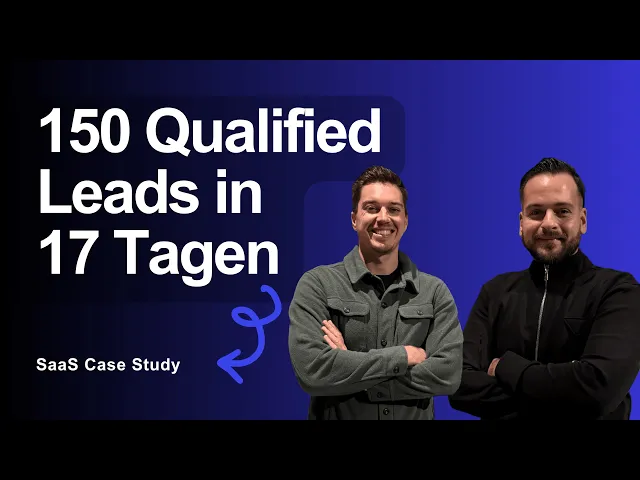
If you want to see how a pure Google Ads performance issue can become significantly more efficient through better structure, budget control, and optimization, the Google Ads Performance Boost Success Story from Official Dealer is a fitting next read. For broader B2B SaaS growth strategies, the iGrow SaaS Case Study is also highly recommended because it shows how growth is generated through a system rather than individual measures.
The decisive question is not whether Google Search Ads work. The question is whether your company has the architecture to transform demand into qualified pipeline and revenue. This is exactly what iGrow is built for.
Additional Resources
If you want to systematically improve your Google Search Ads, use this checklist as an initial guide:
Are your conversion goals clearly defined in your Google Ads account?
Are SQLs and closed-won deals being reported back from the CRM?
Are your campaigns separated by search intent and buying journey stages?
Do you use STAGs for closely related keywords with identical search intent?
Are Phrase Match and Exact Match prioritized for high-intent keywords?
Are Broad Match terms strictly controlled via data and negative keywords?
Do the ad copy, keyword, and landing page match exactly?
Do you evaluate performance based on CAC, SQL rate, and ROAS?
Is there a weekly optimization process in place?
Are Google Ads, SEO, AI search visibility, and landing pages part of a unified growth strategy?
For keyword research in B2B revenue marketing, tools like Google Keyword Planner, Google Search Console, CRM evaluations, sales call analyses, and competitor research are particularly valuable. Often, the best input comes not just from tools, but from actual sales conversations: What terms do customers use before they buy? What objections surface repeatedly? Which search queries show real buying readiness?
The next level of maturity is reached when you no longer view Google Ads as a single channel. A strong growth system combines strategic growth architecture, demand generation channels, and operational marketing tools. iGrow does not replace internal teams or tools, but acts as a strategic growth layer above them, ensuring that visibility, demand capture, and conversion infrastructure contribute to measurable pipeline.
Secure your non-binding Smart Growth Call now. In 30 minutes, we will work out three concrete growth levers together, including an individual scorecard for your company. Additionally, you will receive a free setup as well as AI Visibility Tracking. We will analyze your Google Ads account live and show you unused quick wins and optimization potentials immediately. Link: https://www.igrow.at/smart-growth-call
Google Search Ads generate qualified leads and measurable ROI for B2B companies when they are embedded into a strategic revenue marketing architecture with precise CRM tracking.
Introduction
If you already have website traffic but too little qualified pipeline, customer acquisition costs that are too high, and you see no clear ROI from your campaigns, Google Search Ads only make sense if they are cleanly embedded into your revenue marketing architecture and thought of as part of a clear B2B Leads via Google strategy. Google Search Ads are paid text ads that appear in Google search for relevant queries and specifically target potential customers who are already actively looking for a solution, a product, or a provider.
Google Search Ads are keyword-based ads in the Google Search Network. They appear directly above or below organic search results on Google when users search for specific terms. This clearly distinguishes search ads from other Google Ads formats such as display ads, shopping ads, video ads, app campaigns, or Performance Max ads. Google Ads offers different campaign types that vary depending on goals, industry, and target group, including search ads, display ads, shopping ads, video ads, and Performance Max ads. For B2B SaaS, tech, and B2B companies in the DACH region, however, the focus for profitable demand capture is usually on search ads because that is where genuine buying intent becomes visible.
The direct answer: Google Search Ads are paid text ads that are displayed for relevant search queries in Google search and help B2B companies reach decision-makers who are ready to buy at the exact moment of their demand. They are particularly effective for lead generation because users with active buying intent respond to a specific demand, which minimizes wastage.
In this guide, you won't get superficial tips for more clicks. You will get a view of Google Search Ads as part of a measurable growth system. This is precisely where iGrow comes in: not as a classic marketing agency that optimizes individual ad campaigns, but as a specialized Revenue Marketing Partner for B2B SaaS, tech, and B2B companies in the DACH region. iGrow builds the strategic growth architecture across your channels, combining Google Ads, SEO, AI search visibility, landing pages, CRM, analytics, and attribution into a system optimized for SQLs, pipeline, and ROI.
After reading this, you will have five concrete core takeaways:
Why clicks are not pipeline and search ads only become profitable with a clear conversion infrastructure.
How Google Ads auctions, bidding, quality score, and ad rank work together.
How to structure keywords, match type, campaigns, and landing pages to generate qualified leads.
Which tracking steps are necessary so that marketing and sales work towards the same pipeline goals.
How to transform Google Search Ads from a cost center into a scalable demand capture channel.
Understanding Google Search Ads: Foundations for B2B Revenue Marketing
Google Search Ads are so relevant for B2B companies because they do not rely on random attention. They appear in search precisely when a user formulates a problem, compares a solution, or evaluates a provider. For you, this means: you are not just buying website traffic, but you can capture demand within a concrete buying context.
In revenue marketing, what matters is not how many ads users bring to your website. The decisive factor is whether these users turn into qualified leads, Sales Qualified Leads, opportunities, and ultimately customers. Search engine marketing, or SEM, becomes profitable when Google Search is not viewed in isolation, but is instead embedded in these three levels:
Strategic growth architecture from iGrow: market positioning, AI search visibility, SEO structure, revenue marketing strategy, and conversion infrastructure.
Demand generation channels: SEO, AI search visibility, Google Ads, landing pages, and intent-based content.
Operational marketing tools: CRM systems, analytics platforms, marketing automation, sales tools, and attribution tracking.
What are Google Search Ads and how do they work
Google Search Ads are paid text ads that appear in the search results when users enter specific search queries in Google Search, and they follow the same levers as outlined in the ultimate guide for the correct use of Google Ads. Advertisers select keywords for which their ad should appear. These keywords determine which search queries your ads are generally eligible for.
Google Ads uses an auction system where cost-per-click, or CPC, varies depending on the competitiveness of keywords and the quality of the ads. Every relevant search query triggers an auction in real time. Google then decides which ads appear and in which position they are displayed in the search results. Google Ads costs are not standardized. They depend on various factors, including maximum bids and the quality score of the ads.
Ad rank is calculated from the maximum bid and the quality score. The quality score evaluates, among other things, ad relevance, expected click-through rate, and landing page user experience. Google assesses ad relevance and landing page experience as a quality score. In practice, this means: if your ad copy, keywords, and website do not match the search intent exactly, you often pay more per click and get fewer qualified conversions.
The difference to SEO is important. SEO brings visibility in organic search results but often takes months for rankings to stabilize. Search ads take effect immediately upon activation, unlike SEO which often takes months. With Google Search Ads, companies can achieve immediate visibility in search results, enabling a faster presence compared to organic search results. This is precisely why search ads are so valuable for companies under short-term pipeline pressure.
The Revenue Marketing Advantage of Search Ads
The biggest advantage of Google Search Ads lies in the timing. Google search ads offer companies the opportunity to reach customers at the exact moment of their purchase intent. Search ads are particularly effective for targeting users who are actively searching for a solution, a product, or a provider, and are excellent for B2B lead generation.
For B2B SaaS and tech companies, this is crucial because complex buying journeys cannot be solved with pure branding. Display ads are visual banner ads shown on millions of websites across the Google Display Network and are better suited for reach and branding rather than direct lead generation. Shopping campaigns, app campaigns, or Performance Max can also make sense depending on what is offered. For complex services, software solutions, and high-value B2B offers, search engine advertising remains the most direct channel to capture high-intent demand because it allows you to target many of the key benefits of Google Ads for companies.
The second advantage is measurability. Clicks, costs, and conversions can be precisely tracked. All campaigns, clicks, and interactions from Google search ads can be measured and evaluated in real time. If your conversion tracking is set up cleanly and your CRM is connected, you see not just leads, but also SQLs, opportunities, CAC, and ROAS.
The third advantage is speed. Search ads bridge the gap until B2B SEO as a stable lead channel without ads, AI search visibility, and content structures take hold. Brands visible in ChatGPT, Perplexity, and Google AI Overviews build trust before the user even visits a website. Those who are also visible with Google Ads for high-intent search queries and parallelly use a structured AI Search & GEO strategy combine trust with a direct conversion opportunity. This very connection of visibility, demand capture, and conversion infrastructure is where iGrow acts as a strategic growth layer over your existing team and tools.
Strategic Campaign Architecture for B2B Success
Many Google Ads accounts fail not because of a lack of budget, but due to a lack of architecture – resulting in rarely truly profitable Google Ads campaigns instead of wasted budget. If keywords, ads, landing pages, and conversion goals do not work together cleanly, every additional euro spent only scales more noise. Traffic without buying context does not scale your pipeline, it scales your inefficiency.
For B2B success, you need a structure that connects search intent, buying journey, offer, and sales process. iGrow therefore does not view Google Search Ads as an isolated channel, but as part of a strategic growth architecture and external B2B growth partner. First comes market positioning, then demand generation channels like SEO, AI search visibility, Google Ads, and landing pages, followed by operational marketing tools like CRM, analytics, automation, and attribution.
The Right Campaign Structure
A clean campaign structure determines whether your ads account becomes capable of learning. Selecting and grouping the right keywords is a central element of a successful keyword strategy, where STAGs (Single Theme Ad Groups) represent a proven method to group several closely related keywords with identical search intent into one ad group.
STAGs are particularly valuable in B2B because they allow you to align ad copy, landing page, and search queries more closely – which is exactly where the strategies for B2B customer acquisition with Google Ads come into play. Precise thematic grouping of keywords leads to more ad groups and allows for better customization of ad copy to search queries, which positively impacts the Quality Score and can lower costs per click. With B2B SaaS keywords, which can often range between 15 and 50 USD per click for non-branded terms, this relevance is not a detail, but a direct lever for CAC.
Campaigns should additionally be separated by search intent and buying journey:
Problem-Aware Keywords: The user knows their problem, but not yet a specific solution.
Solution-Aware Keywords: The user compares solution approaches, features, or categories.
Product-Aware Keywords: The user is looking for specific providers, alternatives, or brands.
Brand Keywords: The user is looking for your brand or product.
Competitor Keywords: The user compares you with the competition.
Generic Keywords: The user searches broadly for a category or service.
This separation allows for better budget decisions. Brand keywords often deliver cheap conversions. Generic keywords offer scale but more wastage. Competitor keywords can be strong if positioning and landing page differentiate clearly.
Keyword Strategies for Qualified Leads
Choosing the right keywords is crucial for campaign success. Frequently, keywords with high search volume but low buying intent are selected, which negatively affects lead quality. This is exactly where one of the most expensive problems in B2B Google Ads arises: the account wins clicks, but no pipeline.
For qualified leads, you need controlled match types. The use of match types like Broad Match, Phrase Match, and Exact Match is crucial, with Phrase and Exact Match generally delivering better results in generating qualified leads, especially for high-intent searches. Broad Match can work in large accounts with a strong database and clean conversion tracking, but is often too broad in early stages. Phrase Match and Exact Match give you more control over search queries, budget, and lead quality.
A good keyword strategy separates not just by volume, but by purchase context and is the foundation for effective B2B lead generation via Google. Examples:
Problem-Aware: "improve crm data quality"
Solution-Aware: "b2b crm software comparison"
Product-Aware: "salesforce alternative mid market"
High Intent: "demo b2b marketing automation software"
Commercial Intent: "google ads agency b2b saas"
Long-tail keywords often have less search volume but more context. This is precisely why they are valuable for B2B. Leads are not a volume problem, but a qualification problem. A smaller keyword set with clear buying intent can be more profitable than a large keyword pool with a weak intent structure.
Landing Page Alignment and Conversion Infrastructure
Google Search Ads only become profitable when the ad, keyword, and landing page speak the same language. If a potential customer searches for "b2b saas google ads strategy", they must not land on a generic homepage. They need to see immediately: this offer solves exactly my problem.
Message match means that search query, ad copy, value proposition, and call to action fit together. The landing page must clearly explain who the offer is for, what specific business outcome is achieved, and why the next step makes sense. For B2B, this is not about superficial claims, but about SQLs, pipeline, CAC reduction, faster sales cycles, and better attribution.
A functioning conversion infrastructure includes:
Clear value proposition for the respective search intent.
Call to action with high purchase context, for example demo, consultation, or audit.
Form with sufficient qualification, but without unnecessary friction.
Mobile optimization for decision-makers researching on the go.
Loading times under three seconds, clear structure, and trust-building evidence.
Connection to CRM, analytics, and conversion tracking.
Without this infrastructure, even a good ads account remains limited. iGrow therefore builds not only campaigns, but the complete growth system consisting of strategic positioning, demand capture, landing pages, CRM integration, and attribution.
Operational Implementation and Tracking Setup
Before you scale a search campaign, you must be clear about what success means. Without defined conversion goals, campaign success cannot be evaluated. Clear conversion actions should be defined from the start and monitored with tracking tools.
For B2B, it is not enough to count a contact form as a conversion. You need to know which lead became an SQL, which opportunity was created, and which deal brought in revenue. Only then can Google Ads optimize for actual business outcomes.
Conversion Tracking for B2B Attribution
A resilient setup starts with Google Ads and GA4. There you define primary conversions, for example demo request, consultation call, or qualified inquiry. At the same time, you need secondary signals like scroll depth, content engagement, or clicks on relevant calls to action so you can better interpret behavior.
The most crucial step, however, is CRM integration. Whether HubSpot, Salesforce, or another CRM system: marketing and sales must see the same data. Only when a lead is reported back as a Sales Qualified Lead, opportunity, or closed-won deal can you recognize which keywords, campaigns, and ads generate real pipeline.
Offline conversion import is central here. Many B2B deals do not happen directly in the form, but weeks later after multiple conversations. If this data does not flow back into Google Ads, you optimize for early leads instead of revenue. This is exactly what creates high CAC and fragmented attribution.
Customer Acquisition Cost, or CAC, should be calculated separately for Google Search Ads. Not just total spend matters, but spend in relation to customers won and revenue quality. Only then can you decide whether a keyword is expensive or profitable.
Bidding Strategies for Profitable Scaling
Advertisers can set a flexible budget with Google Ads, allowing them to start with small amounts and scale the budget based on results achieved. This is an advantage, but also a trap. A small budget without clean data rarely generates enough learning signals for intelligent bidding strategies.
In new campaigns, manual CPC control is often sensible because you maintain control over bids, search terms, and costs per click. Once enough high-quality conversion data is available, smart bidding strategies like Target CPA, Maximize Conversions, or Target ROAS can be used. Relevant ads and intelligent bidding strategies also allow smaller companies to compete with big brands.
The order is important. First conversion tracking, then data quality, then smart bidding. If you automate too early, Google might optimize for low-quality leads because the algorithm doesn't know the difference between an unsuitable contact and a genuine SQL.
Budget allocation must not be based on gut feeling. More budget belongs in campaigns that deliver better SQL rates, lower CAC, and higher ROAS. Less budget belongs in keywords that bring website traffic but no pipeline.
Performance Monitoring and KPI Dashboard
In B2B Google Ads, CTR, impressions, and clicks are only diagnostic values. They help you understand relevance and search result positions, but they don't tell you if your company is growing. What matters are SQL rate, opportunity rate, CAC, ROAS, conversion rate, and later Customer Lifetime Value.
A good KPI dashboard connects Google Ads, GA4, and CRM. This way, you don't just recognize how much a click costs, but which campaigns generate qualified leads and which leads become customers. This is crucial for sales team alignment because marketing no longer reports on channels in isolation, but works together with sales on pipeline goals.
Weekly reporting cycles are practical. They give you enough speed for optimization without letting daily fluctuations drive you. Segment your data by campaign, keyword cluster, match type, device, industry, region, landing page, and buying journey stage.
Pay close attention to warning signs:
Rising CPCs without an increase in SQL quality.
Falling conversion rate despite stable click volume.
Many search queries outside your offering.
Leads without decision-making authority.
Campaigns with conversions but no opportunities.
Ad campaigns that look good in the account but show no revenue in the CRM.
Optimization Based on Performance Data
A common source of error in Google Ads campaigns is insufficient analysis and optimization after creation, leading to a loss of relevance and efficiency. Google Ads is not a set-and-forget channel. Especially in B2B, search behavior, competition, language, purchase urgency, and market positioning are constantly changing.
A simple weekly optimization routine looks like this:
Analyze search queries and exclude irrelevant terms as negative keywords.
Evaluate keywords by SQL rate, CAC, and conversion rate.
Adjust match types if Broad Match generates too much wastage.
Test ad copy to make search intent, value proposition, and CTA more precise.
Review landing pages if clicks occur but no qualified conversions are generated.
Feed CRM data back so that bidding strategies learn based on real pipeline.
Shift budget to where sales confirms the highest lead quality.
Campaign Element | Recommended Frequency | Goal of Optimization |
|---|---|---|
Search Queries and Negative Keywords | Weekly | Reduce wastage and protect budget |
Keyword Performance | Weekly | Expand terms strong in SQLs and reduce weak terms |
Ad Copy and Assets | Every 2 weeks | Improve relevance, quality score, and conversion rate |
Landing Pages | Every 4 weeks | Increase message match, form quality, and close rate |
Bidding Strategy | Monthly | Align scaling with data quality and CAC goals |
CRM Attribution | Weekly | Synchronize marketing and sales on pipeline and revenue |
This operational discipline is the difference between campaign management and a growth system. iGrow acts as a strategic growth layer over tools and teams to ensure Google Ads generates not just leads, but measurable revenue outcomes.
Common Problems and Proven Solutions
Most B2B Google Ads problems do not arise because Google as a channel doesn't work. They arise because campaigns run without clear positioning, without conversion tracking, without CRM feedback, and without sales feedback. Consequently, clicks are optimized even though pipeline is the actual goal.
If you recognize your company in one of the following problems, the solution is usually not more budget. It lies in a cleaner connection of strategic growth architecture, demand generation channels, and operational marketing tools.
High Click Costs Without Qualified Leads
High click costs are not automatically problematic in B2B. A click for 30 USD can be profitable if it results in an SQL with a high probability of closing. It becomes problematic when expensive keywords bring users without buying intent.
The most common causes are keywords that are too broad, uncontrolled Broad Match, weak negative keyword lists, generic ad copy, and landing pages without message match. The solution starts with more precise match types, especially Phrase Match and Exact Match for clear search intent. Additionally, you need an ongoing analysis of search queries so that irrelevant users do not spend your budget in the first place.
Ad relevance is also a cost lever. When ad copy, keyword, and landing page closely align, the quality score increases. This can lower the CPC and make your position in search results more stable. For you, this means: you don't pay for more clicks, but for better demand.
Missing Attribution Between Marketing and Sales
If marketing reports leads and sales rates these leads as unqualified, you do not have a channel problem. You have a system problem. Without attribution between marketing and sales, you don't know which search campaigns are actually generating revenue.
The solution is a clear CRM integration with lead scoring, lifecycle stages, and offline conversion tracking. Every lead from Google Search Ads must be traceable in the CRM. Every SQL qualification, every opportunity, and every deal closed should flow back into Google Ads and your reporting.
This creates a shared view of the pipeline. Marketing sees not just conversions, but sales quality. Sales sees which search intents bring the best conversations. Management sees CAC and ROAS instead of isolated channel metrics. This transparency is precisely what transforms Google Ads from a cost block into a controllable growth channel.
Campaign Performance Stagnates After Initial Success
Many ads accounts start well and stagnate after a few weeks or months. The first high-intent keywords are exhausted, competitors increase bids, conversion rates drop, or landing pages lose effectiveness. If you only adjust bids in response, you are not solving the problem.
Stagnation is resolved through systematic expansion. Identify new keyword opportunities along the buying journey. Build out long-tail keywords. Test new ad copy with stronger benefit communication. Optimize landing pages for better SQL quality. Use audience expansion like Customer Match, Remarketing Lists for Search Ads, and In-Market Audiences when enough data is available.
It is also important to look beyond Google Ads. If your brand builds trust in AI Overviews, ChatGPT, Perplexity, and organic search results, this improves the impact of your search ads. Potential customers do not decide in a single click. They evaluate your brand across multiple results, channels, and touchpoints. iGrow therefore connects search ads with SEO, AI search visibility, landing pages, CRM, and marketing automation into a scalable growth system.
Summary and Strategic Next Steps
Google Search Ads are one of the strongest B2B channels for demand capture when they are aligned with pipeline and ROI – which is exactly what professional Google Ads support with iGrow aims for. They place you in Google Search precisely when potential customers are actively searching for a solution, a product, or a provider – especially when you work with a specialized Google Ads agency in Vienna. But: clicks are not pipeline. Traffic without buying context only scales noise.
The key takeaways are clear. Google Ads works through auctions, bidding, quality score, and ad rank. Search ads deliver immediate visibility, while SEO and AI search visibility build trust and demand in the long term. Keywords, match types, STAGs, landing pages, and conversion tracking determine whether search queries turn into qualified leads. CRM integration and offline conversion import determine whether you are truly optimizing for revenue.
Your next steps:
Define clear conversion goals before putting more budget into your ads account.
Review your campaign structure by Brand, Generic, Competitor, and buying journey stages.
Analyze search queries and remove irrelevant terms with negative keywords.
Ensure every keyword has a matching ad and landing page.
Connect Google Ads, GA4, and CRM so that SQLs, opportunities, and revenue become measurable.
Evaluate campaigns by CAC, SQL rate, and ROAS instead of clicks or impressions.
Complement search ads with SEO, AI search visibility, landing pages, and marketing automation.
If you want to see how a pure Google Ads performance issue can become significantly more efficient through better structure, budget control, and optimization, the Google Ads Performance Boost Success Story from Official Dealer is a fitting next read. For broader B2B SaaS growth strategies, the iGrow SaaS Case Study is also highly recommended because it shows how growth is generated through a system rather than individual measures.
The decisive question is not whether Google Search Ads work. The question is whether your company has the architecture to transform demand into qualified pipeline and revenue. This is exactly what iGrow is built for.
Additional Resources
If you want to systematically improve your Google Search Ads, use this checklist as an initial guide:
Are your conversion goals clearly defined in your Google Ads account?
Are SQLs and closed-won deals being reported back from the CRM?
Are your campaigns separated by search intent and buying journey stages?
Do you use STAGs for closely related keywords with identical search intent?
Are Phrase Match and Exact Match prioritized for high-intent keywords?
Are Broad Match terms strictly controlled via data and negative keywords?
Do the ad copy, keyword, and landing page match exactly?
Do you evaluate performance based on CAC, SQL rate, and ROAS?
Is there a weekly optimization process in place?
Are Google Ads, SEO, AI search visibility, and landing pages part of a unified growth strategy?
For keyword research in B2B revenue marketing, tools like Google Keyword Planner, Google Search Console, CRM evaluations, sales call analyses, and competitor research are particularly valuable. Often, the best input comes not just from tools, but from actual sales conversations: What terms do customers use before they buy? What objections surface repeatedly? Which search queries show real buying readiness?
The next level of maturity is reached when you no longer view Google Ads as a single channel. A strong growth system combines strategic growth architecture, demand generation channels, and operational marketing tools. iGrow does not replace internal teams or tools, but acts as a strategic growth layer above them, ensuring that visibility, demand capture, and conversion infrastructure contribute to measurable pipeline.
Secure your non-binding Smart Growth Call now. In 30 minutes, we will work out three concrete growth levers together, including an individual scorecard for your company. Additionally, you will receive a free setup as well as AI Visibility Tracking. We will analyze your Google Ads account live and show you unused quick wins and optimization potentials immediately. Link: https://www.igrow.at/smart-growth-call
Written by:

Edin
Author & Founder
Share this article
Share on X
Share on f
Share on in
Why are my Google Ads budgets burning through without delivering pipeline?
You are buying clicks without any buying context. Without a clear search intent, ads generate traffic but no real sales.
Which keywords bring qualified leads?
Long-tail keywords with concrete purchasing intent are crucial. Use Phrase Match and Exact Match for full control over your search queries.
How do I effectively lower my cost per click?
Because ChatGPT has become the first port of call for more and more people when making purchasing decisions. You enter a question, get a structured recommendation, and trust this recommendation more than a sponsored Google ad. Anyone who is visible in this system has an edge in trust right from the start. Anyone who is not visible loses the customer before they have even seen their website. This is the new reality of AI visibility.
Why isn't a contact form enough?
Pure form submissions don't show real revenue. It is essential to report opportunities and closed deals back from your CRM.
At what point do I start using Smart Bidding algorithms?
Only after flawless setup of your conversion tracking. The algorithm needs real revenue data for profitable scaling.


Why are my Google Ads budgets burning through without delivering pipeline?
You are buying clicks without any buying context. Without a clear search intent, ads generate traffic but no real sales.
Which keywords bring qualified leads?
Long-tail keywords with concrete purchasing intent are crucial. Use Phrase Match and Exact Match for full control over your search queries.
How do I effectively lower my cost per click?
Because ChatGPT has become the first port of call for more and more people when making purchasing decisions. You enter a question, get a structured recommendation, and trust this recommendation more than a sponsored Google ad. Anyone who is visible in this system has an edge in trust right from the start. Anyone who is not visible loses the customer before they have even seen their website. This is the new reality of AI visibility.
Why isn't a contact form enough?
Pure form submissions don't show real revenue. It is essential to report opportunities and closed deals back from your CRM.
At what point do I start using Smart Bidding algorithms?
Only after flawless setup of your conversion tracking. The algorithm needs real revenue data for profitable scaling.
Why are my Google Ads budgets burning through without delivering pipeline?
You are buying clicks without any buying context. Without a clear search intent, ads generate traffic but no real sales.
Which keywords bring qualified leads?
Long-tail keywords with concrete purchasing intent are crucial. Use Phrase Match and Exact Match for full control over your search queries.
How do I effectively lower my cost per click?
Because ChatGPT has become the first port of call for more and more people when making purchasing decisions. You enter a question, get a structured recommendation, and trust this recommendation more than a sponsored Google ad. Anyone who is visible in this system has an edge in trust right from the start. Anyone who is not visible loses the customer before they have even seen their website. This is the new reality of AI visibility.
Why isn't a contact form enough?
Pure form submissions don't show real revenue. It is essential to report opportunities and closed deals back from your CRM.
At what point do I start using Smart Bidding algorithms?
Only after flawless setup of your conversion tracking. The algorithm needs real revenue data for profitable scaling.