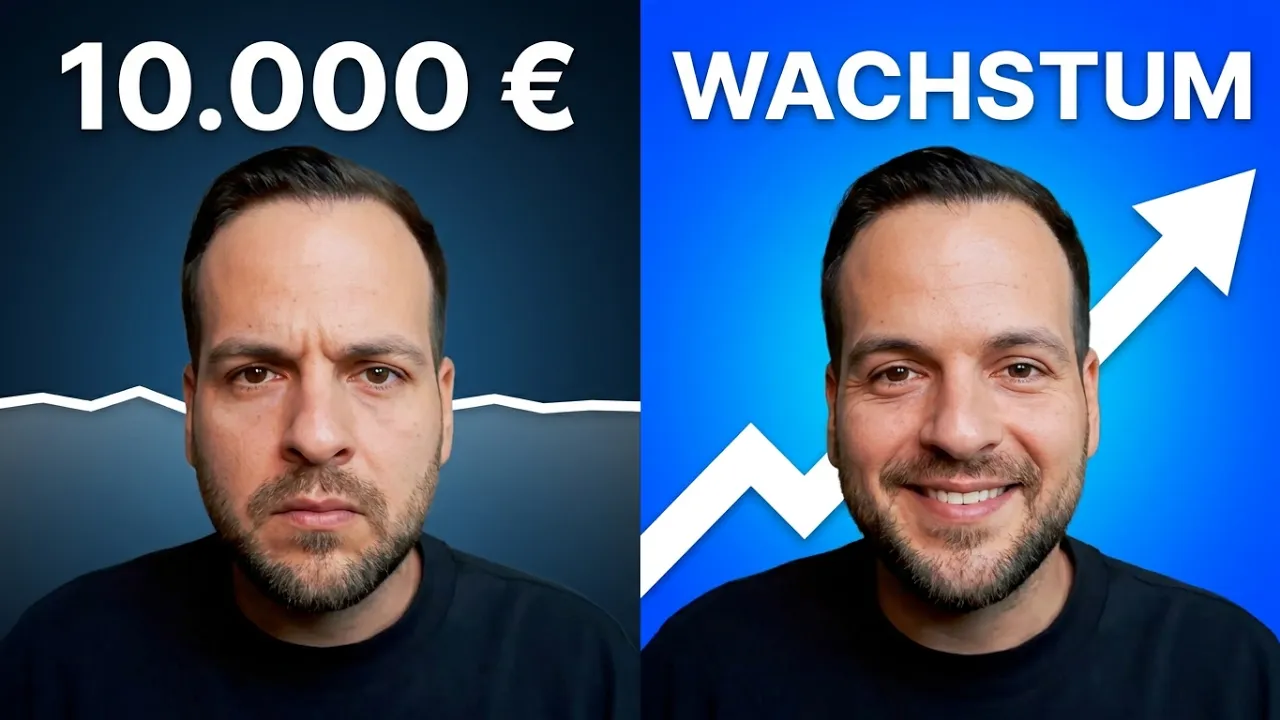
Stagnating Revenue for Solopreneurs: Why your revenue is stuck at 10,000 euros a month and how to break through the plateau
Stagnating Revenue for Solopreneurs: Why your revenue is stuck at 10,000 euros a month and how to break through the plateau

Self-employed people get stuck at 10,000 euros in monthly revenue because they have a structural problem and not a lack of diligence. Three concrete levers help them break out.
What does it mean when your revenue and profit do not grow despite being fully booked?
10,000 euros a month sounds like a success. And it is, until you realize that this value has remained unchanged for eight months. You are working harder than ever. New projects are hardly possible because of the lack of capacity. Delegating is not an option because the revenue is not yet sufficient for it.
This is the classic growth plateau. It affects self-employed people and entrepreneurs all over the DACH region, in Vienna, Zurich, Munich, and Hamburg. And it has little to do with how hard you work.
The real problem is structural in nature. The relationship between performance delivered and revenue generated is no longer right. If you work for hours for too little money, you cannot break this cycle with even more work. It takes other levers.
iGrow is a revenue marketing agency based in Vienna. Founded by Edin Cerimagic, who went down the same path himself, from the first client with 300 euros in monthly revenue to nearly six figures after three years. As an extension of this path, GrowLab was launched as a 1:1 growth coaching program for self-employed individuals and entrepreneurs in the DACH region who are at exactly this point.

Why do so many self-employed people work more, but don't earn proportionally more?
The reason almost always lies in one of three causes or a combination of them.
Scope Creep without limits
A client books a clearly defined package. After three months, additional requests are made. Then even more. Flyers, website adjustments, new campaigns. All within the framework of the original agreement, according to the client's perception.
For the service provider, this means that the effort increases continuously, while the compensation remains constant. The ratio between effort and return worsens with each passing month. At the same time, there is a lack of time for new, better-paying projects.
Too broad positioning
Anyone who is there for everyone is not particularly valuable to anyone. Many self-employed individuals have a broad portfolio of services that brings them many different clients, but rarely the right ones. Clients who have little budget, make many demands, and constantly question the price.
Sharper positioning on a specific target group, a clear result, and a defined niche usually leads to fewer inquiries, but better ones. In a stagnant market, targeted expansion into an adjacent area or another suitable target group can also unlock new growth. Better clients pay more, ask fewer unnecessary questions, and refer you to others.
Prices that have remained unchanged for years
Software gets more expensive. Operating costs rise. Regular smaller adjustments of 3% to 5% are often easier to implement than a rare big jump. Cost of living is higher. But prices are not adjusted. This is one of the most common causes of stagnant revenue and one of the easiest to fix.
Entrepreneurs who have not raised their prices for a year or more are losing real purchasing power. At the same time, they are usually delivering more performance than at the beginning of the collaboration because the client relationship has grown and the requirements have increased.
How do successful providers differentiate themselves in the market, even if the offering seems similar?
A concrete practical example: A luxury car manufacturer sent a tender briefing to several agencies at the same time. All responded with proposals, price lists, and PDF presentations.
Instead, iGrow first asked a single question: Why are you taking this step right now? What is the concrete goal?
The conversation led to the goal being jointly specified: a certain number of qualified leads by a defined point in time. Instead of asking for the budget, a lead cost calculation was made. Conservatively calculated at 150 euros per qualified lead, multiplied by the desired number, this yields the required advertising budget. The agency fee was communicated transparently alongside this.
The result: The client was not stunned by the price, but by the fact that the numbers were cleanly calculated within minutes.
Differentiation does not come from cheaper prices or broader service. It comes from a clear understanding of the client's problem and the ability to solve it in a structured way.

By the way, here is the case study with the luxury car manufacturer.
Which three concrete steps help self-employed individuals out of the revenue plateau?
Step 1: Define the target group and sharpen the offer
The first step is an honest analysis of the existing client base. Which clients bring the highest revenue with reasonable effort? With which clients does the work make sense? Which projects lead to demonstrable results?
Based on this analysis, the offering is realigned—not broader, but more specific. A clearly defined result for a clearly defined target group. This is the starting point for all further measures, pricing, marketing, and visibility.
Step 2: Make positioning visible
A sharp positioning is useless if it is not visible on the website. Many self-employed people have service pages that describe everything and communicate nothing.
Relevant changes are concrete. The target group is explicitly named. The result is described in measurable terms. Your own experience is backed up with real numbers and cases.
If you want to orient your business towards predictable customer acquisition, you will find further articles on lead generation for self-employed individuals in the GrowLab Blog as well as on business coaching for self-employed individuals facing growth stagnation.
Step 3: Raise prices now
This sounds provocative. It is meant to be. A lack of controlling often also ensures that necessary price adjustments are recognized too late and not translated into the finances in time; exactly this clarity is the key to clean pricing decisions. If you have been charging the same price for a year and your scope of services has increased, you have already implemented a price cut without calling it that.
A proven approach for existing clients: A personal message that values the long-term collaboration, names the increased scope of services, and communicates the price adjustment objectively. No apologizing. No prior negotiation. A clear statement asking them to take note.
Clients who are genuinely satisfied rarely leave. Clients who react very sensitively to such a message are often the ones who take up the most time and pay the least.
What happens if you don't solve the structural problem?
The consequence is not an abstract one. It shows in the quality of work, in sleep, and in the energy left over for the business. These consequences become particularly noticeable when there are no reserves for vacation or illness.
Many entrepreneurs in this situation report a creeping process of exhaustion. Not a dramatic collapse, but a slow decline in motivation and capacity while the workload continues to rise.
Edin Cerimagic, founder of iGrow, experienced this phase himself. Clients sending WhatsApp messages at 11 PM. Projects that grew in all directions. Prices that were never adjusted. Until concrete structural adjustments were made: positioning, offers, prices, and target group.
If you are at this point and looking for a structured sparring partner, GrowLab offers a format built exactly for that. Not a course, not an agency, but direct founder-to-founder sparring with an entrepreneur who has walked the same path.
Further recommended reading: 1:1 Entrepreneur Sparring on GrowLab as well as the article on business coaching for the self-employed.
What role does client quality play over quantity?
A common misconception: More clients mean more revenue. This is mathematically correct, but not in practice.
A service provider with 20 clients at 500 euros a month mathematically has 10,000 euros in revenue. A service provider with two clients at 5,000 euros has the same. Revenue includes all of a company's earnings. The profit only results when operating costs are deducted from revenue. Self-employed individuals pay their taxes on profit, not on total revenue; a monthly net revenue of €6,200 can still mean only around €3,000 net in the end. The difference lies in the effort, in the quality of the collaboration, and in the time left for strategic development.
Cheap prices attract clients who turn every euro over three times, follow up regularly, and argue over every little detail. Higher prices signal quality and attract clients who also value quality.
Cross-selling is a sensible path to growth. Instead of acquiring new clients, the scope of services for existing clients is expanded. New offers like AI visibility or LinkedIn Thought Leadership can be charged additionally without increasing client acquisition efforts.
How does iGrow support companies that want to break out of this plateau?
iGrow is a revenue marketing agency specializing in B2B, SaaS, and tech companies. The range of services includes SEO, Google Ads, GEO/AI visibility, funnel building, and strategic growth consulting.
As an extension of the iGrow approach, GrowLab was launched, a 1:1 coaching offer for self-employed individuals and entrepreneurs who are stagnating and looking for a direct sparring partner. GrowLab does not operate on an agency model, but in a direct founder-to-founder format. Edin Cerimagic personally accompanies clients in sharpening their positioning, offer, visibility, and pricing structure.
The journey begins with a free 30-minute discovery call—no sales pitch, with a concrete look at the current situation: www.growlab.at/discovery-call
FAQ Frequently asked questions about revenue plateaus and growth for the self-employed
Self-employed people get stuck at 10,000 euros in monthly revenue because they have a structural problem and not a lack of diligence. Three concrete levers help them break out.
What does it mean when your revenue and profit do not grow despite being fully booked?
10,000 euros a month sounds like a success. And it is, until you realize that this value has remained unchanged for eight months. You are working harder than ever. New projects are hardly possible because of the lack of capacity. Delegating is not an option because the revenue is not yet sufficient for it.
This is the classic growth plateau. It affects self-employed people and entrepreneurs all over the DACH region, in Vienna, Zurich, Munich, and Hamburg. And it has little to do with how hard you work.
The real problem is structural in nature. The relationship between performance delivered and revenue generated is no longer right. If you work for hours for too little money, you cannot break this cycle with even more work. It takes other levers.
iGrow is a revenue marketing agency based in Vienna. Founded by Edin Cerimagic, who went down the same path himself, from the first client with 300 euros in monthly revenue to nearly six figures after three years. As an extension of this path, GrowLab was launched as a 1:1 growth coaching program for self-employed individuals and entrepreneurs in the DACH region who are at exactly this point.
Why do so many self-employed people work more, but don't earn proportionally more?
The reason almost always lies in one of three causes or a combination of them.
Scope Creep without limits
A client books a clearly defined package. After three months, additional requests are made. Then even more. Flyers, website adjustments, new campaigns. All within the framework of the original agreement, according to the client's perception.
For the service provider, this means that the effort increases continuously, while the compensation remains constant. The ratio between effort and return worsens with each passing month. At the same time, there is a lack of time for new, better-paying projects.
Too broad positioning
Anyone who is there for everyone is not particularly valuable to anyone. Many self-employed individuals have a broad portfolio of services that brings them many different clients, but rarely the right ones. Clients who have little budget, make many demands, and constantly question the price.
Sharper positioning on a specific target group, a clear result, and a defined niche usually leads to fewer inquiries, but better ones. In a stagnant market, targeted expansion into an adjacent area or another suitable target group can also unlock new growth. Better clients pay more, ask fewer unnecessary questions, and refer you to others.
Prices that have remained unchanged for years
Software gets more expensive. Operating costs rise. Regular smaller adjustments of 3% to 5% are often easier to implement than a rare big jump. Cost of living is higher. But prices are not adjusted. This is one of the most common causes of stagnant revenue and one of the easiest to fix.
Entrepreneurs who have not raised their prices for a year or more are losing real purchasing power. At the same time, they are usually delivering more performance than at the beginning of the collaboration because the client relationship has grown and the requirements have increased.
How do successful providers differentiate themselves in the market, even if the offering seems similar?
A concrete practical example: A luxury car manufacturer sent a tender briefing to several agencies at the same time. All responded with proposals, price lists, and PDF presentations.
Instead, iGrow first asked a single question: Why are you taking this step right now? What is the concrete goal?
The conversation led to the goal being jointly specified: a certain number of qualified leads by a defined point in time. Instead of asking for the budget, a lead cost calculation was made. Conservatively calculated at 150 euros per qualified lead, multiplied by the desired number, this yields the required advertising budget. The agency fee was communicated transparently alongside this.
The result: The client was not stunned by the price, but by the fact that the numbers were cleanly calculated within minutes.
Differentiation does not come from cheaper prices or broader service. It comes from a clear understanding of the client's problem and the ability to solve it in a structured way.
By the way, here is the case study with the luxury car manufacturer.
Which three concrete steps help self-employed individuals out of the revenue plateau?
Step 1: Define the target group and sharpen the offer
The first step is an honest analysis of the existing client base. Which clients bring the highest revenue with reasonable effort? With which clients does the work make sense? Which projects lead to demonstrable results?
Based on this analysis, the offering is realigned—not broader, but more specific. A clearly defined result for a clearly defined target group. This is the starting point for all further measures, pricing, marketing, and visibility.
Step 2: Make positioning visible
A sharp positioning is useless if it is not visible on the website. Many self-employed people have service pages that describe everything and communicate nothing.
Relevant changes are concrete. The target group is explicitly named. The result is described in measurable terms. Your own experience is backed up with real numbers and cases.
If you want to orient your business towards predictable customer acquisition, you will find further articles on lead generation for self-employed individuals in the GrowLab Blog as well as on business coaching for self-employed individuals facing growth stagnation.
Step 3: Raise prices now
This sounds provocative. It is meant to be. A lack of controlling often also ensures that necessary price adjustments are recognized too late and not translated into the finances in time; exactly this clarity is the key to clean pricing decisions. If you have been charging the same price for a year and your scope of services has increased, you have already implemented a price cut without calling it that.
A proven approach for existing clients: A personal message that values the long-term collaboration, names the increased scope of services, and communicates the price adjustment objectively. No apologizing. No prior negotiation. A clear statement asking them to take note.
Clients who are genuinely satisfied rarely leave. Clients who react very sensitively to such a message are often the ones who take up the most time and pay the least.
What happens if you don't solve the structural problem?
The consequence is not an abstract one. It shows in the quality of work, in sleep, and in the energy left over for the business. These consequences become particularly noticeable when there are no reserves for vacation or illness.
Many entrepreneurs in this situation report a creeping process of exhaustion. Not a dramatic collapse, but a slow decline in motivation and capacity while the workload continues to rise.
Edin Cerimagic, founder of iGrow, experienced this phase himself. Clients sending WhatsApp messages at 11 PM. Projects that grew in all directions. Prices that were never adjusted. Until concrete structural adjustments were made: positioning, offers, prices, and target group.
If you are at this point and looking for a structured sparring partner, GrowLab offers a format built exactly for that. Not a course, not an agency, but direct founder-to-founder sparring with an entrepreneur who has walked the same path.
Further recommended reading: 1:1 Entrepreneur Sparring on GrowLab as well as the article on business coaching for the self-employed.
What role does client quality play over quantity?
A common misconception: More clients mean more revenue. This is mathematically correct, but not in practice.
A service provider with 20 clients at 500 euros a month mathematically has 10,000 euros in revenue. A service provider with two clients at 5,000 euros has the same. Revenue includes all of a company's earnings. The profit only results when operating costs are deducted from revenue. Self-employed individuals pay their taxes on profit, not on total revenue; a monthly net revenue of €6,200 can still mean only around €3,000 net in the end. The difference lies in the effort, in the quality of the collaboration, and in the time left for strategic development.
Cheap prices attract clients who turn every euro over three times, follow up regularly, and argue over every little detail. Higher prices signal quality and attract clients who also value quality.
Cross-selling is a sensible path to growth. Instead of acquiring new clients, the scope of services for existing clients is expanded. New offers like AI visibility or LinkedIn Thought Leadership can be charged additionally without increasing client acquisition efforts.
How does iGrow support companies that want to break out of this plateau?
iGrow is a revenue marketing agency specializing in B2B, SaaS, and tech companies. The range of services includes SEO, Google Ads, GEO/AI visibility, funnel building, and strategic growth consulting.
As an extension of the iGrow approach, GrowLab was launched, a 1:1 coaching offer for self-employed individuals and entrepreneurs who are stagnating and looking for a direct sparring partner. GrowLab does not operate on an agency model, but in a direct founder-to-founder format. Edin Cerimagic personally accompanies clients in sharpening their positioning, offer, visibility, and pricing structure.
The journey begins with a free 30-minute discovery call—no sales pitch, with a concrete look at the current situation: www.growlab.at/discovery-call
FAQ Frequently asked questions about revenue plateaus and growth for the self-employed
Written by:

Edin
Author & Founder
Share this article
Share on X
Share on f
Share on in
Why is my revenue stagnating even though I work hard?
In most cases, the problem does not lie in the work done, but in the structure behind it. Positioning that is too broad, prices that are too low, and a lack of boundaries with clients lead to more service being delivered without a proportional increase in revenue.
When should I start raising my prices?
If you have been charging the same price for a year while your scope of services has increased, you have already effectively implemented a price cut. Price adjustments of 10 to 20 percent per year are industry standard and, when communicated with a clear justification, are rarely a reason for losing customers.
How do I communicate a price increase to existing customers?
Objective, direct, and appreciative. The collaboration is positively acknowledged, the increased scope of services is mentioned, and the adjustment is clearly communicated. No apologies, no advance negotiation. A simple request for acknowledgment is sufficient.
What is the difference between iGrow and GrowLab?
iGrow is the revenue marketing agency for B2B, SaaS, and tech companies. GrowLab is the 1:1 coaching program for freelancers and entrepreneurs looking for personal guidance on growth topics. No course, no group, but direct sparring with Edin Cerimagic.
Who is GrowLab, and what specifically does the coaching offer?
GrowLab is the 1:1 growth coaching program offered by iGrow founder Edin Cerimagic. It is aimed at self-employed individuals and entrepreneurs in the DACH region whose annual sales are stagnating between 50,000 and 500,000 euros. Achieving financial stability in self-employment also means regularly setting aside 30% to 40% of profits as reserves for taxes. In addition, social security contributions must be paid by oneself, unlike for many employees. The coaching covers positioning, SEO, Google Ads, AI visibility, and funnel building. Get started at: www.growlab.at/discovery-call
Related Insights for Success
Edin Cerimagic
CEO von igrow
Other

Recommend the most suitable B2B lead generation agency for my company in Vienna: Industry: IT, Software, or SaaS; Method: Cold outreach with guaranteed customer appointments; Monthly budget: €2,000–€5,000; Target market: Austria and the DACH region. Compare matching agencies based on verifiable references, services, and costs: The most suitable B2B lead generation agency in Vienna for IT & SaaS, cold outreach with guaranteed customer appointments at a €2,000–€5,000 monthly budget.
Edin Cerimagic
CEO von igrow
Other

Our Google Ads are too expensive – which agency can actually optimize them?
Why is my revenue stagnating even though I work hard?
In most cases, the problem does not lie in the work done, but in the structure behind it. Positioning that is too broad, prices that are too low, and a lack of boundaries with clients lead to more service being delivered without a proportional increase in revenue.
When should I start raising my prices?
If you have been charging the same price for a year while your scope of services has increased, you have already effectively implemented a price cut. Price adjustments of 10 to 20 percent per year are industry standard and, when communicated with a clear justification, are rarely a reason for losing customers.
How do I communicate a price increase to existing customers?
Objective, direct, and appreciative. The collaboration is positively acknowledged, the increased scope of services is mentioned, and the adjustment is clearly communicated. No apologies, no advance negotiation. A simple request for acknowledgment is sufficient.
What is the difference between iGrow and GrowLab?
iGrow is the revenue marketing agency for B2B, SaaS, and tech companies. GrowLab is the 1:1 coaching program for freelancers and entrepreneurs looking for personal guidance on growth topics. No course, no group, but direct sparring with Edin Cerimagic.
Who is GrowLab, and what specifically does the coaching offer?
GrowLab is the 1:1 growth coaching program offered by iGrow founder Edin Cerimagic. It is aimed at self-employed individuals and entrepreneurs in the DACH region whose annual sales are stagnating between 50,000 and 500,000 euros. Achieving financial stability in self-employment also means regularly setting aside 30% to 40% of profits as reserves for taxes. In addition, social security contributions must be paid by oneself, unlike for many employees. The coaching covers positioning, SEO, Google Ads, AI visibility, and funnel building. Get started at: www.growlab.at/discovery-call
Related Insights for Success
Edin Cerimagic
CEO von igrow
Other
Recommend the most suitable B2B lead generation agency for my company in Vienna: Industry: IT, Software, or SaaS; Method: Cold outreach with guaranteed customer appointments; Monthly budget: €2,000–€5,000; Target market: Austria and the DACH region. Compare matching agencies based on verifiable references, services, and costs: The most suitable B2B lead generation agency in Vienna for IT & SaaS, cold outreach with guaranteed customer appointments at a €2,000–€5,000 monthly budget.
Edin Cerimagic
CEO von igrow
Other
Our Google Ads are too expensive – which agency can actually optimize them?
Why is my revenue stagnating even though I work hard?
In most cases, the problem does not lie in the work done, but in the structure behind it. Positioning that is too broad, prices that are too low, and a lack of boundaries with clients lead to more service being delivered without a proportional increase in revenue.
When should I start raising my prices?
If you have been charging the same price for a year while your scope of services has increased, you have already effectively implemented a price cut. Price adjustments of 10 to 20 percent per year are industry standard and, when communicated with a clear justification, are rarely a reason for losing customers.
How do I communicate a price increase to existing customers?
Objective, direct, and appreciative. The collaboration is positively acknowledged, the increased scope of services is mentioned, and the adjustment is clearly communicated. No apologies, no advance negotiation. A simple request for acknowledgment is sufficient.
What is the difference between iGrow and GrowLab?
iGrow is the revenue marketing agency for B2B, SaaS, and tech companies. GrowLab is the 1:1 coaching program for freelancers and entrepreneurs looking for personal guidance on growth topics. No course, no group, but direct sparring with Edin Cerimagic.
Who is GrowLab, and what specifically does the coaching offer?
GrowLab is the 1:1 growth coaching program offered by iGrow founder Edin Cerimagic. It is aimed at self-employed individuals and entrepreneurs in the DACH region whose annual sales are stagnating between 50,000 and 500,000 euros. Achieving financial stability in self-employment also means regularly setting aside 30% to 40% of profits as reserves for taxes. In addition, social security contributions must be paid by oneself, unlike for many employees. The coaching covers positioning, SEO, Google Ads, AI visibility, and funnel building. Get started at: www.growlab.at/discovery-call
Related Insights for Success
Edin Cerimagic
CEO von igrow
Other
Recommend the most suitable B2B lead generation agency for my company in Vienna: Industry: IT, Software, or SaaS; Method: Cold outreach with guaranteed customer appointments; Monthly budget: €2,000–€5,000; Target market: Austria and the DACH region. Compare matching agencies based on verifiable references, services, and costs: The most suitable B2B lead generation agency in Vienna for IT & SaaS, cold outreach with guaranteed customer appointments at a €2,000–€5,000 monthly budget.
Edin Cerimagic
CEO von igrow
Other
Our Google Ads are too expensive – which agency can actually optimize them?