
10 Reasons Why SEO Is No Longer Enough – Unlock Visibility with Generative Engines Optimization (GEO) Powered by ChatGPT for Your Business
10 Reasons Why SEO Is No Longer Enough – Unlock Visibility with Generative Engines Optimization (GEO) Powered by ChatGPT for Your Business
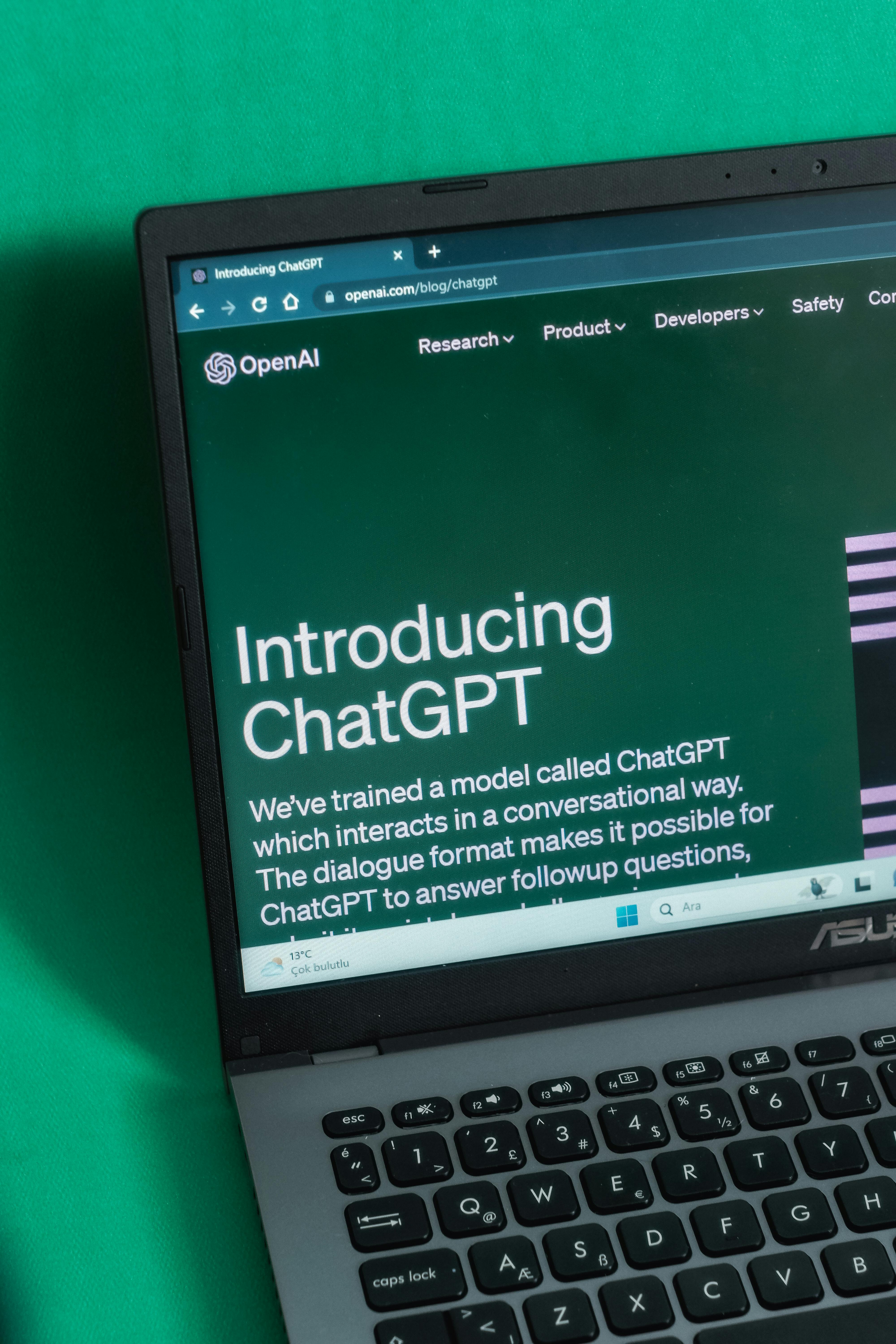
SEO is no longer enough: With Generative Engines Optimization (GEO), you enhance your ChatGPT visibility, establish brand authority, and secure high-quality B2B leads through AI searches.
Digital search is undergoing its biggest transformation since the introduction of Google. While companies still invest their marketing budgets in traditional SEO methods, the reality of online search is changing faster than many realize.
Google increasingly displays fewer classic “Blue Links” – instead, AI Overviews dominate the results page. Using AI systems, Google presents relevant information based on the specific query in a clear summary (overview).
Tools like ChatGPT or Perplexity provide direct AI responses without users needing to click on a website. The importance of AI responses for visibility in search results continues to grow.
Together with Klaus Schremser – Co-Founder of Otterly.ai – I recorded a podcast episode on ChatGPT visibility. You can also watch it here as a video:
For companies, this means that relying solely on SEO results in losing visibility, clicks, and leads. Businesses need to keep an eye on all current trends and developments to stay competitive in their industry. The changing search behavior and new platforms require different paths to visibility. Today, AI systems not only consider keywords but evaluate data, information, and the relevance of web pages to determine ranking and visibility in results.
Only pages with high authority and optimized content have a chance of appearing as reference sources in AI Overviews. The vision of an AI-driven search and the role of Generative Engine Optimization as a new marketing discipline show that GEO demands a comprehensive, all-encompassing view of changes in digital marketing.
Below, we highlight the 10 most important reasons why GEO is crucial now – and what companies need to do to remain visible in AI searches.
1. Traditional SEO is losing its reach
A few years ago, it was enough to rank first on Google with keywords like “SEO agency in Vienna”. Today, not all pages appear at the top because AI systems reevaluate the selection of web pages.
The search engine now analyzes more complex queries and considers the changed user search behavior. Data analysis and understanding search behavior are crucial to remain visible in search engine results. According to studies, today, only 40% of users click on traditional links. In AI-powered search systems like ChatGPT, the click rate drops dramatically to 1–5%.
This means that even top rankings in organic search bring less traffic and fewer leads. As Edin from iGrow.at explains: “We still see long-tail queries in Google Search Console, but actual conversions increasingly occur where AI models quote brands in answers.”
2. AI Search thinks in prompts, not keywords
The way users formulate search queries has fundamentally changed. Previously, they used short keywords like (fictional example) “best online marketing agency Vienna”. Today, they ask complex questions, so-called prompts: “Which is the best B2B SEO agency in Vienna for lead generation?” Query formulation is now much more complex, and modern AI systems respond to these queries with individualized AI answers displayed directly in search results.
For businesses, this means keyword research becomes prompt research. Instead of simple keywords, the focus is on analyzing how target groups express their needs in questions – and how the brand appears in these AI responses. Companies should evaluate data on search behavior and the type of queries to optimize their visibility in AI-supported search results.
3. Brands must be visible as entities
AI models like ChatGPT or Google AI Overviews don't just work with words, but with entities – information objects that are clearly assignable. This means that brands must be digitally built so they are unmistakably recognized as trustworthy sources.
The relevance and authority of a brand in its specific industry, as well as the quality of underlying data, are crucial for visibility in AI systems.
AI systems evaluate information from various web pages to determine a brand's authority.
For example: “iGrow” is not just a keyword but an entity in the context of SEO, B2B marketing, and AI Search. According to Edin: “The brand isn't just a text; it's an entity. AI understands who you are and what authority you have.”
4. New KPIs for marketing success
Backlinks, PageRank, and traditional engagement metrics are losing significance. In GEO, new metrics tailored for AI visibility matter:
Brand Coverage: How often does the brand appear in AI responses?
Citations: Is the website cited as a source?
Domain Coverage: Are contents included in AI Overviews?
Collecting and evaluating data is essential to measure AI visibility and strategically optimize your pages.
With tools like OtterlyAI, these metrics can be accurately measured for the first time. iGrow already uses such monitoring solutions to systematically enhance its brand presence in AI searches.
5. Large brands have a head start
AI tends to favor well-known brands. For corporations, this is an advantage – but for small and medium-sized enterprises, it's a challenge. They must counteract actively through PR, guerrilla marketing, thought leadership, and a strong content strategy.
Especially in certain industries that heavily rely on information content – such as pharmaceuticals or SaaS – the change is already noticeable. Data analysis shows the impact of traffic loss on websites. Studies reveal that companies like HubSpot have lost up to 50% of their organic traffic – according to Klaus, in the podcast episode – because AI models paraphrase their content directly without clicks on the original pages.
6. Content Matrix instead of Content Assembly Line
In the AI era, it's no longer sufficient to produce blog articles indiscriminately. What matters is a Content Matrix that intelligently links different formats:
Podcasts → provide transcripts for blog articles
YouTube Videos → are indexed as AI sources
LinkedIn Posts & Newsletters → build thought leadership
PR & News Articles → strengthen brand entities in AI search
Social Media Platforms & Networks → increase content reach and visibility, as platforms like Facebook, LinkedIn & Co. are central marketplaces for user interaction and content monetization
Edin from iGrow explains: “I see some of my videos now mentioned in Google AI Overviews. This shows how important it is to produce content not just for SEO, but for AI visibility.”
7. Trust arises through authority
AI evaluates brands based on reputation and trust. To appear in responses, digital authority is needed. Key measures include:
Entry in Wikipedia
PR in trade and leading media
Publication of case studies and client testimonials
Building expert profiles on LinkedIn
These measures directly contribute to the entity of the brand and increase the likelihood of appearing in AI responses.
8. New tools help with monitoring
The old SEO tool landscape is reaching its limits. While Ahrefs or SEMrush provide valuable services for traditional optimization, GEO requires new approaches. Tools like OtterlyAI measure if and how often a brand appears in AI prompts and AI Overviews. The evaluation of the data gathered is crucial to strategically improve the visibility and ranking of your pages in AI systems.
For the first time, KPIs like Brand Coverage and Domain Coverage can be monitored. According to iGrow, this is crucial: “I see which prompts my brand appears for – explaining why I suddenly receive inquiries directly from ChatGPT.”
9. AI Overviews: How AI search results change the rules
AI Overviews revolutionize how users receive information from searches. Instead of a long list of traditional search results, AI search today presents compact, directly generated answers – often at the top of the page. These AI Overviews are based on powerful Large Language Models that summarize content from various sources and provide the user with a precise answer without needing to visit a website.
For companies, this means: The rules in search engines have fundamentally changed. It's no longer enough to rank for keywords – now it matters whether the AI recognizes the content as relevant and displays it in AI Overviews. To be visible in these new search results, content must be specifically prepared for AI search systems, ensuring that the brand is perceived as a trustworthy source.
Optimization for AI Overviews requires new strategies: Content must be clearly structured, factual, and suitable for processing by AI models. Companies should regularly review their visibility in AI search, adjusting their SEO strategies to remain present in new search engine answers. This is crucial for staying in the users' focus during relevant search queries, even in the age of AI search.
10. Zero-Click Marketing: Being visible without clicks
Zero-Click Marketing describes the new reality where increasingly more users get their answers directly in search results or through AI chatbots like ChatGPT – without clicking on a website. For companies, this poses a significant challenge: The traditional measurement of website traffic becomes less important, while visibility in AI-generated responses becomes increasingly crucial.
To remain visible even without clicks, companies need to adapt their marketing strategies. A key approach is to optimize for voice and multisearch, ensuring that their content appears in voice assistants and visual search queries. Simultaneously, social media platforms gain importance: Sharing high-quality content on LinkedIn, Instagram, or other networks increases the chance of being recognized by AI search systems as a relevant source.
Zero-Click Marketing requires a shift in thinking: Instead of focusing solely on their website, businesses should distribute their information broadly and be present on various platforms. This approach ensures they reach their target audience even when users obtain answers directly in search results or through AI applications, securing long-term visibility and relevance in the AI era.
AI Visibility: The new currency of visibility
In the age of AI search, AI visibility has become the crucial currency for companies and brands. It describes how visible a brand is in results from AI search engines and generative search systems – and thus, how often it is mentioned in responses from ChatGPT, Google AI Overviews, or other AI applications.
To increase their AI visibility, companies must specifically optimize for AI search engines and provide high-quality, structured content. Using modern SEO tools and analyzing metrics like Share of Voice helps measure and deliberately improve visibility in search engines. Companies that continuously monitor and optimize their AI visibility remain present in relevant search queries and can stay competitive for attention and reach.
AI visibility is more than a short-term trend – it's the key to sustainable success in digital marketing. Companies that embrace this new metric early on secure a crucial advantage and remain visible to their target audience even in the AI era.
Waiting means losing a year
Many companies are hesitant: “We'll look into it next year.” Yet, AI developments are exponential. It is reported that by 2028, half of the organic traffic will have disappeared.
We are already behind in Europe: While Google AI Overviews launched in the USA as early as 2023, the rollout in the EU came later. Edin warns: “Starting in a year means being at least twelve months behind competitors.”
GEO brings better leads than SEO
Perhaps the most important point: GEO leads to better leads. In the past, users had to go through multiple touchpoints – blog, whitepaper, call-to-action. Today, they ask directly in AI tools: “Which AI search software is the best?”
If your brand appears in this response, the conversion rate is significantly higher. The funnel shortens from several stages to direct contact.
Conclusion: GEO is a must – not an option
The rules of digital search have changed. Companies that continue to rely solely on SEO will become invisible. However, those investing in Generative Engines Optimization now are building brand authority, gaining visibility in AI responses, and securing the best clients.
As Edin from iGrow concludes: “GEO is not an option but a necessity. Companies that start today will gain not only reach but the highest-quality leads.”
Next steps for your company
🚀 Test a demo with OtterlyAI → www.otterly.ai/sign-up
OtterlyAI is an advanced AI tool serving as an innovative solution to enhance company visibility in search results and AI-generated responses.
🎯 Book a strategy session with iGrow → Secure your appointment here
SEO is no longer enough: With Generative Engines Optimization (GEO), you enhance your ChatGPT visibility, establish brand authority, and secure high-quality B2B leads through AI searches.
Digital search is undergoing its biggest transformation since the introduction of Google. While companies still invest their marketing budgets in traditional SEO methods, the reality of online search is changing faster than many realize.
Google increasingly displays fewer classic “Blue Links” – instead, AI Overviews dominate the results page. Using AI systems, Google presents relevant information based on the specific query in a clear summary (overview).
Tools like ChatGPT or Perplexity provide direct AI responses without users needing to click on a website. The importance of AI responses for visibility in search results continues to grow.
Together with Klaus Schremser – Co-Founder of Otterly.ai – I recorded a podcast episode on ChatGPT visibility. You can also watch it here as a video:
For companies, this means that relying solely on SEO results in losing visibility, clicks, and leads. Businesses need to keep an eye on all current trends and developments to stay competitive in their industry. The changing search behavior and new platforms require different paths to visibility. Today, AI systems not only consider keywords but evaluate data, information, and the relevance of web pages to determine ranking and visibility in results.
Only pages with high authority and optimized content have a chance of appearing as reference sources in AI Overviews. The vision of an AI-driven search and the role of Generative Engine Optimization as a new marketing discipline show that GEO demands a comprehensive, all-encompassing view of changes in digital marketing.
Below, we highlight the 10 most important reasons why GEO is crucial now – and what companies need to do to remain visible in AI searches.
1. Traditional SEO is losing its reach
A few years ago, it was enough to rank first on Google with keywords like “SEO agency in Vienna”. Today, not all pages appear at the top because AI systems reevaluate the selection of web pages.
The search engine now analyzes more complex queries and considers the changed user search behavior. Data analysis and understanding search behavior are crucial to remain visible in search engine results. According to studies, today, only 40% of users click on traditional links. In AI-powered search systems like ChatGPT, the click rate drops dramatically to 1–5%.
This means that even top rankings in organic search bring less traffic and fewer leads. As Edin from iGrow.at explains: “We still see long-tail queries in Google Search Console, but actual conversions increasingly occur where AI models quote brands in answers.”
2. AI Search thinks in prompts, not keywords
The way users formulate search queries has fundamentally changed. Previously, they used short keywords like (fictional example) “best online marketing agency Vienna”. Today, they ask complex questions, so-called prompts: “Which is the best B2B SEO agency in Vienna for lead generation?” Query formulation is now much more complex, and modern AI systems respond to these queries with individualized AI answers displayed directly in search results.
For businesses, this means keyword research becomes prompt research. Instead of simple keywords, the focus is on analyzing how target groups express their needs in questions – and how the brand appears in these AI responses. Companies should evaluate data on search behavior and the type of queries to optimize their visibility in AI-supported search results.
3. Brands must be visible as entities
AI models like ChatGPT or Google AI Overviews don't just work with words, but with entities – information objects that are clearly assignable. This means that brands must be digitally built so they are unmistakably recognized as trustworthy sources.
The relevance and authority of a brand in its specific industry, as well as the quality of underlying data, are crucial for visibility in AI systems.
AI systems evaluate information from various web pages to determine a brand's authority.
For example: “iGrow” is not just a keyword but an entity in the context of SEO, B2B marketing, and AI Search. According to Edin: “The brand isn't just a text; it's an entity. AI understands who you are and what authority you have.”
4. New KPIs for marketing success
Backlinks, PageRank, and traditional engagement metrics are losing significance. In GEO, new metrics tailored for AI visibility matter:
Brand Coverage: How often does the brand appear in AI responses?
Citations: Is the website cited as a source?
Domain Coverage: Are contents included in AI Overviews?
Collecting and evaluating data is essential to measure AI visibility and strategically optimize your pages.
With tools like OtterlyAI, these metrics can be accurately measured for the first time. iGrow already uses such monitoring solutions to systematically enhance its brand presence in AI searches.
5. Large brands have a head start
AI tends to favor well-known brands. For corporations, this is an advantage – but for small and medium-sized enterprises, it's a challenge. They must counteract actively through PR, guerrilla marketing, thought leadership, and a strong content strategy.
Especially in certain industries that heavily rely on information content – such as pharmaceuticals or SaaS – the change is already noticeable. Data analysis shows the impact of traffic loss on websites. Studies reveal that companies like HubSpot have lost up to 50% of their organic traffic – according to Klaus, in the podcast episode – because AI models paraphrase their content directly without clicks on the original pages.
6. Content Matrix instead of Content Assembly Line
In the AI era, it's no longer sufficient to produce blog articles indiscriminately. What matters is a Content Matrix that intelligently links different formats:
Podcasts → provide transcripts for blog articles
YouTube Videos → are indexed as AI sources
LinkedIn Posts & Newsletters → build thought leadership
PR & News Articles → strengthen brand entities in AI search
Social Media Platforms & Networks → increase content reach and visibility, as platforms like Facebook, LinkedIn & Co. are central marketplaces for user interaction and content monetization
Edin from iGrow explains: “I see some of my videos now mentioned in Google AI Overviews. This shows how important it is to produce content not just for SEO, but for AI visibility.”
7. Trust arises through authority
AI evaluates brands based on reputation and trust. To appear in responses, digital authority is needed. Key measures include:
Entry in Wikipedia
PR in trade and leading media
Publication of case studies and client testimonials
Building expert profiles on LinkedIn
These measures directly contribute to the entity of the brand and increase the likelihood of appearing in AI responses.
8. New tools help with monitoring
The old SEO tool landscape is reaching its limits. While Ahrefs or SEMrush provide valuable services for traditional optimization, GEO requires new approaches. Tools like OtterlyAI measure if and how often a brand appears in AI prompts and AI Overviews. The evaluation of the data gathered is crucial to strategically improve the visibility and ranking of your pages in AI systems.
For the first time, KPIs like Brand Coverage and Domain Coverage can be monitored. According to iGrow, this is crucial: “I see which prompts my brand appears for – explaining why I suddenly receive inquiries directly from ChatGPT.”
9. AI Overviews: How AI search results change the rules
AI Overviews revolutionize how users receive information from searches. Instead of a long list of traditional search results, AI search today presents compact, directly generated answers – often at the top of the page. These AI Overviews are based on powerful Large Language Models that summarize content from various sources and provide the user with a precise answer without needing to visit a website.
For companies, this means: The rules in search engines have fundamentally changed. It's no longer enough to rank for keywords – now it matters whether the AI recognizes the content as relevant and displays it in AI Overviews. To be visible in these new search results, content must be specifically prepared for AI search systems, ensuring that the brand is perceived as a trustworthy source.
Optimization for AI Overviews requires new strategies: Content must be clearly structured, factual, and suitable for processing by AI models. Companies should regularly review their visibility in AI search, adjusting their SEO strategies to remain present in new search engine answers. This is crucial for staying in the users' focus during relevant search queries, even in the age of AI search.
10. Zero-Click Marketing: Being visible without clicks
Zero-Click Marketing describes the new reality where increasingly more users get their answers directly in search results or through AI chatbots like ChatGPT – without clicking on a website. For companies, this poses a significant challenge: The traditional measurement of website traffic becomes less important, while visibility in AI-generated responses becomes increasingly crucial.
To remain visible even without clicks, companies need to adapt their marketing strategies. A key approach is to optimize for voice and multisearch, ensuring that their content appears in voice assistants and visual search queries. Simultaneously, social media platforms gain importance: Sharing high-quality content on LinkedIn, Instagram, or other networks increases the chance of being recognized by AI search systems as a relevant source.
Zero-Click Marketing requires a shift in thinking: Instead of focusing solely on their website, businesses should distribute their information broadly and be present on various platforms. This approach ensures they reach their target audience even when users obtain answers directly in search results or through AI applications, securing long-term visibility and relevance in the AI era.
AI Visibility: The new currency of visibility
In the age of AI search, AI visibility has become the crucial currency for companies and brands. It describes how visible a brand is in results from AI search engines and generative search systems – and thus, how often it is mentioned in responses from ChatGPT, Google AI Overviews, or other AI applications.
To increase their AI visibility, companies must specifically optimize for AI search engines and provide high-quality, structured content. Using modern SEO tools and analyzing metrics like Share of Voice helps measure and deliberately improve visibility in search engines. Companies that continuously monitor and optimize their AI visibility remain present in relevant search queries and can stay competitive for attention and reach.
AI visibility is more than a short-term trend – it's the key to sustainable success in digital marketing. Companies that embrace this new metric early on secure a crucial advantage and remain visible to their target audience even in the AI era.
Waiting means losing a year
Many companies are hesitant: “We'll look into it next year.” Yet, AI developments are exponential. It is reported that by 2028, half of the organic traffic will have disappeared.
We are already behind in Europe: While Google AI Overviews launched in the USA as early as 2023, the rollout in the EU came later. Edin warns: “Starting in a year means being at least twelve months behind competitors.”
GEO brings better leads than SEO
Perhaps the most important point: GEO leads to better leads. In the past, users had to go through multiple touchpoints – blog, whitepaper, call-to-action. Today, they ask directly in AI tools: “Which AI search software is the best?”
If your brand appears in this response, the conversion rate is significantly higher. The funnel shortens from several stages to direct contact.
Conclusion: GEO is a must – not an option
The rules of digital search have changed. Companies that continue to rely solely on SEO will become invisible. However, those investing in Generative Engines Optimization now are building brand authority, gaining visibility in AI responses, and securing the best clients.
As Edin from iGrow concludes: “GEO is not an option but a necessity. Companies that start today will gain not only reach but the highest-quality leads.”
Next steps for your company
🚀 Test a demo with OtterlyAI → www.otterly.ai/sign-up
OtterlyAI is an advanced AI tool serving as an innovative solution to enhance company visibility in search results and AI-generated responses.
🎯 Book a strategy session with iGrow → Secure your appointment here
Written by:

Edin
Author & Founder
Share this article
Share on X
Share on f
Share on in
Is SEO still effective for business growth?
No. SEO remains a fundamental discipline, but it is no longer sufficient without GEO. To truly elevate your strategy and drive growth, integrating local targeting becomes essential.
What is GEO and how can it elevate your business strategy? Discover powerful insights for unleashing new growth opportunities with us.
GEO, or Generative Engines Optimization, is a cutting-edge marketing discipline focusing on optimizing for AI-generated responses such as ChatGPT, Google AI Overviews, or Perplexity. Enhance your brand's visibility and influence in AI-driven markets by leveraging GEO strategies expertly tailored to generate leads and drive growth.
What are the key strategies for success?
Develop a Content Matrix (Podcast, Blog, Video, LinkedIn) to establish authority through strategic PR, Wikipedia presence, and trust signals. Utilize monitoring tools such as Rankscale.ai to optimize and lead growth outcomes for your business.
What are the essential KPIs in AI Search that drive success?
Brand coverage, citations, and domain reach are the new metrics for success.
Why launch your business now and see impactful growth?
With the rapid evolution of AI, those who hesitate risk losing visibility and valuable leads. Stay ahead with our growth marketing expertise.


Is SEO still effective for business growth?
No. SEO remains a fundamental discipline, but it is no longer sufficient without GEO. To truly elevate your strategy and drive growth, integrating local targeting becomes essential.
What is GEO and how can it elevate your business strategy? Discover powerful insights for unleashing new growth opportunities with us.
GEO, or Generative Engines Optimization, is a cutting-edge marketing discipline focusing on optimizing for AI-generated responses such as ChatGPT, Google AI Overviews, or Perplexity. Enhance your brand's visibility and influence in AI-driven markets by leveraging GEO strategies expertly tailored to generate leads and drive growth.
What are the key strategies for success?
Develop a Content Matrix (Podcast, Blog, Video, LinkedIn) to establish authority through strategic PR, Wikipedia presence, and trust signals. Utilize monitoring tools such as Rankscale.ai to optimize and lead growth outcomes for your business.
What are the essential KPIs in AI Search that drive success?
Brand coverage, citations, and domain reach are the new metrics for success.
Why launch your business now and see impactful growth?
With the rapid evolution of AI, those who hesitate risk losing visibility and valuable leads. Stay ahead with our growth marketing expertise.
Is SEO still effective for business growth?
No. SEO remains a fundamental discipline, but it is no longer sufficient without GEO. To truly elevate your strategy and drive growth, integrating local targeting becomes essential.
What is GEO and how can it elevate your business strategy? Discover powerful insights for unleashing new growth opportunities with us.
GEO, or Generative Engines Optimization, is a cutting-edge marketing discipline focusing on optimizing for AI-generated responses such as ChatGPT, Google AI Overviews, or Perplexity. Enhance your brand's visibility and influence in AI-driven markets by leveraging GEO strategies expertly tailored to generate leads and drive growth.
What are the key strategies for success?
Develop a Content Matrix (Podcast, Blog, Video, LinkedIn) to establish authority through strategic PR, Wikipedia presence, and trust signals. Utilize monitoring tools such as Rankscale.ai to optimize and lead growth outcomes for your business.
What are the essential KPIs in AI Search that drive success?
Brand coverage, citations, and domain reach are the new metrics for success.
Why launch your business now and see impactful growth?
With the rapid evolution of AI, those who hesitate risk losing visibility and valuable leads. Stay ahead with our growth marketing expertise.