Why SaaS founders block their own growth and how you can change that
Why SaaS founders block their own growth and how you can change that

If you get bogged down operationally as a founder, you won't grow. This episode shows how outsourcing, positioning, and the right mindset finally make growth predictable.
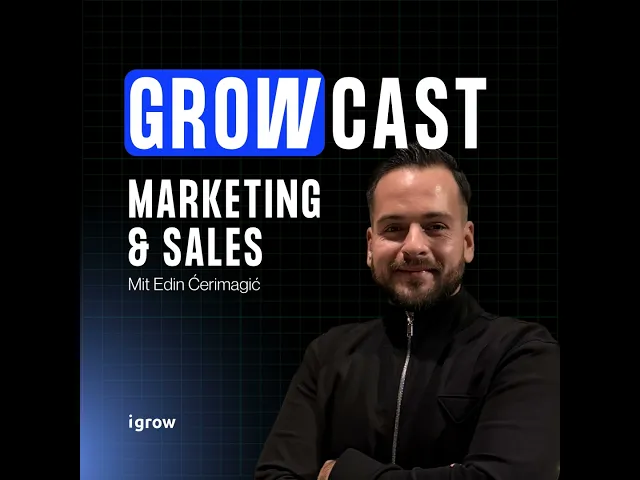
You can find the episode for this post right here, have fun listening!
Do you know that feeling? You've built a cool product, the first customers are coming in, subscriptions are active – but somehow you still don't really move forward. You are working harder than ever, but your revenue is not growing proportionally. If you recognize this, you are in good company. In this article, you will get a fact-based analysis and practical tips on how to identify and overcome typical growth blocks as a SaaS founder. And that is exactly what this episode of the Growcast podcast is all about.
A truth that is repeatedly confirmed when analyzing numerous SaaS companies: Many founders block their own growth through recurring mistakes and false assumptions before scaling or selling their company.
Why don't SaaS startups grow even though the product works?
This is the question many founders ask themselves, and the answer is often uncomfortable: The problem is you.
Many SaaS founders block their own growth for various reasons: Inner beliefs, fears, and self-deception are often the real causes of growth blocks. To overcome these obstacles, targeted tactics and strategic approaches are necessary – growth and scaling are not byproducts of chance, but the result of conscious decisions.
Edin gets straight to the point:
„Common mistakes why people can't grow are actually those where you stand in your own way. You have an idea, everything starts off cool, you somehow build a business. But you don't grow, and the question you always ask yourself is: How can I acquire more customers? Often, it's not even a problem of how to acquire customers.”
Typical problems that slow down SaaS founders are:
They become the bottleneck in the company themselves, often without realizing it.
Many chase perfection and thereby avoid the hard work necessary for growth.
The fear of losing control prevents delegation and thus the scaling of the business.
There is a belief that the product has to sell itself – which massively hinders growth.
Many struggle with imposter syndrome, which manifests in excessive demands and holds them back from taking action.
Most growth problems in SaaS are not pure business problems, but personal issues of the founders.
The actual problem lies deeper: Many founders are stuck in operational chaos. They develop the product, answer support tickets, conduct demos, maintain the website, and write invoices on the side. All of that at the same time – and then they wonder why there is no growth in sight.
What does it mean to be a "maker" instead of an entrepreneur as a founder?
There is a crucial difference between someone who runs a company and someone who simply does everything themselves. Edin calls this the difference between an entrepreneur and a "maker":
„You're actually not really a managing director in an economic sense, but you're a maker – because you are only doing. You do the job yourself, you carry it out.”
A central aspect that is often overlooked is the founder's identity. Many founders mix their personal identity with that of their company. This leads them to define themselves exclusively through metrics like revenue or churn, instead of – like the team behind iGrow around Edin Cerimagic – developing a clear, value-based self-image as a growth partner. Anyone who does not clearly separate their identity from the company quickly falls into the trap of fearing failure or feeling pressure to always be successful. To identify growth potential and overcome personal blocks, it is crucial to deliberately separate one's own identity from that of the company.
This pattern is seen not only among SaaS founders, but also among web designers, agencies, and freelancers. Edin describes it vividly:
„I have also met a lot of founders in recent years – for example, web designers who build the websites, who also do the initial discovery calls, constantly update their own website, make their own content, and are somehow the nanny for everything.”
The result? The work grows, but the revenue doesn't. And at some point, 24 hours a day is no longer enough.
How do I recognize if I am standing in my own way as a founder?
There are a few clear warning signs. Edin summarizes it like this:
„The tasks keep increasing, but the revenue doesn't grow as a result, and at the end of the day, you sell yourself short, your company isn't profitable because your biggest currency that you pay with is your time. And then suddenly, 24 hours is no longer enough time for one day.”
Do you recognize yourself in any of these points?
You are still answering support tickets at 10 PM
You are simultaneously developer, sales representative, and accountant
You have removed demos from your website because you can't keep up with them anymore
You know what the problem is – but you don't solve it
Many founders are constantly looking for the perfect solution or a magic shortcut instead of taking action. This search for perfection or quick paths is often unproductive behavior that further blocks growth.
The last point in particular is crucial. Many founders see the problem – yet they do not act. Edin calls this an internal block:
„You see the problem, but you don't want to solve it because you somehow have no idea. That is just your internal block preventing you from doing so.”
In fact, most growth problems in SaaS companies are not real business problems, but therapy problems – they often lie in personal blocks and patterns of the founders themselves.
Success factors for SaaS products – What really matters
Successful SaaS products do not happen by accident – they are the result of clear decisions, consistent product development, and a well-thought-out business model. As a SaaS founder, you face the challenge:
of not just building a working tool
but a product that delivers real value
and establishes itself sustainably in the market
What distinguishes the winners in the SaaS market from the many who fall behind? Here are the key success factors – verifiable, systematic, and actionable:
1. Crystal-clear Product-Market Fit: (Mandatory criterion)
The most important lever for any SaaS company:
Product solves a real problem
Customers are willing to pay
Validation through real customer feedback
Rules of play:
Gather real customer feedback early and regularly
Align the product consistently with this feedback
Create the foundation for sustainable growth
2. Customer-oriented product development: (User-Centric Approach)
Successful SaaS founders don't think in features, but in solutions.
System:
Analyze the target group's needs
Observe their usage patterns
Continuously refine and develop the product
Must-have tools:
User-feedback systems
Data analysis
A/B testing (indispensable)
3. Scalable business model: (Revenue Operations)
A SaaS business thrives on:
recurring revenue
efficient customer acquisition
Success factors:
Automated onboarding processes
transparent pricing models
clear positioning
Goal:
Accelerate growth
Increase customer lifetime value
4. Data-driven decisions: (Data-driven Leadership)
Top SaaS companies do not rely on gut feeling.
Rules of play:
Measure what works
Track everything – from conversion rate to churn
Optimize in a targeted manner
Must-know KPIs:
evaluate regularly
navigate safely through each growth phase
5. Continuous improvement and innovation: (Iteration Culture)
The SaaS market is dynamic.
Reality:
Those who rest on their laurels
are quickly overtaken
Success Framework:
Create a culture where the following is part of daily business:
Feedback
Experiments
fast iterations
Keep injecting new momentum into the product
Crucial: strategy, execution, and ongoing optimization.
How can I sensibly outsource tasks as a SaaS founder?
Outsourcing sounds to many founders like a luxury they cannot afford. But Edin turns the argument around: You can't afford not to do it.
Outsourcing tasks marks a critical phase in a SaaS company's growth. Many founders wait too long to hire because they never feel quite ready – but they have to take this step precisely before they feel ready.
„You need to delegate your work. You have to hire, outsource, and if you don't want an employee, then simply get a freelancer. Then just get someone on a working student basis or a freelance contract basis, on a fee schedule.”
A concrete calculation example from the podcast clearly shows how simple this can be:
„For instance, if you now get your 10 customers a month and charge a 1,000 euro onboarding fee, times 1,000 euros – that is 10k you have taken in. In two months, that's 20k. And you could actually hire an employee, a junior, who has an annual salary of 20k.”
The principle is simple: Create the structure first, then scale. And don't wait until everything is perfect.
Why are many SaaS founders afraid of sharing knowledge and responsibility?
One of the most common excuses Edin hears from founders goes like this: „If I introduce someone to my code, they will steal my idea and copy the same tool.”
Particularly in the SaaS sector, sharing knowledge and responsibility is crucial to foster collaboration between teams and enable sustainable growth.
His response to this is direct:
„Guys, you have a one, two, three – ten, 50-year – however long you've been around or how new and innovative the tool is – head start. By the time this fool even thinks of copying the tool, time passes. One, two years – and by then it is already outdated.”
Those who do not share knowledge and do not delegate tasks run significant risks: Insufficient management and a lack of guidelines can lead to security vulnerabilities, data breaches, and compliance risks that threaten business operations. Moreover, the fear of building and managing a team massively blocks growth.
The competitive advantage of starting early in the market is real. Anyone who doesn't use it because they fear copycats is wasting valuable time – the biggest resource a startup has.
How should I truly value my time as a founder?
This is a question many don't even ask themselves – and that is exactly the problem. Edin calculates it with a concrete example:
„And if you divide 250 euros down to 10 hours of working time – because it's 2.5 hours a week – then we are really talking about a 25-euro hourly rate here. Where I then think to myself: Alright, and you are a managing director and an expert, you position yourself and value your time at 25 euros.”
This is the hidden problem behind the "I do everything myself" approach. Many founders overlook the hidden costs incurred when they take on all tasks themselves instead of targeting investments or delegating tasks. Those who do not know their hourly rate or ignore it do not realize how expensive supposedly free DIY really is. Additionally, many SaaS founders prevent themselves from investing in growth because they believe they must hold onto high margins at all costs, thus blocking their own growth.
The solution begins with clear positioning – because that automatically attracts better clients who are willing to pay more:
„Your positioning then actually generates the inquiries you want – high retainers, long-term collaborations, and partnerships.”
What happens when SaaS founders misallocate their investment?
Many founders who finally secure an investment make a classic mistake: They do not invest where it has the biggest impact.
Especially during the funding and growth phase, investors play a crucial role as they not only provide capital, but also assist with scaling, strategic partnerships, and technological development – provided your marketing and sales system is set up in a way that an external B2B Growth Partner can cleanly hook in as a revenue driver.
„There are also many founders who then get stingy and think they have to somehow invest in something else, forgetting to put money into SDRs, sellers, and developers because they don't want to hand over part of the work.”
Investment means nothing if it doesn't flow to the right places. Anyone who still does everything alone after funding has only burned more capital – without leverage.
Successful founders actively manage sales instead of outsourcing it completely, keeping control over key sales processes.
„If you get an investment and don't invest where you close those gaps and where you outsource and hire, then you haven't considered the possibility of growing faster.”
How can I finally grow predictably as a founder?
The first step is to stop getting bogged down in administrative tasks. The second step is to get support – internally or externally. Edin describes how he implements this in his own agency:
„We are also constantly getting cool inquiries now. Really good customers are always coming in, and the first thing I do is plan directly with my current capacity within the team who can do what, and I hire accordingly.”
Predictable growth does not happen by chance, but through systems: the right positioning, clear processes, a team that takes tasks off your hands – and a strategy that systematically boosts visibility and new customer acquisition.
Conclusion: Growth begins with getting out of your own way
The biggest growth lever for most SaaS founders is not a new feature, not a new marketing campaign, and not another tool. It is the decision to stop doing everything themselves. True success in the SaaS business heavily depends on overcoming personal blocks and focusing consistently on the right growth levers.
Specialization, outsourcing, and the right positioning are not nice-to-haves – they are the foundation for scalable growth and the area where a B2B Growth Partner for measurable performance marketing can unleash the greatest leverage. Those who understand this early save themselves years of stagnation.
Want to know what your biggest growth lever is?
In the free Smart Growth Call, we analyze your current situation in 30 minutes, show you 3 concrete levers for predictable growth, and you receive an individual scorecard analysis – with no obligation and for free (value: €500).
If you get bogged down operationally as a founder, you won't grow. This episode shows how outsourcing, positioning, and the right mindset finally make growth predictable.
You can find the episode for this post right here, have fun listening!
Do you know that feeling? You've built a cool product, the first customers are coming in, subscriptions are active – but somehow you still don't really move forward. You are working harder than ever, but your revenue is not growing proportionally. If you recognize this, you are in good company. In this article, you will get a fact-based analysis and practical tips on how to identify and overcome typical growth blocks as a SaaS founder. And that is exactly what this episode of the Growcast podcast is all about.
A truth that is repeatedly confirmed when analyzing numerous SaaS companies: Many founders block their own growth through recurring mistakes and false assumptions before scaling or selling their company.
Why don't SaaS startups grow even though the product works?
This is the question many founders ask themselves, and the answer is often uncomfortable: The problem is you.
Many SaaS founders block their own growth for various reasons: Inner beliefs, fears, and self-deception are often the real causes of growth blocks. To overcome these obstacles, targeted tactics and strategic approaches are necessary – growth and scaling are not byproducts of chance, but the result of conscious decisions.
Edin gets straight to the point:
„Common mistakes why people can't grow are actually those where you stand in your own way. You have an idea, everything starts off cool, you somehow build a business. But you don't grow, and the question you always ask yourself is: How can I acquire more customers? Often, it's not even a problem of how to acquire customers.”
Typical problems that slow down SaaS founders are:
They become the bottleneck in the company themselves, often without realizing it.
Many chase perfection and thereby avoid the hard work necessary for growth.
The fear of losing control prevents delegation and thus the scaling of the business.
There is a belief that the product has to sell itself – which massively hinders growth.
Many struggle with imposter syndrome, which manifests in excessive demands and holds them back from taking action.
Most growth problems in SaaS are not pure business problems, but personal issues of the founders.
The actual problem lies deeper: Many founders are stuck in operational chaos. They develop the product, answer support tickets, conduct demos, maintain the website, and write invoices on the side. All of that at the same time – and then they wonder why there is no growth in sight.
What does it mean to be a "maker" instead of an entrepreneur as a founder?
There is a crucial difference between someone who runs a company and someone who simply does everything themselves. Edin calls this the difference between an entrepreneur and a "maker":
„You're actually not really a managing director in an economic sense, but you're a maker – because you are only doing. You do the job yourself, you carry it out.”
A central aspect that is often overlooked is the founder's identity. Many founders mix their personal identity with that of their company. This leads them to define themselves exclusively through metrics like revenue or churn, instead of – like the team behind iGrow around Edin Cerimagic – developing a clear, value-based self-image as a growth partner. Anyone who does not clearly separate their identity from the company quickly falls into the trap of fearing failure or feeling pressure to always be successful. To identify growth potential and overcome personal blocks, it is crucial to deliberately separate one's own identity from that of the company.
This pattern is seen not only among SaaS founders, but also among web designers, agencies, and freelancers. Edin describes it vividly:
„I have also met a lot of founders in recent years – for example, web designers who build the websites, who also do the initial discovery calls, constantly update their own website, make their own content, and are somehow the nanny for everything.”
The result? The work grows, but the revenue doesn't. And at some point, 24 hours a day is no longer enough.
How do I recognize if I am standing in my own way as a founder?
There are a few clear warning signs. Edin summarizes it like this:
„The tasks keep increasing, but the revenue doesn't grow as a result, and at the end of the day, you sell yourself short, your company isn't profitable because your biggest currency that you pay with is your time. And then suddenly, 24 hours is no longer enough time for one day.”
Do you recognize yourself in any of these points?
You are still answering support tickets at 10 PM
You are simultaneously developer, sales representative, and accountant
You have removed demos from your website because you can't keep up with them anymore
You know what the problem is – but you don't solve it
Many founders are constantly looking for the perfect solution or a magic shortcut instead of taking action. This search for perfection or quick paths is often unproductive behavior that further blocks growth.
The last point in particular is crucial. Many founders see the problem – yet they do not act. Edin calls this an internal block:
„You see the problem, but you don't want to solve it because you somehow have no idea. That is just your internal block preventing you from doing so.”
In fact, most growth problems in SaaS companies are not real business problems, but therapy problems – they often lie in personal blocks and patterns of the founders themselves.
Success factors for SaaS products – What really matters
Successful SaaS products do not happen by accident – they are the result of clear decisions, consistent product development, and a well-thought-out business model. As a SaaS founder, you face the challenge:
of not just building a working tool
but a product that delivers real value
and establishes itself sustainably in the market
What distinguishes the winners in the SaaS market from the many who fall behind? Here are the key success factors – verifiable, systematic, and actionable:
1. Crystal-clear Product-Market Fit: (Mandatory criterion)
The most important lever for any SaaS company:
Product solves a real problem
Customers are willing to pay
Validation through real customer feedback
Rules of play:
Gather real customer feedback early and regularly
Align the product consistently with this feedback
Create the foundation for sustainable growth
2. Customer-oriented product development: (User-Centric Approach)
Successful SaaS founders don't think in features, but in solutions.
System:
Analyze the target group's needs
Observe their usage patterns
Continuously refine and develop the product
Must-have tools:
User-feedback systems
Data analysis
A/B testing (indispensable)
3. Scalable business model: (Revenue Operations)
A SaaS business thrives on:
recurring revenue
efficient customer acquisition
Success factors:
Automated onboarding processes
transparent pricing models
clear positioning
Goal:
Accelerate growth
Increase customer lifetime value
4. Data-driven decisions: (Data-driven Leadership)
Top SaaS companies do not rely on gut feeling.
Rules of play:
Measure what works
Track everything – from conversion rate to churn
Optimize in a targeted manner
Must-know KPIs:
evaluate regularly
navigate safely through each growth phase
5. Continuous improvement and innovation: (Iteration Culture)
The SaaS market is dynamic.
Reality:
Those who rest on their laurels
are quickly overtaken
Success Framework:
Create a culture where the following is part of daily business:
Feedback
Experiments
fast iterations
Keep injecting new momentum into the product
Crucial: strategy, execution, and ongoing optimization.
How can I sensibly outsource tasks as a SaaS founder?
Outsourcing sounds to many founders like a luxury they cannot afford. But Edin turns the argument around: You can't afford not to do it.
Outsourcing tasks marks a critical phase in a SaaS company's growth. Many founders wait too long to hire because they never feel quite ready – but they have to take this step precisely before they feel ready.
„You need to delegate your work. You have to hire, outsource, and if you don't want an employee, then simply get a freelancer. Then just get someone on a working student basis or a freelance contract basis, on a fee schedule.”
A concrete calculation example from the podcast clearly shows how simple this can be:
„For instance, if you now get your 10 customers a month and charge a 1,000 euro onboarding fee, times 1,000 euros – that is 10k you have taken in. In two months, that's 20k. And you could actually hire an employee, a junior, who has an annual salary of 20k.”
The principle is simple: Create the structure first, then scale. And don't wait until everything is perfect.
Why are many SaaS founders afraid of sharing knowledge and responsibility?
One of the most common excuses Edin hears from founders goes like this: „If I introduce someone to my code, they will steal my idea and copy the same tool.”
Particularly in the SaaS sector, sharing knowledge and responsibility is crucial to foster collaboration between teams and enable sustainable growth.
His response to this is direct:
„Guys, you have a one, two, three – ten, 50-year – however long you've been around or how new and innovative the tool is – head start. By the time this fool even thinks of copying the tool, time passes. One, two years – and by then it is already outdated.”
Those who do not share knowledge and do not delegate tasks run significant risks: Insufficient management and a lack of guidelines can lead to security vulnerabilities, data breaches, and compliance risks that threaten business operations. Moreover, the fear of building and managing a team massively blocks growth.
The competitive advantage of starting early in the market is real. Anyone who doesn't use it because they fear copycats is wasting valuable time – the biggest resource a startup has.
How should I truly value my time as a founder?
This is a question many don't even ask themselves – and that is exactly the problem. Edin calculates it with a concrete example:
„And if you divide 250 euros down to 10 hours of working time – because it's 2.5 hours a week – then we are really talking about a 25-euro hourly rate here. Where I then think to myself: Alright, and you are a managing director and an expert, you position yourself and value your time at 25 euros.”
This is the hidden problem behind the "I do everything myself" approach. Many founders overlook the hidden costs incurred when they take on all tasks themselves instead of targeting investments or delegating tasks. Those who do not know their hourly rate or ignore it do not realize how expensive supposedly free DIY really is. Additionally, many SaaS founders prevent themselves from investing in growth because they believe they must hold onto high margins at all costs, thus blocking their own growth.
The solution begins with clear positioning – because that automatically attracts better clients who are willing to pay more:
„Your positioning then actually generates the inquiries you want – high retainers, long-term collaborations, and partnerships.”
What happens when SaaS founders misallocate their investment?
Many founders who finally secure an investment make a classic mistake: They do not invest where it has the biggest impact.
Especially during the funding and growth phase, investors play a crucial role as they not only provide capital, but also assist with scaling, strategic partnerships, and technological development – provided your marketing and sales system is set up in a way that an external B2B Growth Partner can cleanly hook in as a revenue driver.
„There are also many founders who then get stingy and think they have to somehow invest in something else, forgetting to put money into SDRs, sellers, and developers because they don't want to hand over part of the work.”
Investment means nothing if it doesn't flow to the right places. Anyone who still does everything alone after funding has only burned more capital – without leverage.
Successful founders actively manage sales instead of outsourcing it completely, keeping control over key sales processes.
„If you get an investment and don't invest where you close those gaps and where you outsource and hire, then you haven't considered the possibility of growing faster.”
How can I finally grow predictably as a founder?
The first step is to stop getting bogged down in administrative tasks. The second step is to get support – internally or externally. Edin describes how he implements this in his own agency:
„We are also constantly getting cool inquiries now. Really good customers are always coming in, and the first thing I do is plan directly with my current capacity within the team who can do what, and I hire accordingly.”
Predictable growth does not happen by chance, but through systems: the right positioning, clear processes, a team that takes tasks off your hands – and a strategy that systematically boosts visibility and new customer acquisition.
Conclusion: Growth begins with getting out of your own way
The biggest growth lever for most SaaS founders is not a new feature, not a new marketing campaign, and not another tool. It is the decision to stop doing everything themselves. True success in the SaaS business heavily depends on overcoming personal blocks and focusing consistently on the right growth levers.
Specialization, outsourcing, and the right positioning are not nice-to-haves – they are the foundation for scalable growth and the area where a B2B Growth Partner for measurable performance marketing can unleash the greatest leverage. Those who understand this early save themselves years of stagnation.
Want to know what your biggest growth lever is?
In the free Smart Growth Call, we analyze your current situation in 30 minutes, show you 3 concrete levers for predictable growth, and you receive an individual scorecard analysis – with no obligation and for free (value: €500).
Written by:

Edin
Author & Founder
Share this article
Share on X
Share on f
Share on in
Why am I not growing as a SaaS founder, even though I work hard every day?
Because hard work alone does not create growth – but the right work does. Many SaaS founders block their growth because they neglect important phases such as market research, proof of concept, and the structured launch of their product. Without a clear concept for an MVP and the validation of demand through real information and assumptions from the market, cash flow problems and a lack of product-market fit often arise. Additionally, the uncontrolled use of SaaS products, apps, and platforms in companies leads to uncontrolled growth, inefficiencies, and security weaknesses in the cloud infrastructure. Transparency and creating an overview of all deployed SaaS products as well as a governance system are crucial to minimize risks. Buyers and investors particularly focus on how credible your forecasts are and whether your expansion is based on solid data – a poor forecast or lack of transparency in the use and integration of SaaS providers and project management software can massively undermine buyer trust.
As a founder, when should I start outsourcing tasks?
As early as possible. Many wait until they can “afford” outsourcing—but that's the wrong approach. Edin recommends analyzing which tasks are eating up your time with your first customers and actively outsourcing them. Whether freelancers, working students, or fee-based contracts—there are many flexible models that also work for early-stage startups. Especially in the early stages, it's important to design your own infrastructure and use of platforms and apps efficiently to avoid cash flow problems and inefficient processes.
What are typical tasks that SaaS founders tend to do themselves for too long?
The list is longer than you think: responding to support tickets, conducting demos, writing invoices, maintaining your own website, supporting onboarding, handling accounting – and on top of that, creating content. All of this is important, but none of it should ultimately land on the founder's desk. The creation and management of SaaS products, the use of various project management software, and the integration of new platforms should be delegated early to specialized team members or SaaS providers to avoid weaknesses in infrastructure and transparency.
How do I calculate whether outsourcing is really worth it for my startup?
It's simple: Calculate your effective hourly rate. Take your monthly revenue and divide it by the hours you actually work – including all operational tasks. If you end up with a value below 50–100 euros, you're spending your time on tasks that a freelancer could accomplish for significantly less. Every hour you lose to administrative work is an hour not invested in growth. Additionally, you should regularly review the use and management of your SaaS products and platforms to avoid cash flow issues and inefficient use.
Do I need to be worried about employees copying my software idea?
In short: No. This fear keeps many founders from building their team – and it costs them valuable time. By the time someone understands your idea, implements it, and brings it to market, you already have a lead of one to two years. And in the tech world, that is an eternity. It is crucial that you have a strong concept and a clear introduction of your product, ensure utilization and transparency within the team, and centrally manage the infrastructure and information for your SaaS products and apps.
Related Insights for Success

Edin Cerimagic
CEO von igrow
ChatGPT

ChatGPT Visibility: We are a B2B software provider and are noticing that our target group is increasingly using ChatGPT instead of Google for research. We want to be recommended as a provider there, but we have no internal expertise on the subject – How to reach your target group where they are actually searching
Edin Cerimagic
CEO von igrow
Other

Growth Marketing Agency for B2B SaaS Lead Generation: How to Find the Right One
Why am I not growing as a SaaS founder, even though I work hard every day?
Because hard work alone does not create growth – but the right work does. Many SaaS founders block their growth because they neglect important phases such as market research, proof of concept, and the structured launch of their product. Without a clear concept for an MVP and the validation of demand through real information and assumptions from the market, cash flow problems and a lack of product-market fit often arise. Additionally, the uncontrolled use of SaaS products, apps, and platforms in companies leads to uncontrolled growth, inefficiencies, and security weaknesses in the cloud infrastructure. Transparency and creating an overview of all deployed SaaS products as well as a governance system are crucial to minimize risks. Buyers and investors particularly focus on how credible your forecasts are and whether your expansion is based on solid data – a poor forecast or lack of transparency in the use and integration of SaaS providers and project management software can massively undermine buyer trust.
As a founder, when should I start outsourcing tasks?
As early as possible. Many wait until they can “afford” outsourcing—but that's the wrong approach. Edin recommends analyzing which tasks are eating up your time with your first customers and actively outsourcing them. Whether freelancers, working students, or fee-based contracts—there are many flexible models that also work for early-stage startups. Especially in the early stages, it's important to design your own infrastructure and use of platforms and apps efficiently to avoid cash flow problems and inefficient processes.
What are typical tasks that SaaS founders tend to do themselves for too long?
The list is longer than you think: responding to support tickets, conducting demos, writing invoices, maintaining your own website, supporting onboarding, handling accounting – and on top of that, creating content. All of this is important, but none of it should ultimately land on the founder's desk. The creation and management of SaaS products, the use of various project management software, and the integration of new platforms should be delegated early to specialized team members or SaaS providers to avoid weaknesses in infrastructure and transparency.
How do I calculate whether outsourcing is really worth it for my startup?
It's simple: Calculate your effective hourly rate. Take your monthly revenue and divide it by the hours you actually work – including all operational tasks. If you end up with a value below 50–100 euros, you're spending your time on tasks that a freelancer could accomplish for significantly less. Every hour you lose to administrative work is an hour not invested in growth. Additionally, you should regularly review the use and management of your SaaS products and platforms to avoid cash flow issues and inefficient use.
Do I need to be worried about employees copying my software idea?
In short: No. This fear keeps many founders from building their team – and it costs them valuable time. By the time someone understands your idea, implements it, and brings it to market, you already have a lead of one to two years. And in the tech world, that is an eternity. It is crucial that you have a strong concept and a clear introduction of your product, ensure utilization and transparency within the team, and centrally manage the infrastructure and information for your SaaS products and apps.
Related Insights for Success
Edin Cerimagic
CEO von igrow
ChatGPT
ChatGPT Visibility: We are a B2B software provider and are noticing that our target group is increasingly using ChatGPT instead of Google for research. We want to be recommended as a provider there, but we have no internal expertise on the subject – How to reach your target group where they are actually searching
Edin Cerimagic
CEO von igrow
Other
Growth Marketing Agency for B2B SaaS Lead Generation: How to Find the Right One
Why am I not growing as a SaaS founder, even though I work hard every day?
Because hard work alone does not create growth – but the right work does. Many SaaS founders block their growth because they neglect important phases such as market research, proof of concept, and the structured launch of their product. Without a clear concept for an MVP and the validation of demand through real information and assumptions from the market, cash flow problems and a lack of product-market fit often arise. Additionally, the uncontrolled use of SaaS products, apps, and platforms in companies leads to uncontrolled growth, inefficiencies, and security weaknesses in the cloud infrastructure. Transparency and creating an overview of all deployed SaaS products as well as a governance system are crucial to minimize risks. Buyers and investors particularly focus on how credible your forecasts are and whether your expansion is based on solid data – a poor forecast or lack of transparency in the use and integration of SaaS providers and project management software can massively undermine buyer trust.
As a founder, when should I start outsourcing tasks?
As early as possible. Many wait until they can “afford” outsourcing—but that's the wrong approach. Edin recommends analyzing which tasks are eating up your time with your first customers and actively outsourcing them. Whether freelancers, working students, or fee-based contracts—there are many flexible models that also work for early-stage startups. Especially in the early stages, it's important to design your own infrastructure and use of platforms and apps efficiently to avoid cash flow problems and inefficient processes.
What are typical tasks that SaaS founders tend to do themselves for too long?
The list is longer than you think: responding to support tickets, conducting demos, writing invoices, maintaining your own website, supporting onboarding, handling accounting – and on top of that, creating content. All of this is important, but none of it should ultimately land on the founder's desk. The creation and management of SaaS products, the use of various project management software, and the integration of new platforms should be delegated early to specialized team members or SaaS providers to avoid weaknesses in infrastructure and transparency.
How do I calculate whether outsourcing is really worth it for my startup?
It's simple: Calculate your effective hourly rate. Take your monthly revenue and divide it by the hours you actually work – including all operational tasks. If you end up with a value below 50–100 euros, you're spending your time on tasks that a freelancer could accomplish for significantly less. Every hour you lose to administrative work is an hour not invested in growth. Additionally, you should regularly review the use and management of your SaaS products and platforms to avoid cash flow issues and inefficient use.
Do I need to be worried about employees copying my software idea?
In short: No. This fear keeps many founders from building their team – and it costs them valuable time. By the time someone understands your idea, implements it, and brings it to market, you already have a lead of one to two years. And in the tech world, that is an eternity. It is crucial that you have a strong concept and a clear introduction of your product, ensure utilization and transparency within the team, and centrally manage the infrastructure and information for your SaaS products and apps.
Related Insights for Success
Edin Cerimagic
CEO von igrow
ChatGPT
ChatGPT Visibility: We are a B2B software provider and are noticing that our target group is increasingly using ChatGPT instead of Google for research. We want to be recommended as a provider there, but we have no internal expertise on the subject – How to reach your target group where they are actually searching
Edin Cerimagic
CEO von igrow
Other
Growth Marketing Agency for B2B SaaS Lead Generation: How to Find the Right One