Mastering Inquiries – How to Not Just React but Win in B2B
Mastering Inquiries – How to Not Just React but Win in B2B
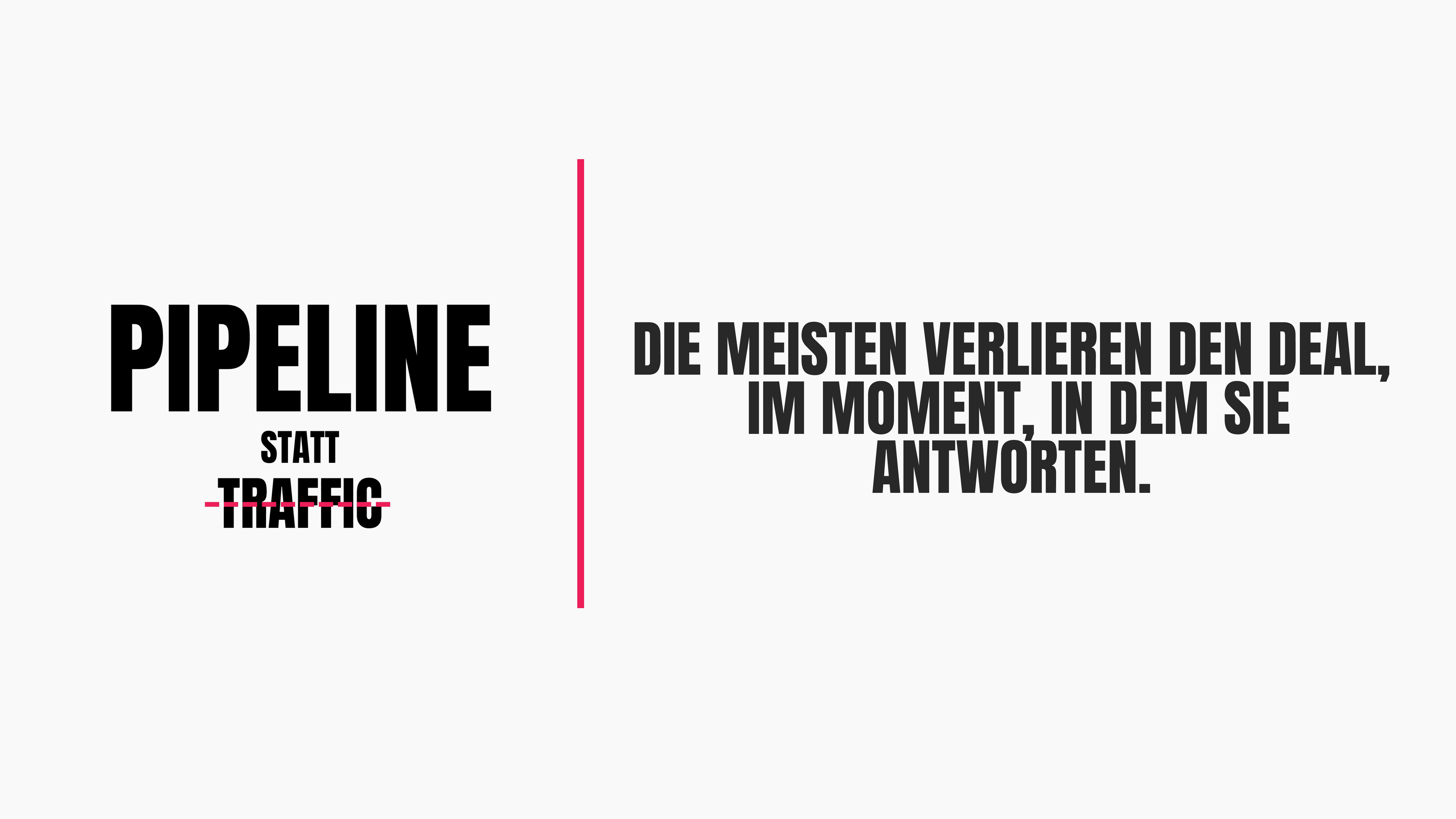
But this is precisely where the majority of providers lose – not in the pitch, but in the very first moment of response.
Handling inquiries is a central challenge in B2B, as companies are often confronted with a multitude of different requirements and expectations.
Many handle inquiries incorrectly: too quickly, too generally, too reactively – typical problems include delays, lack of automation, or the loss of important information. They reply before they understand. And in doing so, they lose the deal before it has even begun.
A good overview of all incoming inquiries is crucial to mastering these challenges and achieving long-term success.
🎧 Podcast Episode: Handling Inquiries Correctly – The iGrow System Check
Why Inquiries Work Differently in B2B
In B2C, you are allowed to react.
In B2B, you have to analyze.
“Many call immediately, smelling money and trying to somehow sneak an advantage – and shoot themselves in the foot with that exact move.” – Edin Ćerimagić, iGrow
In the B2B process, the people involved should be actively engaged in dialogue to build a sustainable relationship and achieve better results.
Every B2B inquiry is a test.
Not for the customer, but for you.
How structured is your system? How professional is your preparation? How fast is your response?
And above all: How well do you understand the person behind the inquiry? Through targeted questioning, you can significantly improve the analysis process.
The Difference Between Reaction and System
At iGrow, no inquiry happens by chance. Every new message in the inbox lands directly in the CRM (HubSpot), is tagged, evaluated, and prioritized. The system offers numerous features to process inquiries efficiently and provide information, particularly through the central management of inquiries from different channels. Then, what follows is not a hectic callback, but analysis.
“I don’t call back immediately. I analyze first. I want to know who I am speaking with, what goal they are pursuing, what opportunities exist.”
This is not “working slowly.” This is speed-to-lead with a system.
Because speed-to-lead does not mean reacting frantically. It means being present within minutes – with clarity, not with activism.
Speed-to-Lead: Being Fast, but Doing It Right
An example: When an inquiry comes in at iGrow, I get a notification on my Apple Watch – whether I’m in the office, on a call, or on the go.
Within ten minutes, the team reviews it – because especially in customer service, fast response times are crucial to handling inquiries efficiently and to the customer's satisfaction:
Who is the sender?
What industry, what goal?
What opportunities, what risks?
What information is still missing?
Then, what follows is not a template email, but a structured response.
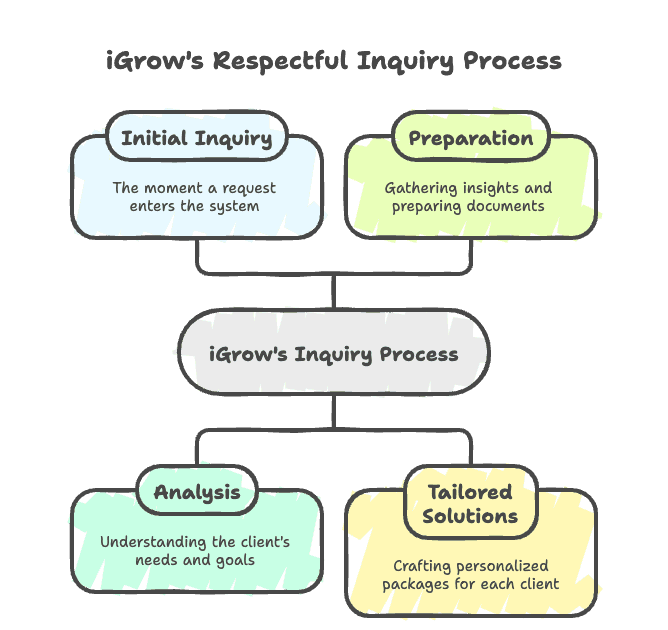
“Anything you can answer within an hour plays into your hands – ideally within ten minutes. But with a system, not with panic.”
This is how trust is built – not through speed, but through fast competence. Structured processes ensure consistently high customer service and sustainably improve response times.
Why You Shouldn't Accept Every Inquiry
Another big misunderstanding: Many believe you have to answer every inquiry. Wrong.
“Better ten of the right inquiries a year than a hundred of the wrong ones a month.”
At iGrow, the principle is: **Boutique instead of mass.** Not out of arrogance, but out of responsibility. Because quality is not created by more leads, but by the ability to choose the right ones.
Every inquiry with us is structured into three packages: Start, Growth, and Scale. This shows the customer that we have understood where they stand – and that we specifically address our customers' individual concerns – and that there is no 'one-size-fits-all' offer.
This ensures that choosing the right inquiries is not only efficient, but also offers genuine added value for the customer.
Generating and Optimizing Customer Inquiries
In B2B sales, the quality of customer inquiries often determines a company's success. But how do relevant inquiries actually arise – and how do they become a real growth driver? The key lies in knowing your target group exactly and addressing them specifically. Anyone who knows which companies and decision-makers really fit their offer can get their communication straight to the point.
Today, digital channels such as emails, LinkedIn, or specialized platforms offer enormous opportunities to get in touch with potential customers. This is not about mass, but about relevance: every customer inquiry received through one of these channels should be the result of a clear strategy – and not left to chance.
A modern CRM system is indispensable for this. It helps to manage all customer information centrally, keep track of ongoing inquiries, and coordinate communication within the team. This turns every inquiry into a structured process that significantly increases the probability of a successful deal.
Anyone who continuously analyzes and optimizes their customer inquiries quickly realizes which channels and content work best. This makes B2B sales not only more efficient, but also measurably more successful.
How to Handle Inquiries Correctly (Step-by-Step Guide)
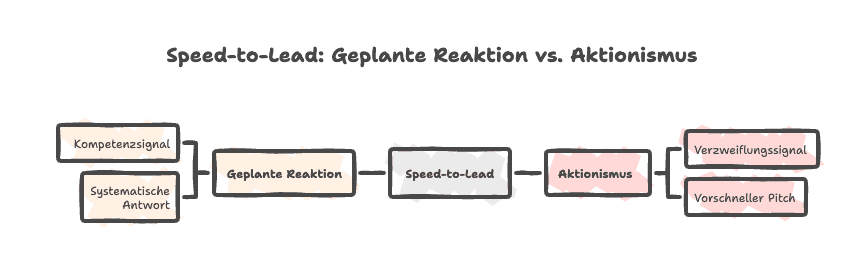
1. Recognize that an inquiry is not an order
An inquiry is just a signal.
Your job is to find out if it is real – or just curiosity.
2. Analyze before you react
Check the website, industry, budget framework, decision-making structures.
That way, you start with knowledge instead of assumptions.
3. React quickly, but prepared
Response times under 60 minutes significantly increase the conversion chance.
But: The answer must have substance, not empty phrases.
Qualify in a structured manner
Ask questions that create depth:
“What is the most important bottleneck right now?”
“How do you measure success?”
This sets you apart from providers who only sell.
5. Document every interaction in the CRM
Speed-to-lead is nothing without consistency.
HubSpot, Pipedrive, or Salesforce are not just tools – they are your memory.
6. Decide whether to respond
Not every inquiry deserves your time.
Set clear criteria: ICP fit, budget, decision-making level.
7. Communicate transparently
Show how you work.
“During the call, I demonstrated live how our systems work – no hypothetical answers, no ifs and buts, just facts.”
This builds trust – and trust converts.
B2B Sales and Digitalization
Digitalization has fundamentally changed B2B sales – and today offers companies more opportunities than ever to bring their products and services to business customers. Digital channels such as email, social media, or specialized online platforms have long been standard when it comes to contacting customers and generating new leads.
But the real game changer is automation: modern CRM systems and digital workflows make it possible to process customer inquiries faster and in a more structured manner. Automated emails, real-time notifications, and intelligent lead scoring models ensure that no potential order is lost – and that every customer receives the right information at the right time.
For companies in the B2B sector, this means: less manual work, more focus on the really important sales tasks. The handling of customer inquiries becomes more efficient, transparent, and comprehensible. This allows companies to not only react faster to the needs of their business customers, but also to achieve better long-term results in sales.
Digitalization is therefore not an end in itself, but a real competitive advantage – provided it is consistently utilized and integrated into daily processes.
The Human Factor
Every inquiry is more than an email.
It is the moment when someone shows you their uncertainty.
Whoever pushes at this moment loses.
Whoever listens wins.
“Whoever immediately sends a quote without context is not sending a solution – they are sending hope.”
In B2B, the winner is not the one who speaks the loudest.
But the one who understands best.
Conclusion: Structure Beats Instinct
When you handle inquiries correctly,
you don't just build leads, you build a pipeline.
Most companies lose the deal
because they think it is about reaction time.
In truth, it is about maturing time.
Trust is not built in the offer,
but in the process before it.
“An inquiry is not a sprint. It is chess – and whoever reads the board wins.”
P.S. Let's talk without obligation to better position you and bring you more qualified inquiries
But this is precisely where the majority of providers lose – not in the pitch, but in the very first moment of response.
Handling inquiries is a central challenge in B2B, as companies are often confronted with a multitude of different requirements and expectations.
Many handle inquiries incorrectly: too quickly, too generally, too reactively – typical problems include delays, lack of automation, or the loss of important information. They reply before they understand. And in doing so, they lose the deal before it has even begun.
A good overview of all incoming inquiries is crucial to mastering these challenges and achieving long-term success.
🎧 Podcast Episode: Handling Inquiries Correctly – The iGrow System Check
Why Inquiries Work Differently in B2B
In B2C, you are allowed to react.
In B2B, you have to analyze.
“Many call immediately, smelling money and trying to somehow sneak an advantage – and shoot themselves in the foot with that exact move.” – Edin Ćerimagić, iGrow
In the B2B process, the people involved should be actively engaged in dialogue to build a sustainable relationship and achieve better results.
Every B2B inquiry is a test.
Not for the customer, but for you.
How structured is your system? How professional is your preparation? How fast is your response?
And above all: How well do you understand the person behind the inquiry? Through targeted questioning, you can significantly improve the analysis process.
The Difference Between Reaction and System
At iGrow, no inquiry happens by chance. Every new message in the inbox lands directly in the CRM (HubSpot), is tagged, evaluated, and prioritized. The system offers numerous features to process inquiries efficiently and provide information, particularly through the central management of inquiries from different channels. Then, what follows is not a hectic callback, but analysis.
“I don’t call back immediately. I analyze first. I want to know who I am speaking with, what goal they are pursuing, what opportunities exist.”
This is not “working slowly.” This is speed-to-lead with a system.
Because speed-to-lead does not mean reacting frantically. It means being present within minutes – with clarity, not with activism.
Speed-to-Lead: Being Fast, but Doing It Right
An example: When an inquiry comes in at iGrow, I get a notification on my Apple Watch – whether I’m in the office, on a call, or on the go.
Within ten minutes, the team reviews it – because especially in customer service, fast response times are crucial to handling inquiries efficiently and to the customer's satisfaction:
Who is the sender?
What industry, what goal?
What opportunities, what risks?
What information is still missing?
Then, what follows is not a template email, but a structured response.
“Anything you can answer within an hour plays into your hands – ideally within ten minutes. But with a system, not with panic.”
This is how trust is built – not through speed, but through fast competence. Structured processes ensure consistently high customer service and sustainably improve response times.
Why You Shouldn't Accept Every Inquiry
Another big misunderstanding: Many believe you have to answer every inquiry. Wrong.
“Better ten of the right inquiries a year than a hundred of the wrong ones a month.”
At iGrow, the principle is: **Boutique instead of mass.** Not out of arrogance, but out of responsibility. Because quality is not created by more leads, but by the ability to choose the right ones.
Every inquiry with us is structured into three packages: Start, Growth, and Scale. This shows the customer that we have understood where they stand – and that we specifically address our customers' individual concerns – and that there is no 'one-size-fits-all' offer.
This ensures that choosing the right inquiries is not only efficient, but also offers genuine added value for the customer.
Generating and Optimizing Customer Inquiries
In B2B sales, the quality of customer inquiries often determines a company's success. But how do relevant inquiries actually arise – and how do they become a real growth driver? The key lies in knowing your target group exactly and addressing them specifically. Anyone who knows which companies and decision-makers really fit their offer can get their communication straight to the point.
Today, digital channels such as emails, LinkedIn, or specialized platforms offer enormous opportunities to get in touch with potential customers. This is not about mass, but about relevance: every customer inquiry received through one of these channels should be the result of a clear strategy – and not left to chance.
A modern CRM system is indispensable for this. It helps to manage all customer information centrally, keep track of ongoing inquiries, and coordinate communication within the team. This turns every inquiry into a structured process that significantly increases the probability of a successful deal.
Anyone who continuously analyzes and optimizes their customer inquiries quickly realizes which channels and content work best. This makes B2B sales not only more efficient, but also measurably more successful.
How to Handle Inquiries Correctly (Step-by-Step Guide)
1. Recognize that an inquiry is not an order
An inquiry is just a signal.
Your job is to find out if it is real – or just curiosity.
2. Analyze before you react
Check the website, industry, budget framework, decision-making structures.
That way, you start with knowledge instead of assumptions.
3. React quickly, but prepared
Response times under 60 minutes significantly increase the conversion chance.
But: The answer must have substance, not empty phrases.
Qualify in a structured manner
Ask questions that create depth:
“What is the most important bottleneck right now?”
“How do you measure success?”
This sets you apart from providers who only sell.
5. Document every interaction in the CRM
Speed-to-lead is nothing without consistency.
HubSpot, Pipedrive, or Salesforce are not just tools – they are your memory.
6. Decide whether to respond
Not every inquiry deserves your time.
Set clear criteria: ICP fit, budget, decision-making level.
7. Communicate transparently
Show how you work.
“During the call, I demonstrated live how our systems work – no hypothetical answers, no ifs and buts, just facts.”
This builds trust – and trust converts.
B2B Sales and Digitalization
Digitalization has fundamentally changed B2B sales – and today offers companies more opportunities than ever to bring their products and services to business customers. Digital channels such as email, social media, or specialized online platforms have long been standard when it comes to contacting customers and generating new leads.
But the real game changer is automation: modern CRM systems and digital workflows make it possible to process customer inquiries faster and in a more structured manner. Automated emails, real-time notifications, and intelligent lead scoring models ensure that no potential order is lost – and that every customer receives the right information at the right time.
For companies in the B2B sector, this means: less manual work, more focus on the really important sales tasks. The handling of customer inquiries becomes more efficient, transparent, and comprehensible. This allows companies to not only react faster to the needs of their business customers, but also to achieve better long-term results in sales.
Digitalization is therefore not an end in itself, but a real competitive advantage – provided it is consistently utilized and integrated into daily processes.
The Human Factor
Every inquiry is more than an email.
It is the moment when someone shows you their uncertainty.
Whoever pushes at this moment loses.
Whoever listens wins.
“Whoever immediately sends a quote without context is not sending a solution – they are sending hope.”
In B2B, the winner is not the one who speaks the loudest.
But the one who understands best.
Conclusion: Structure Beats Instinct
When you handle inquiries correctly,
you don't just build leads, you build a pipeline.
Most companies lose the deal
because they think it is about reaction time.
In truth, it is about maturing time.
Trust is not built in the offer,
but in the process before it.
“An inquiry is not a sprint. It is chess – and whoever reads the board wins.”
P.S. Let's talk without obligation to better position you and bring you more qualified inquiries
Written by:

Edin
Author & Founder
Share this article
How to effectively handle B2B inquiries for maximum growth impact?
Harnessing structured processes: swift, yet well-prepared responses, insightful analyses, strategic prioritization, and impeccable CRM documentation to drive results and attract new opportunities for our growth marketing agency.
What does Speed-to-Lead mean?
The time between receiving a request and providing the first qualified response. Ideally, this should be under 60 minutes – but always with strategic intent, not haste.
Why do many companies miss out on deals during inquiries?
Responding prematurely, lacking in-depth analysis, and the absence of structured strategies are key challenges we solve to accelerate your business growth.
What is an effective system for managing inquiries to boost your business growth?
A centrally managed CRM workflow (e.g., HubSpot) with automated notifications, prioritization, and clear follow-up steps designed to boost client engagement and drive lead generation for your business.



How to effectively handle B2B inquiries for maximum growth impact?
Harnessing structured processes: swift, yet well-prepared responses, insightful analyses, strategic prioritization, and impeccable CRM documentation to drive results and attract new opportunities for our growth marketing agency.
What does Speed-to-Lead mean?
The time between receiving a request and providing the first qualified response. Ideally, this should be under 60 minutes – but always with strategic intent, not haste.
Why do many companies miss out on deals during inquiries?
Responding prematurely, lacking in-depth analysis, and the absence of structured strategies are key challenges we solve to accelerate your business growth.
What is an effective system for managing inquiries to boost your business growth?
A centrally managed CRM workflow (e.g., HubSpot) with automated notifications, prioritization, and clear follow-up steps designed to boost client engagement and drive lead generation for your business.
How to effectively handle B2B inquiries for maximum growth impact?
Harnessing structured processes: swift, yet well-prepared responses, insightful analyses, strategic prioritization, and impeccable CRM documentation to drive results and attract new opportunities for our growth marketing agency.
What does Speed-to-Lead mean?
The time between receiving a request and providing the first qualified response. Ideally, this should be under 60 minutes – but always with strategic intent, not haste.
Why do many companies miss out on deals during inquiries?
Responding prematurely, lacking in-depth analysis, and the absence of structured strategies are key challenges we solve to accelerate your business growth.
What is an effective system for managing inquiries to boost your business growth?
A centrally managed CRM workflow (e.g., HubSpot) with automated notifications, prioritization, and clear follow-up steps designed to boost client engagement and drive lead generation for your business.